How to Budget for Event AV: Build the Strongest Production Around a Real Number
Most corporate events, conferences, galas and nonprofit programs in 2026 are working with a fixed ceiling. Whether that number comes from an approved event budget, a board allocation, a sponsor cap or a grant, it is a real constraint – and it should be treated as a design parameter, not a limitation.
Understanding how to budget for event AV means learning to build the strongest possible audiovisual production inside that number. The main cost drivers include event format, audience size and production complexity, and AV costs typically range from 10% to 30% of the total event budget depending on how central technical production is to the experience. This article walks through that planning process step by step, with an illustrative $15,000 example, so you can approach your next event with clarity instead of guesswork.
Note: this guide covers the event AV budget and event production budget specifically – audio, video, lighting, labor and infrastructure – not catering, marketing or décor, though those expenses interact. Front Row FX is a Minnesota-based audiovisual production partner that designs AV solutions around real numbers for events across Minneapolis–St. Paul, greater Minnesota, Wisconsin and the Upper Midwest.
Start With the Real Number (Not a “Ballpark”)
The single most important step in AV budget planning is being honest about the actual ceiling from day one. Define event goals before assigning budget amounts. When you share a vague range – “somewhere between $10k and $30k” – your AV provider has to guess. That guess usually results in either a proposal that overshoots what leadership will approve, or one that under-designs systems and struggles on show day.
A clear number changes everything. Sources of a fixed AV budget include annual department allocations, grant amounts for a fundraising gala, sponsor funding tied to signed contracts, school district approvals, church board votes, or a client-imposed corporate event cap. When a company tells Front Row FX, “We have $40,000 approved for our Twin Cities sales summit,” the team can immediately model scenarios: projection versus LED walls, crew sizes, room strategies and scalable options – all designed to work inside that ceiling.
This is why event professionals should involve event production experts three to five months before the event. Early engagement with a real number means the AV team designs forward from a foundation, not backward from a dream. Budget should support primary goals like revenue generation, donor engagement or brand positioning – and that only happens when every dollar supports the mission intentionally.
Define Audience Impact and Event Goals First
Your event planning budget for AV should be driven by what the audience must experience, not by a generic gear list. AV planning should factor in the specific needs of the event type and guest count. Before discussing any equipment, answer these questions:
What must every attendee be able to hear clearly (e.g., keynote content, awards, panel discussion)?
What must they be able to see (slides, brand content, live camera, interpreters, ASL, voting results)?
What must they walk away understanding or feeling (new strategy, donor impact, faith message, safety procedures)?
Then identify two or three “non-failure” moments: the CEO keynote at a March 2027 conference, the fundraising ask at an October 2026 gala, or a student performance at a spring concert. These are the moments where your AV plan must be bulletproof. When you evaluate ROI, look beyond ticket sales and registration fees – measure whether the audience received the message, felt the moment and responded.
This impact-first approach lets your AV team prioritize sound systems, displays, lighting and cameras so that critical moments never depend on leftover dollars.
Separate Must-Haves From Nice-to-Haves (Without Devaluing Either)
Strong audiovisual budget planning is about clarity, not cutting. Building a solid AV budget requires breaking down technical needs into categories – what is essential for a successful event, and what would enhance it further if money allows.
Must-haves most events share:
Clean, reliable audio that reaches the back row.
The right microphones (podium, handheld, lavalier) for speakers and panels.
Presentation display: LED wall or projection sized to the room and content.
Stage visibility: basic front light so faces aren’t in shadow, especially for photos and video.
Playback systems for walk-in music, stings and video rolls.
A competent AV team member to operate, troubleshoot and call cues.
Adequate power distribution and safety (no daisy-chained power strips and guessing).
Nice-to-haves that add impact when the audio visual budget allows:
Larger or taller LED walls to fill big hotel ballrooms.
Additional cameras for IMAG, recordings or multi-angle livestreams.
Special effects like low-lying fog, CO₂ jets or indoor cold sparks for specific show moments.
Scenic or architectural lighting to transform walls, drape and room features.
Extra lobby and hallway displays for branding, schedules or sponsor content.
“Nice-to-have” does not mean “unimportant.” Many of these items are where brand storytelling and donor experience live – they are simply more flexible when aligning with a tight budget. AV budgets should cover more than just equipment hire and include planning and labor costs, so don’t confuse your gear wish list with your full production scope. Equipment rental typically constitutes the most visible part of an AV budget, but it is not the only part.
How Venue Constraints Shape Your AV Costs
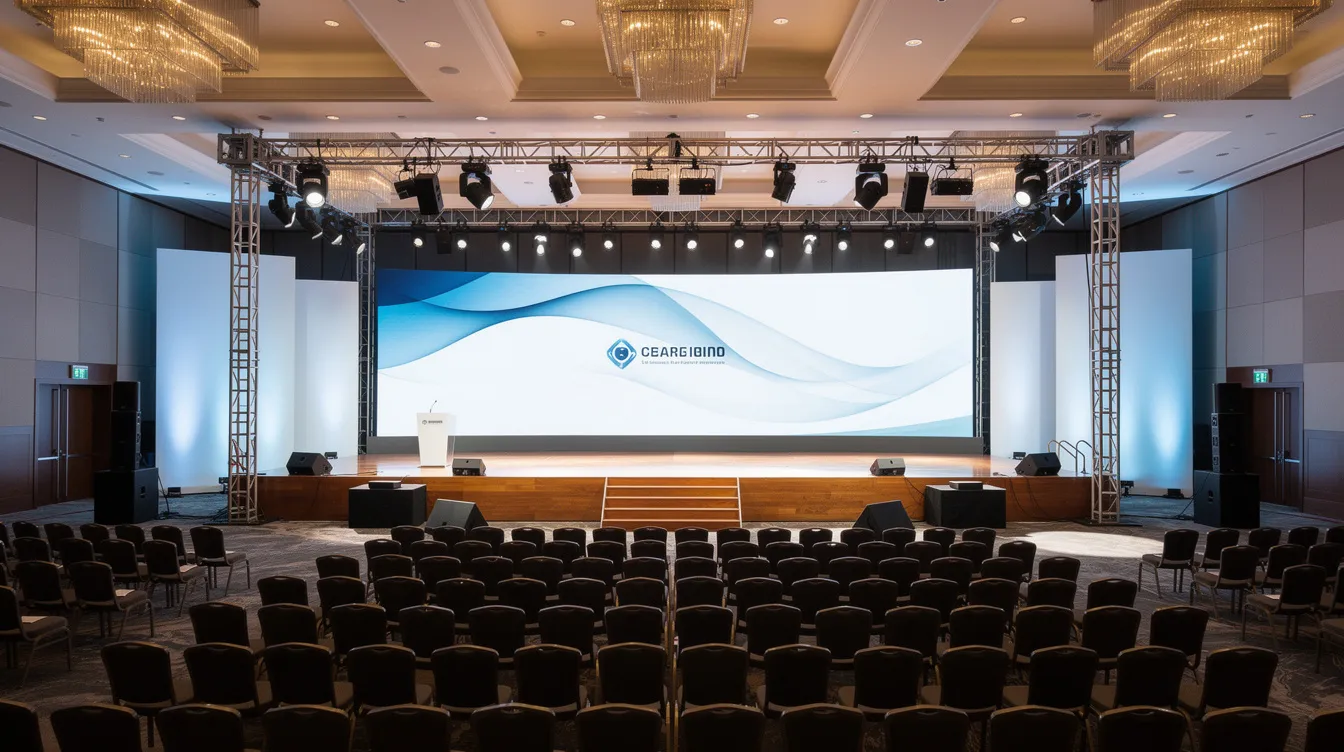
The venue you choose can change AV costs as much as the event size itself. The same agenda will cost differently in a suburban hotel in Bloomington versus a downtown Minneapolis convention center. Event venue costs typically consume the largest budget portion of the overall event planning budget, and food and beverage minimums are often required by venues – which means the space you book affects every other line item.
Venue factors that directly hit the AV line:
Power: whether the venue charges for power drops, tie-ins and electrical supervision. AV budgets should include costs for power distribution and infrastructure.
Rigging: ceiling height, rigging points, required house riggers and any exclusive rigging vendors. Rigging and infrastructure costs are often overlooked but are crucial for safe event execution.
Union labor: when IATSE or other unions are required, affecting who can touch cable, lifts and house systems.
Internet: day-rate fees for dedicated streaming bandwidth, especially for hybrid events or virtual event components.
Loading and access: dock availability, freight elevators, long pushes and restricted load-in windows that drive labor hours.
Security and parking policies for trucks and crew vehicles.
Install windows: limited overnight access or strict quiet hours that force multi-day setups.
Larger event spaces may require more powerful sound reinforcement and larger displays. In-house systems (projectors, basic sound, room lighting) may offset rental needs when assessed properly. In-house AV contracts (exclusive or preferred) may also influence how an outside partner like Front Row FX designs or integrates systems. For more on managing multi-day venue complexities, see this guide to planning multi-day AV production for a trade show or expo.
Discussing venue details early with your AV partner is one of the most effective ways to avoid hidden costs in the production budget. Estimate food and beverage costs based on attendance as part of overall planning, but keep those expenses separate from your AV line items so you’re tracking spending accurately.
Technical Priorities: Where to Protect Your AV Budget
Not all AV equipment has the same impact on audience experience. A smart event AV budget deliberately protects some areas first. Standard corporate meetings can range from $15,000 to $70,000 in AV costs, but where those dollars go makes all the difference.
Audio. If people cannot understand the message, the event fails. Prioritize high-quality speakers, reliable microphones and proper system tuning over cosmetic line items. In reverberant ballrooms or gyms, invest in DSP and proper speaker placement. A professional sound system tuned for speech intelligibility is non-negotiable for conferences, sermons and corporate presentations.
LED / Video. Screen size, aspect ratio and brightness should be chosen based on audience size, seat count, ambient light and content type. Projector brightness may need to be at least 150 lumens per square foot for clear visibility. An appropriately sized LED wall for a 500-person awards banquet in St. Paul is a better investment than an oversized wall that consumes the entire AV budget.
Lighting. Basic stage wash ensures faces are visible for photos, video and livestream. Selective use of color and movement for walk-ins or performances adds atmosphere without requiring a concert rig. Effective event lighting improves both the in-person experience and camera quality.
Cameras. IMAG is worth the spend in large ballrooms. Multi-camera recording is valuable for on-demand training content or a district-wide school board meeting. A single locked-off camera may be enough for internal documentation.
Special Effects (FX). Use FX only where they support a key event moment – a product reveal, finale at a fundraising gala, or a big event performance – rather than scattering them everywhere. AV planning often requires dedicated internet for streaming and high-bandwidth applications, so factor that into event tech costs alongside FX.
Labor: The Often-Misunderstood Driver of AV Costs
Labor often accounts for 30% to 50% of the total AV production quote. That surprises many event planners, but the reality is straightforward: audio visual equipment doesn’t set itself up, tune itself, or run itself during a live show. Labor costs significantly impact AV budget management, and staffing costs should be calculated based on event size.
Key labor phases the AV team must plan and bill for:
Load-in and unloading trucks at the venue dock.
Physical setup of audio, LED, lighting, staging and cabling.
Programming, focusing lights, audio tuning and testing presentations.
Rehearsals, run-throughs and last-minute script changes.
Live show operation: audio, lighting, video, show calling and stage management.
Strike and load-out, often late at night after attendees have left.
Constraints like limited access hours, multiple breakout rooms, or turning the general session room overnight all increase labor hours. Overtime rules, late-night work, weekend rates and required union crews at convention centers in Minneapolis, Chicago or Milwaukee add additional costs. At the Minneapolis Convention Center in 2026, AV technician rates run $66/hr straight time and electricians run $163/hr.
Here’s a principle worth remembering: the cheapest equipment package is not always the cheapest production. A modest gear package that requires long, inefficient setup across three days may cost more in labor than a well-designed system with slightly higher equipment costs but fewer crew hours. Careful planning of the schedule with your AV provider is one of the best ways to control event production costs.
Use Existing Infrastructure Where It Makes Sense
Smart AV budget planning doesn’t automatically replace all venue systems. It evaluates what is reliable, what isn’t, and where integration saves real money. Renting equipment for every space when the venue already has usable systems is a common source of unnecessary expenses.
Infrastructure to assess during a site visit:
House audio system: speakers, amplifiers and DSP – when suitable for speech only, and when external systems are needed for a live band or full-range music.
Existing projectors, screens or built-in LED displays: brightness, aspect ratio and connection options.
Installed stage or house lighting: what can be repurposed versus needing supplemental fixtures.
In-place rigging, truss and pipe grids.
Network and internet infrastructure for presentation support or streaming encoders.
Venue microphones or wireless inventory, if in good working order.
Front Row FX frequently designs hybrid solutions: using house speakers for breakout rooms while bringing in full production for the main ballroom, or using venue projection for secondary spaces while LED walls cover the general session. This approach reduces freight, setup time and sometimes hidden costs like extra power or rigging. It is not about cutting corners – it is about reallocating budget to higher-impact needs. Get multiple vendor quotes to ensure competitive pricing, but also evaluate what rental options actually overlap with usable venue infrastructure.
Design Backward From the Budget, Not Down From a “Dream Rig”
Designing backward means starting with the fixed number and building a prioritized scope from the ground up – not assembling a wish list and cutting randomly until the total fits.
Recommended priority order for most corporate events, conferences and galas:
Protect audio quality and coverage first.
Protect essential technical labor (enough qualified crew to run the plan safely).
Protect power, safety and core infrastructure (cabling, distribution, rigging as required).
Protect content visibility (LED, projection, confidence monitors) so key messages are seen.
Use remaining budget for scenic impact, FX and expanded camera coverage.
This sequence works because failing audio or missing operators create audience failure. Impressive scenery with weak sound systems or no dedicated technician produces a lasting impression – the wrong kind. When a client shares a $25,000 ceiling for a regional association conference, the Front Row FX team builds the scope in this order so that every dollar supports the right tools for success, and any remaining budget goes toward visual impact.
A real budget is not a limitation. It is a design parameter.
Illustrative Example: Designing Around a $45,000 Event AV Budget
This is a fictional but realistic example for a one-day, 300-person corporate meeting or fundraising event in the Twin Cities with a single main room and no breakouts.
Illustrative Example: Designing Around a $45,000 Event AV Budget
This is a fictional but realistic example for a one-day, 300-person corporate meeting, gala or fundraising event in the Twin Cities with one primary room and no breakout spaces.
The objective is not to make the room “look expensive.” It is to make sure the audience can hear clearly, see the content, follow the program and experience a polished show from start to finish.
A Smarter Allocation
Professional audio system: $8,000–$10,000
Proper coverage for 300 guests, wireless microphones, playback, subwoofers where appropriate, stage monitoring and experienced audio operation.LED video / presentation system: $10,000–$14,000
Appropriately sized LED wall or multiple displays based on room depth, sightlines, ambient light and content requirements, including processing and signal distribution.Stage and room lighting: $5,000–$7,000
Presenter lighting, stage wash, selected moving fixtures, architectural or scenic lighting, and programmed looks for key moments.Video playback and show control: $3,000–$5,000
Presentation playback, video rolls, switching, confidence monitoring, content routing and show-control support.Technical crew and show operation: $7,000–$9,000
Audio, video and lighting technicians, plus load-in/load-out support and enough show-day staffing to operate the production without forcing one person to manage several critical systems at once.Power, rigging and production support: $3,000–$5,000
Temporary power distribution, cable management, ground support or rigging coordination, and venue-specific technical requirements.
Poor allocation (same $15,000):
Oversized LED wall consuming half the budget.
Undersized or improperly placed speakers, with no system tuning.
No dedicated operator; volunteers or staff run slides and sound from the front row.
Heavy spend on decorative uplighting while core infrastructure and rehearsal time are underfunded.
No line item for venue power fees, resulting in last-minute cost overruns and financial strain.
These are not fixed Front Row FX packages or price guarantees. They are conceptual examples showing how priorities affect outcomes inside the same ceiling. Costs will vary based on venue, date, labor requirements and scope.
Leave Room for Contingency Without Guessing Percentages
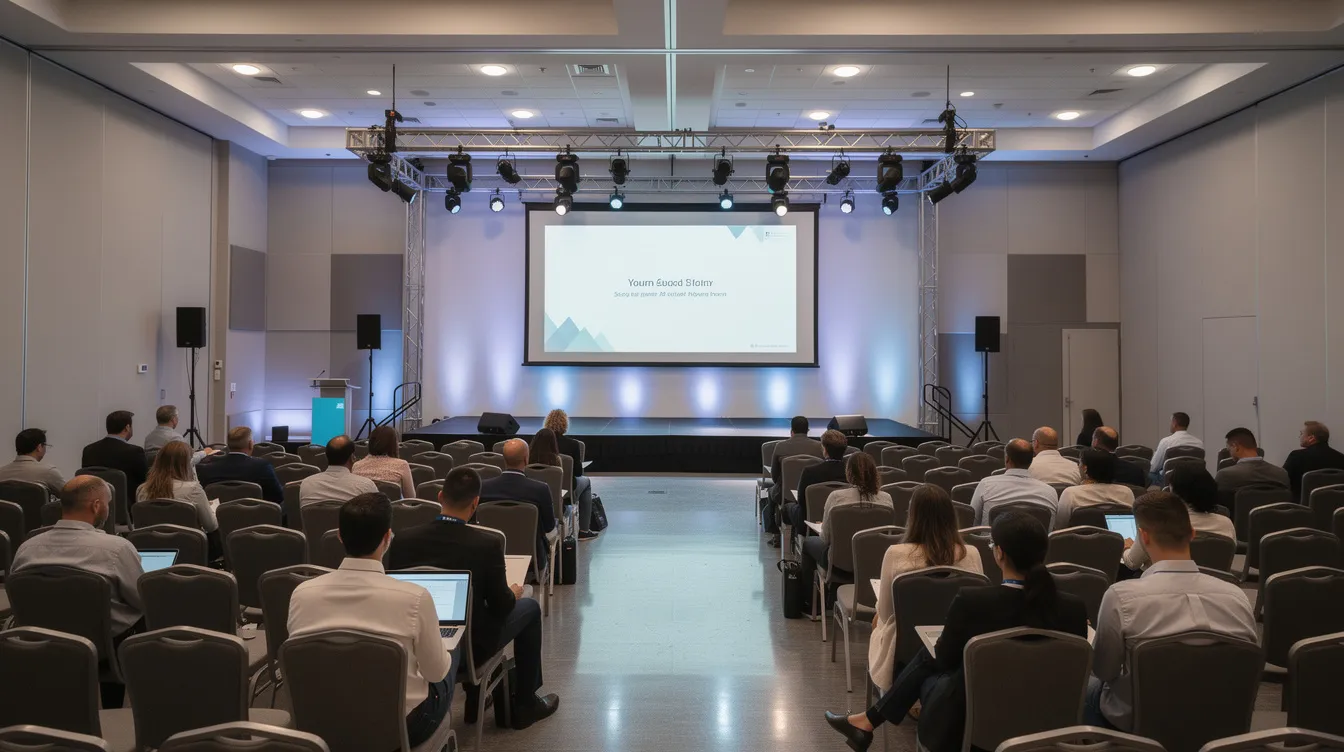
Even a detailed budget should include some flexibility. Set aside 10 to 15 percent for contingency funds to handle the inevitable adjustments that arise during the planning process. A contingency fund protects core program funding during events and covers unexpected costs like staffing changes. Unexpected expenses can arise from last-minute equipment needs, and emergency funds of 15–30 percent of the budget are sometimes appropriate for complex or high-risk productions.
Concrete reasons AV contingencies get used:
Venue changes or room swaps announced a month before the event.
Additional microphones requested as panels grow or formats change.
Extra power needed after final scenic or exhibitor plans are confirmed.
Schedule shifts that add rehearsal blocks, extended hours or overnight labor.
Content changes that require new playback formats or last-minute video support.
Rather than adopting a rigid percentage, work with your AV partner to size contingency around the specific risks in your show. Contingencies can be staged: a portion held internally by the client and a portion built into the AV partner’s planning to cover minor adjustments without triggering change orders. An informed decisions approach to contingency beats guessing every time.
Key Questions Every Event Planner Should Ask About Their AV Budget
A short list of focused questions turns a quote review into a collaborative design conversation rather than a simple price check. Track spending in real time to avoid budget overruns, and use these questions early – three to five months before a big event:
What elements in this scope are non-negotiable for safety and core performance?
What can scale up or down (screen size, fixture count, camera angles) if the budget moves?
Which venue-driven costs (power, rigging, internet, union labor) are still assumptions?
What existing venue systems can we safely and effectively use?
Which decisions in this plan have the biggest impact on labor hours?
What can be simplified without hurting the audience experience or event goals?
What is clearly labeled as optional or alternate, and what impact would cutting it have?
Bring these questions to your AV partner when reviewing any proposal. They help avoid surprise extra costs and ensure your marketing team, leadership and event planner are aligned on what each dollar supports.
Get the Scope and Assumptions in Writing
A clear written scope of work is essential for controlling event production costs and avoiding gaps between what was imagined and what was actually quoted. Marketing can take up a significant portion of the overall event budget, so having clean, separate line items for AV helps multiple vendors and your team stay accountable.
A thorough AV production proposal should spell out:
Specific systems: audio, LED or projection, lighting, cameras, playback and communications.
Crew roles and counts: technicians, stagehands, show caller and any project management.
Setup, rehearsal, show and strike schedule with references to access windows and curfews.
Power assumptions: whether venue power is included, extra charges and any electrical inspections.
Rigging assumptions: points, weights, hardware and any required house riggers.
Venue assumptions: rooms being used, ceiling heights, loading conditions, union status.
Client responsibilities: content delivery deadlines, presenter support, show flow approvals.
Streaming or recording responsibilities: who manages platforms, encoding and archiving.
Explicitly excluded costs: parking, drayage, hotel resort fees or third-party internet charges.
This level of clarity protects both sides and is standard practice for Front Row FX on corporate, conference and nonprofit productions. A good production budget is created by designing the scope around the real budget from the beginning – not by pulling gear off a list until the number fits. When you compare proposals from multiple AV companies, this structure lets you evaluate apples to apples and find the best value.
Next Steps: Turn Your Real Budget Into a Solid AV Plan
Your approved ceiling is a design parameter. When you share it along with event goals, audience priorities and venue details, an experienced AV partner can build a strong, efficient production around it – without creating extra money surprises at the end.
Bring three things to your first conversation with Front Row FX: the approved AV number, your top three audience outcomes, and your current venue or date window. Whether you’re planning a corporate summit, a nonprofit gala, a conference, a school program or a trade show in Minnesota or the Upper Midwest, that’s all we need to start designing.
Tell us the vision. Tell us the real budget. We’ll design the strongest production we can inside it.
Smart AV budgeting is a competitive advantage – especially in cost-sensitive corporate, nonprofit and educational environments heading into 2027. The strongest productions are not built from unlimited budgets. They are built from clear priorities, honest numbers and an AV team that knows how to make every dollar count.