Choosing an Event Production Company in Minnesota: Practical Guide for Corporate & Live Events
Picking the right event production company in Minnesota starts with a question most buyers skip: what does your event actually require? Not what gear you think you need, but what technical systems, crew and planning will make the difference between an event that runs smoothly and one that doesn’t.
This guide walks through the real operational factors that matter when evaluating production partners in Minneapolis, Saint Paul and the broader Upper Midwest – from understanding event complexity to reading proposals, asking the right questions and knowing when integrated production is worth the investment.
Start with Your Event: Type, Scale and Complexity
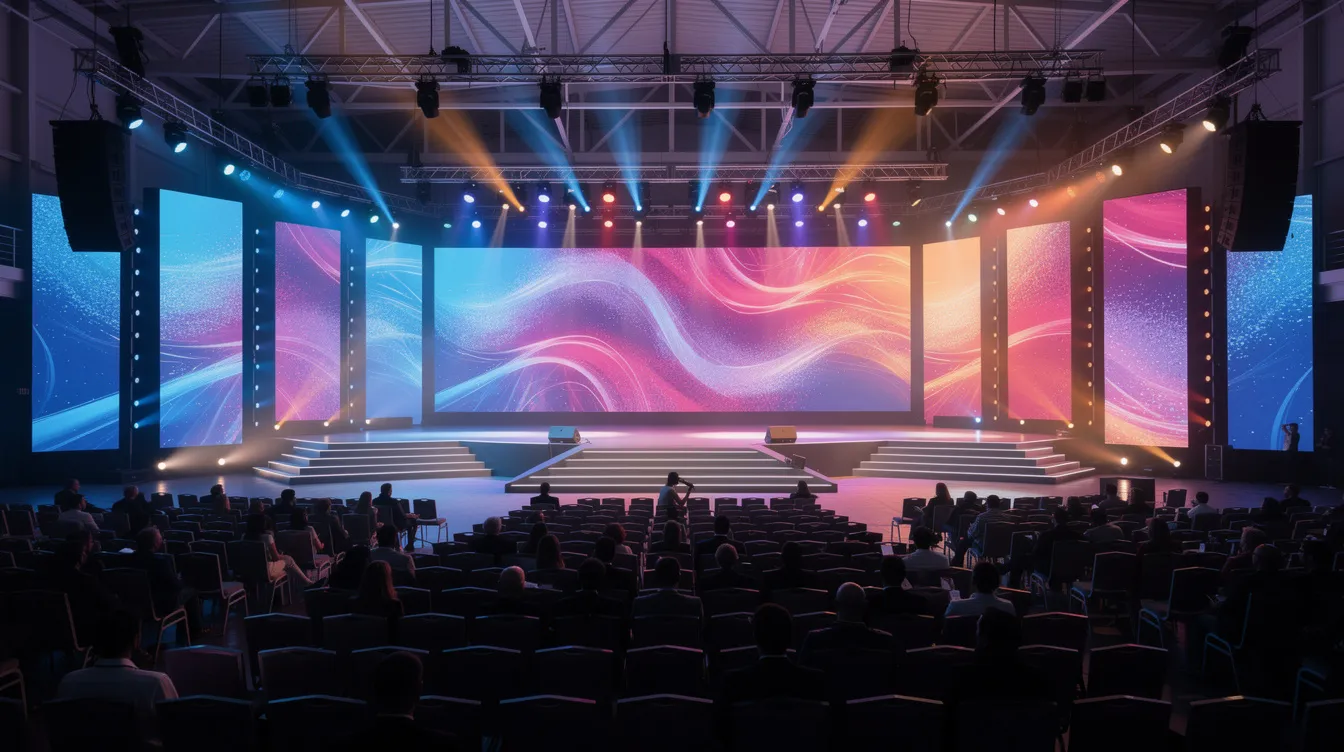
How you pick the right production partner depends almost entirely on what you’re producing. A 150-person sales meeting in a hotel boardroom has different technical demands than an 800-person nonprofit gala or a multi-day conference with breakout sessions across several rooms. Events include corporate meetings, concerts, and galas – and each format carries its own set of production requirements.
The first step is honest scoping. Before you contact any provider, get clear on what your event is, who it’s for and what success looks like.
Small Internal Meetings
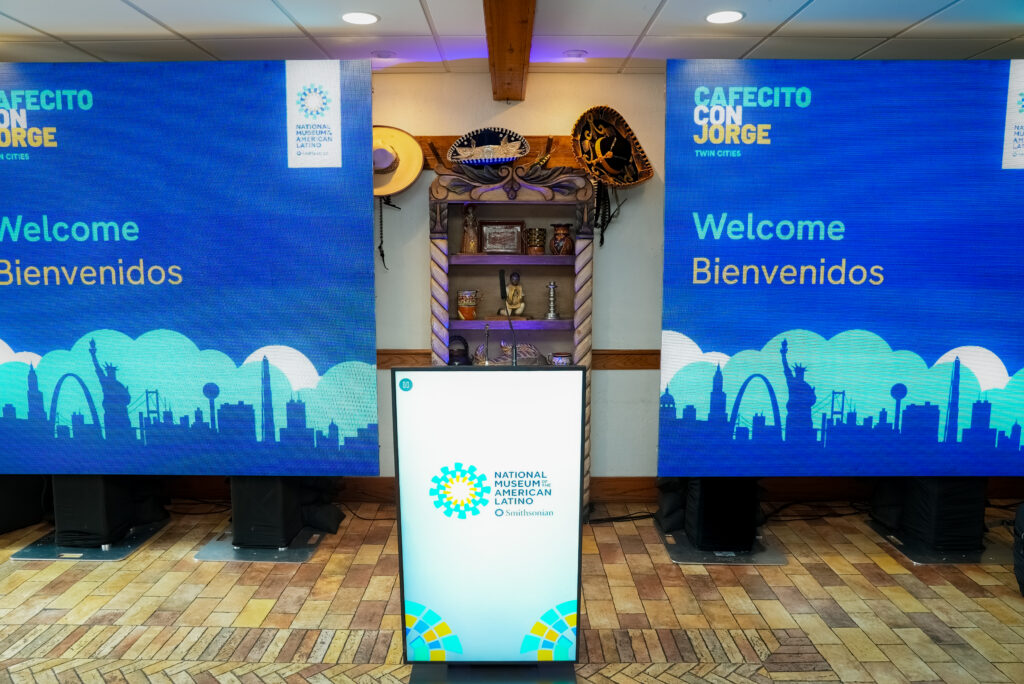
A quarterly business update for 100 people in a hotel meeting room may only need a projector, two wireless microphones and a confidence monitor. There’s no complex show flow, no livestream, no entertainment. In these cases, basic in-house AV or simple equipment rental may be enough. You don’t need a full production team for a straightforward presentation.
Mid-Size Corporate Events and Galas
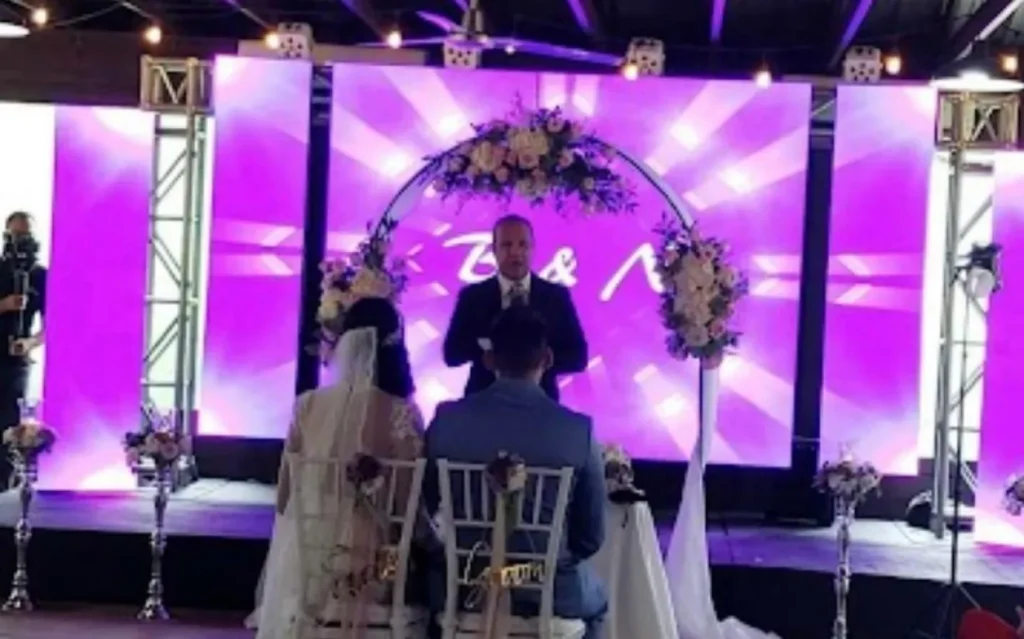
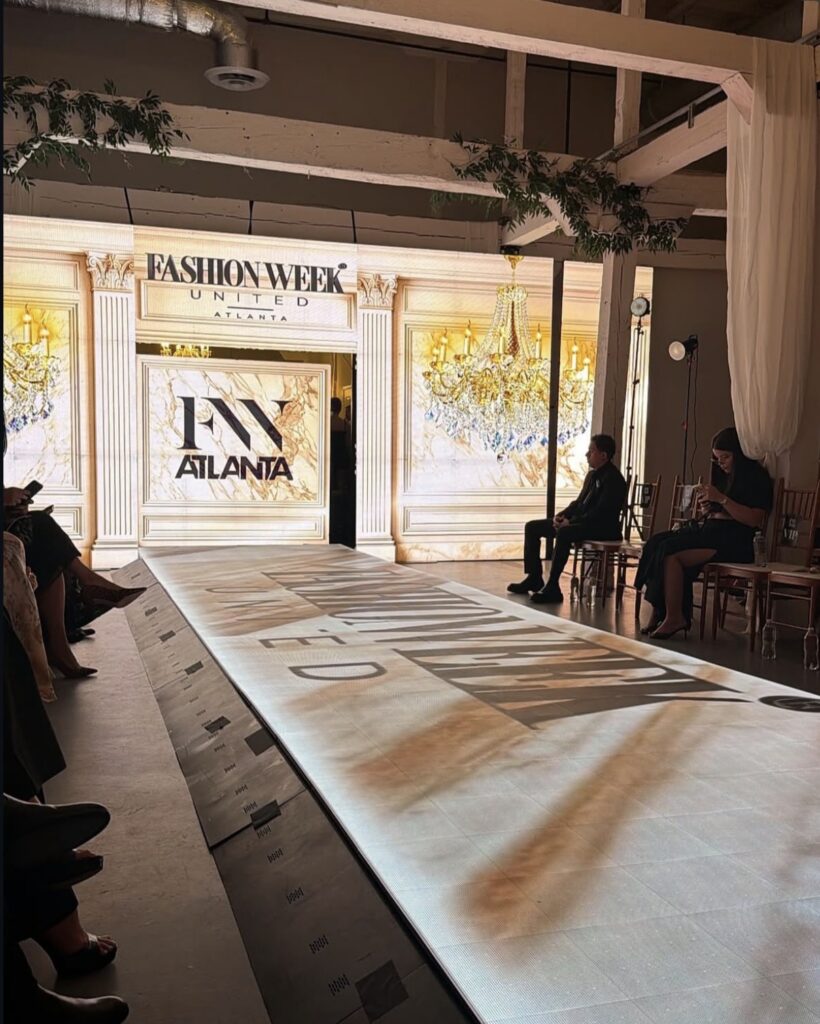
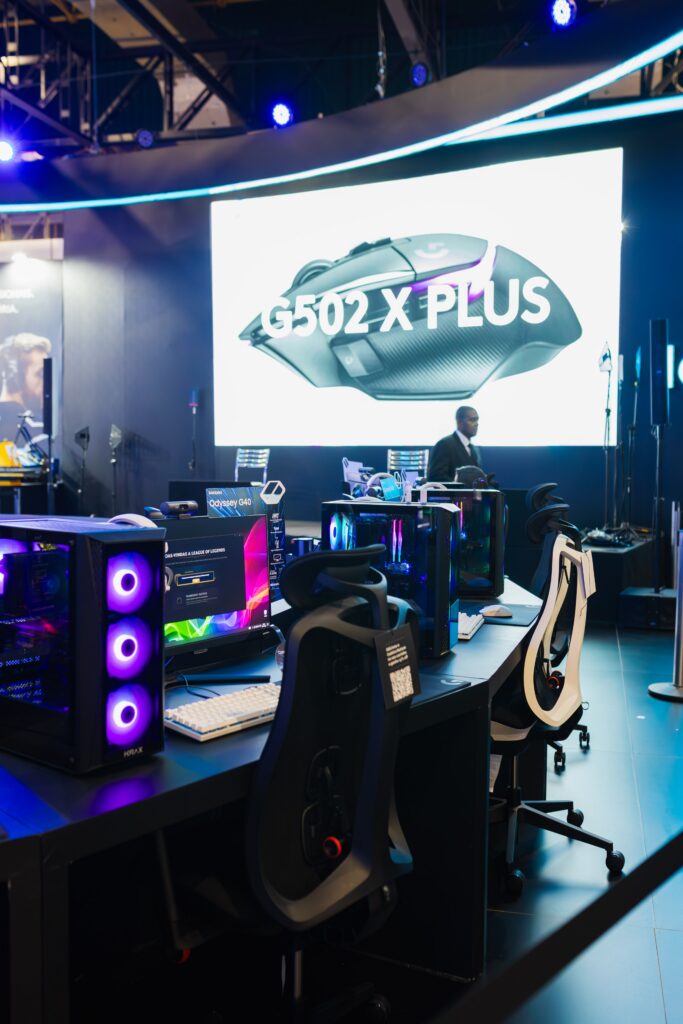
Once you move into the 300–800 person range – think annual conferences, nonprofit fundraisers, corporate galas or brand activations – the technical dependencies start multiplying. You need sound reinforcement that ensures speech intelligibility across the entire room. You need LED video or projection scaled for audience distance. You may need stage lighting, live camera feeds, entertainment support, content playback and possibly hybrid or virtual streaming with secure live-streaming platforms and remote audience integration.
Each of these dependencies adds coordination complexity. Multiple wireless microphones require RF coordination. LED video walls need the right pixel pitch and brightness for the room. Show cues need a caller. Remote participants need a separate signal chain with dedicated crew. This is where an integrated event production company becomes critical.
Large Public Productions
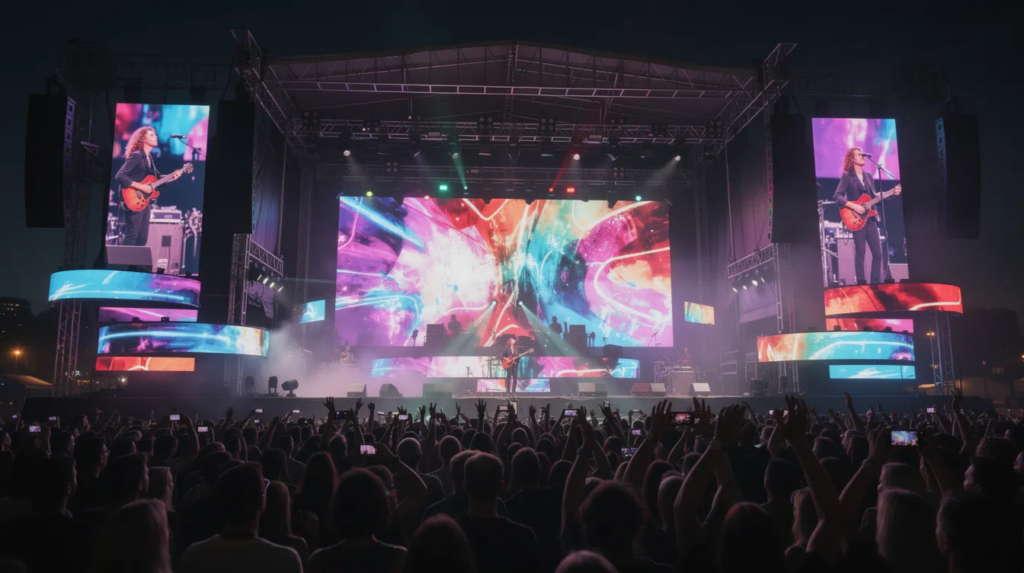
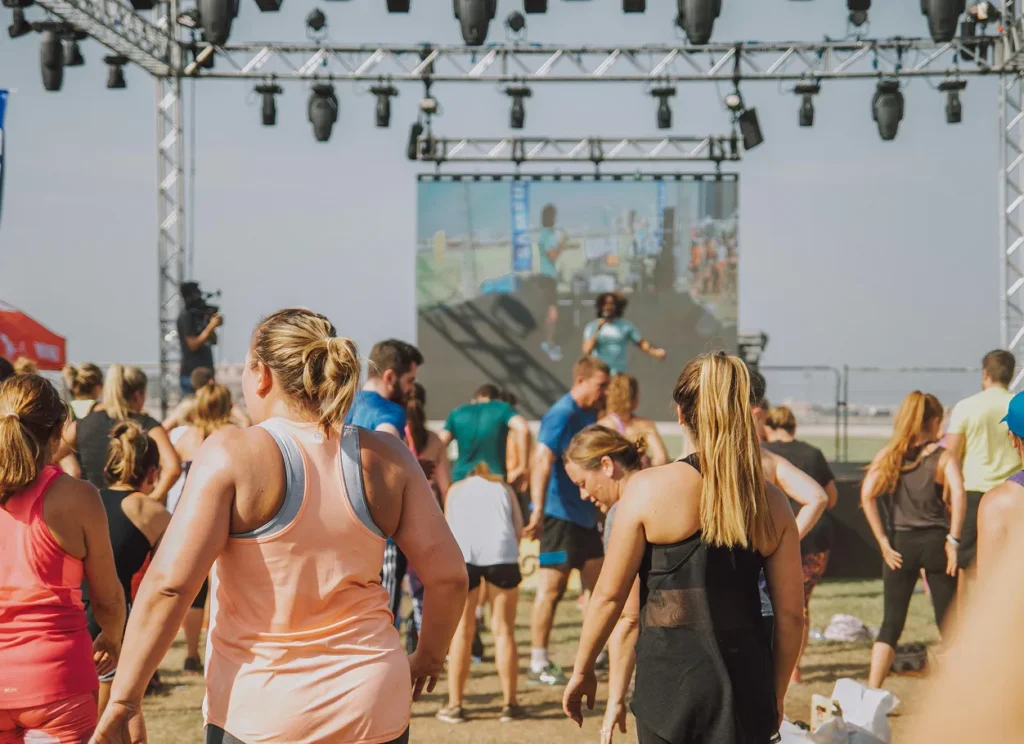
For events with 1,000+ attendees, multiple stages, outdoor setups or touring acts, you’re looking at full-scale production: staging, rigging, power distribution, multi-system integration, crowd safety, backline coordination, trucking logistics and communications infrastructure. In Minnesota – where outdoor events might happen in June sunshine or require January load-ins through snow and freezing conditions – local experience is not a luxury. It’s a practical necessity.
Concrete Minnesota Examples
Consider the range of events that happen across the Twin Cities every month:
-
A two-day corporate training in downtown Minneapolis with a general session in one ballroom, breakouts in adjacent rooms and plenary sessions livestreamed to remote executives. This requires full design, crew and show operation across multiple rooms.
-
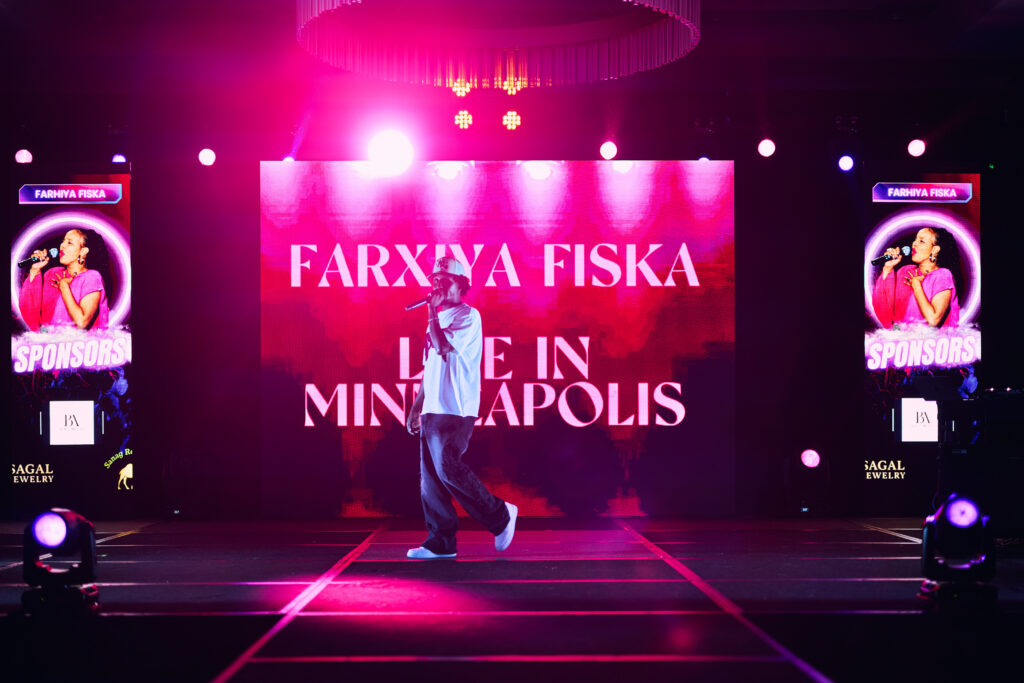
An annual fundraiser gala in Saint Paul with a dinner program, live auction, entertainment, video content, mood lighting and branded staging. The production needs to create emotional connections while supporting fundraising goals.
-
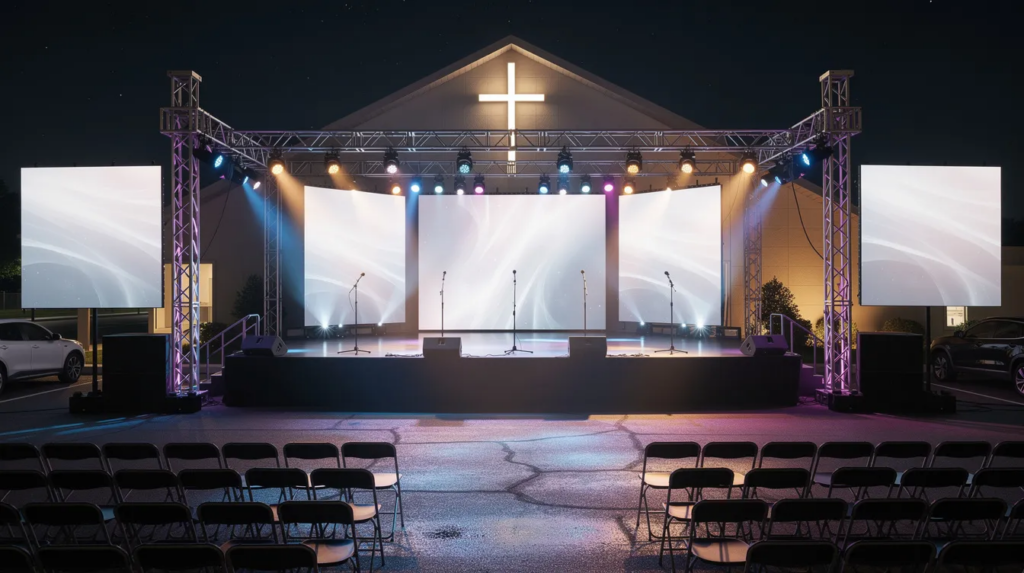
A summer outdoor festival in a Minnesota park with staging, power generation, weather protection and audience flow management.
Define Goals Before You Shop
Defining goals up front is what separates effective event planning from reactive scrambling. Are you optimizing for message clarity to stakeholders? Audience engagement? Brand impact? Fundraising targets? An event unforgettable enough to shape how attendees think about your organization?
These objectives drive every technical decision downstream – from how many cameras you need to whether you invest in intelligent lighting or keep it simple.
Front Row FX works primarily where audiovisual production and show operation are central to success. For a straightforward meeting with basic needs, lighter support may be the right call. But when the audience, the message and the stakes matter, integrated production changes the result.
Event Production Company vs. Equipment Provider: What You’re Really Hiring
Many buyers search “event production company Minnesota” expecting to compare similar vendors. In reality, you’ll find very different business models – from dry-hire rental houses to fully integrated production teams – and the differences have real consequences on show day.
Minnesota is home to several reputable event production companies specializing in corporate events and large-scale gatherings. Minnesota features a robust network of event production companies centered around the Twin Cities metro area. Allied Productions has operated since 1995 and has worked in 48 states and 28 countries providing AV services. Legacy Production Group is based in Minneapolis, Minnesota and specializes in corporate functions and music tours, creating unforgettable experiences for clients. Freestyle Productions has a 25-year history in event services and handles events from circus to corporate. BeEvents creates high-impact experiences for brands nationwide. Event agencies in Minneapolis focus on both corporate and private events, and event agencies across the region focus on creating emotional connections at events.
Understanding where a provider sits on the spectrum helps you hire the right level of support for your project.
Four Models of Event Production Support
|
Model |
What You Get |
What You Don’t Get |
|---|---|---|
|
Equipment Rental Only (Dry Hire) |
Gear delivered – speakers, LED panels, lighting, projectors |
No crew, no system design, no show calling, no on-site troubleshooting |
|
Basic AV Support (Hotel/In-House) |
Standard packages – podium mic, small sound system, basic projector/screen |
Limited customization, often stock gear, may not support LED walls, multi-camera or virtual events |
|
Integrated Audiovisual Production |
Design + technical execution + crew + show operation, including rehearsals, contingency plans and on-site decision-making |
Not a one-size-fits-all package – scoped to each event |
|
Large/Multi-Department Production |
Everything above plus staging vendors, rigging departments, trucking, power distribution, backline, inter-department comms |
Typically needed for multi-stage festivals, touring shows or complex multi-site events |
Event production companies manage the technical and creative execution of gatherings. Event production companies in Minnesota offer audiovisual design, staging, lighting, live streaming, and logistical coordination. Event production companies offer core services including audio-visual setup, lighting design, staging, and live streaming.
Front Row FX operates in the integrated audiovisual production category – focused on complete technical execution for corporate events, live events and selective high-production private events across Minnesota and the Upper Midwest.
What Rental-Only Providers Actually Deliver
A rental house supplies inventory. You get speakers, lighting fixtures, LED panels – possibly delivered to your venue. But rental-only providers usually expect your team or separate freelancers to handle design, setup, operation and teardown. If something goes wrong during the show, there may not be anyone responsible for fixing it.
What In-House AV Typically Covers
Hotel and venue AV teams often provide solid basics: a podium, a few microphones, a projector and screen, standard stage lighting. For a simple presentation to a small audience, this works. But in-house AV is rarely engineered for dynamic lighting cues, multi-camera broadcast, LED video walls, wireless mic coordination across a dozen speakers, or the dual signal chain a hybrid event demands.
What Integrated Production Delivers
An integrated event production partner takes responsibility for the full technical picture: scoping the right systems for your room and audience, specifying equipment, scheduling crew, planning load-in and teardown, managing rehearsals, calling show cues and making real-time decisions when things change.
This is how you create unforgettable experiences – by aligning sound, lighting, LED video, content playback and special effects with the event’s brand, run-of-show and audience journey, not by renting disconnected pieces and hoping they work together.
Choosing the Right Level
The right level of support depends on your risk tolerance, audience expectations and budget. Some events can safely rely on simple AV. High-impact corporate events, mission-critical programs and productions where the audience experience defines business outcomes benefit from a production partner with passion for execution and the creativity to solve problems in real time.
Reputable event production partners align with best practices described by organizations like AVIXA and the Event Safety Alliance – covering everything from signal flow and audio standards to safety protocols.
Local knowledge also matters. A Minnesota-based AV production company understands regional venues, typical power availability, loading dock constraints, winter weather logistics and union versus non-union environments. That understanding directly affects planning and show-day reliability.
Preproduction, Discovery and Venue Walkthroughs
Serious event production starts well before show day. The discovery process is where a production partner learns what matters to your organization and begins translating goals into technical plans.
A structured preproduction conversation should cover:
-
Event objectives and audience profile
-
Session formats, speaker count and entertainment
-
Video content, recording and streaming needs
-
Accessibility considerations
-
Timeline and content deadlines
-
Budget parameters
Audio-visual production includes sound systems, microphones, and video recording equipment – but determining which systems, in what configuration, for which rooms, requires dialogue, not a price list.
Venue walkthroughs in Minneapolis, Saint Paul and greater Minnesota help identify ceiling heights, rigging points, load-in routes, sightlines, power access and emergency exits. Every venue has quirks – freight elevator sizes, floor load limits, natural light that washes out projection, loading docks shared with restaurant deliveries.
A production-oriented company will request or create scaled floor plans, seating layouts and equipment plots. They’ll attend walkthroughs with the venue operations team, caterer and decor partners to coordinate placement of stages, LED walls, scenic elements and camera positions.
Front Row FX routinely uses preproduction and site visits to align technical design with the realities of Minnesota venues and seasonal factors – because an outdoor event in June and a winter gala in January present very different logistical challenges.
Technical Design: LED Video, Sound, Lighting, Staging and Special Effects
Technical design is where ideas become operational plans – and where the difference between a rental price list and a true AV production company becomes most visible.
A production partner translates your vision into systems:
-
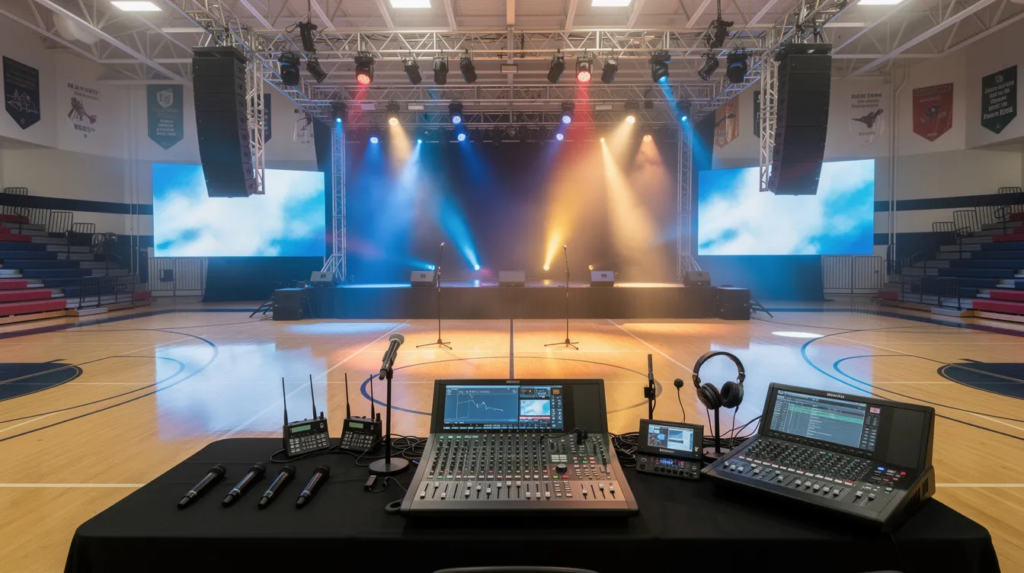
Sound reinforcement sized for the room – coverage without dead spots, appropriate levels for speech intelligibility, delay or fill speakers for deep ballrooms
-
LED video walls specified by pixel pitch (based on viewing distance), brightness (for ambient light conditions), refresh rate (critical when cameras are involved) and modularity for the venue. For reference, the Minnesota State Legislature’s broadcast specifications require 1.25mm pixel pitch, minimum 3840Hz refresh rate and 700 nits brightness for on-camera LED content – a useful benchmark for understanding what professional-grade specifications look like.
-
Lighting that serves multiple functions: speaker visibility, scenic effects, mood transitions and on-camera color temperature
-
Staging and set design involving custom stage construction, scenic backdrops, ADA-compliant access and safety rails
-
Special effects – fog, haze, confetti, LED elements – requiring permits, trained operators and fire marshal compliance
Event production involves building custom stages, backdrops, and physical props tailored to the event theme. Livestreaming infrastructure and multi-camera broadcast setups allow for remote attendance, adding another layer of technical design.
The critical word is integration. All elements – audio, video, lighting, projection, LED walls, comms and special effects – must work together and be operated by a coordinated team. Front Row FX’s core capabilities are deployed as part of a cohesive production design, not as disconnected line items.
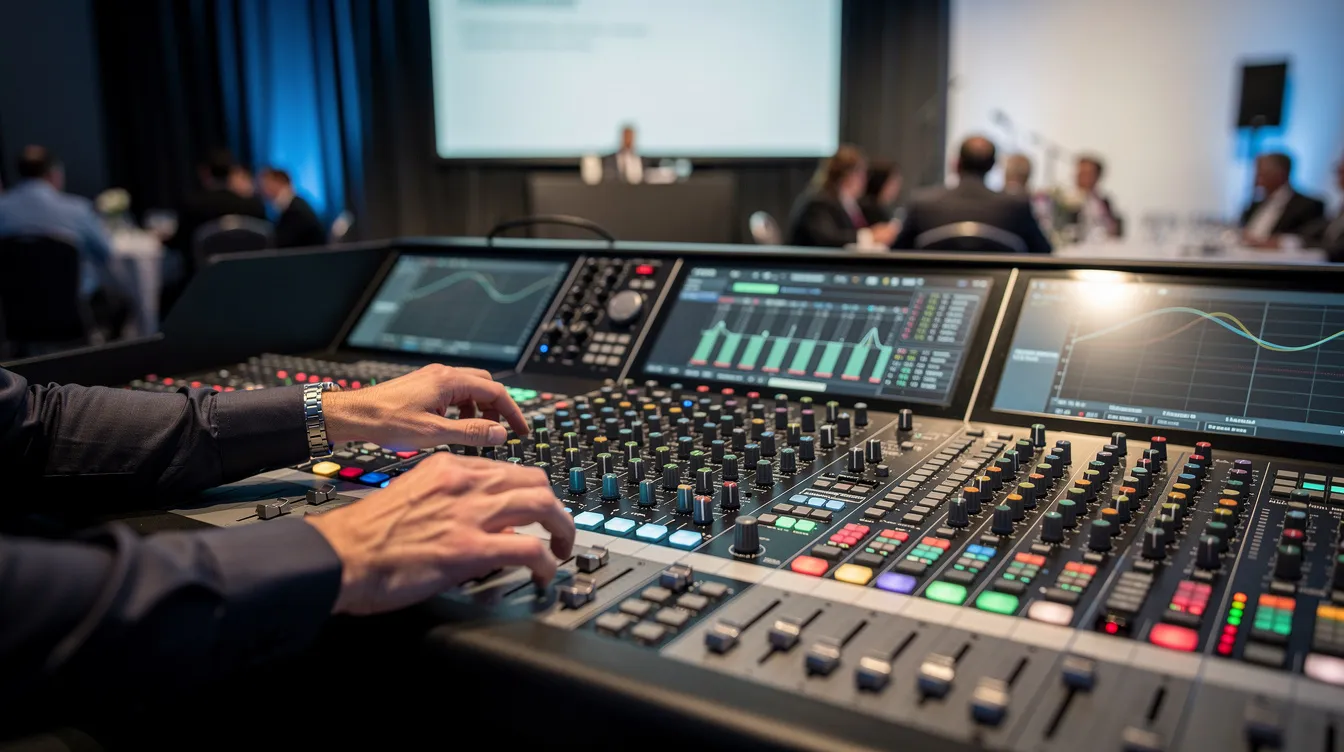
Crews, Operators and Who Runs Your Event on Show Day
For complex corporate events and live productions, the crew is as important as the equipment. They are the people making real-time decisions that keep the event on track.
Event production companies provide technical direction, cue sheets, and overall event management. Typical crew roles include:
-
Audio engineer (FOH) – mixes sound for the room
-
A2 / audio assist – manages wireless mics, monitors, stage audio
-
Video director – calls camera switches for broadcast or screens
-
LED/graphics operator – runs content playback and graphics
-
Camera operators – frame shots for screens or streaming
-
Lighting programmer – executes lighting cues
-
Stage manager / show caller – coordinates technical cues across departments
-
Riggers and stagehands – handle physical setup and safety
The difference between models is stark. A drop-off rental means no operators. Basic tech support might mean one person “on call” handling audio and projection simultaneously. A fully staffed production crew has dedicated operators for each system throughout the event.
Ask who will actually operate sound, lighting, LED walls, cameras and content playback during your event. Ask whether they are regular team members or ad-hoc freelancers sourced the week before.
As AVIXA emphasizes, competent operators and clear roles are central to safe, reliable event execution – especially where elevated platforms, rigging or high-power electrical systems are in use.
Front Row FX aligns crew levels with event complexity, ensuring corporate events and live shows across Minnesota are supported by operators who understand both the technology and the show’s objectives.
Planning, Safety and Logistics: How Professional Production Keeps Events On Track
The best production work is invisible to the audience. Guests experience seamless transitions, clear audio, beautiful lighting and content that appears on screen at exactly the right moment. Behind that experience is an infrastructure of planning, safety protocols and logistical coordination that keeps everything running.
Event production companies handle logistics such as venue coordination and labor planning. As audience size grows or technical systems multiply, these behind-the-scenes functions become as important as the gear onstage. Corporate events, nonprofit fundraisers and brand activations in Minnesota benefit when production partners follow structured planning practices rather than making ad-hoc decisions on show day.
This is where buyers learn what responsible production companies should handle beyond equipment lists.
Production Schedules, Load-In and Teardown Planning
A production schedule maps out every stage of the process:
-
Truck arrival and dock times
-
Crew call times
-
Equipment load-in order and setup milestones
-
Rehearsal windows
-
Doors open
-
Show cues and transitions
-
Teardown sequence and truck-out
Factors specific to Minneapolis and Saint Paul make realistic timing essential. Downtown loading docks are often tight and shared. Freight elevators have weight and size limits. Rush-hour traffic affects crew arrival. Winter weather can delay everything by hours.
Professional AV production companies coordinate schedule details with the venue, event planning team, caterer, decor and entertainment to avoid conflicts on the dock or stage. Ask for a written production schedule before show day, and understand who controls changes when the event timeline shifts.
Front Row FX routinely plans load-ins and load-outs around venue access windows, local ordinances and client needs – reducing overtime surprises and last-minute compromises.
Power, Technical Infrastructure and Safety Standards
Under-planned power can shut down sound systems, LED walls and lighting at the worst possible time. It’s one of the most common and avoidable production failures.
Typical power considerations in Minnesota venues include:
-
Available 20-amp branch circuits and their locations
-
Three-phase power requirements for larger shows
-
Generator needs for outdoor events
-
Cable routing that meets electrical code and prevents trip hazards
-
Ground-fault protection for wet or outdoor environments
Reputable production partners calculate loads, specify appropriate distribution and follow the venue’s electrical rules. The Event Safety Alliance provides guidance on proper power distribution, cable management, emergency egress and weather planning.
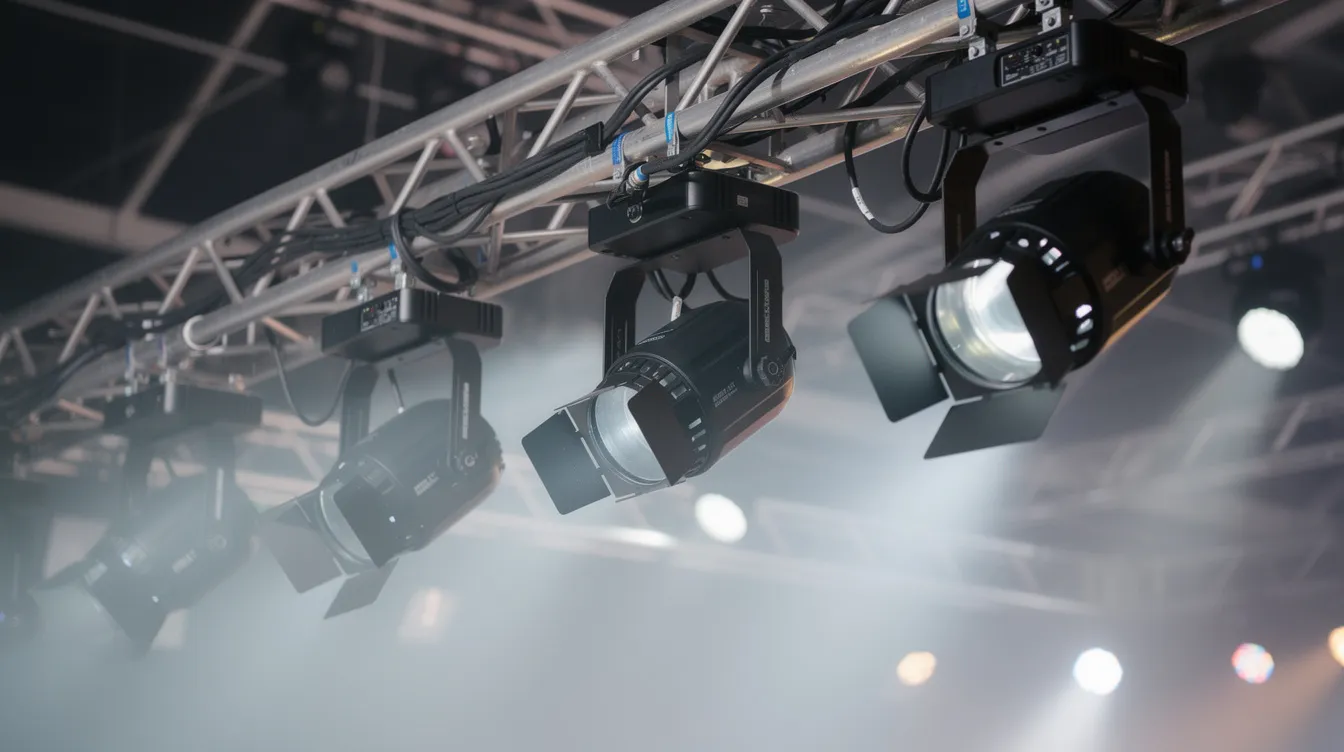
Safe rigging practices matter when hanging lighting, speakers or LED video from truss. Trained riggers, rated hardware and venue-approved rigging points are non-negotiable. Ask how the provider protects guests from trip hazards, cable congestion, excessive loudness levels and strobe lighting issues.
Front Row FX builds safety into its technical planning, working within Minnesota venue policies and industry best practices to protect guests, staff and equipment.
Insurance, Documentation and Venue Coordination
Professional event production companies should carry general liability insurance at levels that meet or exceed typical Minnesota venue requirements. This is not optional – it protects you, your organization and the venue.
What to ask for:
-
Certificates of insurance naming the venue and client as additional insured
-
Confirmation of coverage timelines
-
Detailed proposals with equipment lists and clearly defined responsibilities
-
Emergency contacts
-
Risk assessments or method statements for rigging, special effects or structural work
Direct coordination between the production company and the venue’s operations team matters. Access times, power availability, rigging approvals, fire codes and noise policies all need to be confirmed before load-in day – not discovered during it.
Front Row FX routinely interfaces with venue teams across Minnesota and the Upper Midwest on behalf of clients, freeing planners to focus on content, stakeholders and guest experience instead of technical logistics.
Rehearsals, Testing and Contingency Planning
Rehearsals and technical run-throughs are major predictors of how smooth a live event will feel to the audience. They are not a luxury – they are where problems get found and fixed before anyone is watching.
A good rehearsal block includes:
-
Line checks for all microphones
-
Content playback tests on every screen and LED wall
-
Lighting looks review for each segment
-
Camera framing and switching rehearsal
-
Walk-on and walk-off practice for presenters
-
Timing of key moments against the run-of-show
Integrated audiovisual production teams build rehearsal time into the schedule and advocate for it – especially for executive presentations, product launches and multi-speaker panels.
Contingency planning is equally important: backup microphones, redundant playback systems, spare LED modules, extra cables, plans for speaker changes and weather contingencies for outdoor Minnesota events. Industry data suggests that planning time often increases by 30–50% when hybrid elements are involved, making pre-planning even more critical for virtual events with remote audiences.
Front Row FX approaches rehearsals and backup planning as standard practice, not an add-on, to protect the integrity of corporate events and live productions.
Evaluating Proposals and Choosing the Right Minnesota Event Production Partner
By the time you receive proposals, you should already have discussed goals and basic scope with potential partners. Now the focus shifts to evaluating how each provider plans to deliver.
The goal is not simply to find the lowest price. It’s to identify the partner most likely to deliver reliable results that meet your business and stakeholder expectations. Detailed, transparent proposals usually reflect deeper thinking about your event, while vague lists or one-size-fits-all packages may signal a rental mentality rather than production ownership.
Use this section as a practical checklist when comparing event production partners in Minneapolis and across MN.
Reading the Proposal: Scope, Clarity and Accountability
A strong proposal demonstrates understanding of the whole event – not just equipment categories. Look for:
-
Run-of-show awareness – does the proposal reference your program flow, session formats and audience profile?
-
System justification – does it explain why specific sound, lighting and LED video configurations were chosen for your room and audience, or just list model numbers?
-
Role clarity – does it identify who is responsible for design, load-in, setup, operation, strike, trucking, power coordination and post-event wrap-up?
-
Narrative overview – is there a plain-language summary that non-technical stakeholders can understand alongside the technical line items?
-
Cost transparency – are labor, equipment, transport, insurance, crew, overtime and potential additional costs (permits, power, union fees) clearly broken out?
Front Row FX proposals for audiovisual production projects in Minnesota typically combine technical detail with plain-language explanations of how the design supports the event’s objectives – because the person signing the contract and the person mixing audio are rarely the same person.
Key Questions to Ask Before You Sign
Before you commit to any event production company in Minnesota, ask these questions. The way a provider answers – with specifics, examples and calm clarity – often tells you more than the equipment list.
Understanding and strategy:
-
“How would you describe the primary goal of our event?”
-
“Why did you recommend this specific sound and LED video configuration for our audience and venue?”
Crews and show operation:
-
“Who will be on-site from your team, and what are their roles?”
-
“Who is mixing audio, running graphics, operating lighting and managing cameras?”
-
“Is there a dedicated show caller for technical cues?”
Logistics and safety:
-
“How are load-in and teardown scheduled with the venue?”
-
“How do you plan power distribution – and will it require generators?”
-
“What safety practices do you follow for rigging, cable management and emergency egress?”
Communication and accountability:
-
“Who is our single point of contact, especially for changes during the event?”
-
“How do you handle last-minute changes during the show?”
-
“What is your process if something doesn’t go as planned?”
Documentation:
-
“Can we see a sample production schedule or run-of-show?”
-
“Will you provide certificates of insurance naming us and the venue as additional insured?”
-
“How far in advance do you need final content files and run-of-show?”
The providers who answer these questions with specificity and care are the ones most likely to deliver when it counts.
When Front Row FX Is the Right Fit
Front Row FX offers scalable production solutions for corporate events, conferences, galas, concerts, brand activations, cultural events and technically demanding private events across the Twin Cities and beyond. The company adds the most value when audiovisual production, technical design and coordinated show operation are central to the event’s success.
Front Row FX is not a pickup-style rental house. The company focuses on complete audiovisual production, technical design, systems integration and show operation throughout Minneapolis, Saint Paul, Minnesota, Wisconsin and the Upper Midwest. Production is scaled to match each event – from focused LED video wall or audio support to full multi-system productions with coordinated crews – without forcing a rigid package approach.
If you’re helping people connect with a message, a brand or each other, and the production needs to elevate that connection rather than just project a slide deck, a conversation with Front Row FX is worth your time. Planners, agencies and out-of-state producers should reach out early in the event planning process to discuss goals, learn about venue options and work through preliminary technical concepts.
The earlier you bring a production partner forward in the planning process, the more creative and production value you’ll get from your investment.