How to Compare AV Proposals: Looking Beyond the Lowest Quote
Two audio visual proposals land in your inbox for the same 2027 corporate conference in Minneapolis. Both cover a general session, four breakout rooms, and three event days. Both list projectors, microphones, speakers, and lighting. Yet one comes in $30,000 higher than the other.
What happened?
Why AV proposals that “look the same” can cost very different amounts
The answer almost never comes down to equipment pricing alone. Comparing audiovisual proposals requires evaluating the scope, equipment, and labor behind each line item-and that is where two seemingly identical quotes start to diverge. AV services include audio, video, and lighting solutions, but the depth, quality, and support wrapped around those solutions vary enormously from one event production company to the next.
Labor alone often accounts for 30–50% of total AV production costs on a corporate conference. Add venue-controlled fees, power distribution, rigging, redundancy, and realistic schedule assumptions, and a “low” event production quote can inflate by 20–30% once every real cost is counted. It’s essential to clarify all exclusions and assumptions in AV proposals before you compare headline numbers.
The lowest quote is not always the lowest final production cost.
At Front Row FX, we build transparent, scope-driven proposals for clients across Minnesota, Wisconsin, and Chicago. This article will help you compare AV proposals intelligently-not just on the equipment subtotal-by walking through the areas that matter most:
Scope and what is actually covered
Systems, gear quality, and redundancy
Labor roles, crew size, and schedule assumptions
Load-in, strike, and venue access windows
Power, rigging, internet, and mandatory venue fees
Show operation and technical management
Exclusions and change-order procedures
Start with scope: what is actually included in each AV proposal?
AV proposal comparison starts with scope, not price columns. Before you look at a single dollar figure, identify what each vendor is actually delivering.
“Show scope” means concrete details: which rooms are covered (general session, four breakouts, registration area, overflow), which days and hours AV support is provided (e.g., April 14–16, 2027), and how many attendees the system is designed for (e.g., 600). A project overview should summarize the proposal’s scope in terms any planning team can understand. Understanding client needs is crucial for proposal customization, so the scope section sets the foundation for everything that follows.
Check each AV proposal for:
Which rooms and days are explicitly listed with start and end times.
Whether rehearsal, pre-conference setup, and post-event teardown windows are specified or assumed.
Whether AV support covers only live sessions or also includes registration tech, networking breaks, and presenter prep.
Whether proposal comparisons ensure equivalent deliverables are quoted across vendors-same rooms, same days, same hours.
Compare a vague description like “full AV support for conference” against a detailed, room-by-room, day-by-day scope summary. The vague version may omit an entire rehearsal day or leave strike responsibilities unclear, and that missing day can cost several thousand dollars in added crew and rental fees.
Front Row FX proposals begin with a clear written scope section so clients can see exactly what is and is not covered before looking at numbers.
Systems and gear: similar words, very different audio visual systems
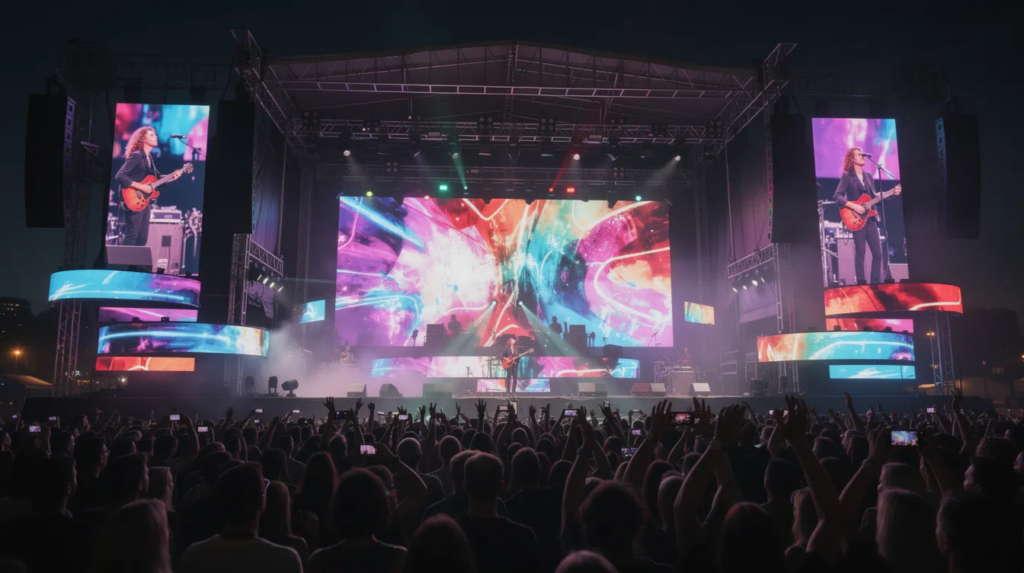
The phrase “sound system” could mean a pair of small powered speakers on sticks or a professional line array engineered for a 600-seat ballroom. “LED wall” might refer to a high-resolution, high-brightness LED video wall or a basic panel configuration that washes out under ambient light. “Lighting package” can range from simple wash fixtures to intelligent moving lights with specials and effects. Equipment quality impacts reliability and overall performance during events, so reading past the label matters.
When you review an itemized equipment list, look for:
Quantities and specifications for every item-not just category names. LED video walls are a common AV equipment type, but pixel pitch, brightness, and panel size determine whether the audience can actually read the content on screens from the back of the room.
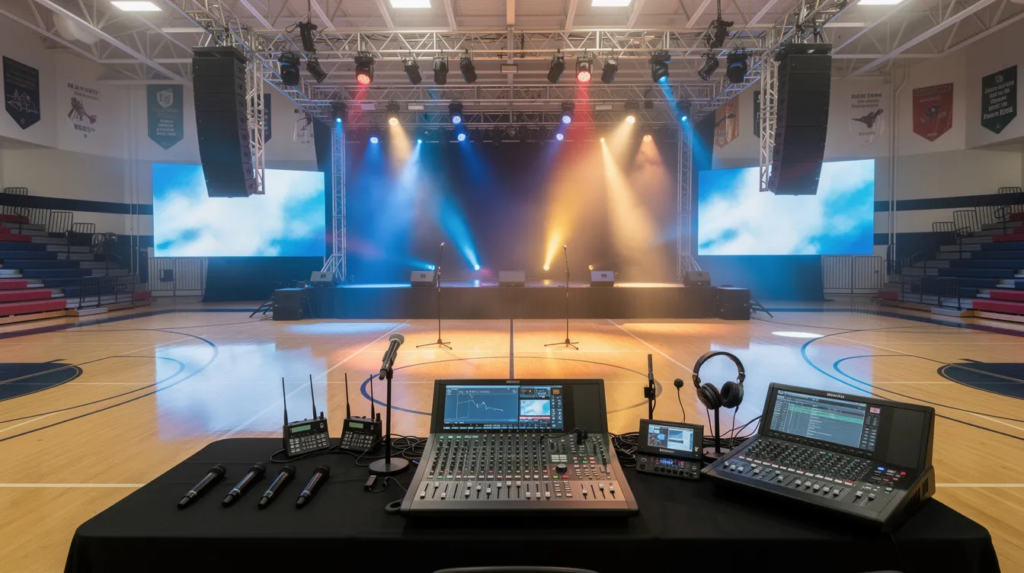
Professional audio systems are essential for live events. Confirm whether the proposal includes line arrays sized for the room or generic speakers that may not deliver even coverage.
AV equipment rentals include projectors and microphones, but how many wireless channels, what frequency coordination, and what backup inventory?
Lighting design enhances the atmosphere of events. Check whether the proposal specifies wash, spot, and effect fixtures or just “lighting.”
Whether redundancy is included-backup laptops, spare microphones, extra LED panels, secondary playback paths-and how that affects both reliability and price.
Itemized equipment should be organized by room and system so you can spot gaps. List equipment organized by room for client clarity instead of a single lump-sum gear total.
A useful descriptive comparison: Proposal A offers a single projector connected to a laptop with no backup, minimal breakout speakers, and basic wash lighting. Proposal B specifies an LED wall for the main session plus a backup media server, spare wireless mics, line array sound, and a full lighting rig including specials. Proposal B costs more-but it is solving a different problem at a different level of reliability.
Front Row FX designs systems around room size, sightlines, and show content-not just the lowest-cost gear list-so our line items may differ from “cheapest possible” quotes.
Labor, crew size, and schedule assumptions
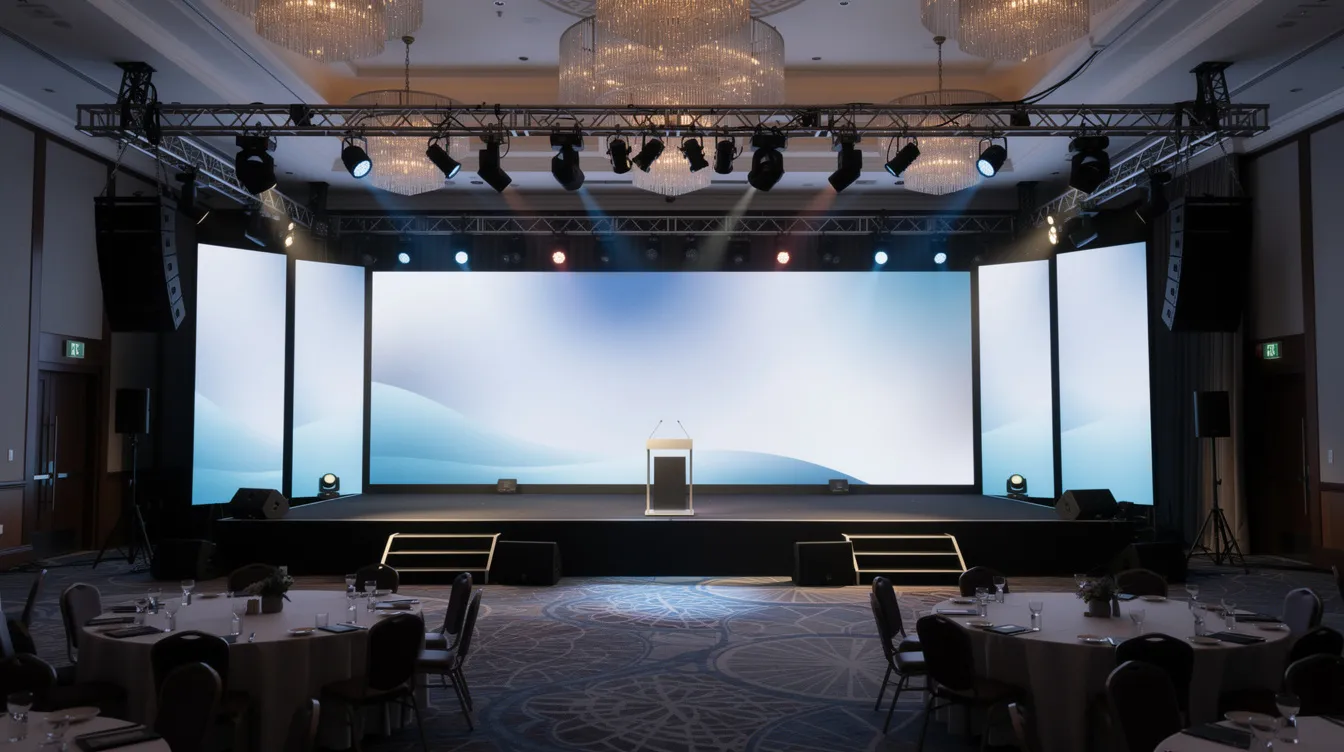
Crew assumptions often create the biggest difference between an event AV proposal and the final invoice. Labor hours for technical staffing should cover every phase of the event-load-in, rehearsal, show days, and strike-yet many teams discover that the quote they accepted only budgeted labor for show hours.
Walk through these questions with each vendor:
How many technicians are on site for general session and breakouts? Are there separate audio, video, and lighting operators, or is one person doing everything across three rooms?
What days and hours are budgeted for load-in, rehearsals, show days, and strike? Published convention-center rates for technical operators can run $85–$100/hr straight time and $127–$147/hr overtime, so a few unplanned overtime hours add up fast.
Include a separate section for labor and installation costs in every proposal you evaluate. If labor is buried inside equipment line items, you cannot identify where schedule changes will hit the budget.
How are overtime triggers, early-morning call times, and late-night strikes handled? If not clearly assumed in the quote, they become surprise overages.
Request a simple labor schedule overview-a day-by-day crew matrix for your event-from each vendor. Vendor experience and accountability are crucial for successful event execution, and a company that can show you exactly who is on site, when, and in what role demonstrates both.
Front Row FX proposals show labor as its own section with clear roles (A1, V1, LD, stage manager, LED techs) and realistic call times so planners can budget with confidence.
Load-in, strike, and venue access: the hidden cost drivers
A proposal built around a four-hour load-in will cost less on paper than one based on the venue’s actual access windows and freight elevator limitations. The difference shows up on the final invoice.
Know your exact room access times from the venue contract. A Minneapolis hotel ballroom that only opens at 6:00 a.m. on event day forces a compressed, high-pressure setup. A venue that allows load-in the afternoon before may reduce overtime and risk significantly.
Union or in-house labor requirements in hotels and convention centers affect AV production costs. Many venues require house riggers, electricians, or stagehands at premium rates with minimums. If your AV vendor’s proposal doesn’t account for these, the gap lands on your budget.
Multi-day load-ins for complex LED video walls, rigging, and lighting deliver safer, higher-quality builds than same-day quick setups-but they require additional crew days and rental costs that should be visible in the quote.
Technical execution and reliability are prioritized in evaluating AV vendors, and load-in planning is where that reliability starts. Front Row FX coordinates with venues across Minnesota, Wisconsin, and Chicago to align load-in and strike plans with real building access so labor assumptions in our proposals reflect what the job actually requires.
Venue power, rigging, internet, and mandatory fees
Many event production quotes do not include venue-controlled costs, and that omission can distort any AV proposal comparison. Pricing transparency necessitates a detailed line-item breakdown of costs-including who is responsible for each venue charge.
Power: confirm whether electrical distribution, tie-ins, and dedicated power drops are included in the AV proposal or charged separately by the venue. A lighting rig or LED wall requiring 200 amps of three-phase power can cost thousands from the venue’s electrical contractor.
Rigging: check whether rigging plots, rigging hardware, motors, and certified rigger labor are included, or whether the hotel’s in-house team handles them at their own rates.
Internet: show-critical wired internet for streaming, presenter connectivity, and production control is often a separate venue line item. Do not assume it is free or included.
Venue fees: patch fees, stagehand minimums, dock fees, union fees, and service charges may never appear on the AV proposal but will appear on the venue invoice.
Proposals should include a clear pricing summary with subtotals and totals that distinguish vendor costs from venue costs. Ask each AV vendor to specify which venue-controlled costs are included, estimated, or excluded-and require separate line items.
Front Row FX typically calls out known venue fees or assumptions so corporate event AV buyers can see a truer “all-in” expectation before signing.
Show operation and technical management: who is actually running the show?
Some AV production costs are about brains, not boxes. Stage management, graphics operation, comms, and cue calling are invisible in a gear list but define whether the show runs smoothly or stumbles through every transition.
There is a meaningful difference between “equipment-only” quotes and professional AV proposals that include a show caller, stage manager, and dedicated operators. The first delivers hardware; the second delivers an audio visual experience.
A technical director or production manager coordinates the run-of-show, rehearsals, and live changes with the client team. Without this role, many teams find themselves managing AV logistics they did not plan for.
Graphics ops, playback ops, and camera ops add value versus asking presenters to manage their own slides from stage. Post-event support should also be part of the AV proposal assessment-who handles file backups, session recordings, or equipment removal after the last attendee leaves?
Consider a two-hour awards gala with a live band and video rolls. That show needs a caller, graphics op, and audio engineer working together to run signal, lighting cues, and playback. Compare that against a vendor offering “just a PA system and projector”-the scope of support is not equivalent.
Front Row FX proposals spell out show operation roles (TD, show caller, graphics op, A1, V1, LD) when we are responsible for full show execution.
Redundancy, backups, and risk management in professional AV proposals
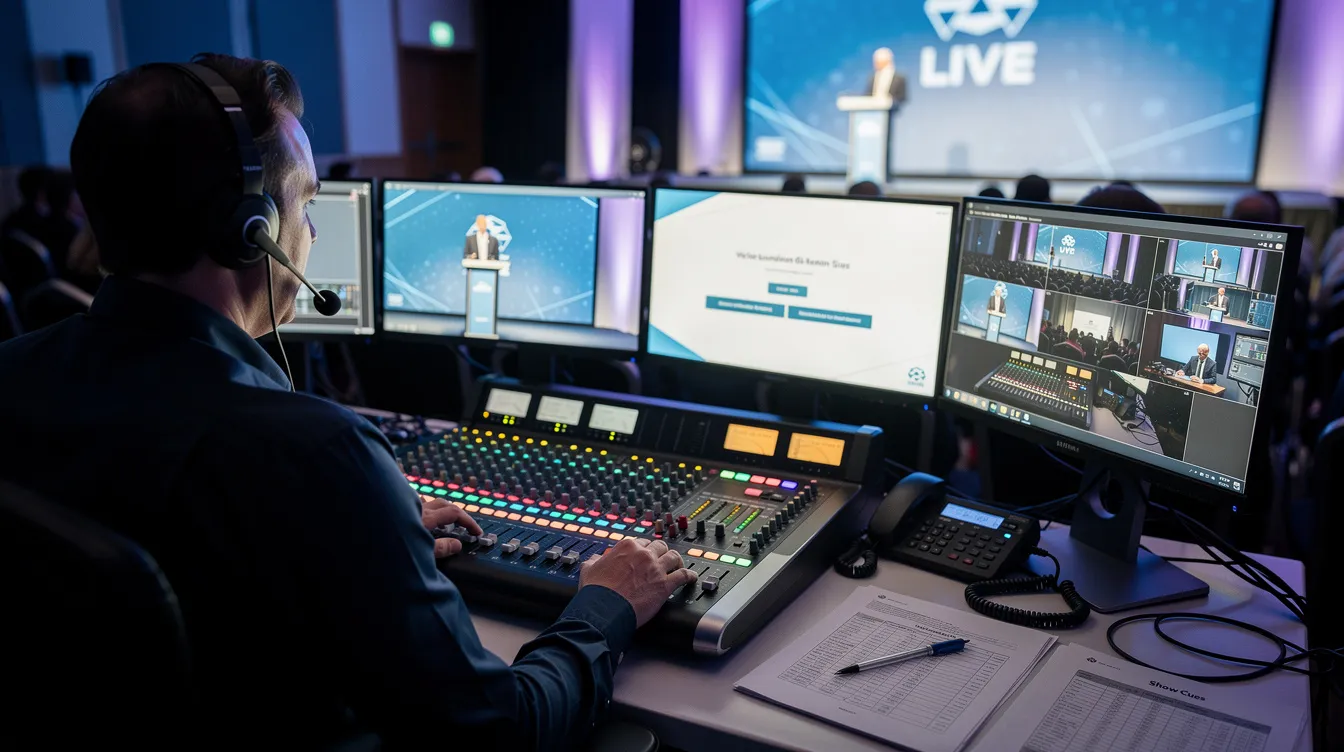
Professional AV proposals often include redundancy-backup mics, playback machines, spare LED panels, secondary signal paths-that less expensive quotes may omit entirely. Evaluating AV proposals includes checking for backup systems and redundancy because these are the safety nets that protect your event when something fails.
Mission-critical corporate event AV for AGMs, investor days, and product launches usually requires backups to protect against mid-show technical failure. A single point of failure in video playback or wireless audio can derail an entire session.
Redundancy requires extra equipment and labor to manage failover, and that legitimately increases AV proposal pricing. A quote with zero backup inventory and a quote with thoughtful failover design are not equivalent offers.
Ask each vendor directly: “What happens if a projector, playback machine, or wireless mic fails mid-show?” The answer reveals whether you are buying a contingency plan or just hoping nothing breaks.
Identifying performance metrics is vital for verifying completed AV installations and ensuring the redundancy you paid for actually works. Front Row FX practices scope-appropriate redundancy for key systems and explicitly lists major backup strategies in our proposals when included.
What is explicitly excluded, and how change orders will be handled
Exclusions and change-order language often explain why a “low” event production quote grows after contract signing. Reviews of AV proposals should assess scalability and future growth potential-if your event expands or shifts, the proposal should tell you what that will cost.
Common exclusions to watch for: scenic and staging, décor lighting, session recording, last-minute breakout rooms, additional wireless mics, and streaming services.
A written change-order process matters: who can approve changes, what document is provided, and how pricing is calculated (rate cards, overtime multipliers, minimum call times).
Timeline shifts-an added rehearsal day, extended show hours-trigger labor changes and additional AV production costs that should be anticipated, not discovered.
Include terms and conditions to prevent disputes. Clear contract language protects both sides.
Include a signature line for client acceptance in proposals, with electronic signatures or digital signatures where the workflow supports them, so approvals are tracked and documented.
Compare whether each audiovisual proposal includes an explicit list of exclusions and whether it defines how scope changes are priced. Front Row FX proposals clearly state both inclusions and exclusions, plus straightforward change-order procedures, to keep total costs predictable.
Reading and comparing AV proposal templates and formats
Different AV vendors use very different AV proposal template structures, making side-by-side comparison harder than it should be. Many teams try to compare a slick PDF against a spreadsheet against a narrative document and struggle to identify where the real differences are.
Normalizing AV proposals involves reorganizing line items into standardized categories. Extract comparable sections from every proposal: scope, itemized equipment, labor, venue-dependent costs, show operation, and exclusions.
Ask vendors for clarification or a summary page that aligns with your internal comparison format. A structured scorecard can help objectively compare vendor proposals based on key criteria.
Room-by-room and system-by-system organization (e.g., “Main Ballroom – Audio,” “Breakout A – Projection”) gives corporate event AV buyers clarity that a single lump-sum number never can.
A professional cover page enhances first impressions. Include a cover page with company name and client information, and include the client’s logo in the proposal header when creating proposals for specific clients.
Customizing proposals can streamline future project submissions. Proposal templates should be updated as services evolve, and vendors should create unique templates for different industries and clients. Customize the proposal tone based on the client’s industry-a nonprofit gala and a tech product launch call for different framing.
Proposal automation software generates proposals with less manual work. Tools like QuoteAV generate branded proposals from quote data with one click, and most platforms cover proposal generation, sending, and tracking. This kind of proposal automation software improves speed, accuracy, and consistency across the sales and proposal creation process, helping reduce errors and helping teams create proposals from scratch more efficiently. It also helps track engagement and collect electronic signatures during approvals.
Front Row FX organizes professional proposals so non-technical stakeholders can recognize rooms, sessions, and outcomes-focus on clarity and completeness rather than document length or visual design alone.
How to run a fair AV vendor comparison process
The goal is not to choose the highest or lowest number. It is to identify the best-fit partner at the best total value for your event. A fair process makes that possible.
Step 1: Create a written baseline scope-date, rooms, audience size, key show elements-and send the same brief to all AV vendors. This ensures every company is quoting the same job.
Step 2: Ask each vendor to confirm assumptions around labor schedule, power, rigging, and internet in writing. Do not let critical assumptions stay verbal.
Step 3: Use a simple internal comparison grid with rows for scope coverage, gear level, labor, venue costs, redundancy, and exclusions. This is the control tool that keeps your review consistent.
Step 4: Hold a short review call with your top two vendors to walk through assumptions and discuss “what if” questions-what happens if you extend by an hour, add a breakout, or lose early access to the venue.
This process helps reveal why one event production quote might be meaningfully more complete than another, even if the equipment subtotals look similar. Front Row FX is comfortable walking through line items and assumptions collaboratively so agencies and planners can make an informed choice with full confidence in the billing they approve.

Why many clients choose scope-driven partners like Front Row FX
The central theme is simple: understanding what is behind the numbers in an AV proposal comparison is the difference between money well spent and money lost to surprises.
Scope clarity, systems design, labor assumptions, venue-related costs, redundancy, and change-order transparency are the pillars of a real comparison-not headline totals.
The “cheapest” quote can become the most expensive once missing labor, venue fees, and last-minute changes are added. Quality and consistency in delivery matter as much as the initial pricing.
Front Row FX is a regional partner in Minnesota, Wisconsin, and the Upper Midwest committed to clear assumptions, complete audiovisual production, and honest AV production costs. We are built for businesses, agencies, and organizations that value technology, solutions, and a commitment to success over a race to the bottom on price.
If you have an upcoming event and proposals already in hand, contact Front Row FX. Send us your current event AV proposal or RFP details and we will help you interpret assumptions, identify what may be missing, and build a transparent, comparable audiovisual proposal that reflects what your event actually needs.