How to Produce a High-Impact Corporate Event Without Increasing the AV Budget
Most corporate event planners already know the feeling: production costs creep upward, but the approved budget stays flat. The instinct is to start deleting line items. That approach usually creates problems that cost more to fix than they saved.
The real opportunity is not spending less. It is making the same corporate event budget work harder by redirecting spend toward what attendees actually hear, see, understand and experience.
Answer First: How to Get More Impact From the Same Corporate Event Budget
A corporate event budget should reflect desired outcomes, not just a list of equipment. When you prioritize attendee experience in budget allocation, you stop treating every AV line item as equally important. Instead, you move dollars away from invisible complexity and toward systems that directly contribute to audience impact: audio coverage, content visibility, lighting and show operation.
Same budget. Better decisions. Stronger production.
That is the philosophy Front Row FX operates with across Minnesota, Wisconsin and the Upper Midwest. Altering budget allocations can be based on prioritizing attendee experience rather than simply inflating or deflating the total number.
Here is a concrete example. A 300-person sales kickoff in Minneapolis kept its total corporate event production budget flat year over year. The team reallocated funds away from duplicate side screens and decorative scenic into a properly sized LED wall, focused stage lighting and a dedicated show caller. Post event surveys showed content clarity scores doubled compared to the prior year. No new dollars. Just better decisions about where existing dollars went.
This article walks through specific, practical ways to redesign the AV plan before cutting, grounded in real event planning and event management trade-offs.
Start With Clear Objectives and a Realistic Event Budget Framework
Every strong event budget starts with clear objectives, not with line-item cuts. Planning a corporate event budget requires a structured approach, and that structure begins with defining what success looks like before anyone opens a pricing spreadsheet. Clear measurable goals should be established before allocating budget.
Define three to five measurable goals for your corporate event. Examples: “launch new product line to 250 partners with 90% recall on key features,” or “train 150 managers on new process by Q3 2026.” These goals shape every subsequent decision. Allocating funds based on defined core objectives is crucial in event planning because objectives determine the event type, whether that is an internal meeting, a conference, a product launch or an awards gala.
Map those objectives to audience-facing systems. What must attendees hear clearly? What visual elements need to be readable from the back row? What must people understand and take away? A strategic budget connects financial planning with event goals by answering these questions before assigning dollar amounts.
Budgets should categorize expenses into clear manageable categories. A common budget structure recommends 35% to 45% for venue and catering, while 10% to 15% of the total budget should be allocated for marketing and branding. Categories for budgeting should include venue, catering, AV and production, and staffing. Within these, separate fixed costs (venue rental, core AV minimums, base crew), variable costs (extra breakout sessions, additional screens, crew hours scaling with attendee count) and contingency. A contingency fund of 10% to 20% should be set aside for unexpected costs as a safety net against surprises.
A corporate event budget should include venue costs, technology expenses, catering costs that reflect attendee needs and preferences, staffing costs, and marketing expenses. Event success metrics should be defined before expenditures. For reference, sample budgets help structure event planning effectively: an in-person seminar for 100 attendees may cost around $14,300, while a hybrid event budget can reach approximately $27,330 for 150 in-person attendees. A detailed budget should include visible and operational expenses, because many budgets overlook essential operational details that surface later as cost overruns.
This framework helps your team decide where the current budget should work harder. It is not a reason to automatically demand a larger budget.
Protect What the Audience Actually Experiences: Audio, Visibility, Flow
Certain elements form the non-negotiable layer of a corporate event production budget. These are the core elements that define whether your event feels like a professional event or a disorganized meeting.
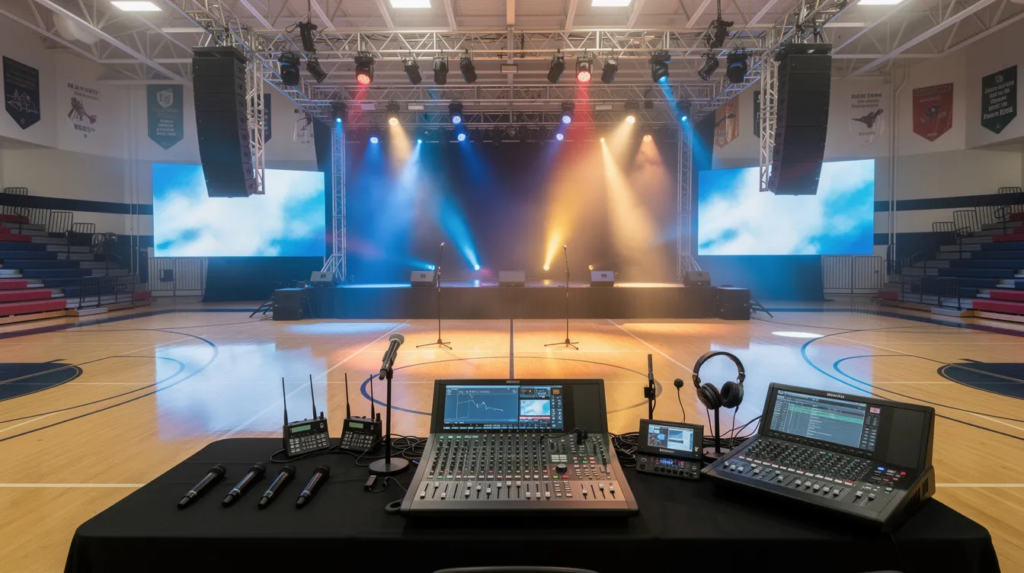
Audio clarity and speech intelligibility should almost never be reduced. If attendees cannot hear a keynote speaker or panel discussion, no amount of scenic design compensates. Speaker coverage, wireless microphones and professional mixing are essential requirements.
Content visibility matters at every seat. Screen size, LED versus projection, sightlines and ambient light control determine whether the back row can read slides and see presenters. Technology can enhance events without draining budgets when the right display system matches the room.
Stage lighting is a high-ROI component. Presenters should be well lit, faces visible on cameras, and brand identity readable. Fixture placement and intention matter more than fixture count.
Show operation and transitions – walk-on music, playback, smooth handoffs between segments – shape the guest experience. These are not just behind the scenes details. They are part of what attendees feel.
Consider two events, each with a $60,000 corporate event AV budget. Event A cuts audio coverage and removes the show caller but keeps heavy scenic. Event B preserves full audio, enhances lighting and keeps show calling, but trims scenic and eliminates duplicate side screens. Event B consistently earns higher attendee satisfaction on clarity and professionalism.
Redesign Before Cutting: Make the Production Smarter, Not Smaller
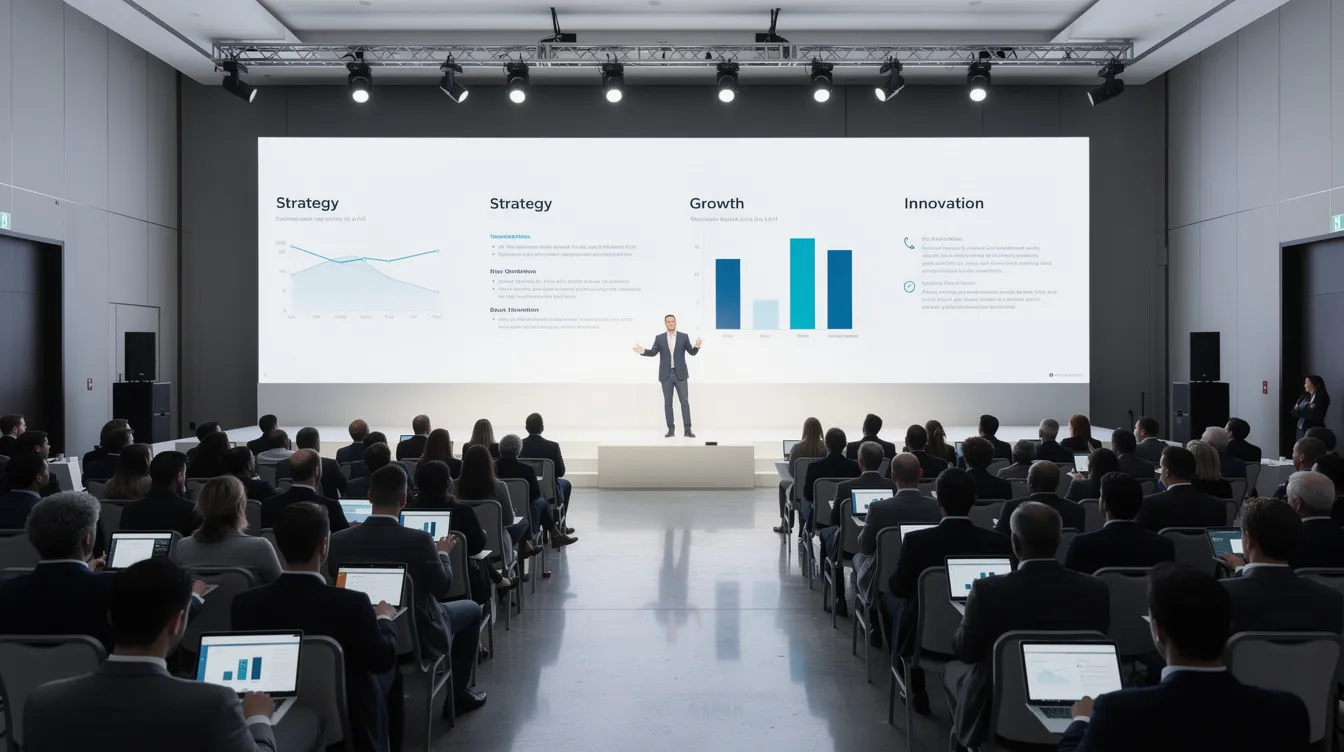
The central mindset for managing corporate AV costs is redesign before cutting. For every line item, ask: what problem was this element solving? Can the same objective be accomplished differently?
Concrete alternatives exist for most high-cost items. A smaller but better-placed LED video wall with projection flanks can replace an oversized LED wall. Simplified stage design using digital signage and digital scenic content on LED or projection can replace custom-fabricated physical scenic, saving on trucking, storage and installation time. Adjusting screen arrangement to serve primary sightlines rather than duplicating content across many displays redirects money toward what delivers most value.
Consolidating multiple functions into a single multi-use system is one of the most effective moves. One LED canvas can support branding, presentations, speaker identification, sponsors, awards and ambient content throughout the day. Over-speccing production elements wastes budget on unseen details, while focused, right-sized systems deliver better results.
The objective is event cost optimization, not stripping the production to the point where it feels off-brand. Focusing only on the lowest cost can compromise quality. Make the production smarter, not simply smaller.
Audio First: Why Sound Quality Should Anchor Your Corporate Event AV Budget
If attendees cannot clearly hear or understand content, the entire corporate event budget underperforms. Audio is the one system where failure is immediately obvious to every person in the room.
Speech intelligibility depends on coverage for all seats, avoiding echo and acoustic hotspots, appropriate speaker placement and balancing music versus voice. Matching PA size and configuration to the room avoids both underpowering and overspending. Larger audio systems are not automatically better.
Wireless microphone strategy matters. A three-to-five person panel needs one mic per panelist plus spares. Keynotes need at least two systems: a lavalier and a handheld backup. Frequency coordination prevents interference. Mic reliability deserves protection in the budget.
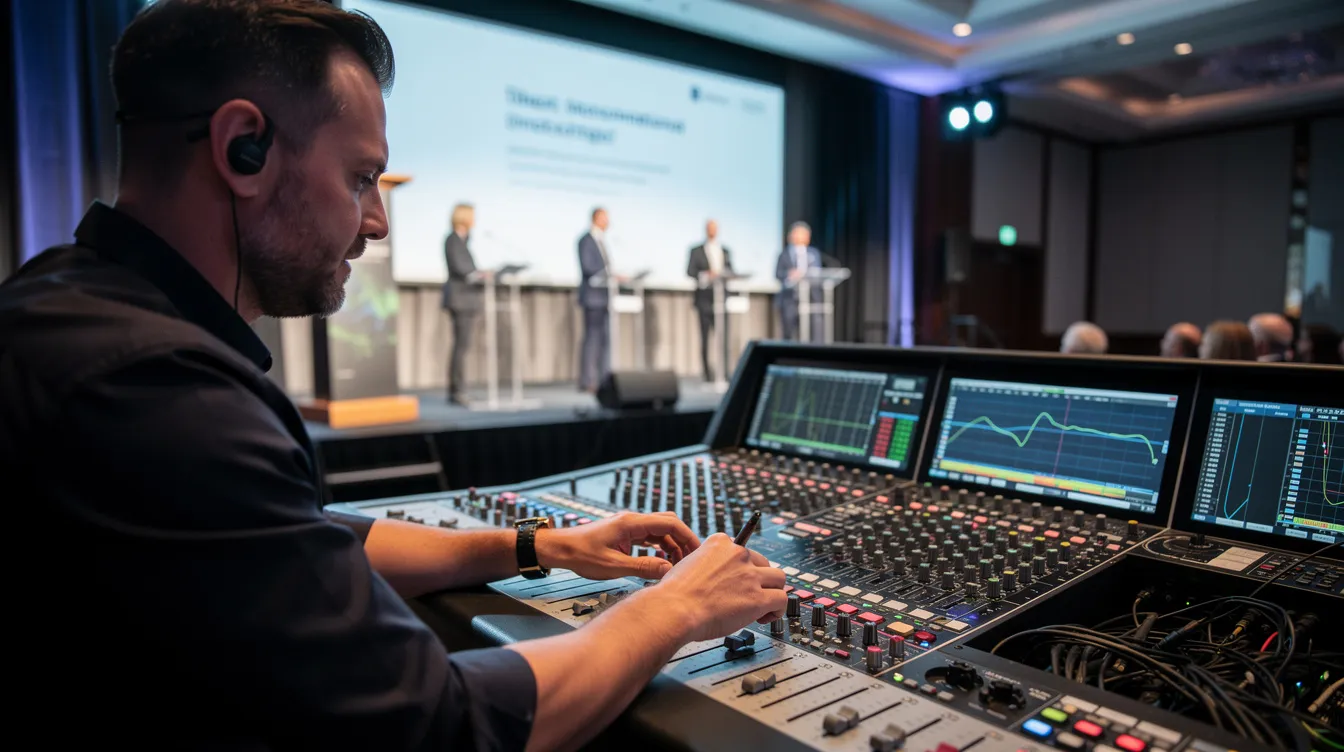
A professional audio technician mixing and monitoring in real time catches clipping, feedback and dropouts before the audience notices. Removing this role often costs more in audience perception than it saves. Underestimating planning complexity leads to unrealistic budgets, and audio is where that gap shows first.
For event planners designing right-sized audio systems, Front Row FX’s professional sound capabilities provide direct access to scalable PA, wireless and mixing solutions.
Video, LED and Content Visibility: Build Screens Around the Room, Not the Rider
LED walls and projection often define the visible character of a corporate event. Sizing and placement matter more than sheer square footage. Most events benefit from screens built around the room and content, not around the maximum possible rental inventory.
Size screens based on room depth and audience distance. A practical rule: text legibility requires roughly one inch of letter height per ten feet of viewing distance. Dense charts need larger or closer screens; large imagery is more forgiving.
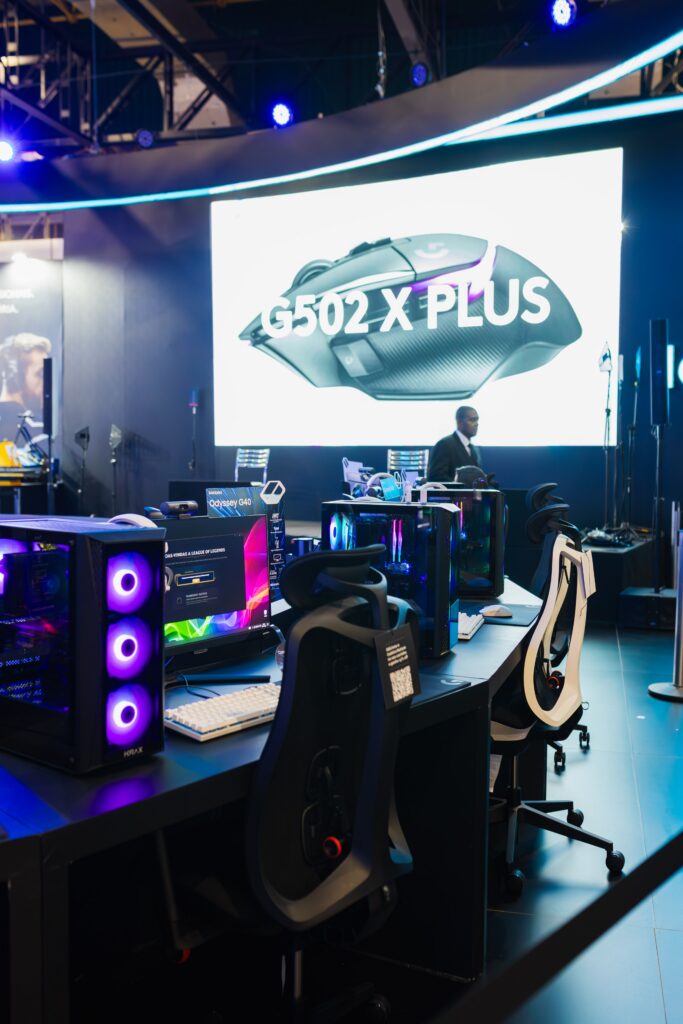
LED video walls deliver superior brightness and wider viewing angles, especially during long daytime sessions with ambient light. Projection works well in darkened rooms with static, presentation-heavy content. For Minneapolis-area events, Front Row FX’s LED screen rental options help event managers match display technology to actual room conditions.
IMAG (live camera to screen) improves visibility in larger rooms, but camera count should reflect actual needs: recording, live streaming, or in-room visibility. Not every corporate event requires multiple cameras. Eliminate extra equipment like unnecessary duplicate displays that do not materially improve sightlines, and redirect that portion of the event AV budget into better main-stage visibility or lighting.
A multi-use content strategy – one main LED or projection canvas shifting between pre-show ambience, branding, presentations, live camera feeds and sponsor content – delivers cost efficiency by reducing additional playback systems and media server costs. Itemized quotes should be compared across vendors to evaluate costs effectively, and multiple vendor quotes should be obtained to ensure competitive pricing.
Lighting With Intention: High-ROI Uses of Your Event Lighting Budget
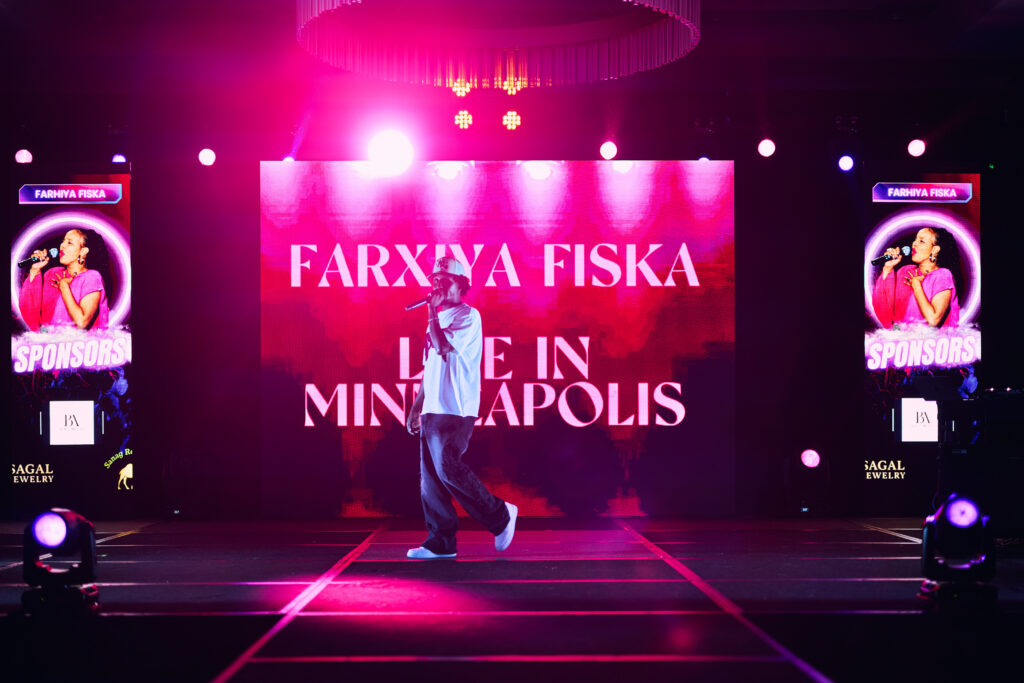
Intentional lighting design can significantly elevate the attendee experience and camera quality without a proportional increase in corporate AV costs. Event professionals consistently rank lighting among the highest-ROI production investments.
Three priority areas for event lighting:
Presenters: key light and fill light ensure faces are clearly visible on stage and on camera. Even a modest stage wash dramatically improves perceived production value.
Branding and scenic features: color washes and accent lighting reinforce the event theme and brand identity without additional physical scenic.
Audience ambience: uplighting and programmed transitions create mood shifts that attendees feel, even if they cannot articulate why.
Fixture placement, focus and programming matter more than sheer quantity. A smaller, well-planned rig can outperform a larger, unfocused one. Programmed lighting looks let a room shift from keynote to panel to awards reception without physically rebuilding the stage – networking sessions and breakout sessions benefit from the same approach.
Cut Invisible Complexity, Not Critical Redundancy
Invisible complexity refers to technical layers that consume budget and labor but add little to what attendees actually experience.
Examples include:
Extra screens showing identical content to audiences who can already see the main display
Redundant playback systems for non-critical moments
Overly complex signal routing that requires additional programming and crew
Decorative scenic with minimal audience visibility
Do not cut critical redundancy. Backup microphones for key talent, failover paths for the main screen, and spare playback for primary content protect the event’s purpose. A single production partner reduces duplicated costs, while duplicated vendors inflate coordination time and costs.
Excess complexity increases not just AV equipment costs but also crew time, programming, trucking and strike costs – a hidden tax on the event budget. A practical scenario: simplifying screen layout from five displays to three and trimming redundant playback machines freed enough budget to upgrade the main LED panel and add a second audio delay zone. Attendees reported higher clarity and visibility despite fewer screens.
Match redundancy and complexity to event type. An internal town hall tolerates more simplicity than a live investor webcast or a product launch broadcast to target audiences worldwide.
Using Venue Infrastructure and Choosing Budget-Smart Spaces
Venue selection and infrastructure can shift the effective corporate event production budget dramatically, even when rental fees look similar on paper. Evaluate venues on total cost, not just rental fees. Ignoring total venue costs can lead to budget overruns.
Walk through what the venue provides: installed projection, house audio, basic stage lighting, rigging capacity, power (standard and three-phase), internet bandwidth and any exclusive AV policies. Use viable existing infrastructure where appropriate – ceiling speakers for background music during networking opportunities, existing projectors for secondary breakout rooms – instead of automatically replacing everything.
A seemingly inexpensive venue can become expensive when you factor in mandatory in-house AV with 30% to 50% markups, rigging surcharges, limited loading access, beverage minimums, or exclusive labor rules. In Minnesota, Wisconsin and Chicago, ask venues for exact power and rigging pricing, overtime thresholds and install windows before finalizing the event budget.
Partnering early with a production company like Front Row FX allows event coordinators to model production costs across two to three venue options and see which combination yields the best event cost optimization. This gives a clearer picture of where your money will actually go.
Labor, Crew Structure and the Myth of the “Cheapest” Equipment Package
A corporate event production budget is heavily influenced by labor. The cheapest equipment package is not always the cheapest production.
Complex, piecemeal gear choices can increase setup time, programming, trucking and required crew size. Each piece may look inexpensive individually, but the total cost rises.
Protect appropriate staffing so each technician – audio, video, lighting, show calling – can perform their role without overloading critical responsibilities.
For a 500-person awards banquet, combining audio, lighting and video playback into one operator creates risk of missed cues and poor mixes. That undermines an otherwise well planned budget and damages financial performance for the event.
Well-planned multi-use systems and thoughtful schedules reduce overtime, rush fees and last-minute add-ons. This is often a more powerful way to reduce event production costs than cutting costs by removing technicians.
Front Row FX focuses on building the smallest crew that can still operate the design professionally. The team works closely with event planners to match staffing to actual show complexity, not to a generic crew template.
Designing Flexible Programs: Room Resets and Multi-Use Systems
Flexible technical design lets one set of systems support multiple event segments – keynote, breakout sessions, awards, reception – without physical rebuilds.
Programmed lighting looks, flexible content templates and reusable microphone positions help move from a morning conference to an evening gala inside the same room. A two-day corporate conference in St. Paul used one LED wall and lighting rig to support general sessions, an awards dinner and a closing reception through content and lighting changes only. This approach reduced labor hours, strike and rebuild time, and trucking.
Cameras used for IMAG can double as content capture for recap videos or training material, multiplying the value of one system. Tracking expenses in real time tracking is essential for managing a budget during an event, especially across multi-segment programs where costs can drift.
For recurring corporate events, reusable show files and templates lower prep time for future events, making the same corporate AV budget go further year over year.
Recurring Corporate Events: Learning From Prior Corporate Event Budgets
Quarterly meetings, annual conferences and sales kickoffs often repeat with similar formats and attendee counts. Historical data on past budgets should be reviewed for current budgeting. A post-event financial review helps improve future budget accuracy by revealing where money created obvious audience value and where it did not.
Gather feedback from prior events: which segments felt overproduced? Were any screens or scenic pieces rarely used? Did attendees complain more about sound or seating than décor? These valuable insights let event managers question automatic budget increases. Sometimes reallocation within the same event budget solves new needs without higher total spend.
Building multi-year relationships with a production partner means designs, show files and workflows evolve instead of being rebuilt from scratch every year. Include a small innovation slice inside the existing budget – reallocated from underused elements – to test new formats or technologies that enhance the attendee experience for your next event.
When and How to Involve a Corporate AV Production Partner
A production partner helps planners get more value from their existing corporate event AV budget. The role is not upselling extra equipment – it is helping make the plan financially sound from day one.
Involve a partner as soon as dates, venue shortlist and event type are known. Locking the plan early saves costs significantly. Late changes can significantly increase event costs, and budgets built late often reveal expensive constraints too close to events.
Front Row FX evaluates audience, venue, content, audio visual requirements, lighting, video, labor and logistics before recommending technical scope. A single, full-service partner through complete audiovisual production and show and technical management reduces duplicated vendors, simplifies event budgeting and creates a more cost effective production for most events.
Event planners and event coordinators across Minnesota, Wisconsin and the Upper Midwest can reach Front Row FX through the contact page to explore how a successful event can come from better decisions, not a bigger spend.
FAQ: Corporate Event Budget and AV Production Decisions
These answers focus on commercially useful guidance for the planning process, not generic money tips.
How can we increase impact without raising our corporate event AV budget? Reallocate toward audio clarity, content visibility and lighting. Trim invisible complexity – duplicate screens, redundant playback, excess scenic – and redirect those dollars to systems that directly improve what attendees hear, see and experience. You can save money while raising quality by spending in the right places.
What should never be cut from a conference AV budget? Intelligible audio, primary screens or LED walls for core content, key lighting for presenters, backup microphones and show calling. These are the core elements that define whether your event reads as professional or unprepared.
Does using venue AV always save money? No. In-house AV often includes 30% to 50% markups. Evaluate total event production costs including labor, printed materials, and limitations before assuming the venue’s package is the best investment.
How early should we lock our event budget and AV design? Twelve or more weeks before the event. Earlier decisions reduce late-change premiums, rush labor and expedited shipping. Booking gear and crew at standard rates can be 15% to 20% cheaper when locked in advance. Underestimating planning complexity can derail event budgets.
How does Front Row FX approach budget-smart audiovisual production? Front Row FX evaluates audience, venue, content, audio, visuals, lighting, labor and logistics holistically. The goal is not ticket sales on equipment – it is designing production where every dollar creates measurable value. The philosophy: same budget, better decisions, stronger production. This careful planning approach through the full services offering helps deliver a successful event within the budget you already have.