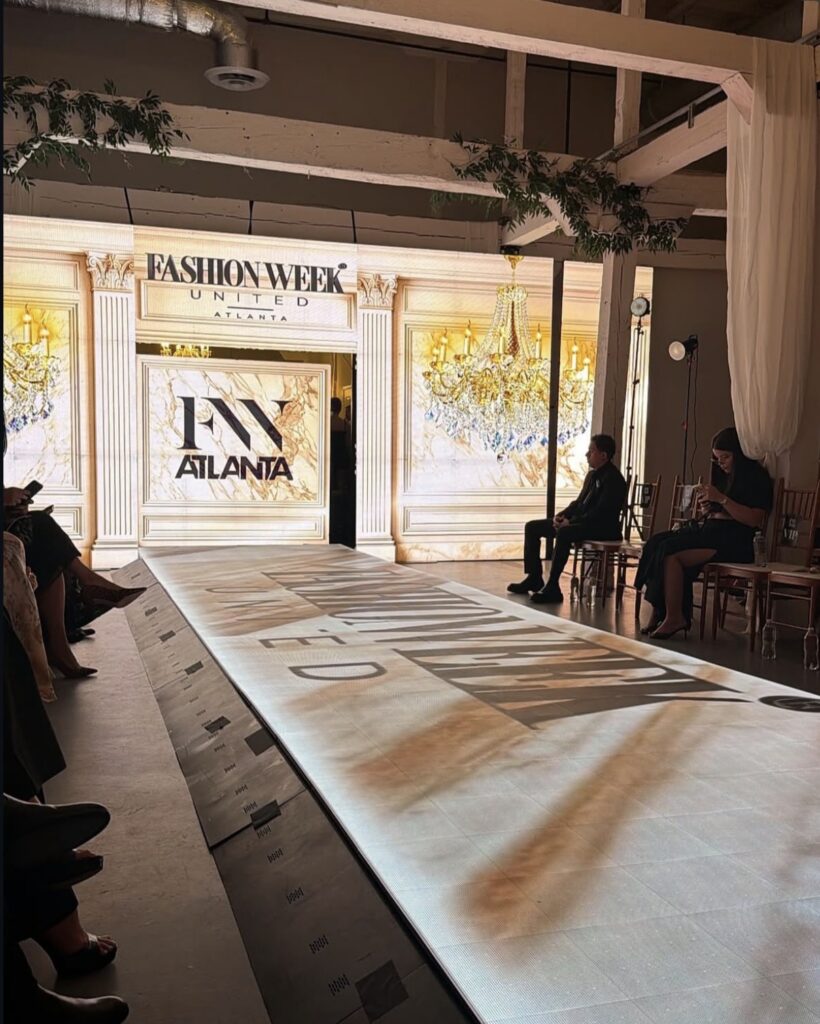
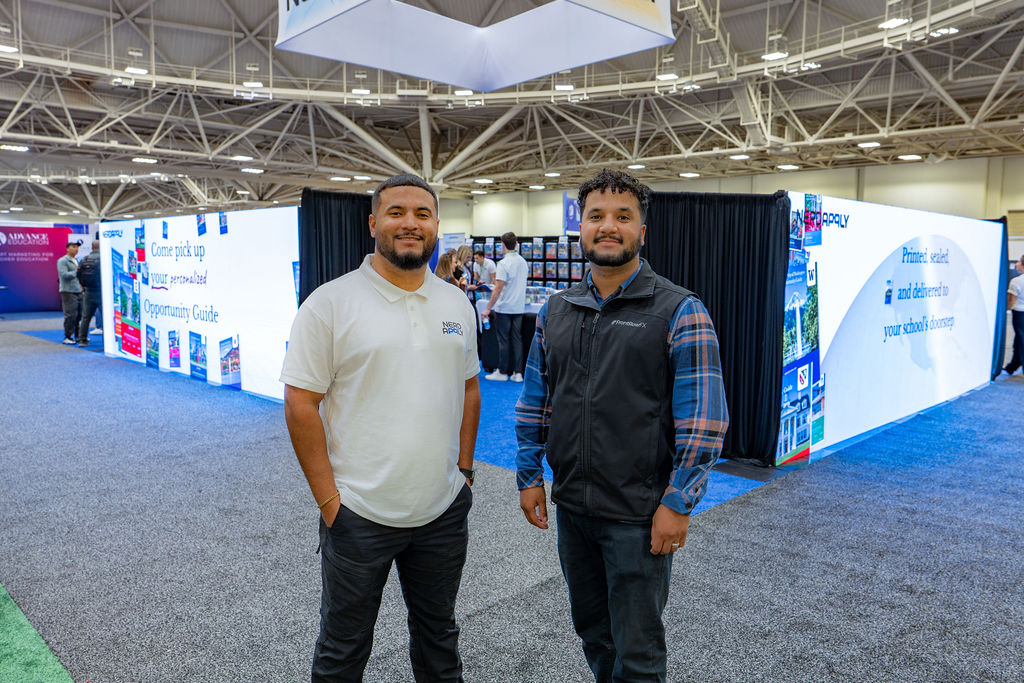
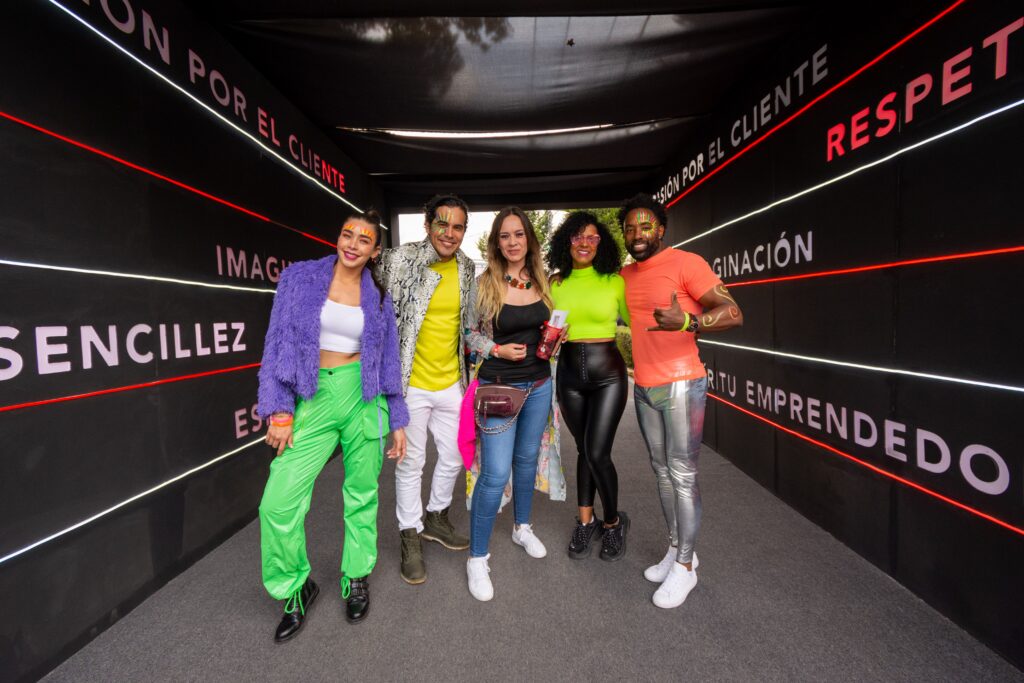
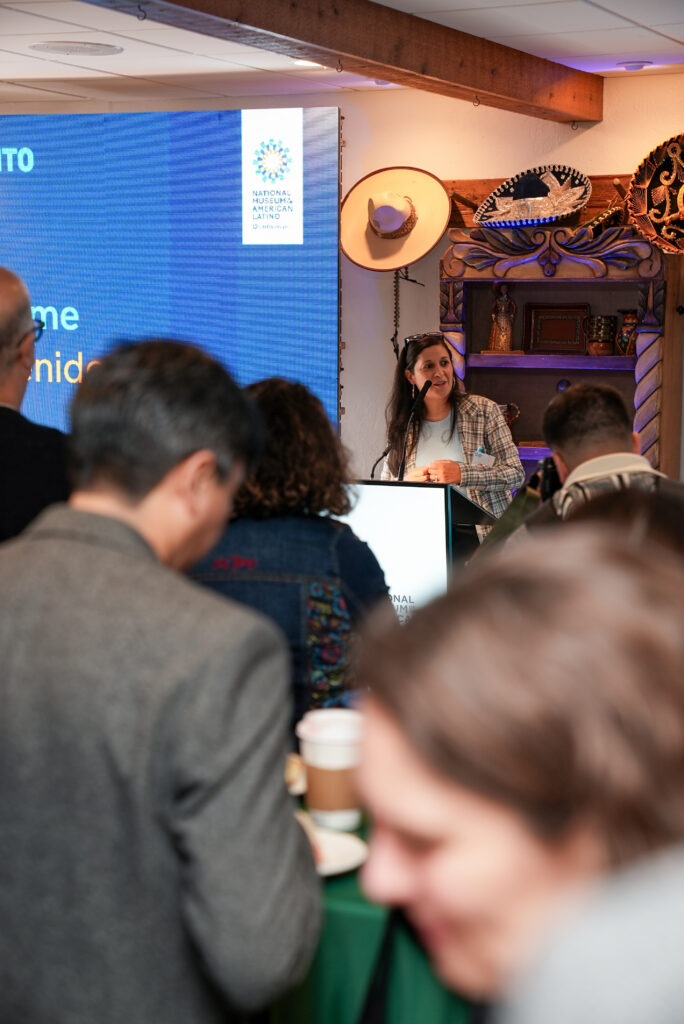
Large LED Screen Rental for Outdoor Events and Live Productions
Plan Your Large LED Screen Rental Early
Front Row FX provides large-format modular LED screen rentals as part of complete outdoor production. We plan, deliver, install and operate LED video walls for outdoor events; we do not offer equipment-only rentals or trailer-mounted trucks. LED video walls provide high-resolution images for events ranging from 500-person fundraisers to 30,000-capacity festivals.
LED walls can be configured for indoor and outdoor use, and LED screens can be rented for various events. This article focuses on large outdoor applications: festivals, concerts, watch parties, community gatherings and live productions with sizable audiences. LED screen rental prices vary based on size and duration, so attendance alone cannot determine the right screen. Planners must also account for audience depth and width, nearest and farthest viewers, stage placement, content type and whether live cameras will be used. Front Row FX supports outdoor productions in Minnesota, Wisconsin, Illinois and Georgia with modular LED screens, LED tiles and full technical crews. Visit our Minneapolis LED screen rental page for service details and project inquiries. For general outdoor screen selection topics like weather ratings and basic brightness concepts, see our separate Outdoor LED Screen guide; this article stays focused on large-format planning.
Events That Benefit from Large Outdoor LED Screens
A “large” LED screen in this context means a wide-format LED video wall built from modular LED tiles, typically 20 feet wide and above, scaled to the audience area. LED tile walls can be rented up to 100 feet wide. LED tile video wall rentals typically start around $10,000 depending on pixel pitch and configuration. LED screens provide high-resolution images and videos across every format below.
-
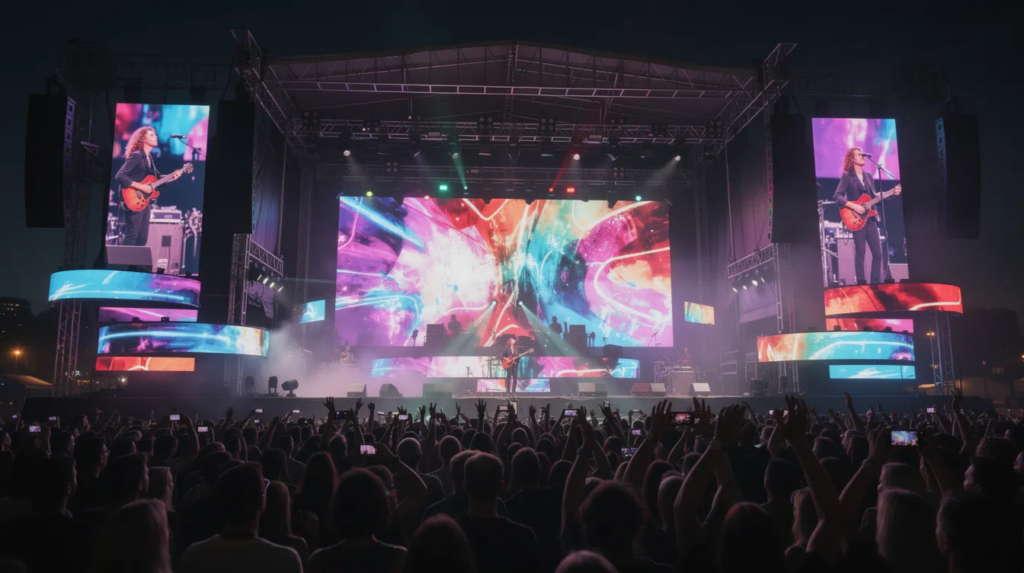
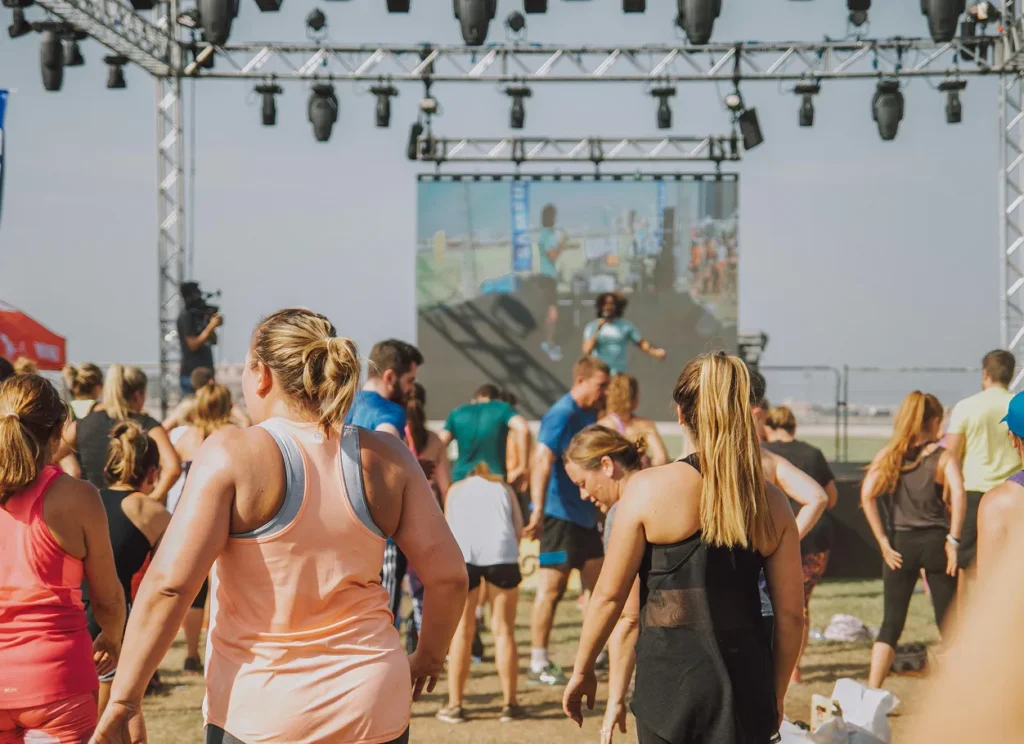
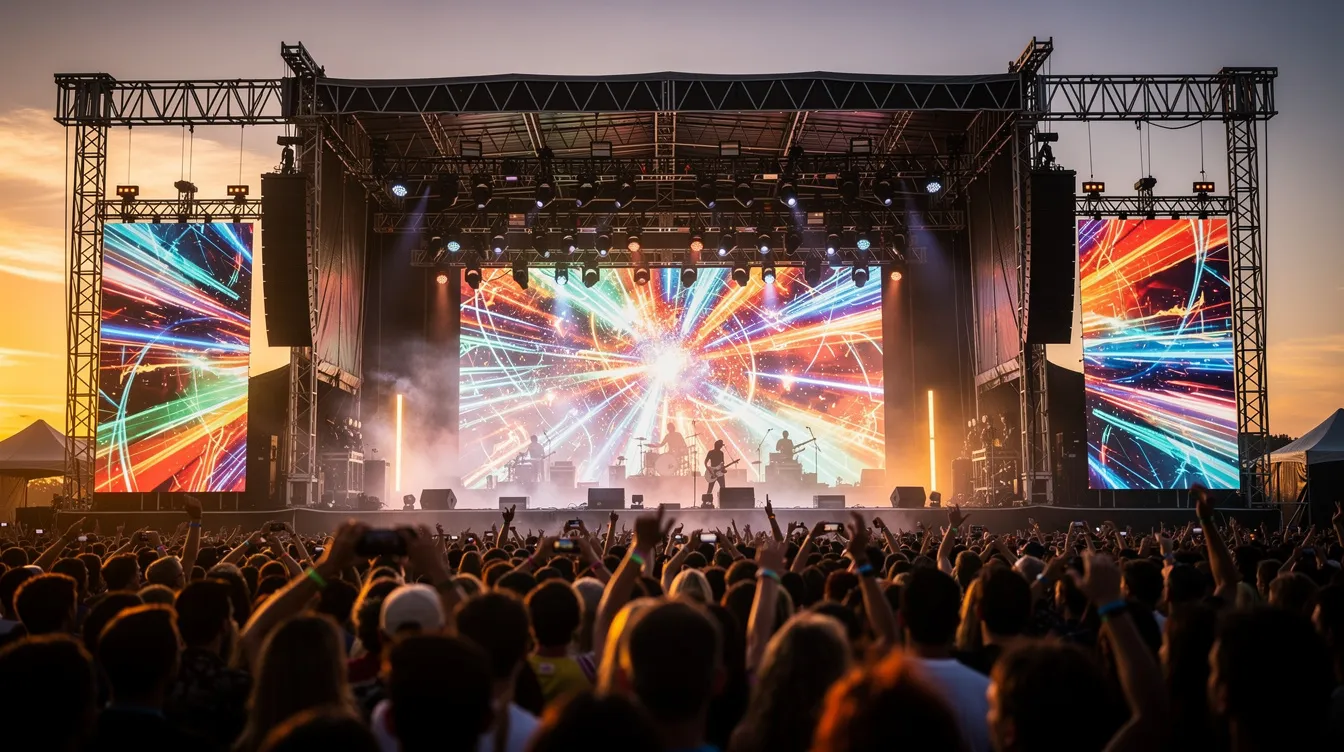
Festivals and city events. Multi-day summer music festivals, art fairs and civic celebrations where a main stage LED display plus optional side screens make performances visible from the back of the lawn.
-
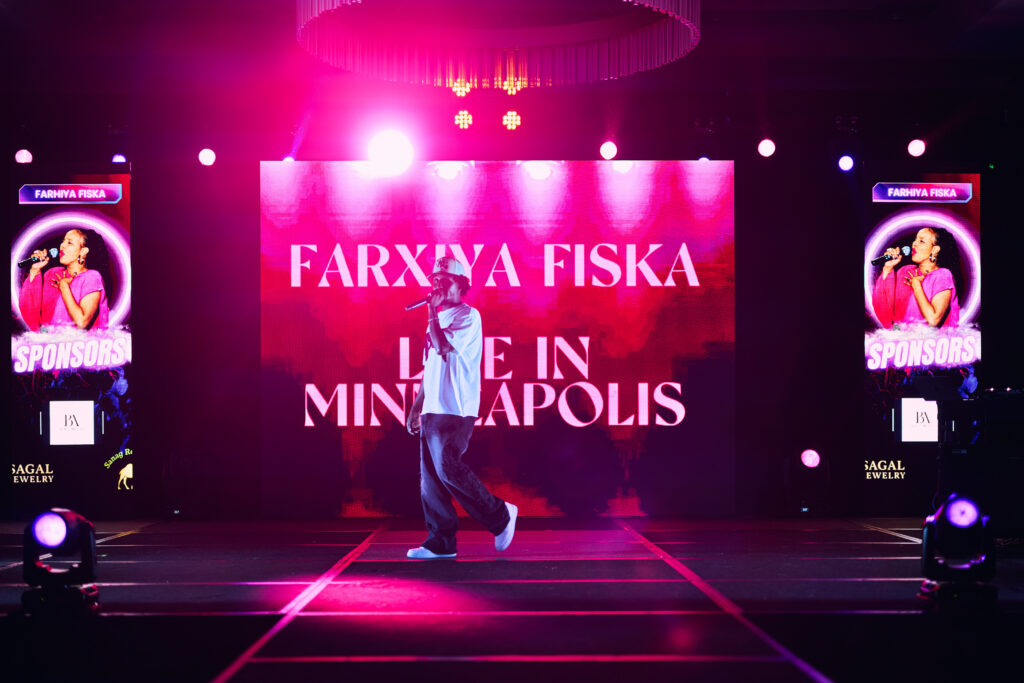
Concerts and touring shows. Large LED displays support headliner concerts and regional tours with IMAG of performers and LED video content synchronized with stage lighting.
-
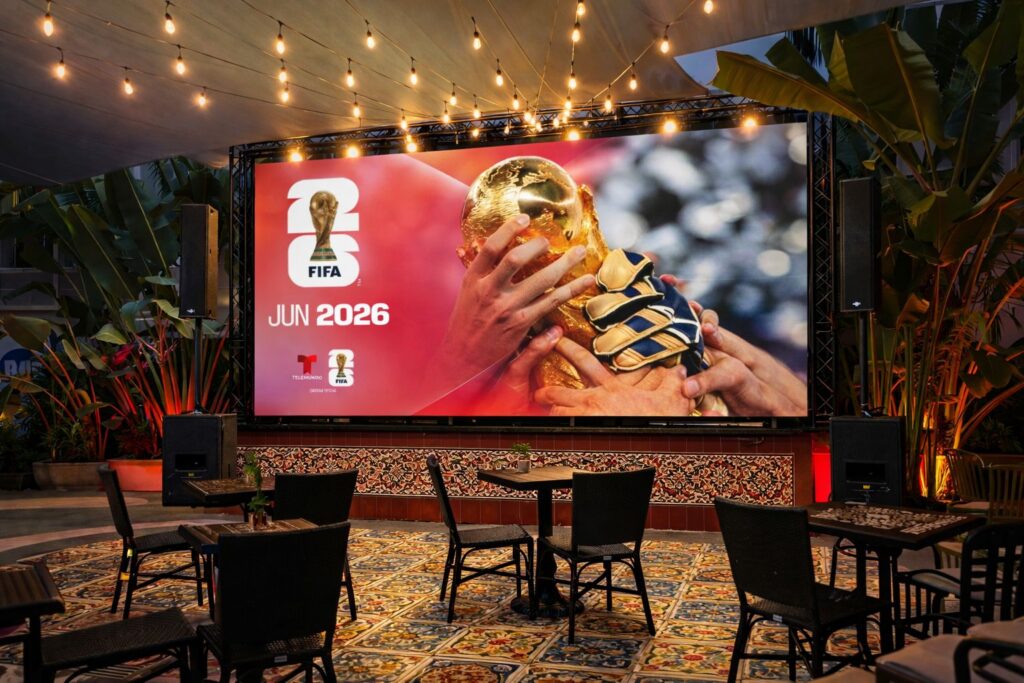
Sporting events and watch parties. Outdoor watch parties for football playoffs, the World Cup or NCAA tournaments where a single large video screen becomes the focal point for thousands of fans. LED displays are ideal for dynamic advertising and digital signage in fan zones, and sponsors can fill rotation with branded content.
-
Community movie nights. Parks or drive-in style screenings using high resolution LED screens instead of projection to overcome city light and ambient lighting.
-
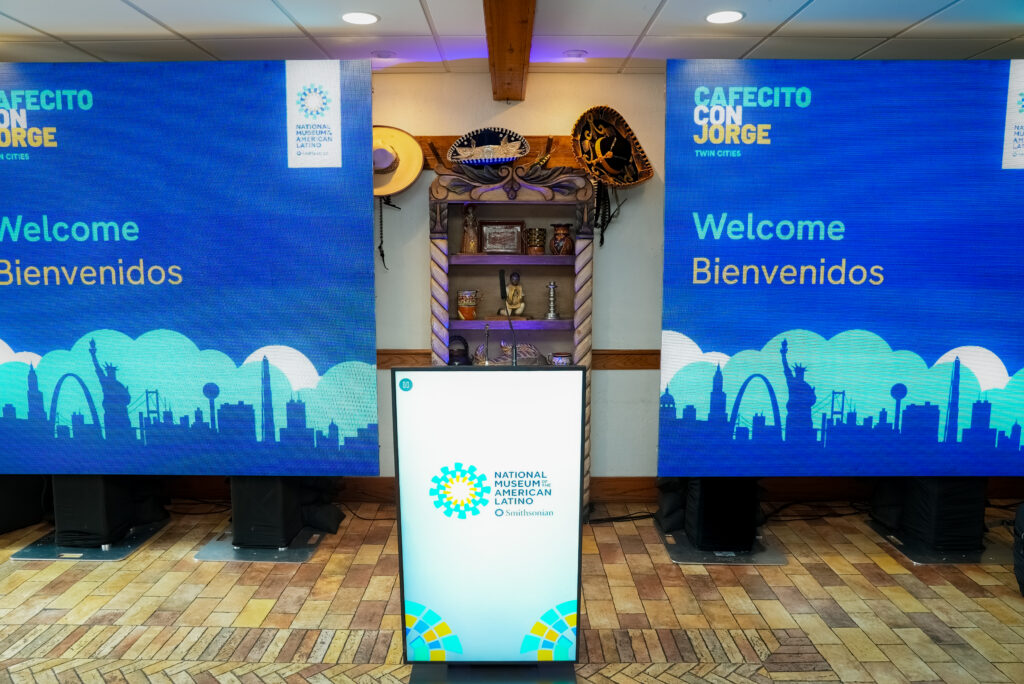
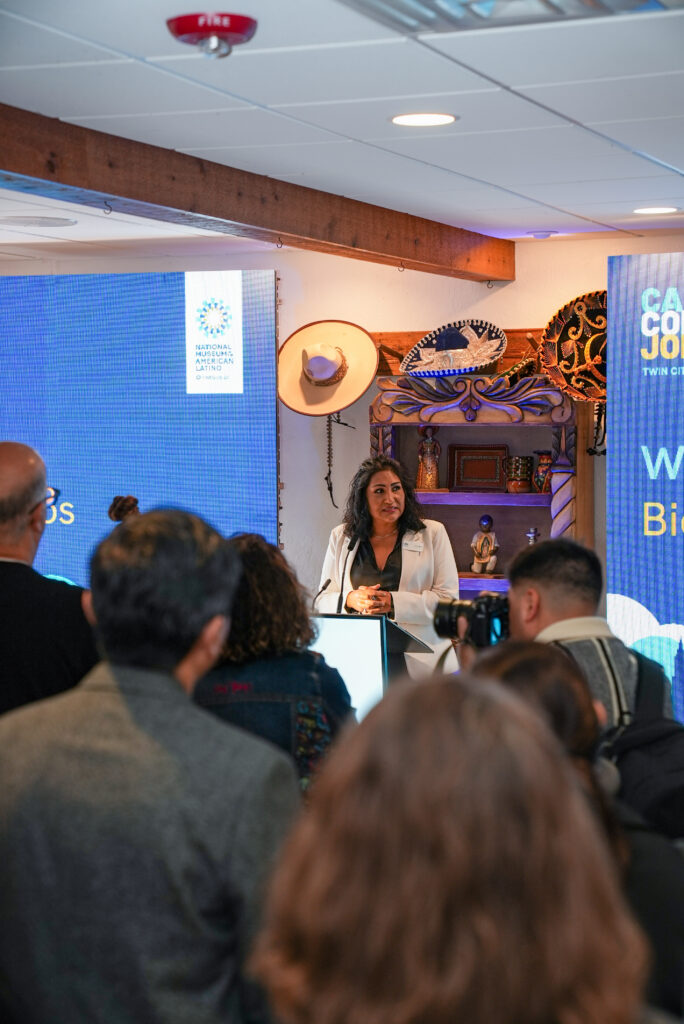
Fundraisers and galas. Outdoor galas, charity runs and benefit events where a large screen carries sponsor loops, donation totals and live camera shots of speakers. LED displays can enhance advertising and promotional efforts for nonprofit customers.
-
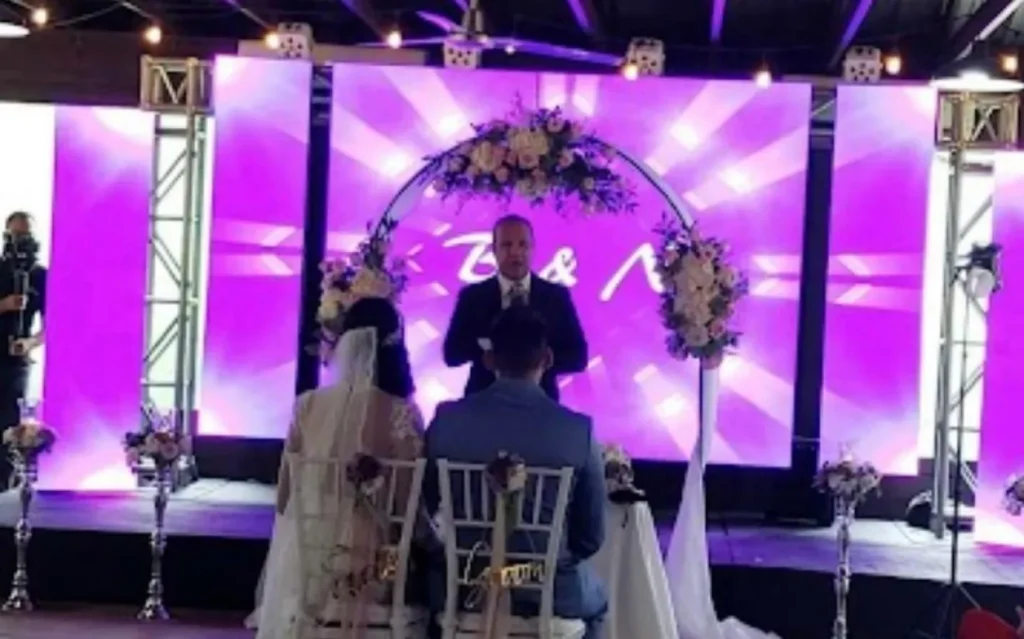
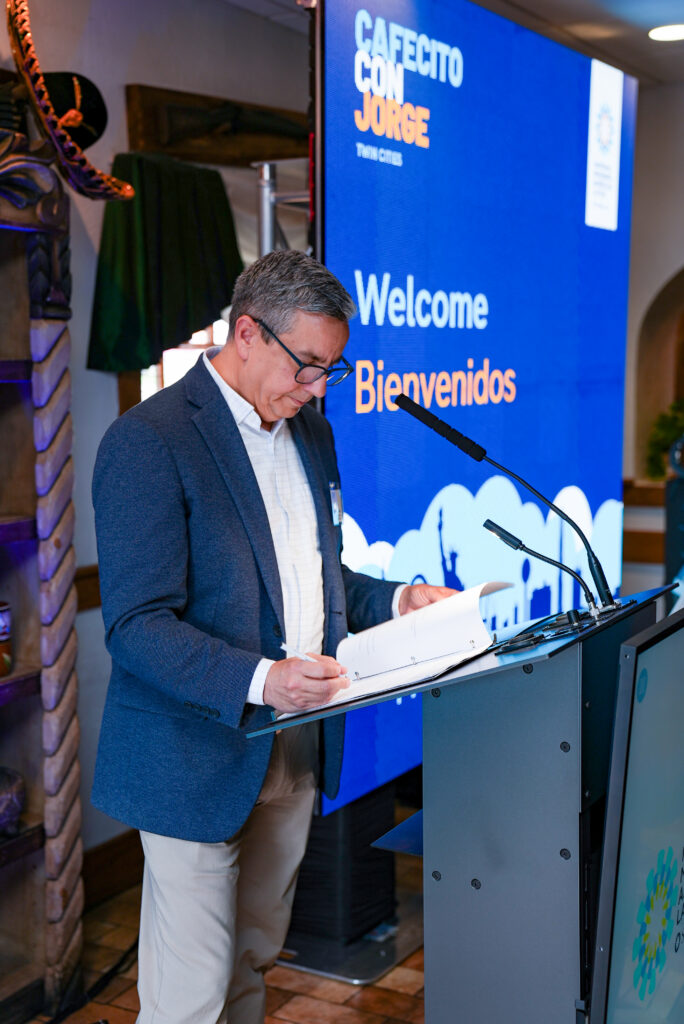
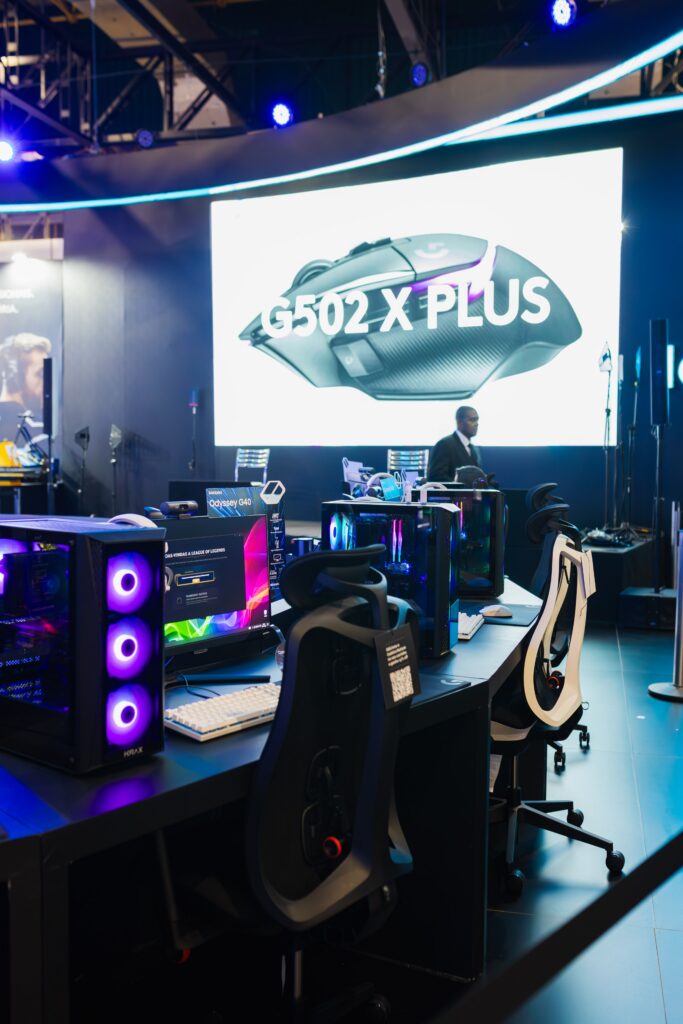
Corporate events and brand activations. Product launches, campus events and brand experiences where LED walls anchor staging and presentations. Transparent LED walls create immersive experiences without obstructing views in certain corporate event production setups.
Mobile LED screens are ideal for budget-conscious multi-location events; the MAX XL, for example, is a 15′ x 8′ mobile LED display suited to smaller activations. Front Row FX focuses on professionally installed modular LED walls for larger productions.
Audience Layout, Viewing Distance and Sightlines
Audience layout and sightlines drive LED screen rental decisions more than headcount. Front Row FX designs screen layouts around real site maps, not attendance estimates alone. Screen size recommendations should consider audience size and viewing distance together. Our LED Wall Size article covers size-to-distance calculations in depth.
-
Audience depth. The distance from stage to the back of the crowd defines minimum screen height and approximate pixel pitch. Pixel pitch refers to the distance between LED pixels measured in millimeters; viewing distance influences which pitch keeps content legible.
-
Audience width. A wide lawn or plaza may require a single extra-wide display or multiple LED screens (main wall plus delay screens) to cover side areas.
-
Nearest and farthest viewers. Balance readability for guests 40 to 60 feet from the screen with fans several hundred feet back. There is no single correct size without site details.
-
Sightline obstructions. Tents, light poles, trees and front-of-house audio positions must be mapped before finalizing wall placement and height.
-
Standing vs seated audiences. Dense standing pits at concerts differ from spaced-out lawn chairs at community events; this affects screen elevation and aspect ratio.
-
Side angle viewing. Angling or curving LED walls, or placing secondary displays, can cover side seating or VIP areas. Our LED Screens for Concerts guide discusses stage-specific configurations.
Screen Dimensions, Aspect Ratio and Daylight Performance
Choosing a large LED screen rental means selecting overall dimensions and aspect ratio, then matching brightness and orientation to real daylight conditions. Outdoor LED systems are typically brighter and more rugged than indoor displays because they must compete with direct sunlight rather than controlled venue lighting.
-
Common aspect ratios. 16:9 is standard for live camera and broadcast content. Ultra-wide configurations work for festival stage backdrops and custom scenic LED video displays.
-
Content-driven sizing. Screen proportions follow content: IMAG, cinematic movie nights, sponsor reels, scoreboards and wide video backdrops each suggest different shapes.
-
High resolution vs physical size. “High resolution” refers to both total pixel count and appropriate pixel pitch for the expected viewing distance. A wall that looks sharp at 200 feet may waste budget on pixel density no person at that range can perceive.
-
Daylight and brightness. LED video walls offer superior brightness for outdoor events, but actual requirements depend on time of day, season, screen orientation and ambient light. Large LED screens require high brightness for daylight visibility; specifics belong in the production plan.
-
Screen orientation. Position the display to minimize direct sun on the LED face, considering sunrise and sunset direction for events running from afternoon into evening.
-
Content contrast and readability. Bold fonts, high-contrast graphics and simplified layouts remain legible in bright conditions. Consider the type of content when designing graphics for outdoor screens; what reads well on a laptop may wash out on a brighter outdoor wall for distant viewers.
See our Outdoor LED Screen guide for deeper coverage of weather ratings and brightness concepts.
IMAG, Live Camera Production and Content for Distant Audiences
IMAG (image magnification) uses live cameras to enlarge performers, speakers or game feeds on a large LED display so distant guests can see clearly. The LED screen is one component; effective IMAG also requires cameras, lenses, video switching, signal distribution, processing and trained operators. On-site technical support is recommended for larger outdoor events where content changes in real time.
-
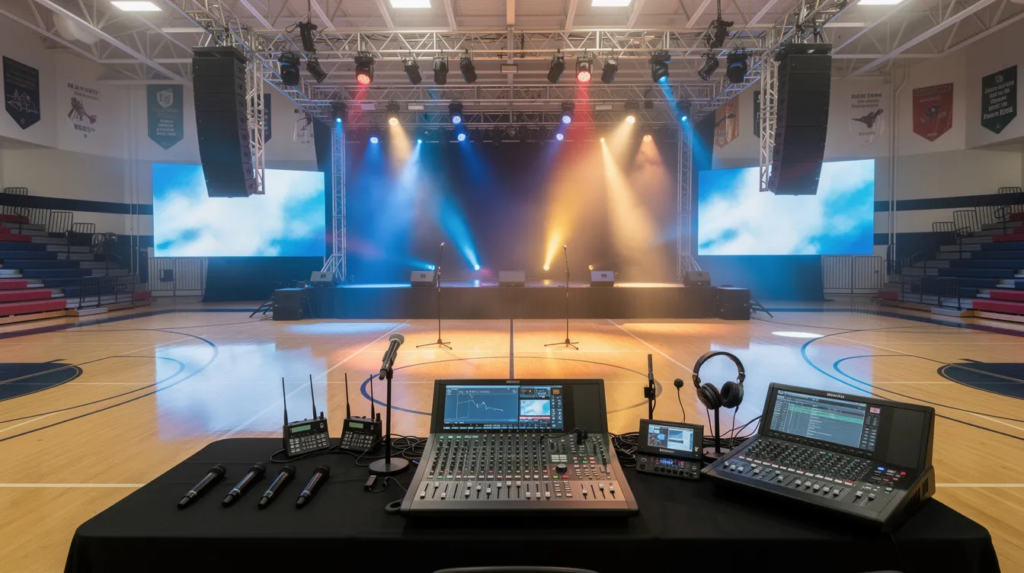
Components of an IMAG system. Cameras, a video switcher, processing hardware, cabling, a show operator and the LED wall itself. Unlike LCD video walls, which consist of multiple tiled LCD displays and suit indoor board rooms, LED video walls have a longer lifespan and the brightness needed for outdoor stages.
-
Camera positions and sightlines. Plan camera platforms or risers with clear lines to the stage that do not block audience views; coordinate with lighting and staging teams.
-
Latency and synchronization. Video processing must keep LED video, audio and on-stage action aligned so lip-sync feels natural for the crowd.
-
Content mix. Typical mixes include live camera shots, sponsor loops, scoreboards, pre-produced video segments and real-time information like schedules, social tags or fundraising totals.
-
Designing for distance. Simple layouts, large text, strong contrast and safe margins around critical information keep content readable at the back of a field.
-
Coordinated production. Front Row FX treats every screen rental as part of a complete production: technical design, content testing, rehearsals, show calling and on-site operators managing the display throughout the event.
Structures, Weather, Power and Logistics for Large LED Screens
Large-format LED screen rentals require engineered support structures, weather planning, safe power distribution and realistic logistics. Address these early in preproduction; retrofitting solutions on-site is costly.
-
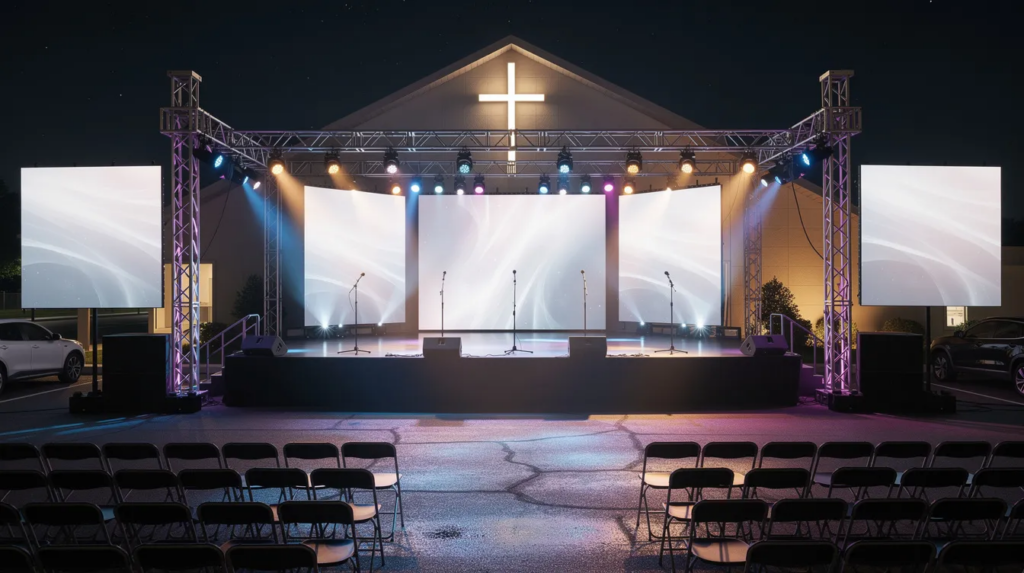
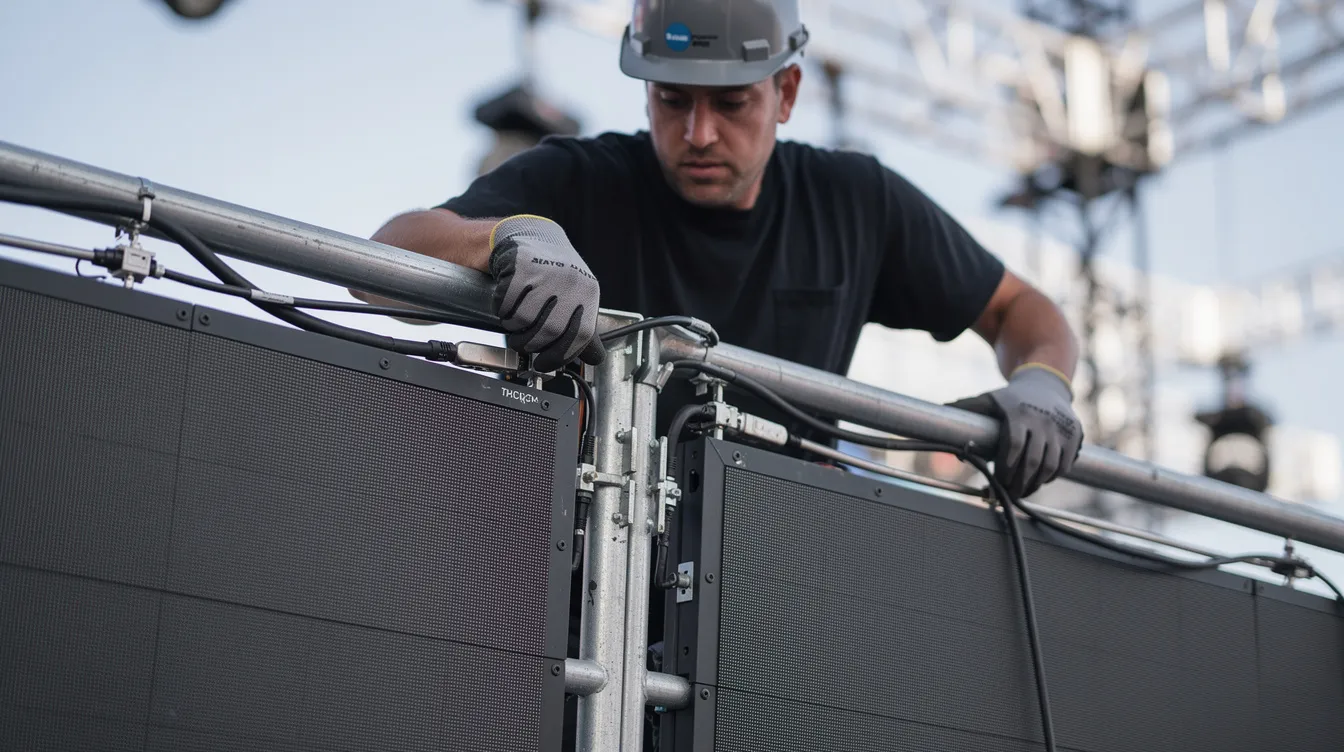
Ground-supported vs flown LED walls. Ground systems use goal-post towers or base frames; flown walls rig from stage roofs or venue structures. Our LED Wall Rigging article covers structural considerations in detail.
-
Structural engineering and ballast. Wind loads, ballast requirements and structural safety must be calculated by qualified professionals. This article does not provide universal values.
-
Weather and wind monitoring. Wind safety is critical for outdoor events due to variable weather in Minnesota. Define operating limits, monitor wind on-site and maintain clear procedures for lowering or powering down the screen.
-
Rain and temperature. Outdoor LED screens should have an IP65 rating or higher for weather resistance. Signal equipment and power connections need matching protection.
-
Power distribution. Large LED walls often require dedicated power sources and proper power distribution designed by qualified electricians. Generators may be needed at remote locations.
-
Signal paths and redundancy. Route video and control lines safely around walkways and vehicles with protection, labeling and redundant paths when appropriate.
-
Load-in access. Truck access, distance from parking to the build site, ramps and venue restrictions all affect how quickly a modular LED wall can be installed. Mobile trailers offer faster setups for outdoor events, but professionally installed walls handle the scale most large productions demand.
-
Installation time and staffing. Large builds require rigging teams, LED technicians and show operators. Front Row FX provides crews for setup, testing, operation and teardown. Additional fees may apply for delivery and setup depending on venue location and access.
-
Venue coordination. Permits may be required for outdoor events, depending on location in Minneapolis and other cities. Coordinate with venues and municipalities on ground protection, overnight security and operating hours.
Information Needed for an Accurate Large LED Screen Rental Proposal
Providing detailed event information allows Front Row FX to recommend appropriate LED screen sizes, configurations and production support with competitive pricing that reflects the real scope of your next event.
-
Event overview. Event name, dates, daily operating schedule and whether it is a festival, concert, watch party, fundraiser, corporate event or other live production.
-
Location and layout. Venue name, city and state, site maps or sketches showing stage location, audience areas, vendor zones, sponsor tents and fixed obstacles.
-
Audience estimates. Expected peak attendance and how the audience is distributed: standing, lawn chairs, bleachers, VIP decks or multiple zones.
-
Stage and screen ideas. Stage dimensions, desired LED screen locations (upstage wall, side screens, delay screens) and any target widths, heights or aspect ratios.
-
Content and sources. What will be shown: live camera IMAG, sponsor loops, presentations, scoreboards, LED video playback or broadcast feeds, and what formats or systems provide those signals.
-
Camera and IMAG needs. Whether cameras are required, how many angles are desired and whether recording, streaming or in-venue IMAG only is needed.
-
Power and access. Existing electrical services, generator plans, truck access routes, hard curfews and any noise or light restrictions at the venue.
-
Budget range and priorities. Sharing a budget range and priorities (maximum coverage, front-of-stage impact, heavy sponsor visibility) helps align LED screen rental options with your production style and business goals.
Contact Front Row FX with your event location, audience layout, stage dimensions, operating schedule, content plans and camera needs. We will review the details and develop an outdoor LED screen production plan matched to your site, your audience and your budget. Start by visiting our Minneapolis LED screen rental page or reaching out through our experiences portfolio to see past outdoor productions.