LED Screens for Concerts: Size, Placement and Production Planning
A concert LED screen must be planned around far more than panel dimensions. The audience, stage layout, viewing distance, content format, camera system, lighting design, rigging method, weather exposure and production schedule all determine whether the screen system will actually work on show day.
Concert LED screen essentials (quick answers first)
Screen size alone does not guarantee a successful visual production. A massive LED wall that is poorly located, running low-resolution content at the wrong aspect ratio, or mounted without proper structural evaluation will underperform a smaller, well-planned system every time. Concert LED screens are integrated components of the wider production-not isolated equipment rentals.
The difference between adequate results and outstanding performance starts with how the project is scoped:
-
Screen-only rental mindset: renting LED panels with minimal content support, no custom design, limited staffing, and little coordination with lighting, audio or staging.
-
Full LED screen wall production: includes content creation and specification, video processing, rigging or ground-support engineering, lighting and show integration, camera and IMAG setups, qualified crew for operation and troubleshooting, pre-production testing, color calibration and schedule coordination.
Key planning factors at a glance:
-
Stage width, depth and available trim height
-
Audience capacity, depth and sightline geometry
-
Content type-scenic playback, IMAG, sponsor messaging or a combination
-
Pixel pitch relative to closest and farthest viewing distance
-
Rigging capacity or ground-support requirements
-
Indoor or outdoor setting, including weather conditions and brightness needs
-
Load-in window, rehearsal time and show schedule
Front Row FX is a full-service audiovisual production company based in Minnesota, serving concerts, festivals and live events across Minnesota, Wisconsin, Illinois and Georgia.
Why LED screens are used in concert production
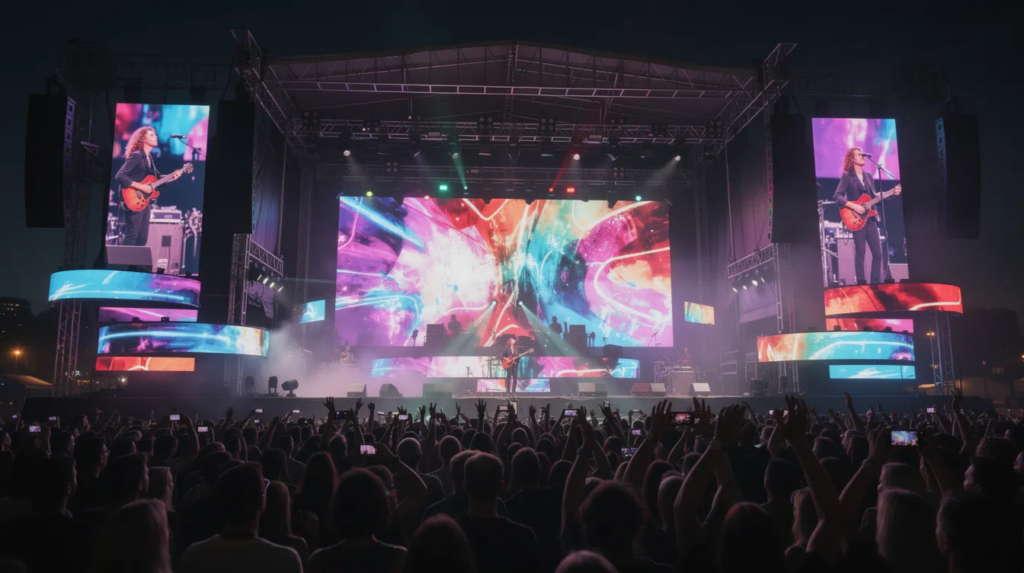
LED screens, video walls and LED displays have moved from optional backdrops to essential production layers in modern concerts, music festivals and tours. They solve visibility problems, support visual storytelling, deliver sponsor value and create immersive atmospheres through synchronized animations and effects.
LED screens enhance storytelling by visualizing song narratives and engaging audiences in ways that stage lighting alone cannot accomplish. Using LED screens transforms concert production from simple backgrounds to essential elements of the show design.
Primary functions include:
-
IMAG (image magnification): live camera feeds driven by a video director so audience members in distant seats can see performer close-ups. Large LED screens enable close-up feeds for audiences in the back rows of venues.
-
Artist visuals and playback content: pre-rendered motion graphics, lyric treatments, album art and video content synchronized with the music.
-
Scenic LED: content designed for stage geometry-columns, ribbons, floor panels, wrapping structures-to create theatrical depth and atmosphere.
-
Sponsor and partner messaging: dedicated content slots for sponsor logos, brand bumpers, walk-in and walk-out loops.
-
Audience information: safety announcements, set times, event messaging during intermissions or delays.
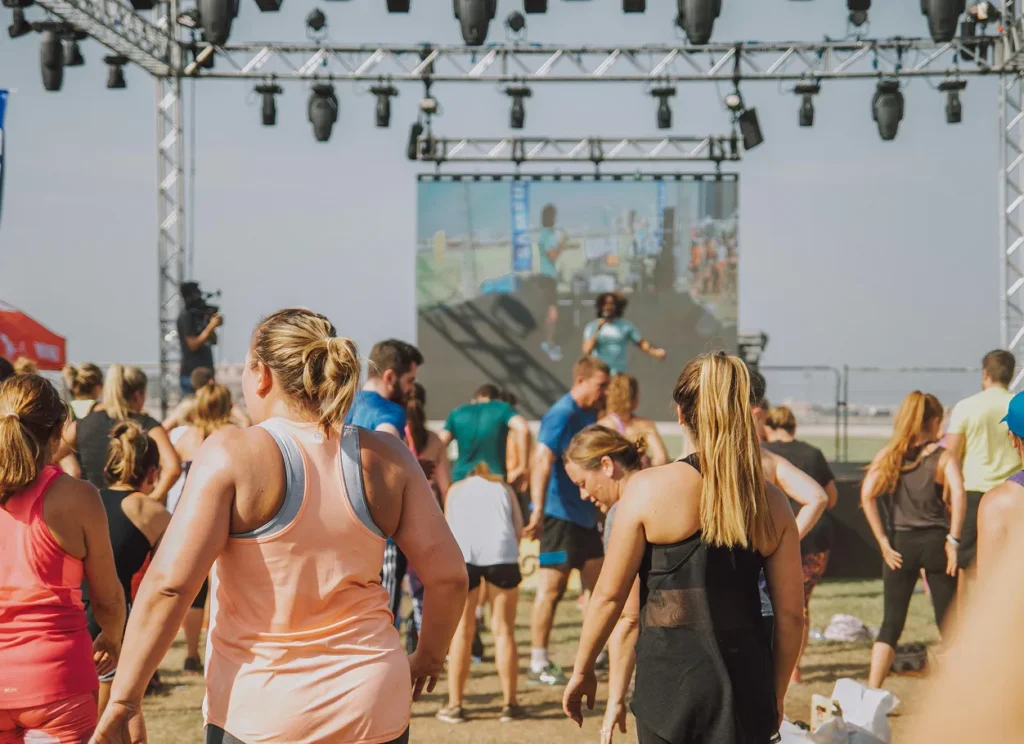
As a concrete example, a 2025 summer festival in Minneapolis used a central upstage LED wall approximately 40 ft wide plus flanking side screens for IMAG, allowing upper lawn and back-of-house attendees to see performer expressions clearly. High-definition LED displays are crucial for maintaining engagement in large venues like this, where the farthest seats may be 200 ft or more from the stage.
LED screens improve production value by enabling high-quality visual displays during events. They integrate directly with audio, lighting and staging-not as a standalone add-on, but as a core layer of the show design where video content, lighting cues and audio timecode often run in sync.
Selecting LED screen size for concerts: audience and stage first
LED wall size depends on stage width, available trim height, venue capacity, audience depth and whether the screen is primarily scenic or intended for live camera magnification. Giant LED screens can be configured to any size or shape, but the right dimensions are always driven by the specific show, not a universal chart.
Practical ranges to consider:
-
For a 40 ft (12 m) wide festival stage, a typical upstage concert LED screen might be 24–36 ft wide and 12–16 ft tall.
-
For a 60 ft (18 m) main stage, walls often extend 40–50 ft wide with heights of 15–20 ft.
-
The goal is that the content fills a reasonable field of view for mid-house without overpowering lighting or scenic elements.
Three common scenarios:
-
Club or theater under 1,500 people: stage width 30–50 ft; screen width 12–20 ft; pixel pitch in the 2.6–3.9 mm range; IMAG may be unnecessary if the venue is shallow.
-
Mid-sized arenas, 3,000–8,000 capacity: stage widths 50–80 ft; upstage LED walls 30–50 ft wide plus side IMAG screens; pixel pitch between 3.9–5.9 mm.
-
Outdoor festivals, 10,000+ people: stage widths 60–100 ft; main upstage walls 40–60 ft wide or more; coarser pixel pitch (4.8–6.9 mm); high brightness panels to handle daylight.
Modular designs allow for customizable screen sizes, so walls can be scaled precisely rather than forced into fixed dimensions. Front Row FX helps translate creative direction and content resolution into concrete LED wall dimensions rather than offering a one-size solution.
Common concert LED screen placements and configurations
Most concert stages use some combination of central, side and scenic LED surfaces. The specific configuration depends on the venue, audience layout, creative brief and structural capacity.
-
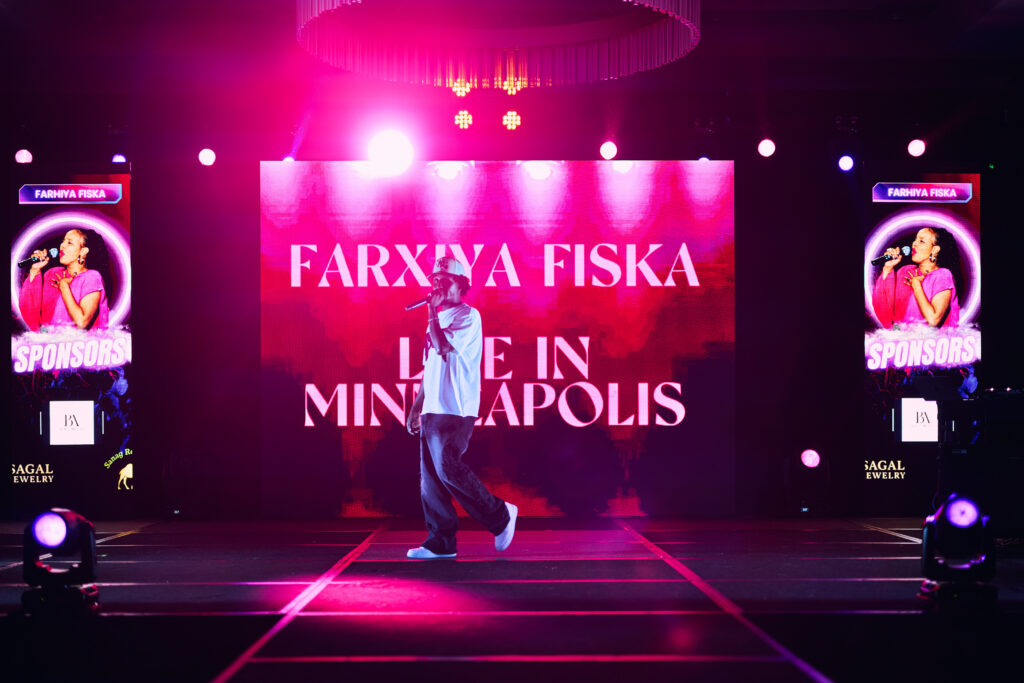
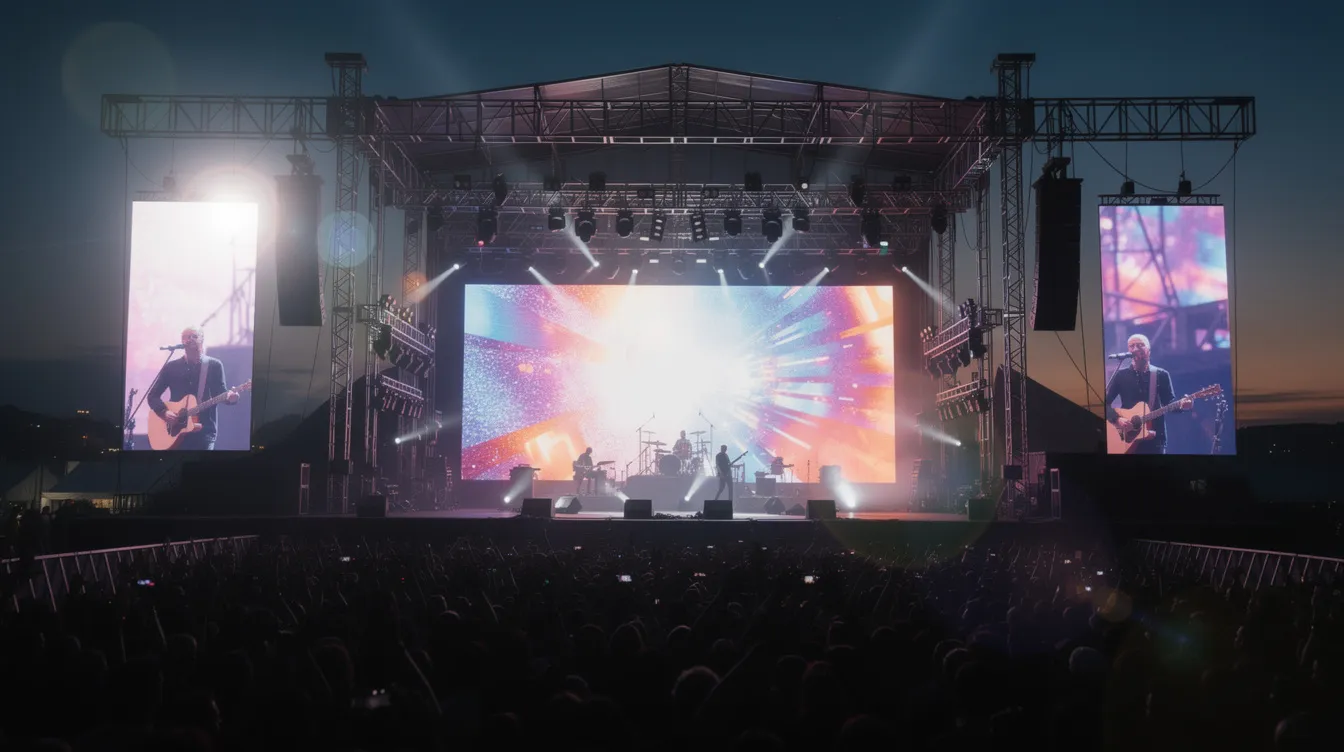
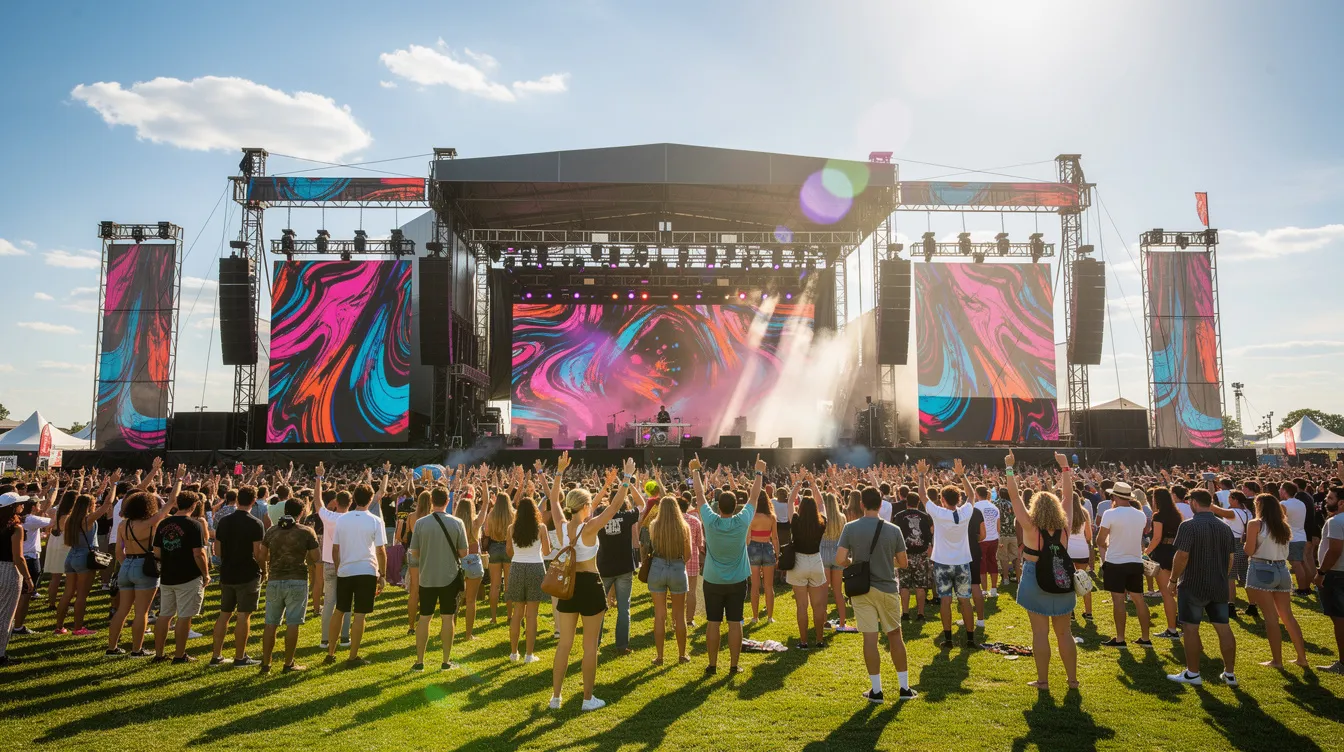
Central upstage LED video wall behind the band. The primary content surface for artist visuals, motion graphics and scenic looks. Standard for touring productions and festival main stages. Often the largest single screen in the system.
-
Left/right side screens for IMAG in arenas and outdoor shows. Dedicated to live camera feeds so off-axis and distant audience members can see performers. Common in arenas, amphitheaters, stadiums and deep festival fields.
-
Scenic LED panels, ribbons or columns built into risers and set pieces. Used for theatrical-style productions, design-heavy tours and shows where visual effect matters as much as content delivery. Modular LED designs allow for creative stage configurations and dynamic backdrops.
-
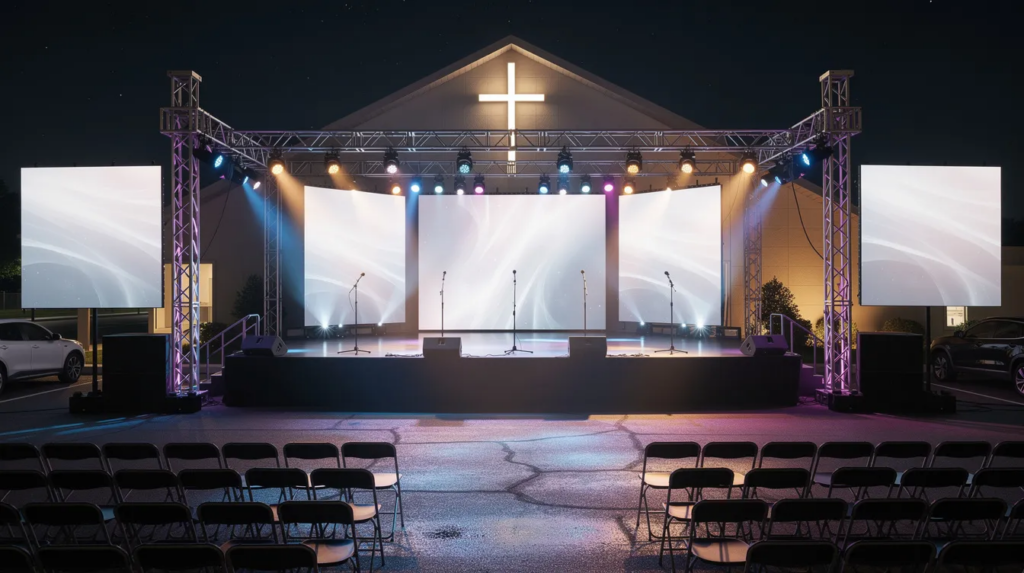
Ground-supported outdoor LED screen when rigging points are limited. Self-supporting frames or ballast-weighted structures used in venues without adequate overhead capacity. Height may be limited by structural constraints.
-
Multi-screen or asymmetric layouts for tours and festivals. Mixes of central, side, scenic and depth panels used to create distinctive looks, serve multiple audience zones or reinforce branding.
Most large concerts combine several surfaces-for example, one big upstage wall plus two side video walls for visibility-with scenic strips or columns adding visual depth. LED technology allows for extensive customization in visual setups for concerts and events, and modular LED panels allow customizable configurations for various events, adapting to each show’s requirements.
Center-screen, upstage and side-screen applications
An upstage LED wall is the centrally located screen behind performers. Side IMAG screens sit stage-left and stage-right, dedicated primarily to live camera feeds. Secondary surfaces-scenic columns, floor LED, fascia strips-fill supporting roles.
The central upstage LED wall:
-
Primary use: artist visuals, motion graphics, scenic looks, logo and album art.
-
Typical aspect ratios include 16:9, ultra-wide 32:9 or custom proportions for panoramic content. Full-width content is common.
-
LED panels maintain sharp contrast and vivid colors under intense concert lighting, making this surface effective even with aggressive stage washes.
Side IMAG screens:
-
Positioned left and right of the stage for camera feeds.
-
Sized so faces and instruments are readable from the back of the audience area.
-
Content is typically simpler-live camera rather than heavily produced graphics.
Some productions pull camera feeds into the upstage wall while side screens show IMAG simultaneously. Other designs keep the upstage wall reserved for artistic visuals and dedicate side screens exclusively to IMAG. The choice depends on content budget, performer movement and creative direction.
Screen placement must align with truss positions, line array speaker hangs, followspot locations and sightlines from VIP areas, FOH and delay tower positions. A screen that sits behind a speaker array or below a lighting truss line becomes invisible to significant portions of the audience.
When side screens and IMAG are necessary for audience visibility
IMAG-image magnification-uses live cameras to feed LED screens so that distant audience members can see performers clearly. It is a production decision, not just an equipment add-on, because it requires cameras, operators, switching, signal distribution and careful planning for latency and image consistency.
Side LED screens become important when:
-
Outdoor fields are deeper than approximately 150–200 ft (45–60 m) from stage to the farthest rows.
-
Arenas, amphitheaters and stadiums have upper seating sections where performers appear as small figures.
-
Festivals use multiple audience pens and FOH positions set far from the stage.
Side IMAG screens are especially important for seated audiences, corporate hospitality areas and sponsors expecting clear views. Screens displaying live camera feeds and social media content enhance audience interaction and help every attendee feel connected to the moment on stage, regardless of their position.
Adding cameras, switching and signal distribution is a production-level decision that must be scoped during preproduction. Front Row FX can provide camera systems, operators and switching alongside the LED displays as part of broader live event production.
Choosing LED wall pixel pitch and brightness for concerts
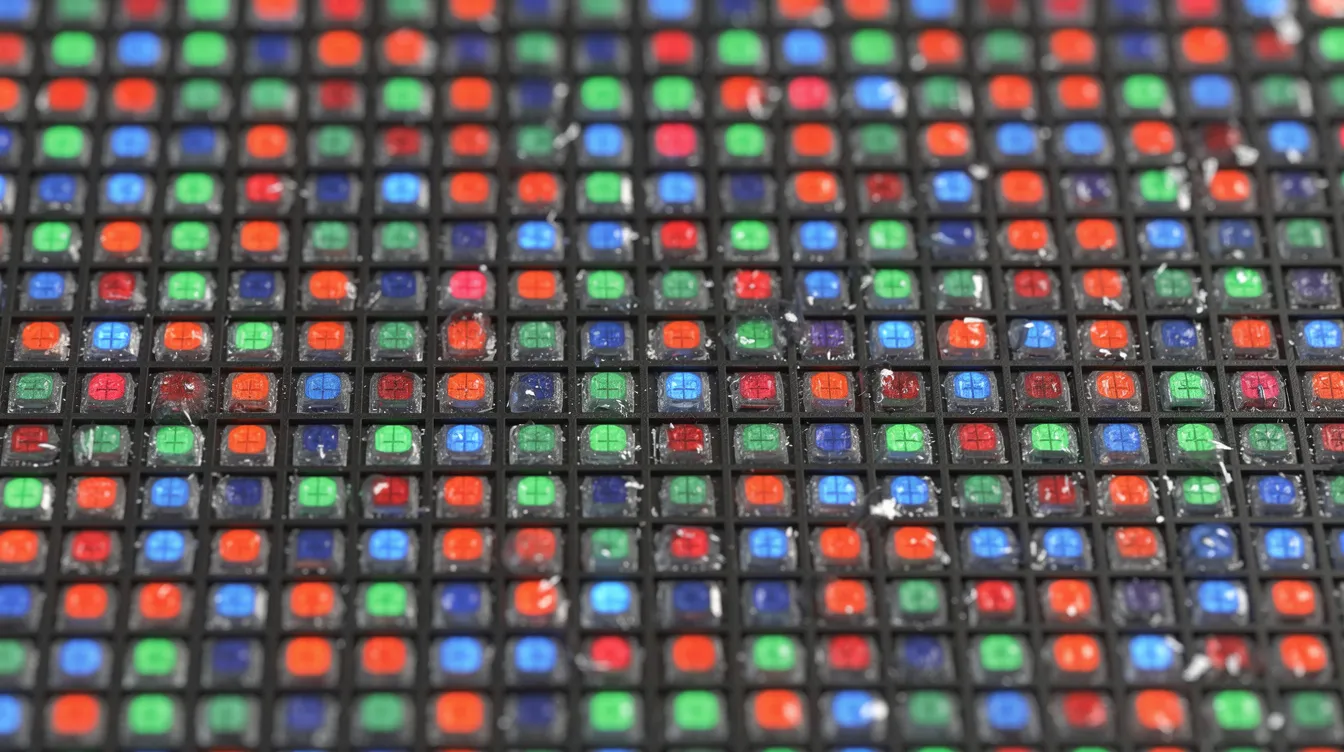
Pixel pitch is the distance in millimeters between the center of one LED pixel and the next. A smaller pitch produces a higher resolution display with finer detail, but increases cost per square meter, power consumption and processing demand. High pixel density ensures detailed visuals at concerts, and the right pitch depends on viewing distance and content type.
Practical ranges for concert LED screens:
-
Indoor theaters and close viewing: 2.6–3.9 mm pixel pitch.
-
Arenas and mid-size fields: 3.9–5.9 mm.
-
Large outdoor stages with long throw distances: 4.8–6.9 mm and beyond.
A finer pixel pitch allows closer seating and more detailed content-suitable for front-row VIPs or broadcast-quality requirements-but increases cost and processing requirements. A P3.9 panel, for example, offers good clarity at minimum viewing distances of approximately 20–26 ft.
Brightness requirements vary significantly:
-
Indoor concerts: typically 800–1,200 nits is adequate under controlled lighting.
-
Outdoor daytime festivals: 4,000+ nits and calibrated contrast are often required. Some festivals use 5,000–6,000 nits to counter direct sunlight. LED screens provide high brightness and clarity for better visibility, and high contrast enhances clarity in large outdoor venues.
Blow-through or wind-permeable LED panels are used in some outdoor designs to reduce wind load, but they still require engineering, ballast and weather monitoring. They offer easy maintenance with module replacement options, which simplifies servicing during multi-day festivals. Products like the R Series panels feature seamless splicing for a flat display surface even across large configurations.
Content resolution, aspect ratio and playback preparation
The LED display must be designed around actual content resolution and aspect ratio-16:9, ultra-wide, portrait columns or custom canvases. Mismatched content results in stretched, letterboxed or cropped visuals that undermine the entire investment.
Panel counts translate directly into total pixel dimensions. If 500 × 500 mm panels are arranged 20 across and 8 high, the wall is 10 m wide and 4 m tall. The native pixel resolution of each panel multiplied across the array determines the content canvas size. Align this with common content formats (1080p, 4K or custom resolutions) so that files render at native resolution without scaling artifacts.
Content types to plan for:
-
Playback: artist visuals, lyric treatments, motion graphics, sponsor logos, transitions.
-
Show branding: tour titles, city and date slides, walk-in and walk-out looks.
Preparing content for the LED screen:
-
Request final files at correct pixel dimensions and frame rates well before load-in.
-
Provide safe areas to avoid critical details near edges or behind scenic masking.
-
Test colors and contrast against stage lighting in rehearsal when possible.
Front Row FX can coordinate with creative teams and agencies to define content specs and test them against the planned LED screen layout, ensuring that every visual element lands where it should.
Live cameras, playback and video signal workflow
Live camera IMAG and playback content are separate source types that merge through the video signal workflow before reaching the LED screen system. Understanding the difference-and planning the signal path-is what separates a reliable show from one plagued by dropouts, sync issues or misrouted feeds.
Core video workflow elements:
-
Cameras and operators capturing performer close-ups and wide shots.
-
Video switcher or production desk where a director selects and transitions between camera angles.
-
Media servers or playback systems storing and triggering pre-rendered content.
-
Signal distribution to LED processors and screens via SDI, fiber or Ethernet.
Planning considerations:
-
Latency and sync across multiple LED screens or video walls must be controlled, especially when combining IMAG and graphics on adjacent surfaces.
-
Each concert LED screen surface may receive a different feed-upstage wall for playback, side screens for IMAG, scenic strips for timecode-driven effects.
Practical needs:
-
Redundant feeds where appropriate to protect against signal loss.
-
Clear labeling and cable paths between FOH, stage and processor locations.
-
Intercom and communication between camera operators, director and LED techs.
Front Row FX provides end-to-end video workflow design, staffing and show operation-not just the LED panels. LED screens provide vibrant visuals for concert-goers, but only when the signal chain behind them is properly designed and operated.
Rigging, ground-support and structural planning for LED walls
Suspending a concert LED wall requires proper rigging points, structural evaluation and qualified personnel. This is not an area for improvisation. Every flown screen needs engineered load calculations, rated hardware (truss, chain motors, shackles with documented working load limits) and safety backups.
Common approaches:
-
Flown concert LED wall hung from venue or festival truss using rated motors and rigging bars.
-
Ground-supported LED video wall with self-supporting frames or ballast-weighted structures.
-
Hybrid setups mixing a flown center wall with ground-stacked side screens.
Planning considerations:
-
Total system weight including LED panels, frames and rigging hardware. Each modular panel weighs 7.6 kg for a 500 × 500 mm size, and weights accumulate quickly across a large wall.
-
Available trim heights, sightlines and masking to ensure the screen is visible without blocking lighting or audio positions.
-
Rigging access, lifts and timing during load-in-flown walls require overhead access and adequate schedule.
Lightweight touring panels are often preferred for multi-city runs to reduce transported and suspended weight and improve load-in efficiency. Modular LED panels can be quickly assembled and disassembled, and LED screens can be quickly set up and taken down, which matters when load-in windows are tight. However, lighter cabinets still require professional rigging and structural compliance.
Front Row FX works with venues, promoters and structural professionals to ensure appropriate rigging or ground support for each show, including documentation and safety verification.
Outdoor concert LED screens: weather, brightness and wind
Outdoor concerts add complexity that indoor settings avoid: weather exposure, direct sunlight, wind loads, uneven ground and extended cable runs. LED screens can perform reliably in different lighting conditions including daylight, but only with proper planning.
Weather-related planning:
-
IP-rated LED screens and weather-resistant signal and power connections. Outdoor LED screens can have an IP65 protection rating, protecting against water jets and dust ingress. Modular LED panels are designed for both indoor and outdoor use.
-
Rain plans for gear protection and safe shutdown procedures, including covered power disconnects.
-
Temperature considerations-LEDs and processors have operating ranges, and summer festivals in Minnesota or Wisconsin can swing from near-freezing mornings to intense afternoon heat.
They are designed to withstand rain, wind and dust, but structural engineering remains non-negotiable:
-
Both solid and blow-through video walls must be engineered for wind. Wind creates lateral loads that must be resisted through anchoring, ballast and guy wires.
-
Ballast, proper anchoring and monitoring weather forecasts are essential for any outdoor event.
-
Blow-through panels reduce, but do not eliminate, structural requirements.
Outdoor brightness:
-
High brightness LED screens for direct sun conditions-outdoor LED screens maintain visibility in bright sunlight at 4,000–6,000 nits. LED screens maintain visibility even in bright sunlight when properly specified.
-
Calibration of brightness after dusk to avoid washing out cameras or overpowering the concert experience at night.
Power, cable paths, testing and show operation
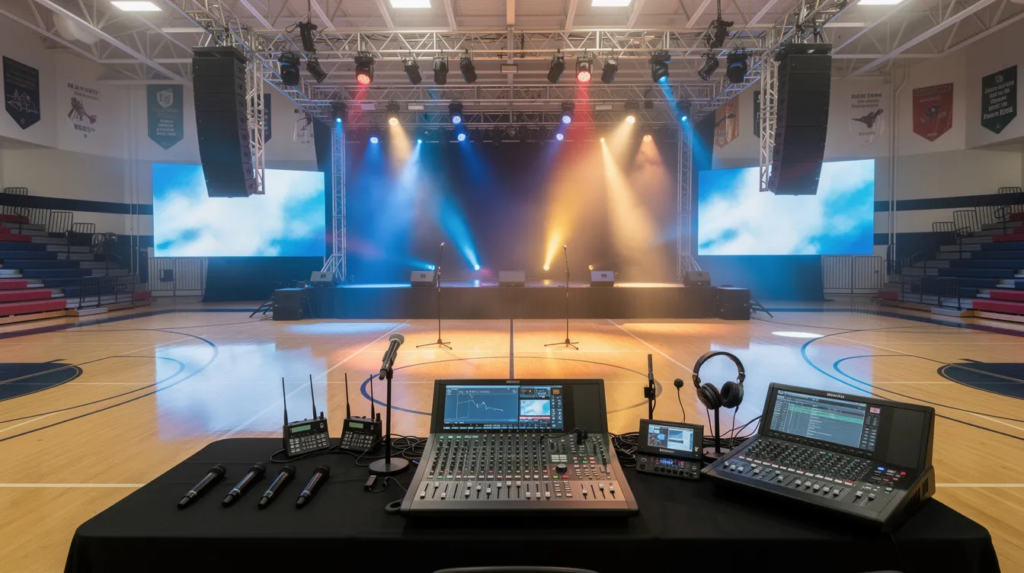
A concert LED display system is more than panels. It needs power distribution, signal paths, processing, networking and operators to function reliably. LED technology consumes less power and generates less heat compared to older display systems, but a large screen still demands careful electrical planning.
Power planning:
-
Estimate total power draw for LED screens, processors and playback gear. A typical panel may draw approximately 100 watts, and a large wall with hundreds of modules can demand hundreds of amps.
-
Coordinate with the venue or generator provider on tie-in locations and distribution.
-
Separate clean power for video where practical to avoid interference.
Cable and signal paths:
-
Plan routes between stage, FOH and any delay or satellite screens.
-
Allow for protected crossings and cable ramps in audience areas.
-
Build in slack and redundancy where possible.
Testing and rehearsal:
-
Allocate time for pixel checks, color calibration and playback tests.
-
Run through full show cues and camera looks when time allows.
-
Confirm failover procedures with the tech team.
Operation:
-
Define who calls video cues-tour LD, show caller or video director.
-
Ensure Front Row FX or client-provided operators are briefed on show flow and contingencies.
Concert LED screen planning checklist and comparison table
This section provides a quick-reference comparison table and a planning checklist for promoters and production teams.
|
Application |
Primary Purpose |
Typical Planning Considerations |
Typical Productions |
|---|---|---|---|
|
Upstage LED wall |
Artist visuals, scenic content, branding |
Stage width, trim height, content resolution, rigging capacity |
Touring shows, festival main stages, arena concerts |
|
Side IMAG screens |
Live camera magnification for distant audience |
Audience depth, camera count, signal routing, sightlines |
Arenas, amphitheaters, large outdoor events |
|
Scenic LED columns or surfaces |
Atmospheric and theatrical visual effect |
Set design integration, custom shapes, timecode control |
Design-heavy tours, theatrical productions |
|
Ground-supported outdoor screen |
IMAG or content where rigging is unavailable |
Ground conditions, ballast, wind load, access |
Festivals, temporary outdoor stages, parks |
|
Flown concert LED wall |
Large-format display with clear stage floor |
Structural capacity, motor ratings, safety documentation, trim height |
Arenas, permanent venues, festival roofs with rated steel |
Planning checklist:
-
Event basics: date, venue, city, indoor or outdoor, expected audience size.
-
Stage details: width, depth, trim height, roof or rigger notes, available power.
-
Screen goals: scenic vs. IMAG vs. sponsor content-or a combination.
-
Technical needs: pixel pitch, camera system, playback sources, image quality requirements.
-
Content: resolution, aspect ratio, file format, delivery timeline, safe areas.
-
Logistics: load-in window, rehearsal time, curfew and load-out schedule.
-
Weather contingency (outdoor): wind plan, rain plan, brightness settings for daylight vs. night.
For related planning resources, see Front Row FX’s pages on concert production and tour support and LED screen wall production. LED screens create immersive atmospheres through synchronized animations and effects when every item on this checklist is addressed before load-in day.