What Size LED Wall Do I Need for My Event?
There is no single standard LED wall size that works for every event. The right LED screen size for events depends on viewing distance, room dimensions, stage layout, content format and the role the screen plays in your production.
How to choose the right LED wall size
Rather than searching for a generic led wall calculator, start with the inputs that actually drive the decision:
-
Audience size and farthest viewing distance
-
Venue dimensions, ceiling height and rigging options
-
Stage width and screen placement
-
Content type (slides, video, IMAG, sponsor loops)
-
Whether the LED wall is your primary visual focus or a scenic backdrop
Physical LED wall dimensions describe the screen’s width and height in feet. Resolution is a separate measure – it depends on how many cabinets are assembled and what pixel pitch is used. Two walls of identical size can have very different pixel counts.
Typical sizes for LED walls range from 6 to 50+ feet wide. A smaller breakout may use around 10×6 ft, while a large general session might start around 22×10 ft. These are illustrative starting points, not universal specs.
LED wall screens are built by locking together individual LED cabinets or tiles, and modular LED tiles allow for flexible configurations and custom dimensions. Front Row FX approaches LED video wall production as part of the complete AV package – lighting, audio, cameras, staging and technical operation – rather than as an equipment-only rental.
The five factors that determine event LED wall size
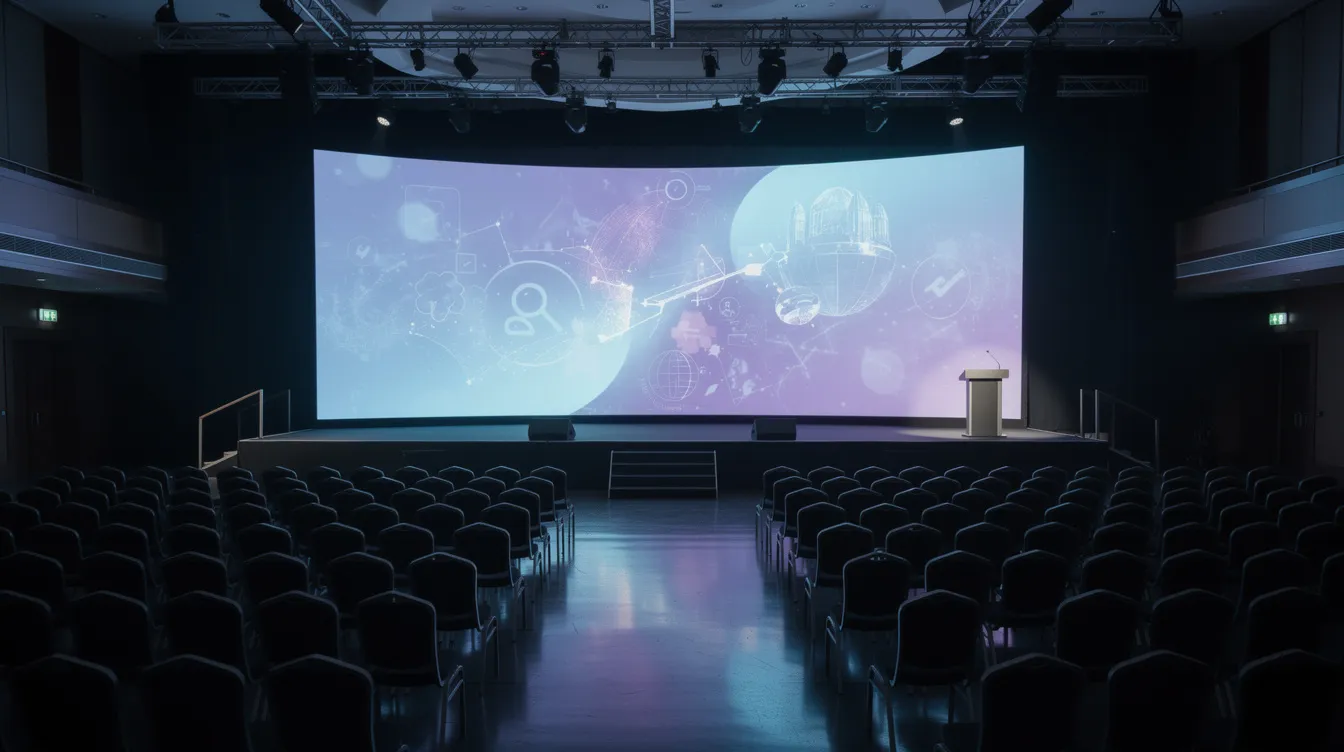
Every event LED wall size decision at Front Row FX is built around five practical factors, not just what fits on a truck. Here is how each one works when we are working through a recommendation:
-
Audience size and farthest LED screen viewing distance – deeper rooms need taller or multiple walls to maintain readability.
-
Venue dimensions and available installation area – ceiling height, rigging points and access paths expand or limit what you can install.
-
Stage width, sightlines and screen placement – the wall must feel proportional and remain visible from all major seating sections.
-
Content format and LED wall aspect ratio – slide-heavy presentations, widescreen video and panoramic graphics each suggest different shapes.
-
Pixel pitch, resolution needs and camera use – closer audiences and on-camera applications demand finer resolution.
Bigger is not automatically better. A concert-scale wall can overwhelm a low-ceiling ballroom, while a small conference LED screen may be ineffective in a large convention hall. Front Row FX evaluates these factors consistently across indoor and outdoor productions throughout Minneapolis, St. Paul, greater Minnesota, Wisconsin, Chicago and the broader Midwest.
Audience size and farthest viewing distance
Readability for the person in the last row is the primary driver of screen height. Front Row FX does not rely on a single universal formula, but accepted guidelines help frame the conversation.
-
Screen height should usually be one-sixth to one-tenth the distance to the furthest viewer. The common viewing distance rule indicates the furthest viewer should be no more than 6 to 8 times the screen height.
-
Viewers sitting very close to the screen require smaller physical size with tighter pixel pitch to avoid visible pixel structure.
-
Theater-style seating, banquet rounds, flat floors and raked seating each change what size feels appropriate.
-
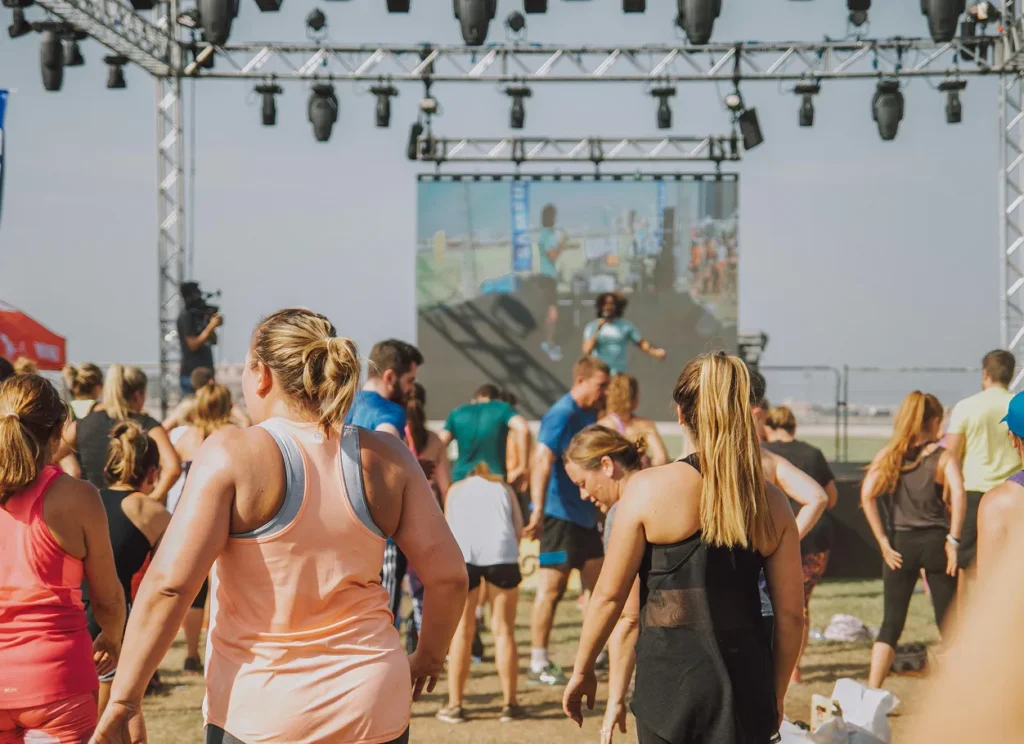
Camera image magnification (IMAG) for keynotes or performers often justifies a larger wall so faces remain visible from the back.
A 150-person corporate meeting in a hotel breakout room might start around 10×6 to 12×7 ft. A 1,000-person general session in a convention center ballroom often requires 18–24 ft wide or larger, depending on layout and content.
Venue dimensions and available installation area
Many LED wall ideas are limited or expanded by the actual room.
-
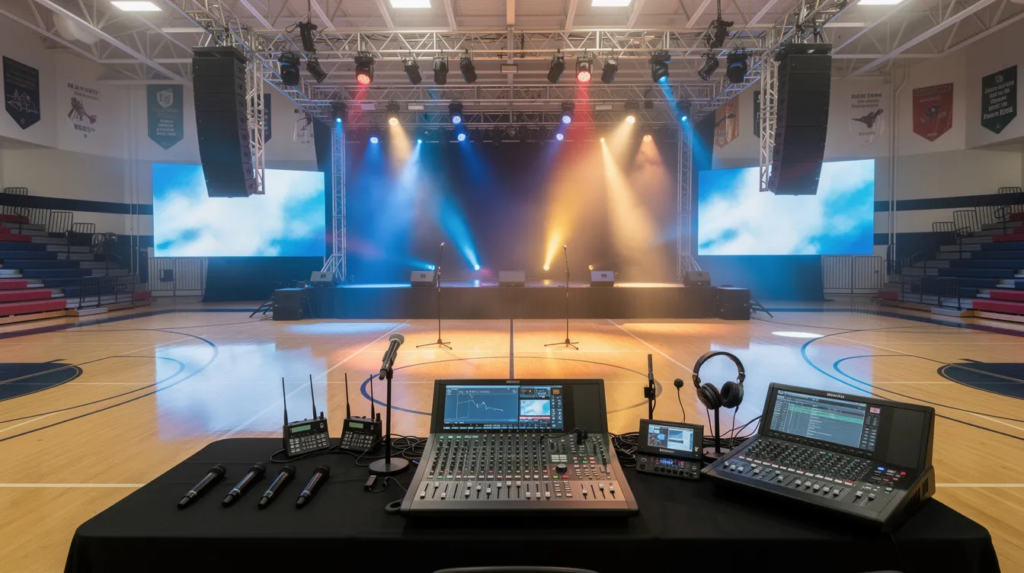
Ceiling and trim height – low ceilings in older hotels around Minneapolis or Madison may cap wall height at 12–14 ft. Clearance above the screen is needed for lighting truss, scenic headers and speaker arrays. Indoor installations generally require lower brightness targets of 500 to 1,200 nits, but bright ambient light from windows may push that higher. Mitigate ambient light by opting for high-brightness panels in bright locations.
-
Width limitations – stage platforms, stairs, podium positions, emergency exits and venue rules about blocking doors all affect available width.
-
Rigging and structure – some rooms support flying a large LED video wall from house points; others require ground support structures that consume floor space and backstage clearance.
-
Access paths – loading docks, elevators and narrow corridors affect what LED wall dimensions are practical to bring into a venue, especially in downtown Minneapolis, St. Paul and Chicago properties.
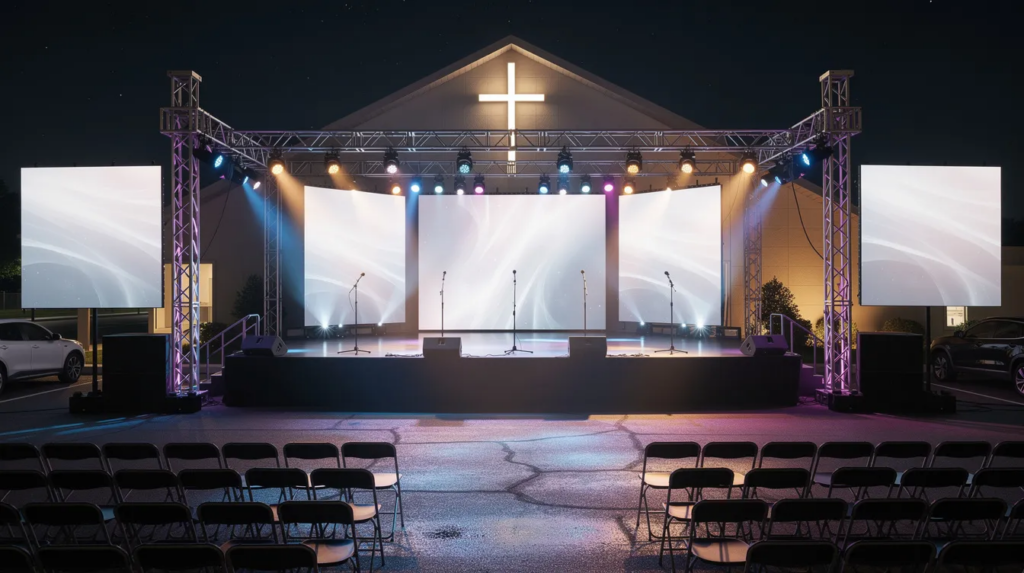
Outdoor sites introduce wind loading, ballast and weatherproof requirements. Outdoor-rated LED panels must withstand weather conditions with appropriate IP ratings. Simple room sketches or phone photos of the space are extremely helpful early in the plan.
Stage width, sightlines and screen placement
The LED wall must feel proportional to the stage and remain visible from as many seats as possible.
-
On a 24 ft-wide stage, a single 22 ft-wide wall may feel dominant but balanced. On a 40 ft-wide stage, the same wall might look undersized.
-
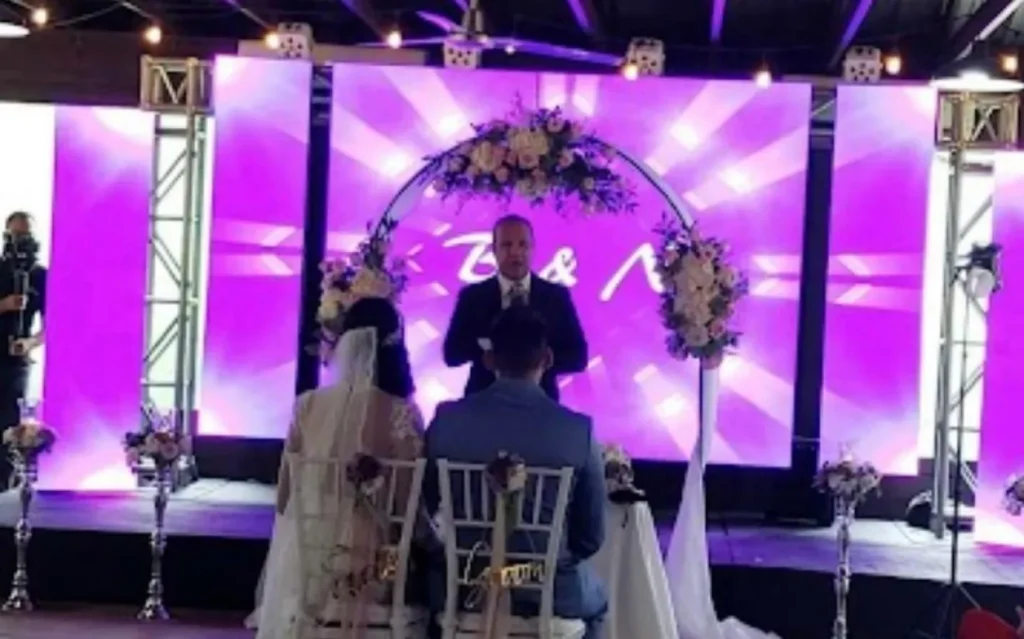
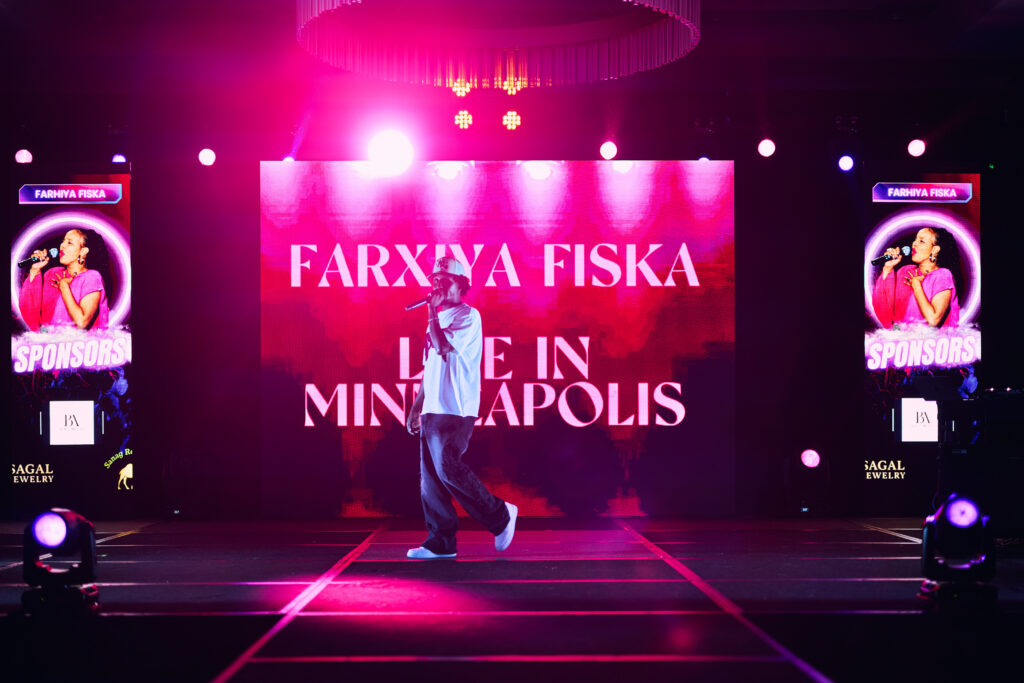
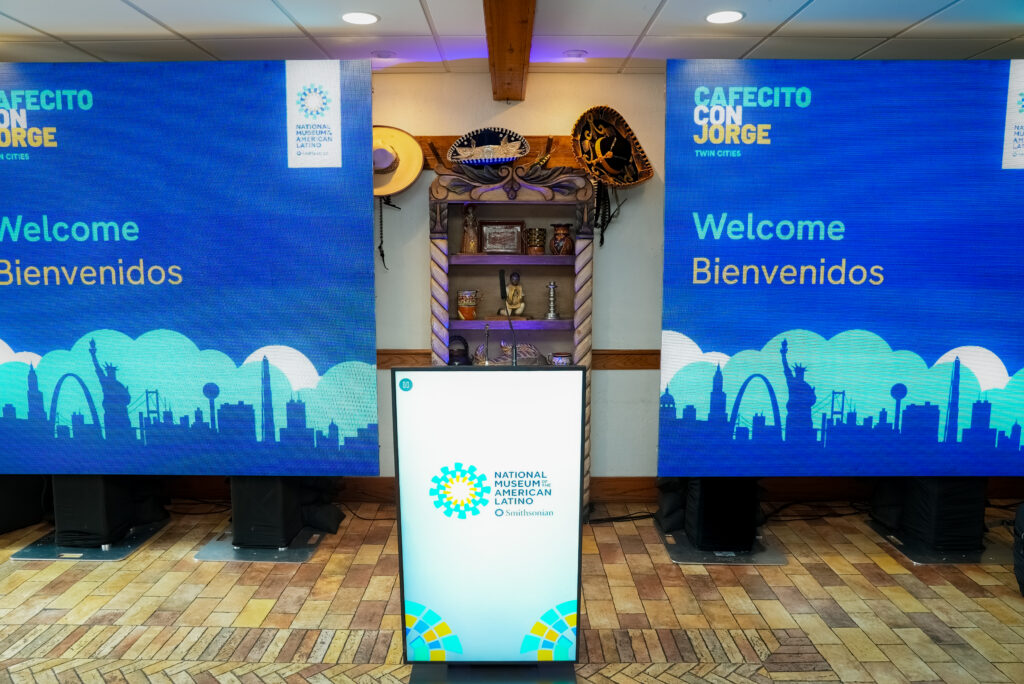
Placement options: single center wall behind the presenter, dual side screens with scenic center, or wide panorama wall spanning much of the upstage line.
-
Sightlines: avoid blocked views behind chandeliers, columns or balcony fronts. Adjust height so attendees at banquet rounds can see above heads. Consider camera angles so lenses do not cut off part of the screen.
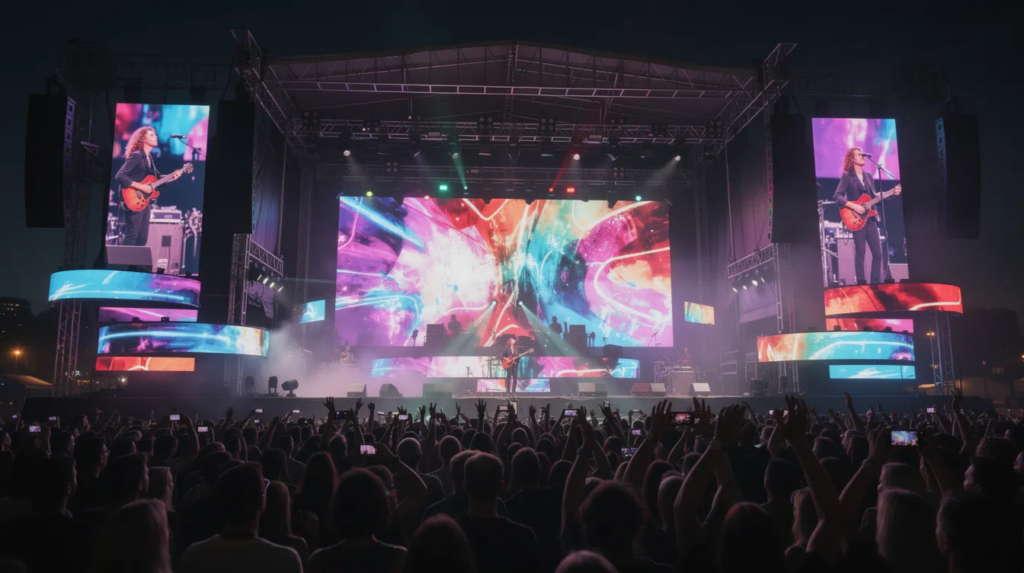
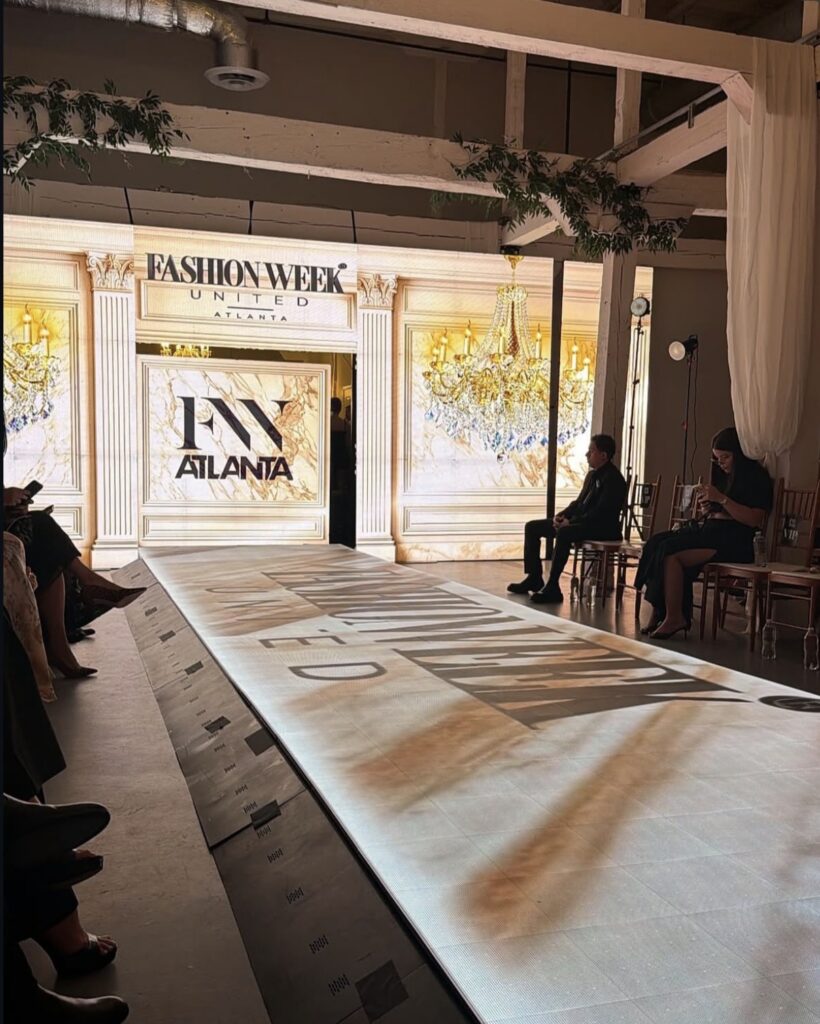
Line-array speakers, scenic elements and decor compete for stage real estate, so LED wall dimensions must be coordinated with the full stage plot. For concert production, a concert LED wall is often intentionally very wide to create a strong visual canvas for live IMAG and LED video content, while corporate and nonprofit events typically prioritize balanced proportions.
Content format and LED wall aspect ratio
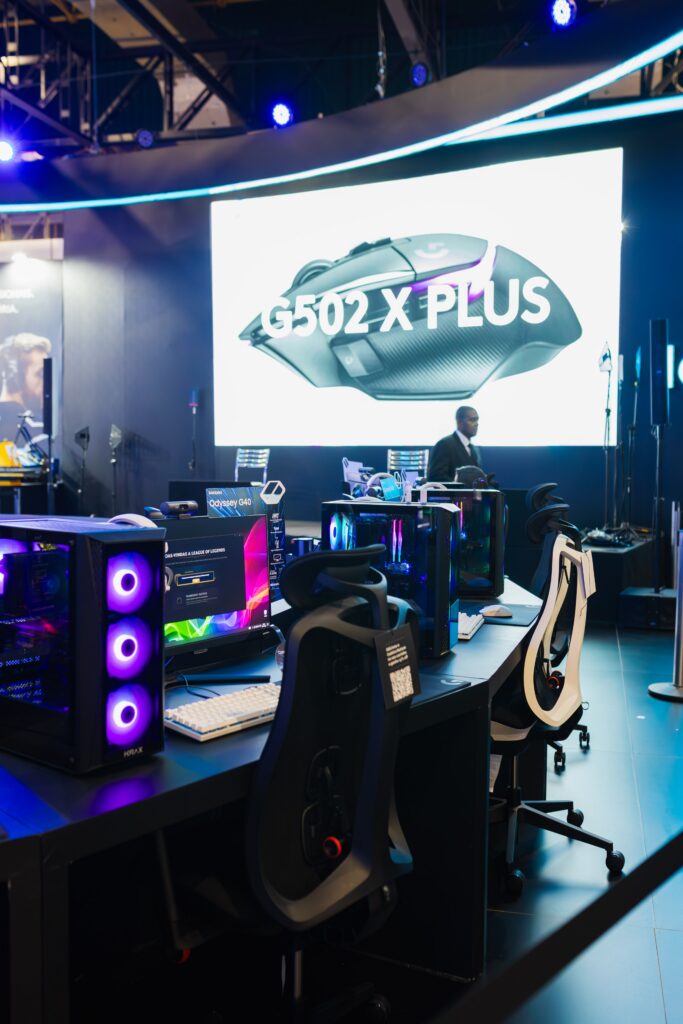
Content format should drive aspect ratio decisions. The typical LED screen aspect ratio is 16:9 for widescreen video presentations, and a 16:9 LED wall is ideal for most business uses – slides, Keynote decks, 1080p camera feeds and hybrid meeting layouts.
Common aspect ratios include 16:9, 4:3 and 21:9. A 21:9 ratio is suitable for immersive visual experiences like scenic backdrops, concerts and creative stage designs. Ribbon or strip LED walls can serve as accent bands above or below a main screen. Aspect ratio affects content fit and viewing experience directly.
-
Mismatched ratios cause black bars, stretching or cropping – choosing the wrong ratio is one of the most common mistakes.
-
Custom aspect ratios require careful planning for content. Designers must build assets specifically for the wall’s pixel map.
Front Row FX helps plan aspect ratio alongside content production, ensuring LED wall dimensions align with slide templates, lower thirds, live camera frames and sponsor loops. These applications are designed so planners can focus on messaging and show flow rather than technical details.
Pixel pitch and image resolution
Two LED walls with the same dimensions can have very different resolution. The difference is pixel pitch – the distance between LED dots measured in millimeters. Smaller numbers mean more pixels and finer detail.
-
For indoor viewing distances, a pixel pitch of 1.5mm to 2.9mm is recommended for clarity. Larger pitch is acceptable for long distances, especially outdoor events.
-
Front Row FX uses internal tools that function as an LED wall resolution calculator – we combine pixel pitch, cabinet resolution and wall dimensions to calculate the final pixel count and select the right configuration.
-
Higher resolution improves IMAG quality and readability of fine text but may increase cost, power requirements and processor needs.
For most corporate, nonprofit and gala events, the key questions are: will text and logos be crisp from the back of the room, and will live camera shots look clean on the chosen wall size and pitch? Front Row FX recommends pixel pitch options once we know audience distance, indoor or outdoor status, and whether live cameras are part of the production.
Representative LED wall sizes for common event scenarios
The following examples are starting points, not guaranteed prescriptions. Final LED wall dimensions always depend on venue and production design.
|
Scenario |
Audience |
Venue Type |
Representative Size |
Primary Use |
Key Planning Notes |
|---|---|---|---|---|---|
|
Smaller corporate presentation |
50–150 |
Hotel breakout |
~8×5 to 12×7 ft |
Slides, video |
Small LED walls typically measure 6 to 10 feet wide; keep proportional to tight rooms |
|
Ballroom conference or gala |
200–500 |
Hotel ballroom |
~16×9 to 20×11 ft |
IMAG, branding, slides |
Medium LED walls commonly range from 10 to 25 feet wide; consider table layouts and sightlines around pillars |
|
Large general session |
500–1,500+ |
Convention center |
~22×10 to 32×12 ft |
Dominant main screen, IMAG |
May need support screens for side seating; verify rigging capacity |
|
Concert or live performance |
500–5,000+ |
Theater, arena, outdoor stage |
~24×12 to 40×16 ft |
IMAG, concert visuals |
Large LED walls are usually 20 to 50+ feet wide; additional LED strips or side walls common |
|
Outdoor watch party |
200–2,000+ |
Park, fairground, lot |
~16×9 to 30×16 ft |
Live feed, broadcast |
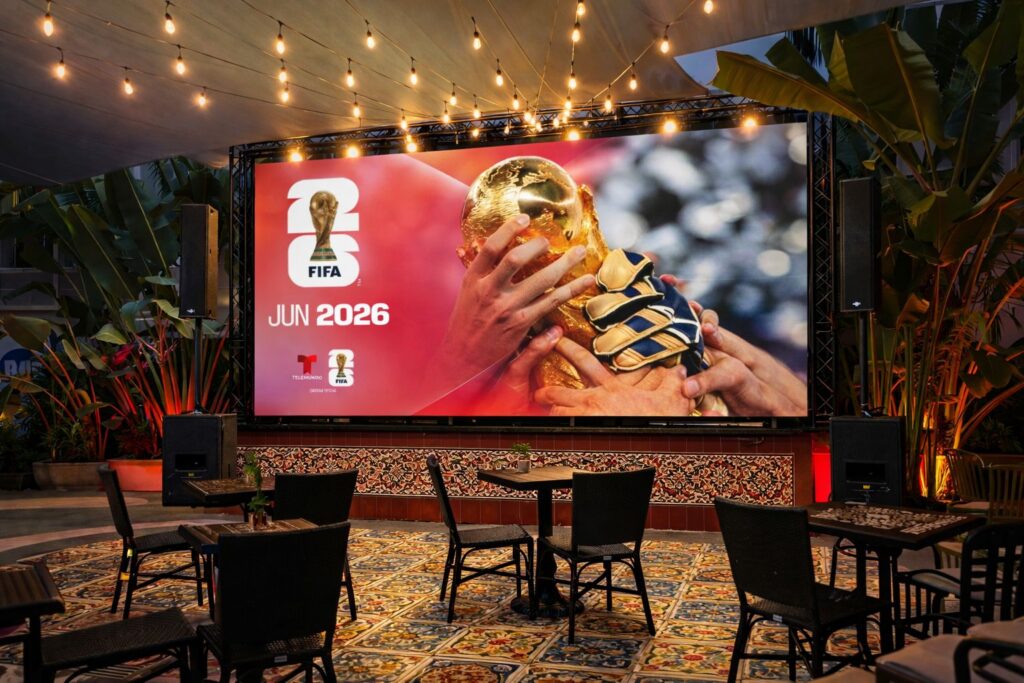
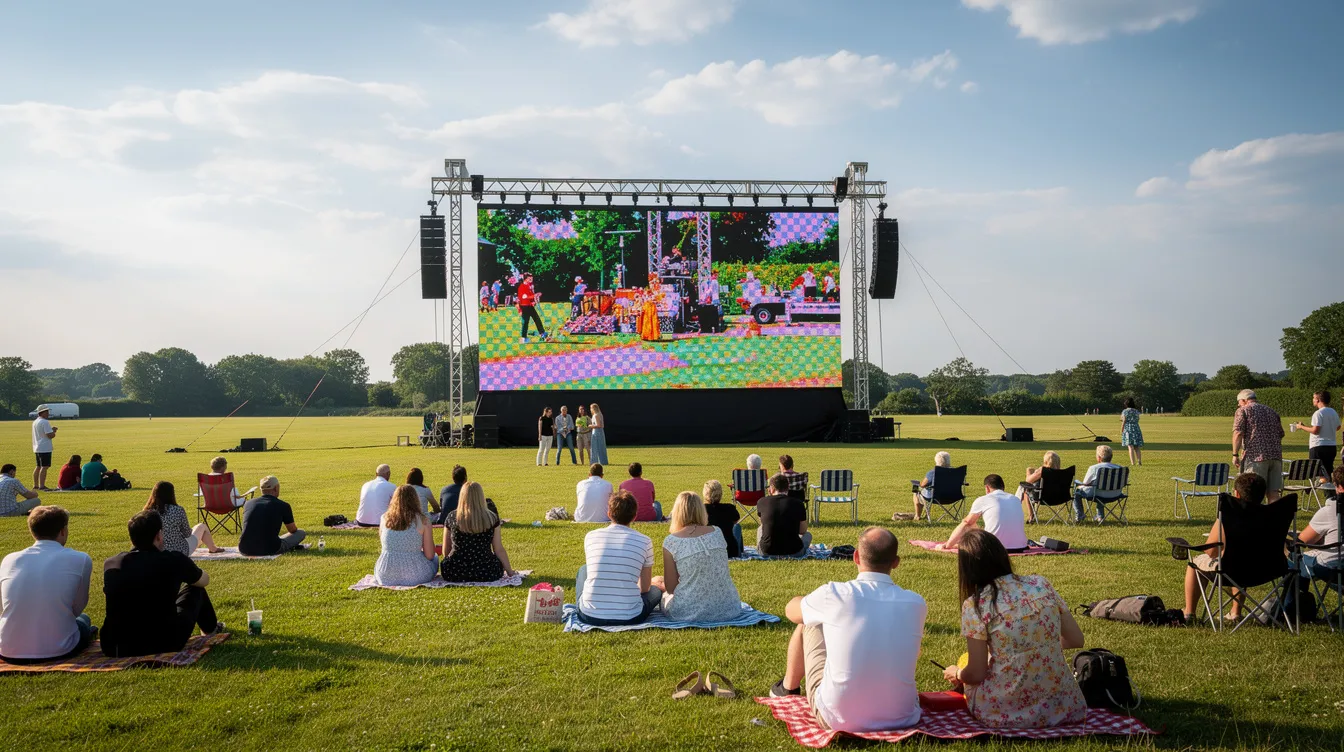
For outdoor setups, brightness requirements range from 5,000 to 10,000 nits to combat glare; weather-rated cabinets essential |
Front Row FX adjusts these baselines once we review actual room drawings, seating maps and content plans.
Information we need to recommend an accurate LED wall size
A quick call or email with a few specific details allows Front Row FX to size your event LED wall far more accurately than any generic wall calculator. Here is what helps us the most:
-
Event date(s) and schedule (load-in, rehearsal, show, strike)
-
Venue name, city and room
-
Expected audience size and room layouts (theater, classroom, rounds, mixed)
-
Farthest viewing distance or approximate room depth
-
Indoor or outdoor environment and any daylight concerns
-
Stage dimensions and any existing set elements
-
Whether the LED wall is the main screen, backdrop or part of a multi-screen design
-
Content types (slides, spreadsheets, videos, IMAG, sponsor loops)
-
Preference for standard 16:9 aspect ratio vs. creative or ultra-wide configurations
-
Any venue rules about rigging, weight limits or noise
Basic diagrams, CAD drawings or even phone photos of the room help us dial in wall size and placement. Reach out early so LED wall decisions integrate smoothly with lighting, audio, staging and show calling.