LED Wall vs Projection: How to Choose the Right Screen for Your Conference or Corporate Event
Choosing between an LED wall and a projector for your conference isn’t just a technology question. It’s a room question, a content question, and a budget question. This guide walks through each factor so you can make the decision that actually serves your audience.
LED Wall vs Projection: Quick Answer for Busy Planners
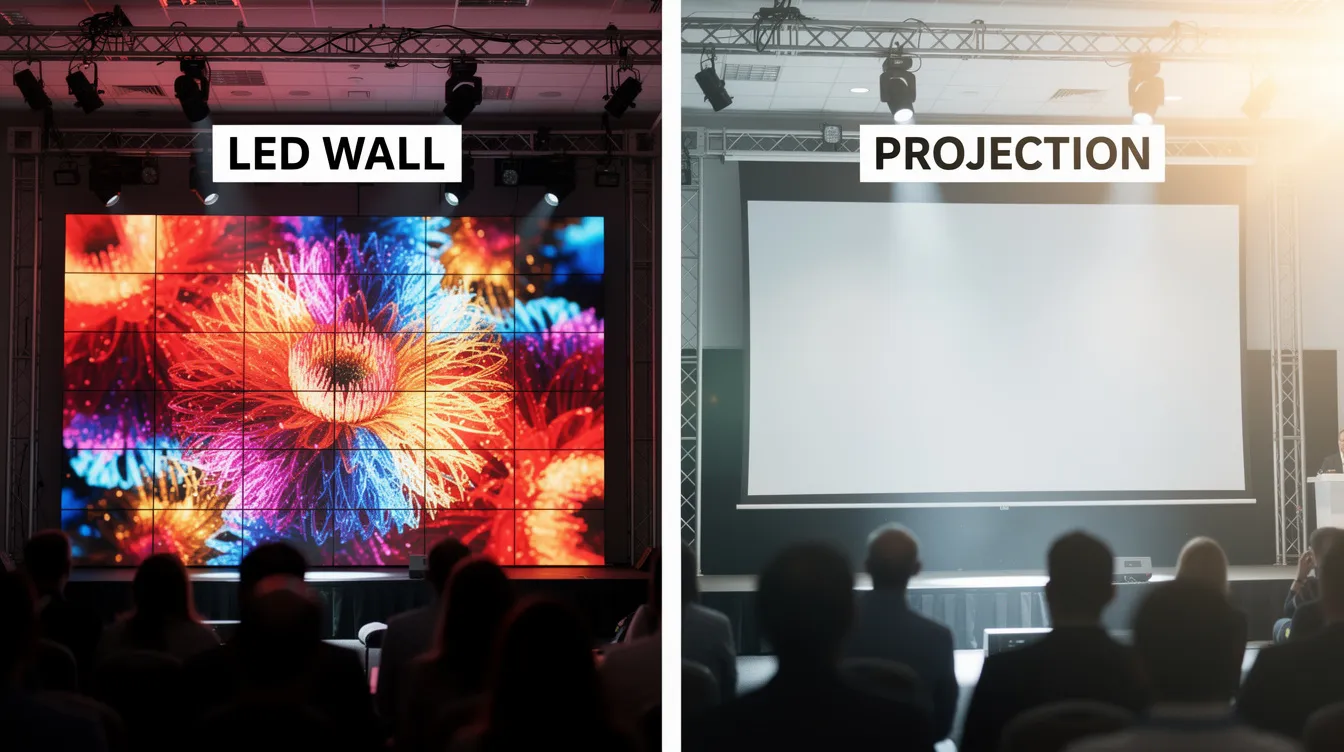
For a typical 300–500 person corporate event in a hotel ballroom-the kind we see regularly across the Twin Cities-neither LED nor projection wins automatically. If the room has chandeliers on, windows letting in daylight, or expo-floor lighting that can’t be dimmed, an LED wall will deliver brighter, higher-contrast visuals without fighting the room. If the ballroom has good light control, existing ceiling-mounted projection, and the event is a standard general session with slide decks, a well-specified projector and screen can look excellent at a lower price point.
Here’s the short version:
LED wall: brighter, higher contrast, better in ambient light, more visual impact, more flexible shapes and aspect ratios, higher cost, more power draw and setup time.
Projection: lower cost, good for large images in darker rooms with enough throw distance, relies more on room conditions, can use existing venue screens.
The right display is the one that makes your content work for your audience in your specific room-not automatically the brightest or the newest option.
Front Row FX provides both LED video walls and projection systems for corporate events across Minnesota, Wisconsin, and the Upper Midwest. The rest of this article is a neutral decision guide built from over a decade of production experience.
How LED Video Walls and Projectors Work (and Why That Matters)
Understanding the underlying technology helps explain why each solution behaves differently in real event spaces.
LED video wall:
Modular tiles or cabinets lock together to form one continuous large display. LED walls are modular and can be configured to any size or shape.
Each pixel is a light emitting diode-the screen itself is the light source. Common indoor pixel pitch ranges in 2026 run from roughly 1.5 mm to 3.9 mm for conference LED walls.
Suited to conference stages, product launches, brand activations, and large corporate events.
Projector-based system:
A large projector sends light through a lens onto a projection screen (front or rear projection). Projectors rely on reflected light, which means ambient light directly competes with the image.
Current corporate environments commonly use laser projectors in the 7,000–20,000 lumen range for conference rooms and ballrooms. Lower-lumen units serve small meeting rooms and home theater applications.
Why does this matter? LED is emissive-it creates its own light, so it fights ambient light far more effectively. Projection is reflective-it bounces light off a screen, so brightness and image quality depend on the specific technology used because each solution serves different environments. Both systems integrate with the same content management and switching workflows: laptops, media servers, camera systems, and playback decks.
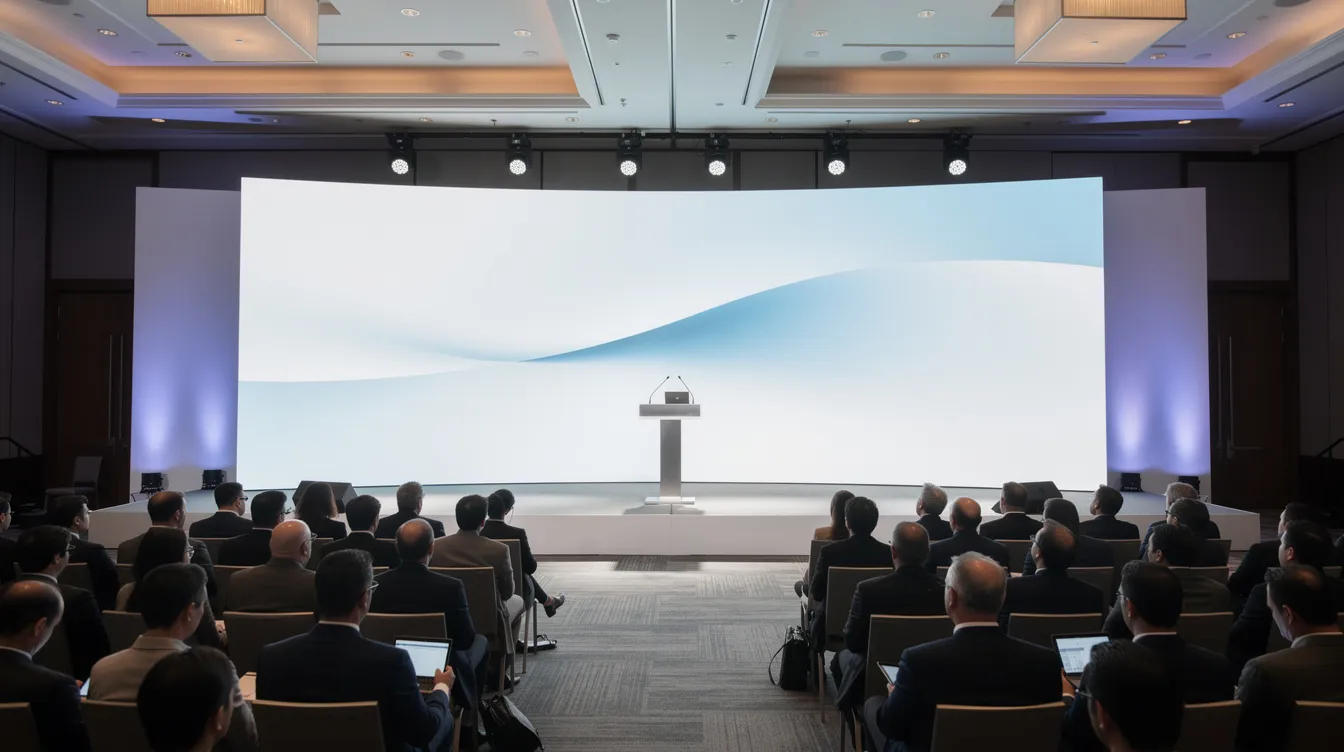
Image Quality: Brightness, Contrast, Resolution and Pixel Pitch
Image quality is often the deciding factor when selecting conference AV screens.
Brightness and ambient light: Indoor LED walls typically operate at 1,000–1,500 nits for conference settings, staying punchy even with chandeliers and windows. LED video walls offer superior image quality and brightness, and they maintain visibility in bright environments where traditional projectors struggle. A large projector for the same ballroom might need 7,000–10,000 ANSI lumens-and even then, the image can look washed out unless house lights are dimmed. Picture a 1,000-person awards night in a downtown Minneapolis hotel with partial house lighting on: LED walls are brighter and clearer in well-lit environments like this, while projection may lose saturation and contrast.
Contrast: LED walls deliver deeper blacks because individual pixels can turn off completely. This is critical for video content and IMAG (live camera feeds) at corporate events. Projection screens can never produce true black-they reflect ambient light, and black levels depend on screen material, lens quality, and room control.
Resolution and pixel pitch: Pixel pitch is the distance (in millimeters) between LED pixel centers. Tighter pixel pitch means higher resolution and sharper image quality. For a 60-foot deep ballroom, P2.6 delivers crisp detail for front-row viewers at 8–12 feet, while P3.9 works for audiences seated further back. LED walls provide higher resolution than projectors at equivalent screen sizes. Meanwhile, a 1920×1080 projector can still look crisp on a large projection screen at longer viewing distances, especially when content uses larger fonts and simple graphics.
Content type matters: Detailed spreadsheets, small text, and UI demos demand tighter pixel pitch or higher-lumen projection with a sharp lens. For cinematic video and brand films, both projection and LED can look excellent if sized correctly. High-quality content maximizes visual impact on LED walls, but well-designed slides also present beautifully on a properly specified projector.
Mini example: A conference LED wall with 2.6 mm pitch serves a leadership summit with data-heavy presentations in a bright room. A large projector and screen works well for a more budget-conscious internal meeting where house lights can be lowered.
Room and Audience Factors: Ambient Light, Depth, Sightlines and Seating
The room often decides between an LED wall vs projector more than any spec sheet.
Ambient light: Conference rooms, expo halls, and hotel ballrooms with skylights all present different challenges. LED walls handle uncontrolled light-trade shows, glass foyers, atriums-far better than projection. Projectors need dark rooms for optimal image quality, which isn’t always possible during daytime sessions where attendees need to take notes.
Room depth and throw distance: Projectors require adequate throw distance. Standard, short throw projectors, and ultra-short-throw lens options exist, but in a shallow room there may not be enough depth for a large projector image. In those cases, an LED screen for conference use is a better fit because the display sits at the stage edge with no throw needed.
Sightlines: Truss, chandeliers, low ceilings, and balcony overhangs can block a projector’s light path. Projectors can cast shadows if obstructed by people or objects-a common issue with front projection when presenters walk across the stage. Rear projection solves this but consumes significant backstage space. LED walls avoid beam shadows entirely but do have a physical footprint onstage.
Audience size and seating: A 60-person U-shaped meeting needs a very different display than a 1,200-person theatre-style corporate event. When multiple screens-dual projection screens or flanking LED walls-improve sightlines for side seating, the modular design of LED panels makes it straightforward to build independent screen zones.
Front Row FX typically walks the room (or reviews floorplans and CAD drawings) with planners to match display type and size to seating maps and stage design.
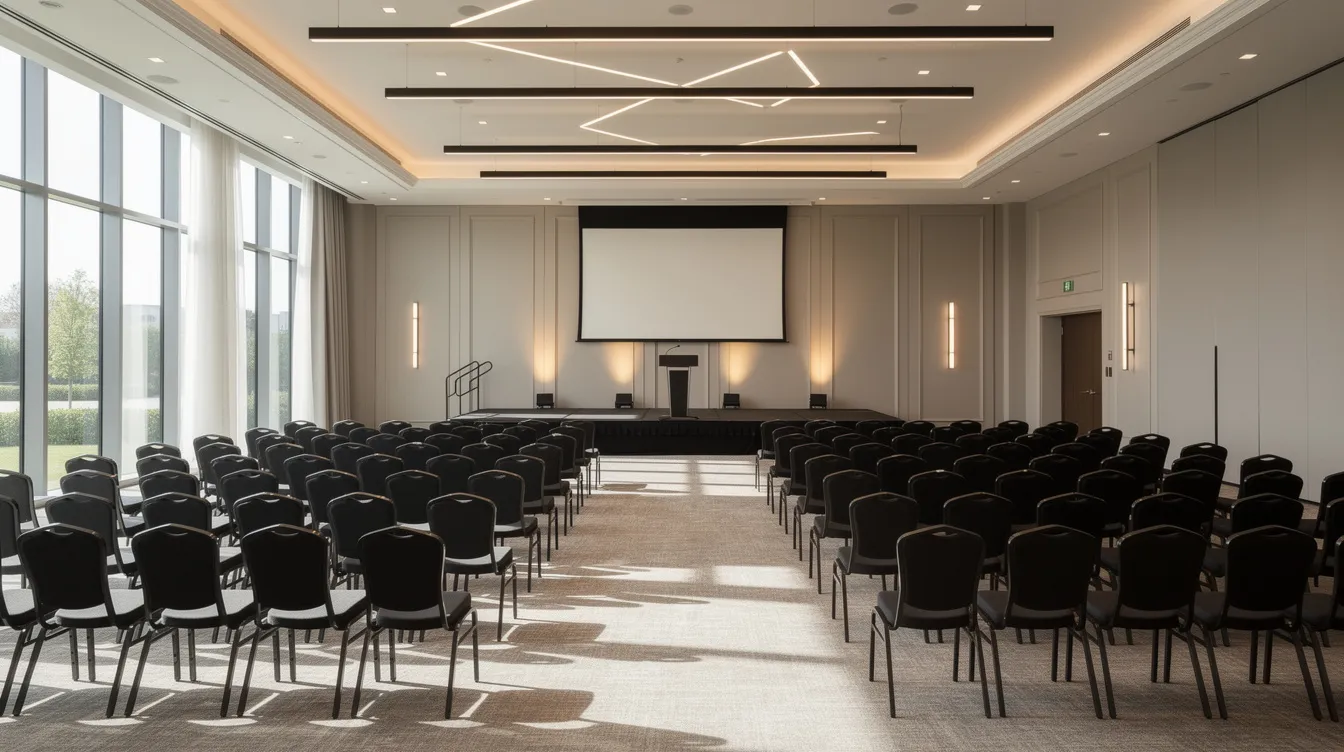
Stage Footprint, Rigging, Ceiling Height and Power
These logistics aren’t glamorous, but they often determine what’s actually feasible.
Stage footprint: Front projection requires a clear throw path from projector to screen. Rear projection consumes significant backstage depth. LED walls sit directly on or just behind the stage edge, preserving audience space but requiring ground support or rigging structures.
Ceiling height and rigging: Typical hotel ballroom ceilings in Minneapolis range from 18 to 24 feet, limiting both tall LED walls and large projector screens. LED walls are heavier, requiring specialized rigging and more setup time than projectors. Flying an LED video wall demands rated truss and rigging points capable of supporting hundreds of kilograms, while screens and projectors are lighter but still need safe support.
Power and heat: A mid-size indoor LED video wall draws roughly 150–250 watts per square meter at full brightness. A large projector-especially a high-output laser unit-may need dedicated circuits. In some venues, power availability or circuit layout might make projection simpler, especially for smaller conferences.
Real-world scenarios:
An older historic venue in St. Paul with limited rigging capacity and tight backstage naturally favors projection.
A modern convention center ballroom with robust rigging and power makes an LED or hybrid approach easy to support.
Content and Use Case: Presentations, Video, IMAG and Hybrid Events
What you’re showing matters as much as the hardware displaying it.
Slide decks and data-heavy presentations: Small text, financial tables, and software screenshots demand clarity. LED video walls with appropriate pixel pitch make text razor sharp even in bright rooms. Well-specified projectors in controlled light can still work well for standard PowerPoint-style corporate events.
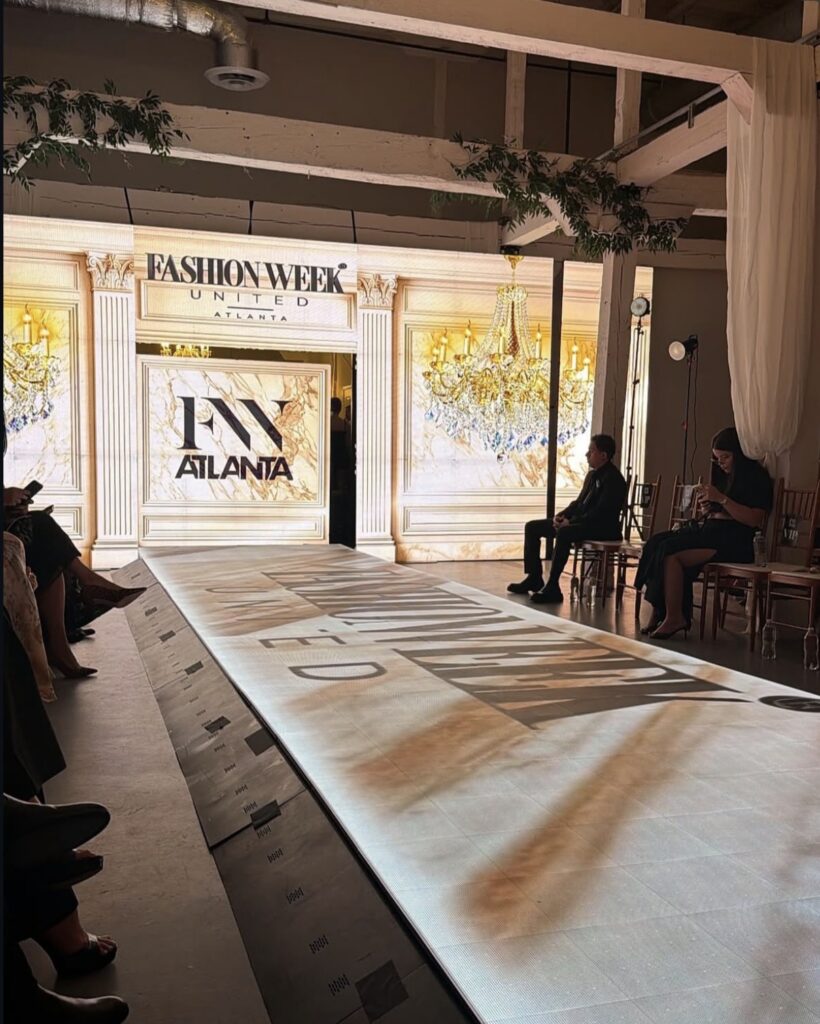
Brand films and product launches: The visual impact of event LED walls is hard to match for product reveals-think a new medical device launch with saturated color and dynamic graphics. But the immersive look of large projection in a darkened room, akin to a home theater but on a conference scale, can also create a powerful experience. Projection mapping allows for immersive visuals on irregular surfaces and creates optical illusions and immersive storytelling experiences when the venue and content call for it.
IMAG and broadcast: A refresh rate of 3,840 Hz or higher is ideal for broadcasts. High refresh rate LED video walls avoid the flicker and moiré that cameras sometimes pick up. Projection can also work for IMAG, especially in theatre-like settings with darker rooms. LED walls provide a better visual impact for concerts or high-energy events where cameras are always rolling.
Hybrid events and streaming: Bright LED screens help remote audiences see on-site content clearly when cameras are positioned at the back of conference rooms. Dimmer projected images may push cameras to higher gain, introducing noise.
Content management and multiple sources: LED walls can display multiple content sources simultaneously-picture-in-picture, sponsor zones, social feeds alongside a presentation. Front Row FX can feed multiple laptops, playback systems, and cameras into either LED or projection systems through complete AV production workflows. Similar multi-source layouts work via projection using wide-format screens and video switching, though complexity increases.
Budget, Total Cost and When Projection Is the Better Value
Budget is real. Here’s where each technology sits.
Upfront costs: LED walls generally have a higher upfront cost due to hardware complexity. Conference LED wall rentals cost meaningfully more per day than single-projector solutions, especially for small to mid-size meetings. Projectors are more cost effective for temporary or smaller setups where a venue already has screens in place.
Total cost of ownership: LED walls typically last up to 10 years with low maintenance. LED walls require less maintenance than projectors over time, and replacing a faulty LED panel is easier and cheaper than projector repairs. Projectors usually have a maximum warranty of three years, and lamp-based units need frequent bulb replacements, increasing long-term costs. Laser projectors hold brightness better but still degrade over their life span.
Labor and setup: LED wall deployment is more labor-intensive, especially for larger walls or complex shapes. Existing venue projection screens and mounting can significantly reduce labor on a show. For multi-day trade shows running across many breakout rooms, projection’s simpler setup can save meaningful time. Projectors often draw less power for comparable image sizes in moderate-light rooms-a factor for multi-day conferences with many rooms. LED panels are more energy efficient per hour of operation over their lifetime, though initial power draw for a full wall is higher.
When projection is usually the better value:
Dark or dimmable conference rooms with existing ceiling-mounted projectors or built-in infrastructure
Training sessions or internal meetings where cinematic impact is less critical than cost efficiency
Very large single images where venue throw distance and screen size are available without major rigging costs
Front Row FX regularly recommends projection over LED walls when it better serves the event’s goals and budget, particularly for conference projection in breakout rooms and small to mid-size general sessions.
When an LED Wall Shines: High-Impact Conferences and Corporate Events
LED video walls are the right call in specific scenarios-not by default.
High ambient light: Expo floors, daytime product launches in glass atriums, lobby activations where LED walls maintain visibility in bright environments that would overwhelm projection.
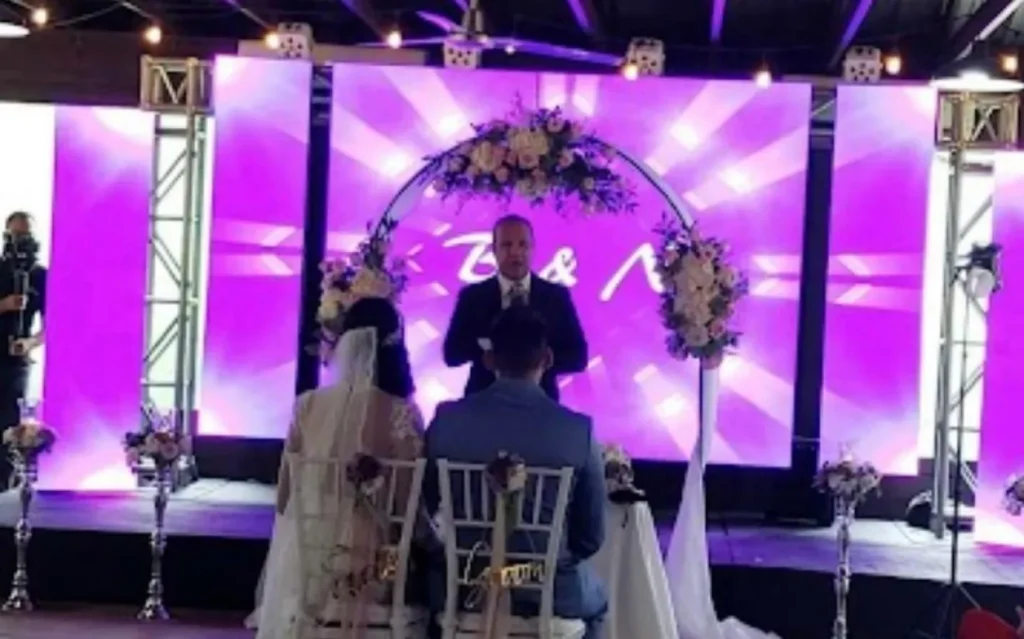
Flagship events: Investor meetings, national sales meetings, and awards shows where brand perception is critical and LED walls enhance audience engagement at corporate events. LED wall stage design can integrate the display into scenic elements.
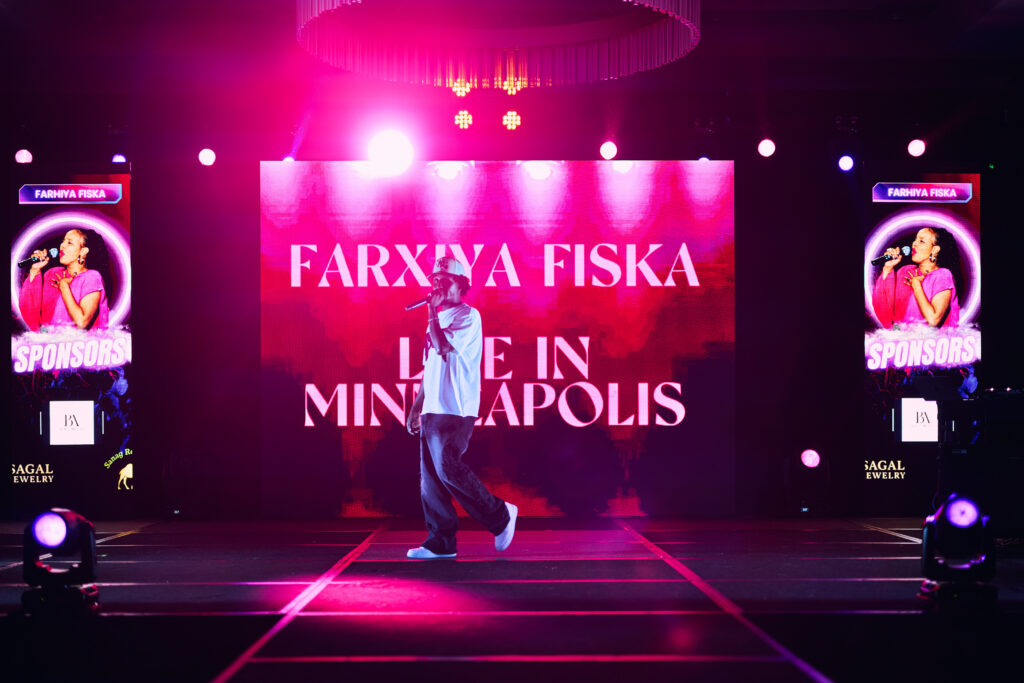
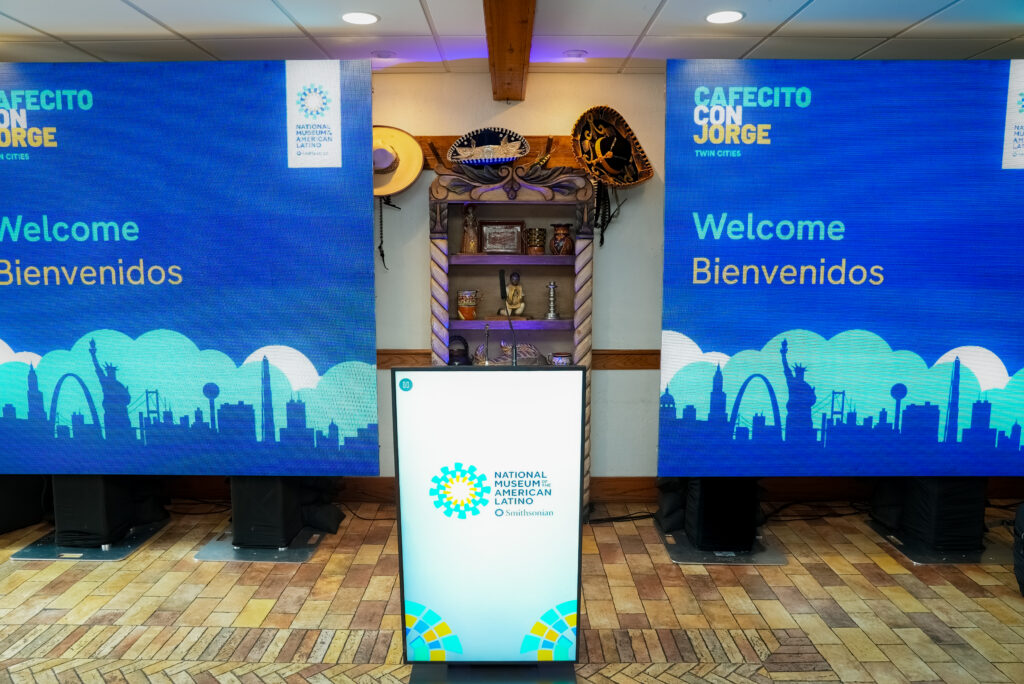
Creative stage design: LED walls can be configured in various shapes and sizes-ultra-wide panoramic backdrops, vertical columns flanking a keynote stage, or curved walls for immersive storytelling.
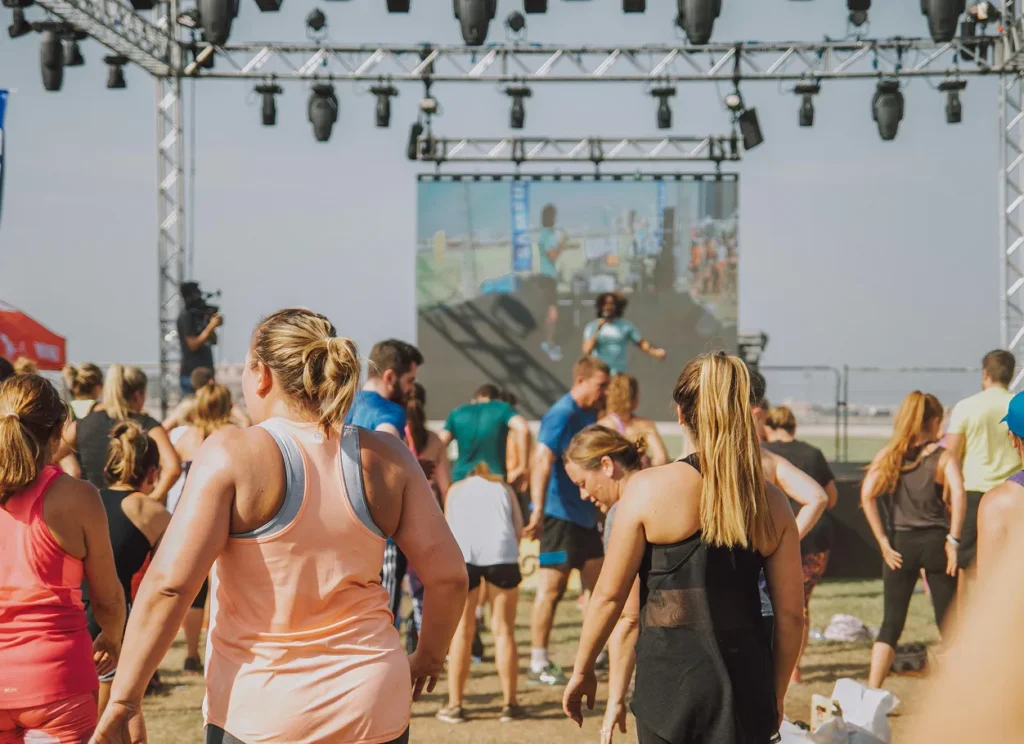
Outdoor events: Company celebrations and outdoor product launches in the Upper Midwest where sunlight makes projection impractical.
Multi-screen layouts: LED walls function as multiple independent screens or one continuous canvas for sponsors, live camera, social feeds, and presentation content on a single reliable, highly durable display surface.
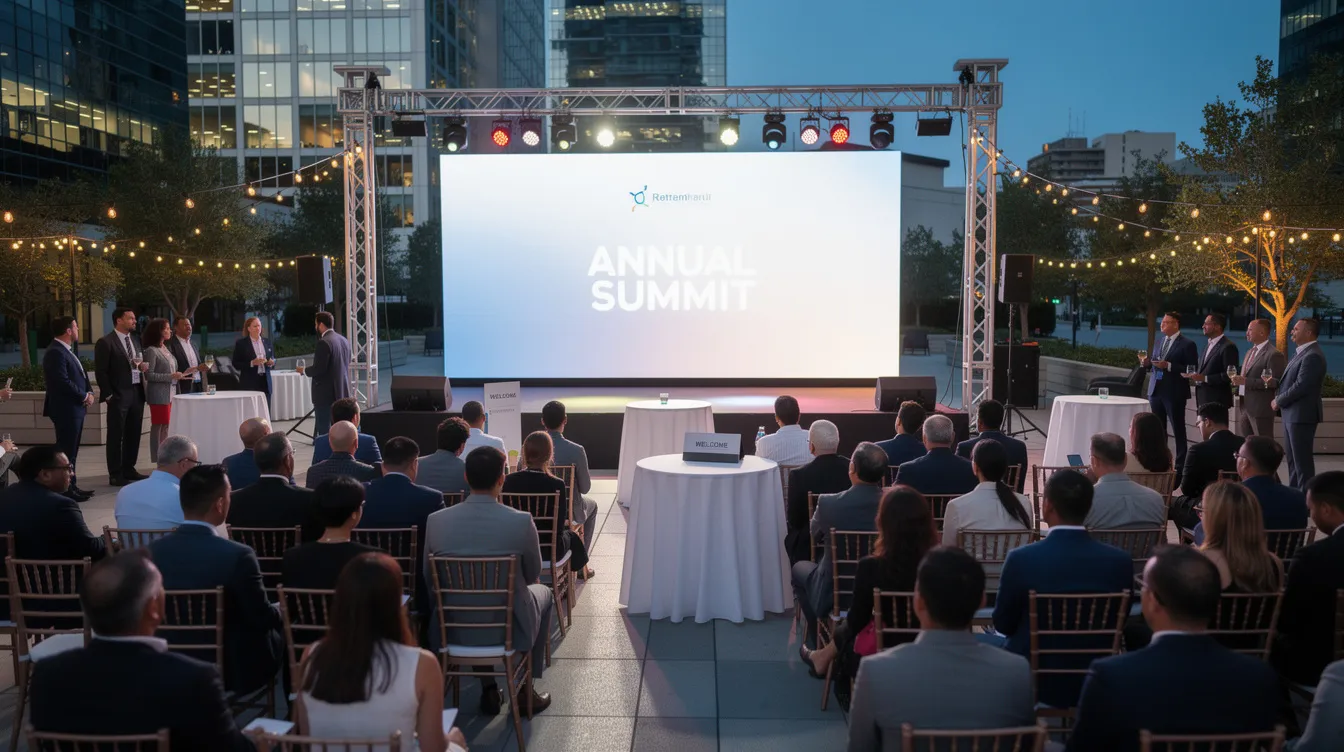
A Practical Decision Framework: How Front Row FX Helps You Choose
Use this framework when planning your next event:
Room: Evaluate venue diagrams, ceiling height, rigging, throw distance, and ambient light control. Decide whether the space favors an LED wall, a projection screen event setup, or a hybrid approach.
Audience: Consider headcount, seating layout, and furthest and closest viewing distances. Determine whether a single central display or multiple conference AV screens are needed.
Content: List what will actually be shown-slides, spreadsheets, product demos, IMAG, sponsor loops, pre-produced video. Determine minimum screen size and high resolution requirements so critical details remain legible from the back row.
Ambient light and show flow: Decide whether the room can be dimmed during key segments or must remain bright for note-taking and networking.
Budget and priorities: Clarify whether the priority is maximum impact, maximum efficiency, or a balance. Front Row FX can model side-by-side proposals with pros and cons for each.
Venue infrastructure: Check if the venue already has house projectors, screens, or LED infrastructure. Front Row FX can supplement or replace in-house systems depending on condition, brightness, and reliability.
The right display is the one that makes your content work for your audience and the room. That’s the point every planning decision should focus on.
Working With Front Row FX on Your Next Conference or Corporate Event
Front Row FX is a Minnesota-based company that designs and delivers both LED walls and projection systems for conferences, corporate events, galas, and product launches across Minnesota, Wisconsin, and the Upper Midwest. The team brings full-service support: technical design, content management, video processing, audio, lighting, installation, and show operation.
What that looks like in practice:
We walk the room (or review detailed plans) with you to find the perfect setup for your space.
We model different LED wall vs projector options for conference rooms or ballrooms.
We recommend projection where it is genuinely the better choice, even when LED is available.
Two quick examples: For a bright expo keynote space in Minneapolis, Front Row FX deployed a P2.6 conference LED wall that cut through heavy ambient light and delivered sharp graphics and IMAG for 800 attendees. For a three-day leadership conference general session in a hotel with excellent built-in LCD projection and blackout capability, the team recommended keeping the venue’s existing large projector and screen-saving the client meaningful budget without sacrificing quality or clarity for the audience.
Ready to find the right display for your next event? Share your event dates, audience size, and venue with Front Row FX and we’ll propose the right mix of LED video walls, projection screens, and supporting AV systems tailored to your world.