When To Bring In An Outside AV Production Team For Your Corporate Event
Most corporate events start with familiar resources-your internal AV staff, a few house microphones, and the venue’s installed projector. For a standard corporate meeting, that setup works. But as audience size climbs, rooms multiply, and the stakes rise, there comes a point when those everyday resources aren’t sized for the job anymore.
Setting up an outside AV production team requires clear communication and defined roles, but the purpose is straightforward: add capacity and specialized equipment rather than replace the people who already know the organization. Audiovisual production companies support corporate events and live productions by filling gaps your internal team shouldn’t have to stretch to cover.
This page will help you:
Recognize the signs that your next event has outgrown normal AV resources
Understand how internal, house, and outside AV teams work together
Plan and budget for outside event production support
See how Front Row FX integrates with internal and venue teams for conferences, galas, live events, and hybrid events across Minnesota, Wisconsin, Chicago, and the Upper Midwest
Inside, House, And Outside AV: How They Work Together
Three distinct AV resources typically show up in corporate event production, and understanding each one matters before deciding what to add.
Internal corporate AV or IT team. Your employees. They manage meetings, town halls, and everyday technology. They own institutional knowledge-speaker preferences, branding standards, internal workflows. Companies provide services like audio, video, and lighting design at the internal level, but their equipment and bandwidth are sized for daily operations, not annual flagship events.
House AV. The venue’s installed systems and on-site staff. In-house teams know venue rigging and power limits while outside teams offer customization. House AV covers basic projection, installed sound, and standard lighting for the location.
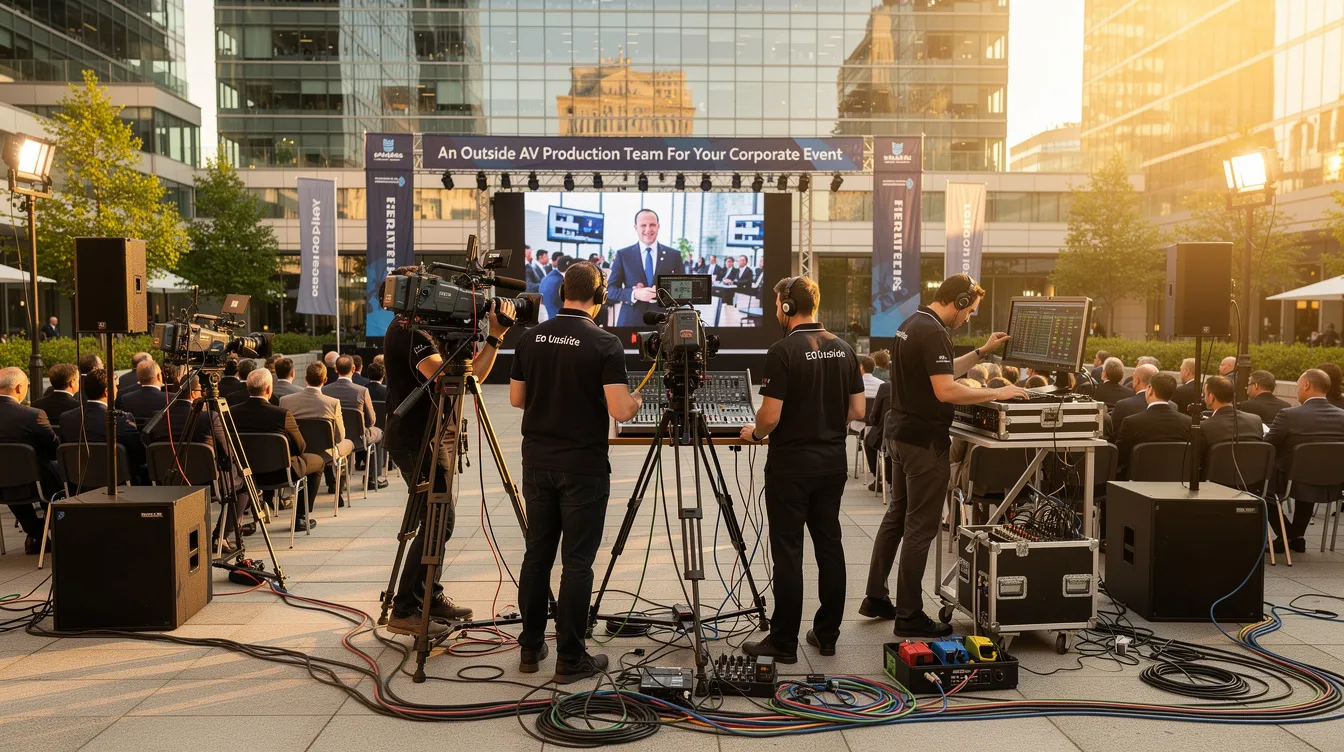
Outside AV production company. A partner that brings additional systems-LED video walls, expanded audio, intelligent lighting, staging, cameras for IMAG, and dedicated crew members for setup, operation, and teardown.
For many corporate events, the best answer is a hybrid model: internal AV handles content and coordination, house AV provides installed infrastructure, and an outside AV production team manages the systems the event actually needs. Identify all roles and responsibilities in advance of the event to ensure clarity across all three groups.
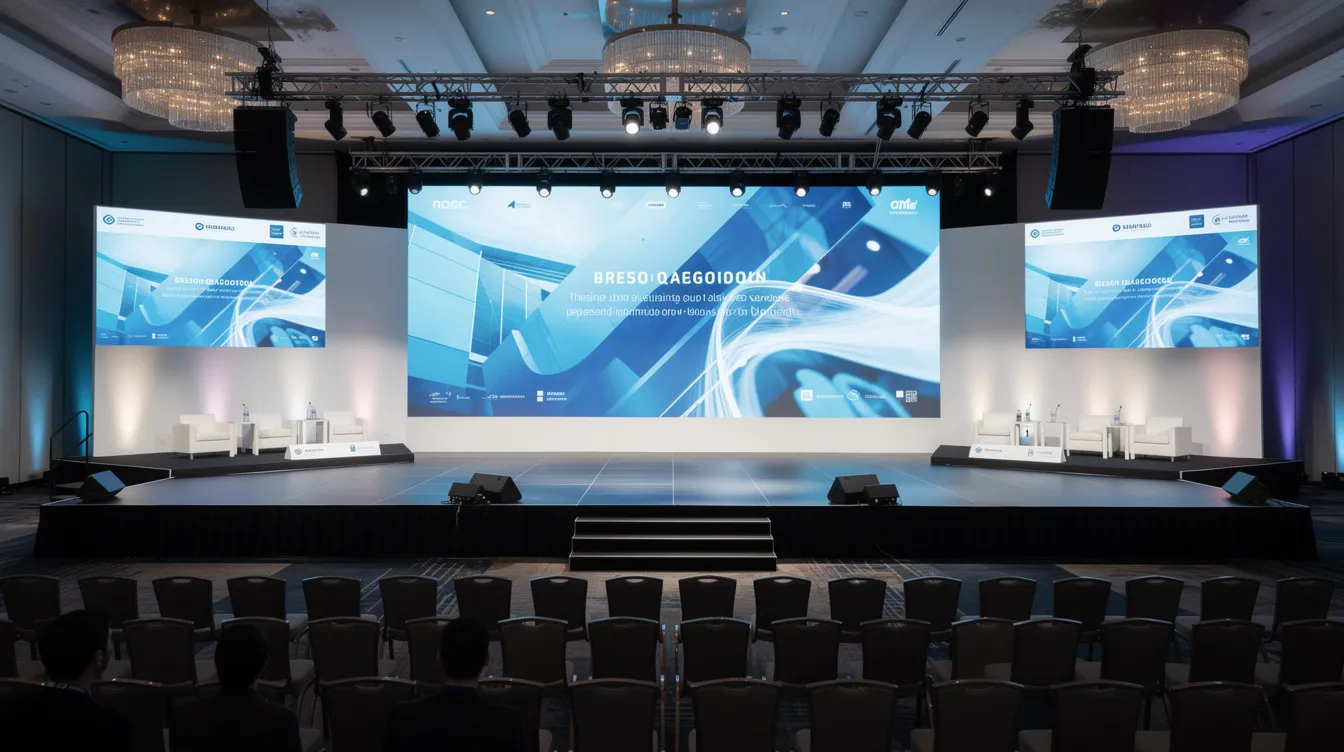
Consider a Minneapolis hotel ballroom: the venue provides basic projection and house lighting, your internal team manages slide decks and speaker logistics, and a company like Front Row FX brings in LED video, show calling, and expanded stage lighting for the general sessions.
Key Signs Your Next Event Needs An Outside AV Production Team
These are practical, observable indicators that your event production needs have grown beyond everyday resources. If several of these apply, it may be time to bring in outside support.
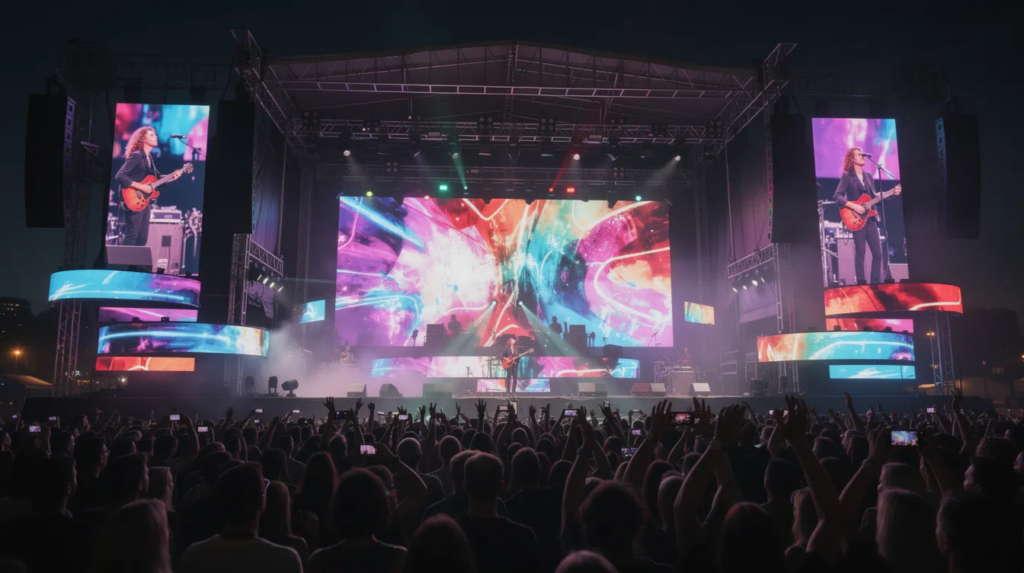
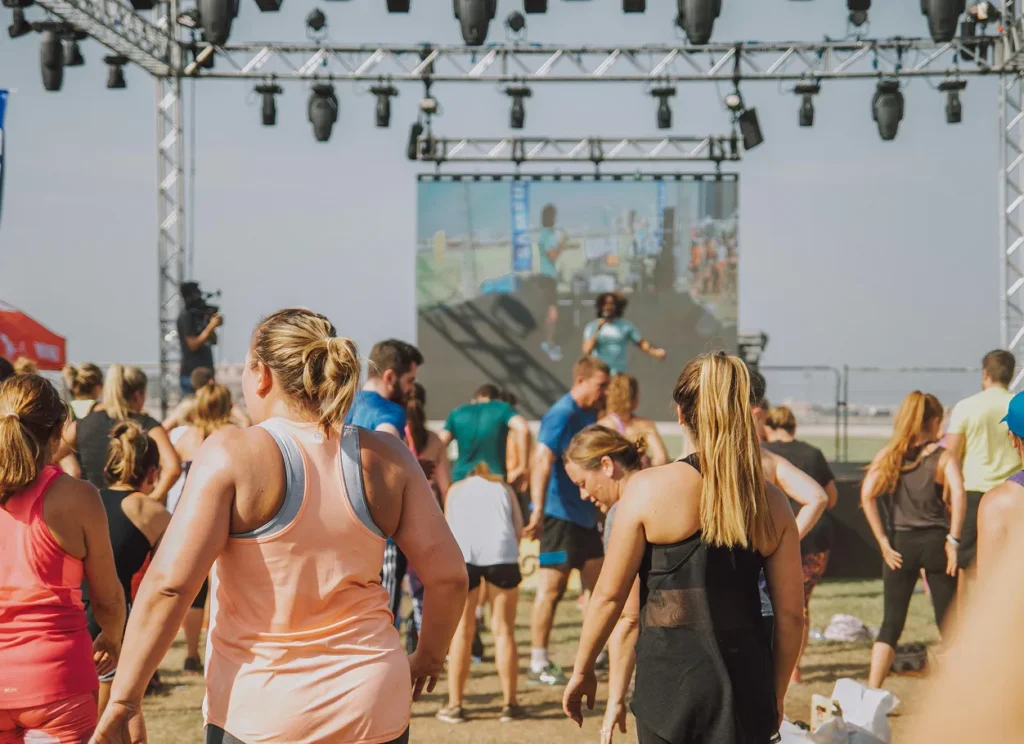
Audience and venue scale. When attendance crosses into the 500–2,000 range, sightlines, throw distances, and audio coverage change dramatically. Events with reliable AV support can accommodate 100 to 5,000 attendees, but delivering that reliability at scale requires equipment and crew beyond what most internal teams carry. Larger venues, arena-style seating, outdoor stages, or multi-city roadshows all push the boundary.
Technical complexity. Multiple breakout rooms running simultaneously, IMAG camera feeds to screens, live performance segments, or visiting artists with technical riders that exceed your normal inventory-these are clear triggers. If you need more wireless microphones than you own, or your event involves a trade show floor with separate AV zones, the math stops working with internal gear alone.
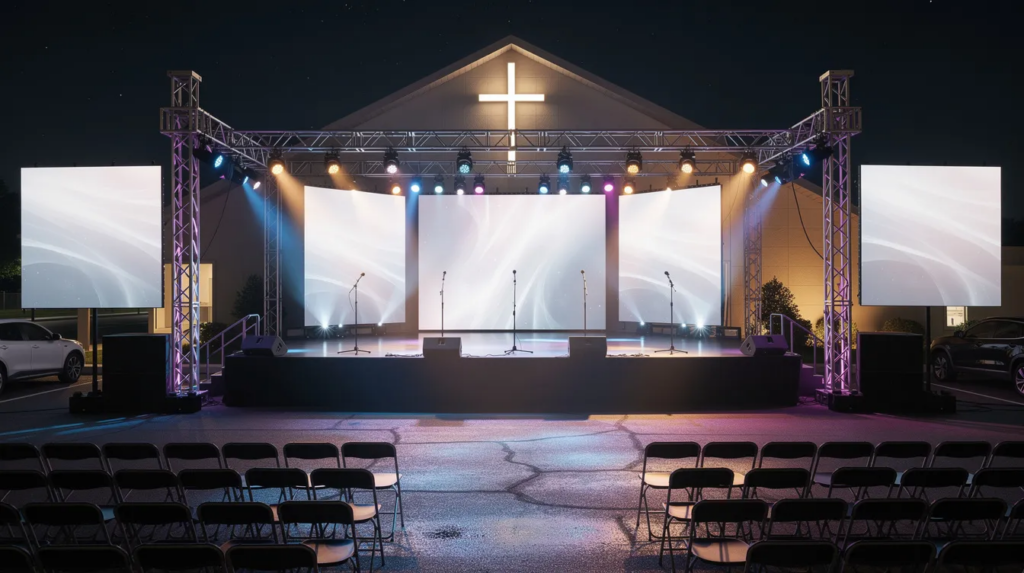
Infrastructure and staging. The need for temporary power distribution, rigging for lighting or LED panels in the ceiling, expanded stage lighting with intelligent fixtures, or outdoor LED video walls all signal that house AV alone won’t cover it. Create a detailed technical rider documenting stage dimensions and power needs, and establish detailed technical riders and load-in expectations before the event date.
Content and presentation demands. Senior executive keynotes with critical show cues, live demos, panel discussions, and real-time switching between video rolls, graphics, and camera feeds require a level of show management that goes beyond pressing “next slide.” When key messages from leadership need flawless execution, the risk of underproduction is real.
Hybrid and streaming requirements. Live streaming to remote offices, on-demand recordings, and multiple language feeds add layers of complexity. Hybrid events now represent a business reality where remote attendees expect the same production quality as the person sitting in the front row.
Operational pressure. Compressed load-in or load-out windows, back-to-back sessions, and an internal team already overloaded with event planning and communication tasks are operational triggers. If your team members can’t focus on both logistics and production, something will slip.
House AV vs Outside AV: When “Built-In” Isn’t Enough
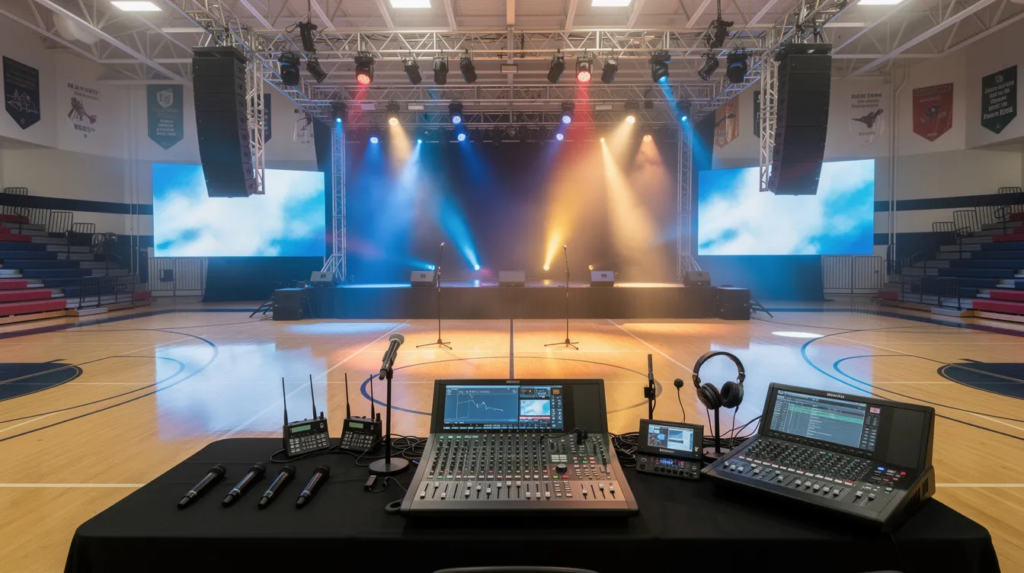
House AV works well for straightforward meetings and conferences-a projector working properly, a couple of wireless mics, and standard room lighting. For a 150-person internal sales meeting at a hotel, that setup delivers everything you need at that location.
But limitations appear as events grow:
Restricted inventory of microphones, projectors, and lighting fixtures
No LED video wall or high-powered audio systems for larger live experiences
Limited creative flexibility for event design beyond standard packages
Venue exclusivity rules that can add unexpected cost
Conduct venue audits and technical checks to align with event specifications before you commit to any single path. Compare a 150-person regional meeting-where house AV covers the concept and execution-with a 700-person annual sales conference featuring live streaming, multiple breakouts, and high executive visibility. The second scenario demands outside support.
The goal is collaboration, not replacement. The outside team works alongside house techs, using venue infrastructure while bringing in the rest of what the event requires. When you evaluate AV vendors, focus on relevant experience in corporate events and technical expertise. The professional AV industry includes established providers across the country-EventAVision has served Southern California for over 25 years, Voice & Video Rentals has provided high-end equipment since 1973, and Ace January Productions has specialized in hybrid and live-streamed events and offered AV equipment rentals since 2009. Whether your event is in San Diego, San Francisco, or Minneapolis, the key is finding a partner whose capabilities align with your intended scope and who can connect with your existing team.
Hybrid Workflows: Blending Internal Teams With Outside Production
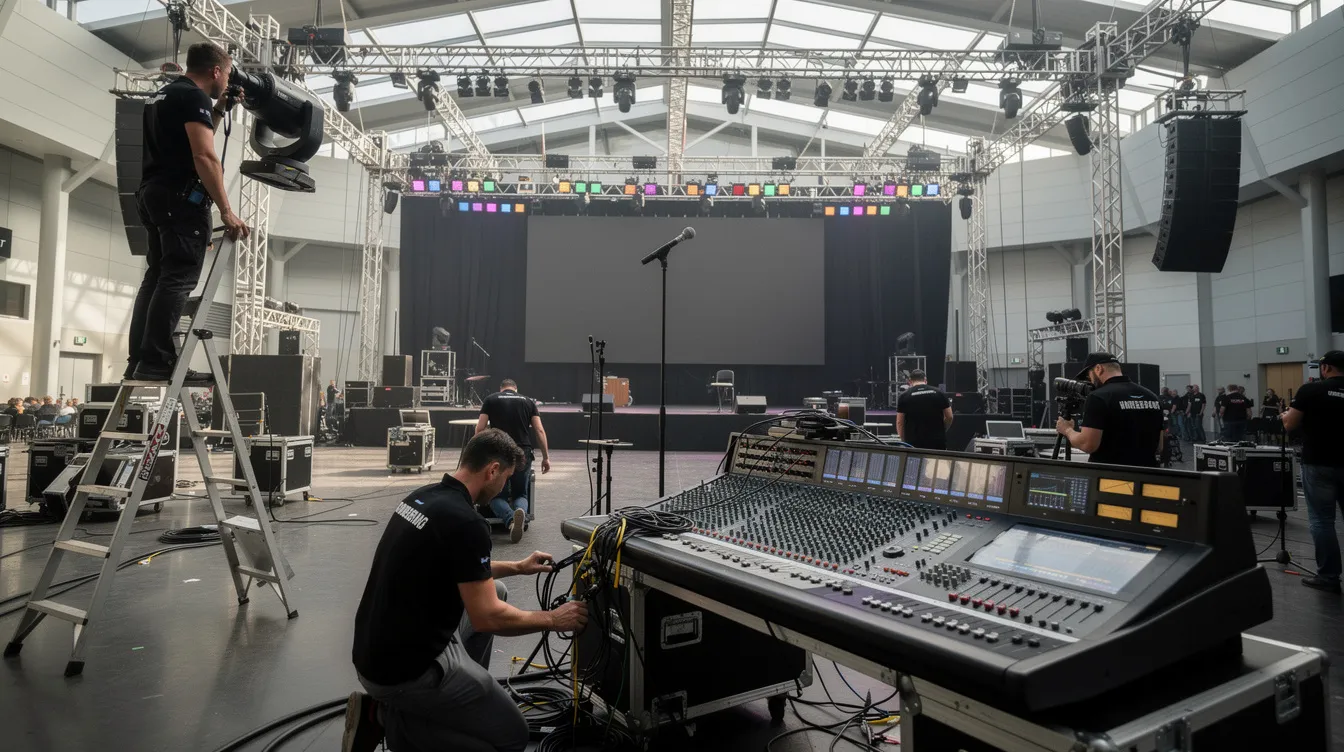
The most effective approach for many organizations is a hybrid workflow where internal staff, venue technicians, and an outside event production company share responsibilities. Here are three scenarios that happen regularly:
Scenario 1: Your internal corporate AV team handles content collection, speaker coordination, and basic room checks. An outside AV production team manages the audio visual systems for the general session-LED wall, cameras, lighting, and show calling. Designate a single internal producer as a liaison to the outside AV lead to keep communication clean.
Scenario 2: Venue AV runs basic breakouts in standard rooms while an outside company manages the main ballroom production, including IMAG, expanded lighting, and stage management. This lets the house team perform where they’re strongest.
Scenario 3: Your organization uses its own platform and team for live streaming while an outside crew provides audio, lighting, and camera feeds into that system. Procore Productions supports events nationwide where timing and clarity matter-this kind of division of labor follows the same principle regardless of provider.
Establish clear communication channels to avoid conflicting directions during events, and provide dedicated communication channels for crew interactions. Conduct joint walkthroughs and tech rehearsals with the outside AV crew before doors open. Frequent rehearsals help prevent technical glitches during live events and ensure the intended audience engagement is delivered.
The benefits of this blended model are clear: it preserves institutional knowledge, avoids overloading internal staff, and adds capacity without disrupting existing event planning processes. Your team can focus on the success of the attendees’ experience while production experts manage the technology.
Planning And Budgeting For Outside AV Support
Involving an outside AV production team early in planning helps right-size equipment and labor. Comprehensive planning is vital for a successful AV production setup-and it starts well before the load-in date.
What to gather before reaching out:
Event dates, venue, and anticipated attendance per session
Room diagrams showing dimensions, ceiling height, and rigging points
Agenda flow-number of general sessions vs breakouts, speaker count, content types
Whether live streaming, recording, or translation is required
Load-in access windows and multi-day production timelines
Define your event agenda and requirements before consulting AV vendors. This allows any production company to create solutions that are accurately scoped rather than padded with assumptions.
Key cost drivers to understand:
Number of rooms and audience size per room
Duration-single-day corporate meeting vs multi-day conference
LED wall size, camera count for IMAG, lighting complexity
Crew size for setup, show operation, and teardown
Venue constraints including exclusive labor rules and power limitations
AV proposals should clarify all aspects of the event’s technical scope and requirements. Itemized pricing helps ensure transparency and avoid misunderstanding in AV contracts, so review itemized proposals carefully to identify potential hidden costs. Create backup plans for critical AV systems to mitigate unexpected failures-redundant microphones, backup video sources, and failover streaming paths.
Evaluate AV production partners based on strategic alignment and risk management, not just price. A partner who can manage growth alongside your organization is worth more than the cheapest bid on the page.
How Front Row FX Collaborates On Corporate Event Production
Front Row FX is a Minnesota-based audiovisual production company that serves as a collaborative outside AV production team for corporate events, conferences, concerts, galas, brand activations, and live events across Minnesota, Wisconsin, Chicago, and the Upper Midwest.
A consultative mindset is essential in an AV production partner for successful events. Front Row FX typically engages through a discovery call about your next event, a review of technical requirements and existing AV resources, and creation of a plan that integrates with internal and venue teams. The ability to communicate openly with your team from the start is what turns ideas into reality and brings your vision to life on stage.
Capabilities built for scale:
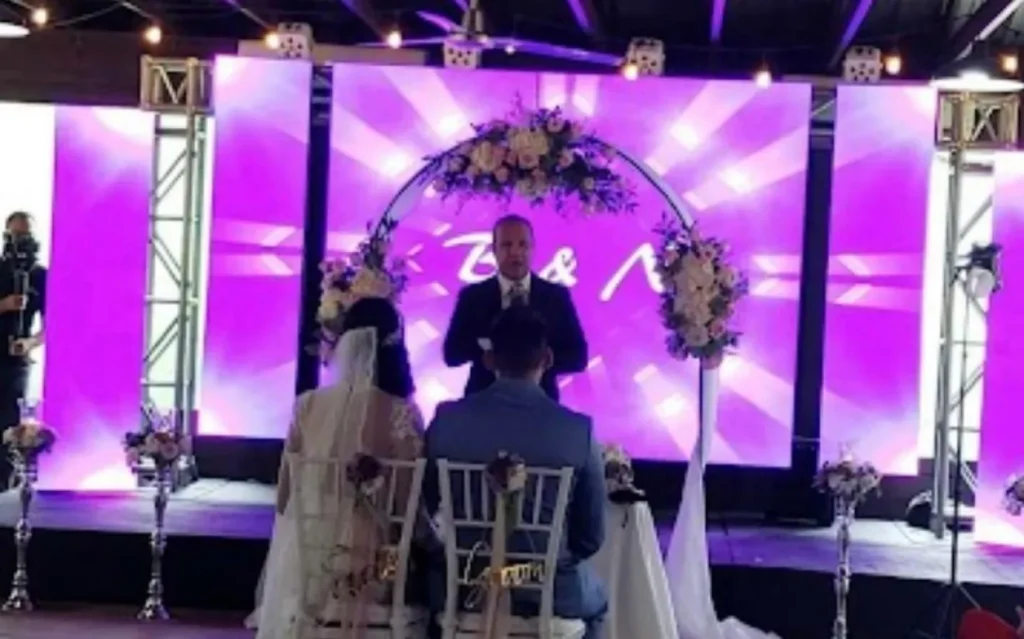
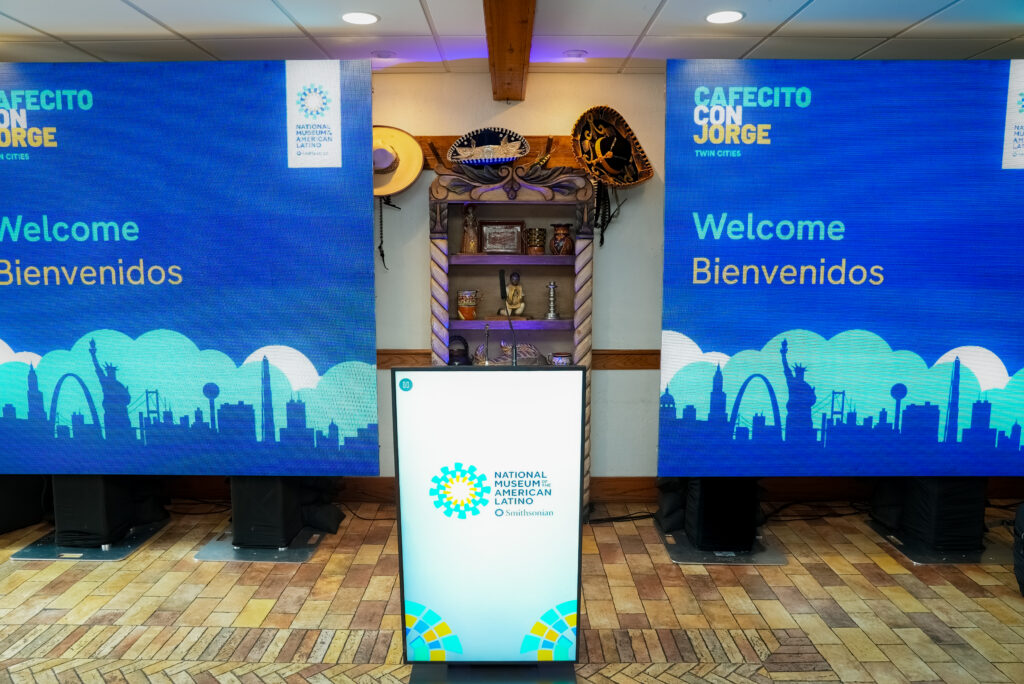
Indoor and outdoor LED video walls for general sessions and trade show stages
Professional audio systems for speech clarity, music, and live performance
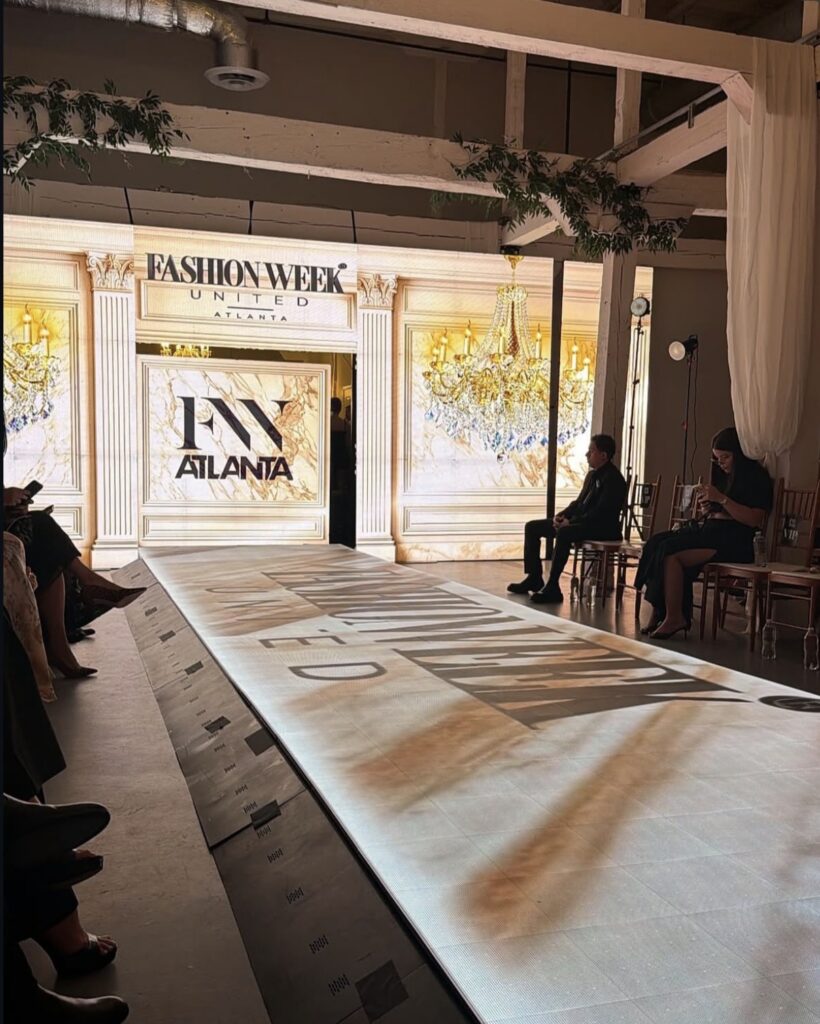
Intelligent and creative stage lighting for atmosphere and audience engagement
Video processing, IMAG, and show management for seamless execution
Full crew for setup, operation, and teardown-including games day turnarounds and compressed schedules
Reliable AV support ensures seamless execution of events. Front Row FX frequently joins events where internal teams and house AV are already in place, adding capacity for multi-room conferences, hybrid live streaming, outdoor live events, or high-visibility executive meetings. The rest of the production ecosystem-your internal staff, your venue’s crew-stays intact. Live events can accommodate groups from 100 to 5,000 attendees when the right production partner scales the systems to match.
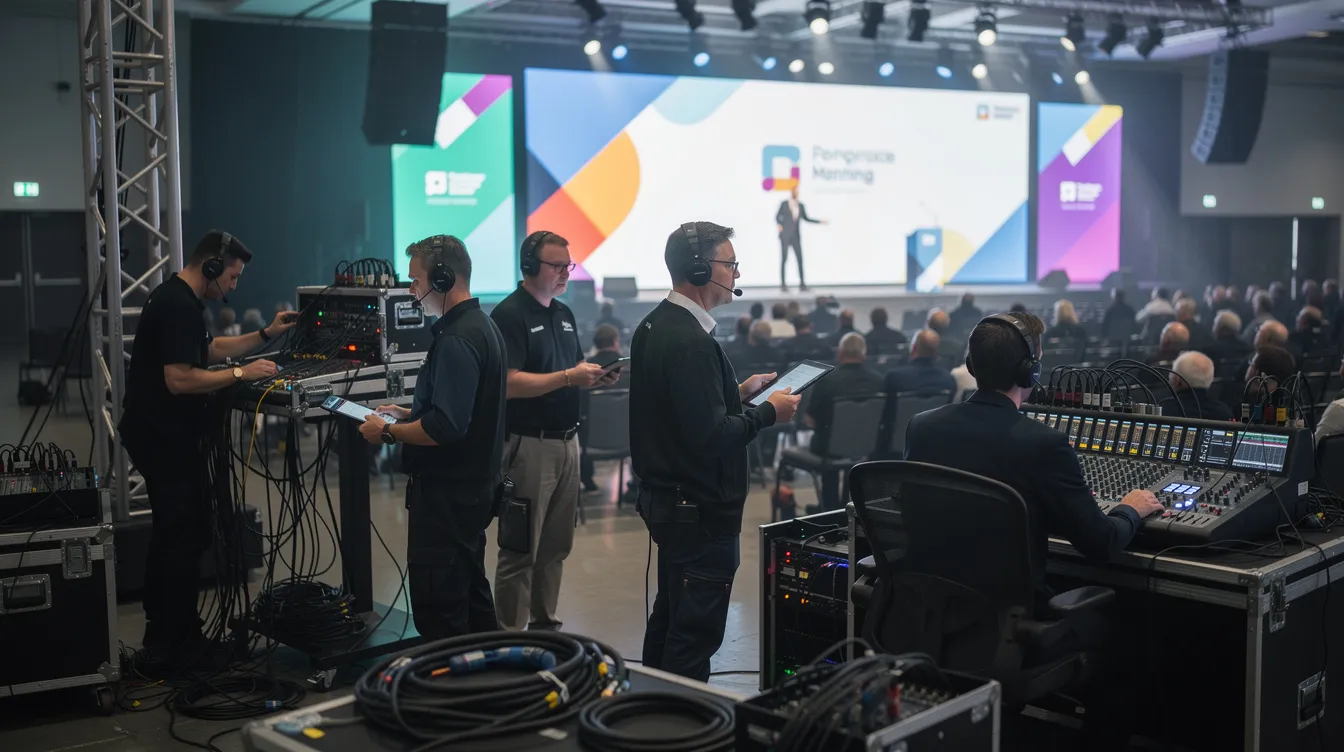
If your next event is growing beyond the normal technical environment, outside production isn’t about replacing your team-it’s about giving them room to do what they do best. Contact Front Row FX with your event details-attendance, venue, number of rooms, streaming requirements, and the visual impact you want to create-and we’ll help you assess whether outside AV support makes sense for your site and propose a right-sized solution.