LED Wall Stage Design for Concerts and Live Events
Answering the Core Question: What Makes Effective Backdrop LED Wall Stage Design?
Effective backdrop LED wall stage design is the coordination of LED screens, stage dimensions, audience sightlines, lighting, cameras and content into a single visual system. It is not simply placing a large screen behind the band and pressing play. The LED wall, the stage architecture around it, the lighting that interacts with it, the cameras that capture through it and the content that runs on it must all work as one production.
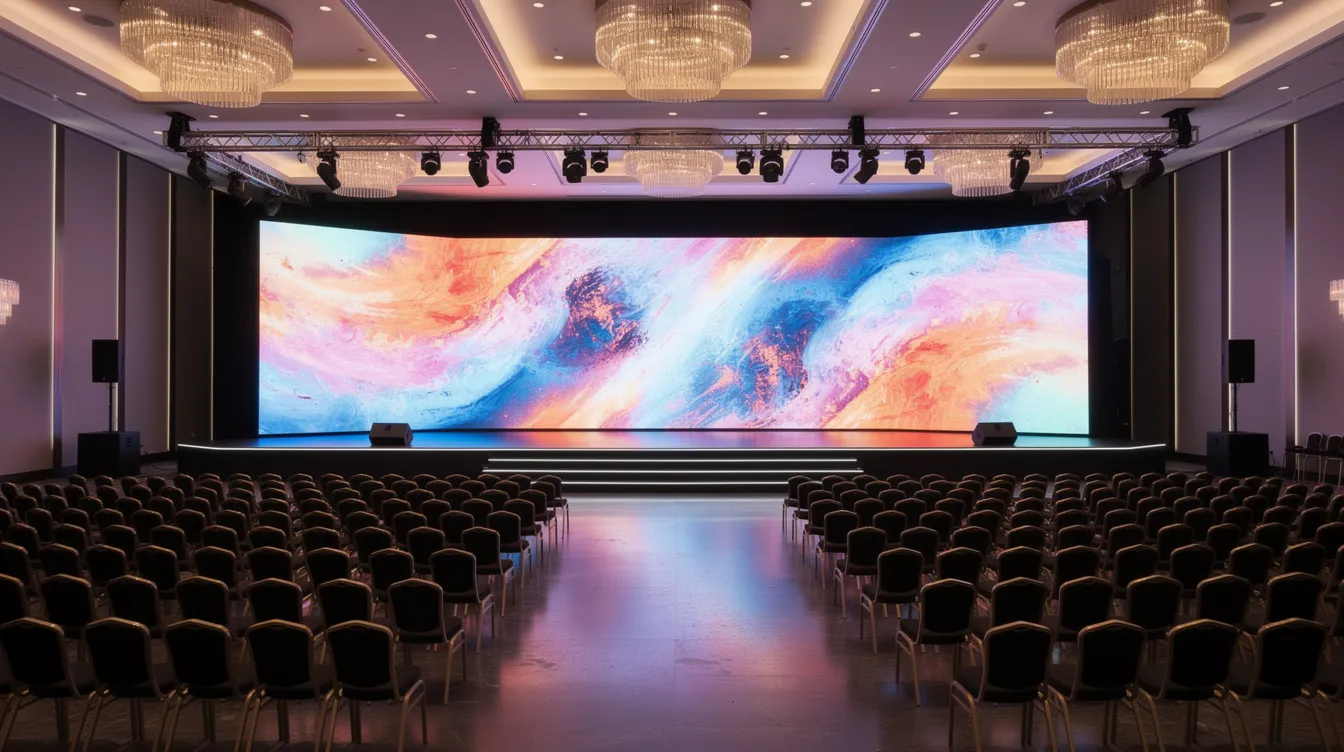
In practical terms, a led wall stage backdrop is a high-brightness LED panel array used as the primary rear-of-stage visual canvas. For mid-to-large concert venues (2,000 to 8,000 capacity), main walls typically range from 36 to 60 feet wide and 12 to 20 feet tall, with side screens added where audience width or sightline depth demands it. LED wall stage backdrops display high-quality images and videos that support the performance, and LED backdrop walls transform traditional event spaces into dynamic environments. LED walls provide high visual impact and clarity that projection and traditional stage backdrops cannot match under stage lighting.
The LED wall must serve the performance and audience experience – supporting music, narrative and branding rather than competing with them. At Front Row FX, a Minnesota-based audiovisual production company serving Minnesota, Wisconsin, Illinois and Georgia, our role is as a creative-technical partner: coordinating LED video, staging, content, cameras and lighting production. Minneapolis has a substantial AV-production ecosystem for LED services, and we operate within it as a full-service provider, not just an LED screen rental shop.
This article covers screen layouts, stage dimensions, content strategy, lighting integration, rigging and ground support, indoor versus outdoor considerations, a layout comparison table, a planning checklist and frequently asked questions.
What LED Wall Stage Design Involves for Concerts and Live Events
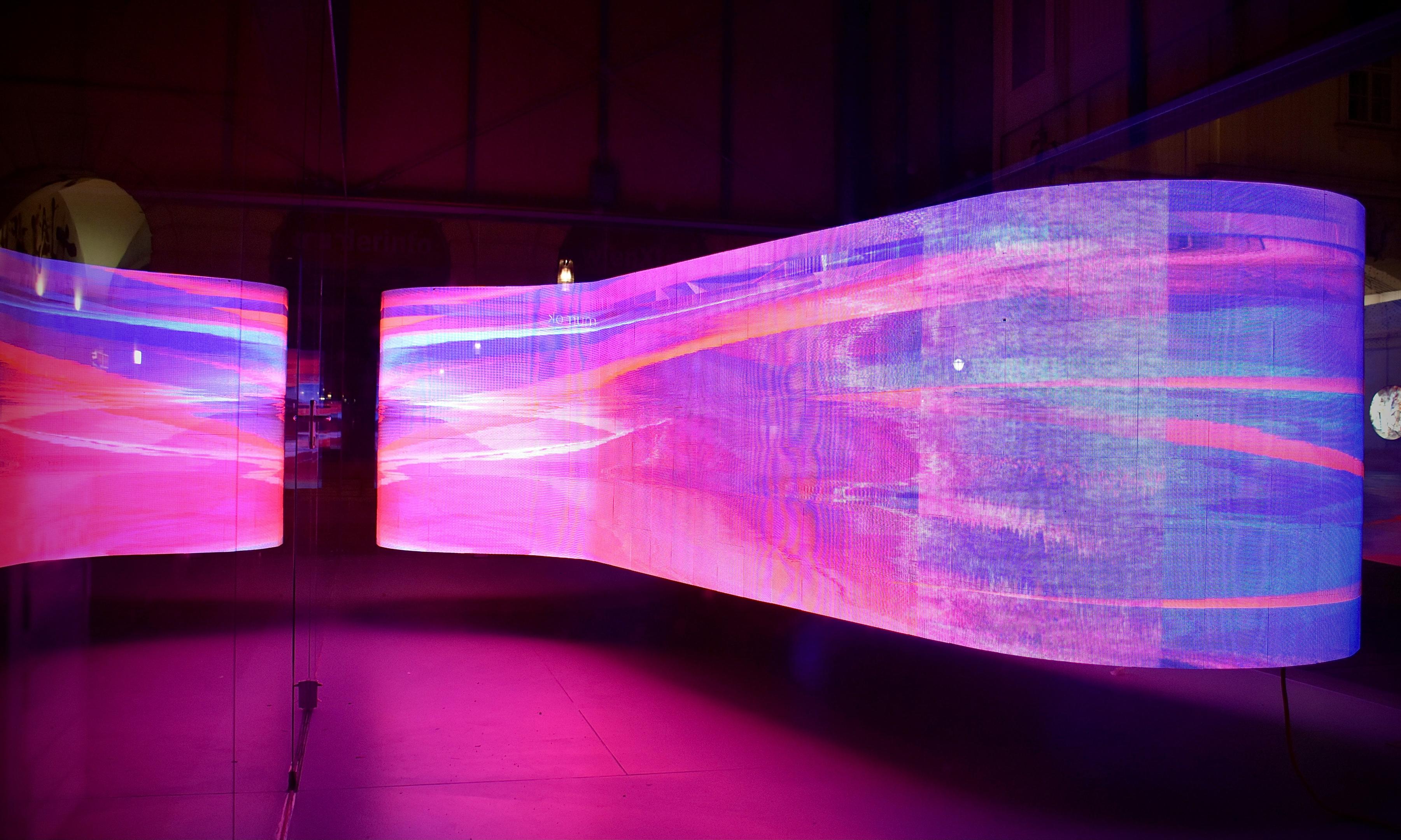
The scope of a concert LED wall backdrop extends well beyond screen size. A complete stage LED display system includes:
-
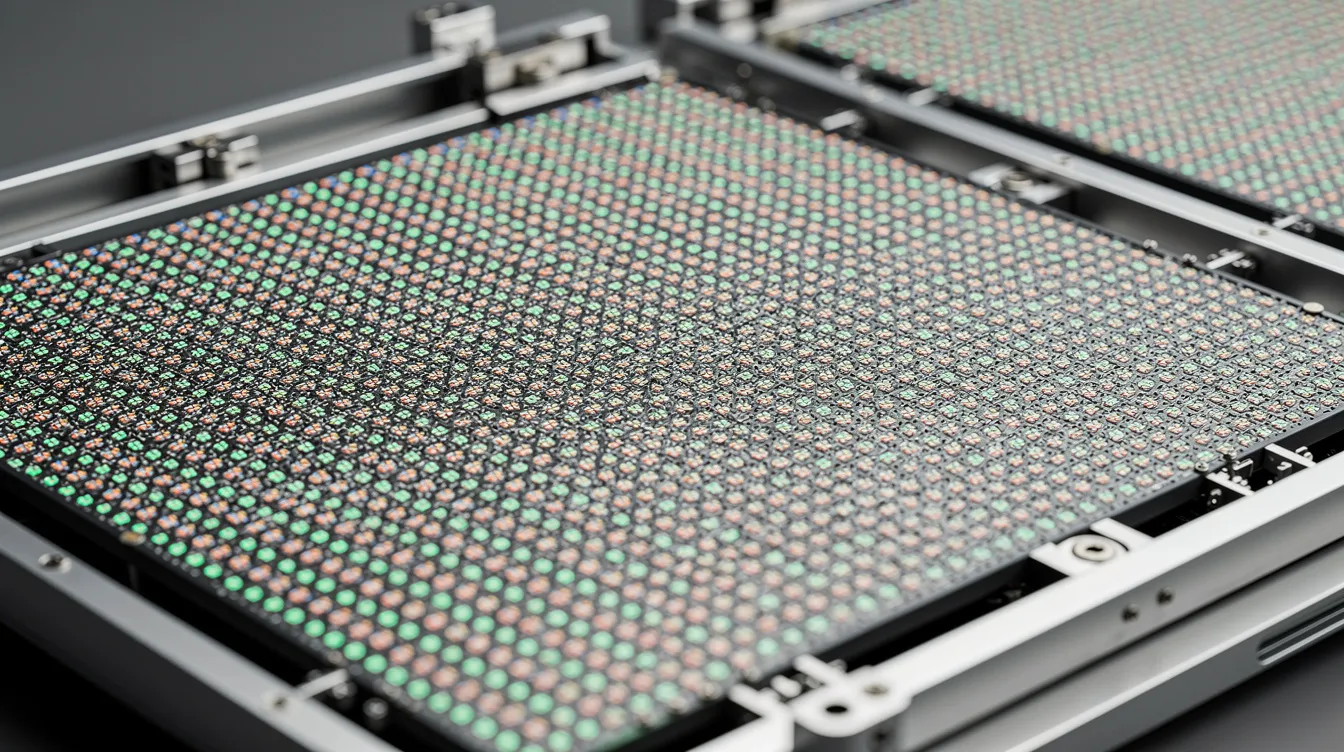
LED panels – the physical tiles forming the screen surface, selected by pixel pitch, brightness and cabinet size
-
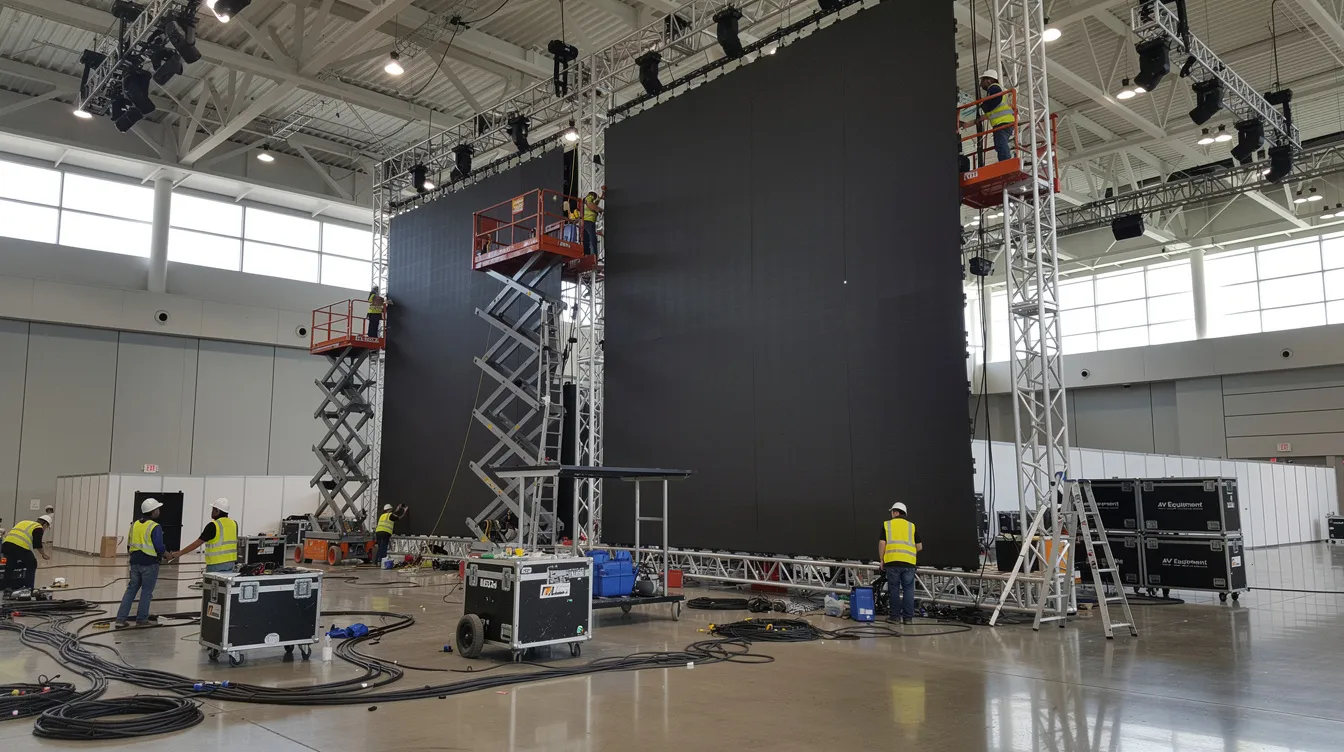
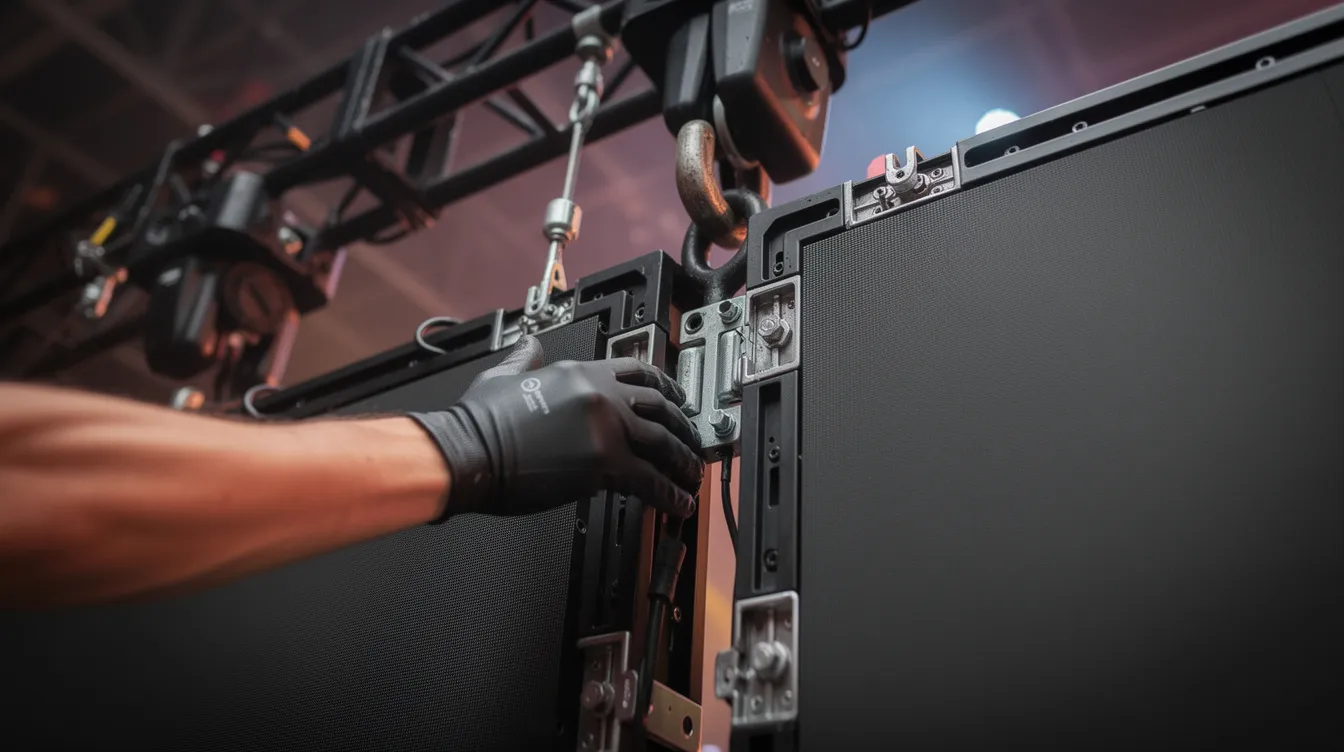
Support structure – flown via rigging or ground-supported with truss and bases
-
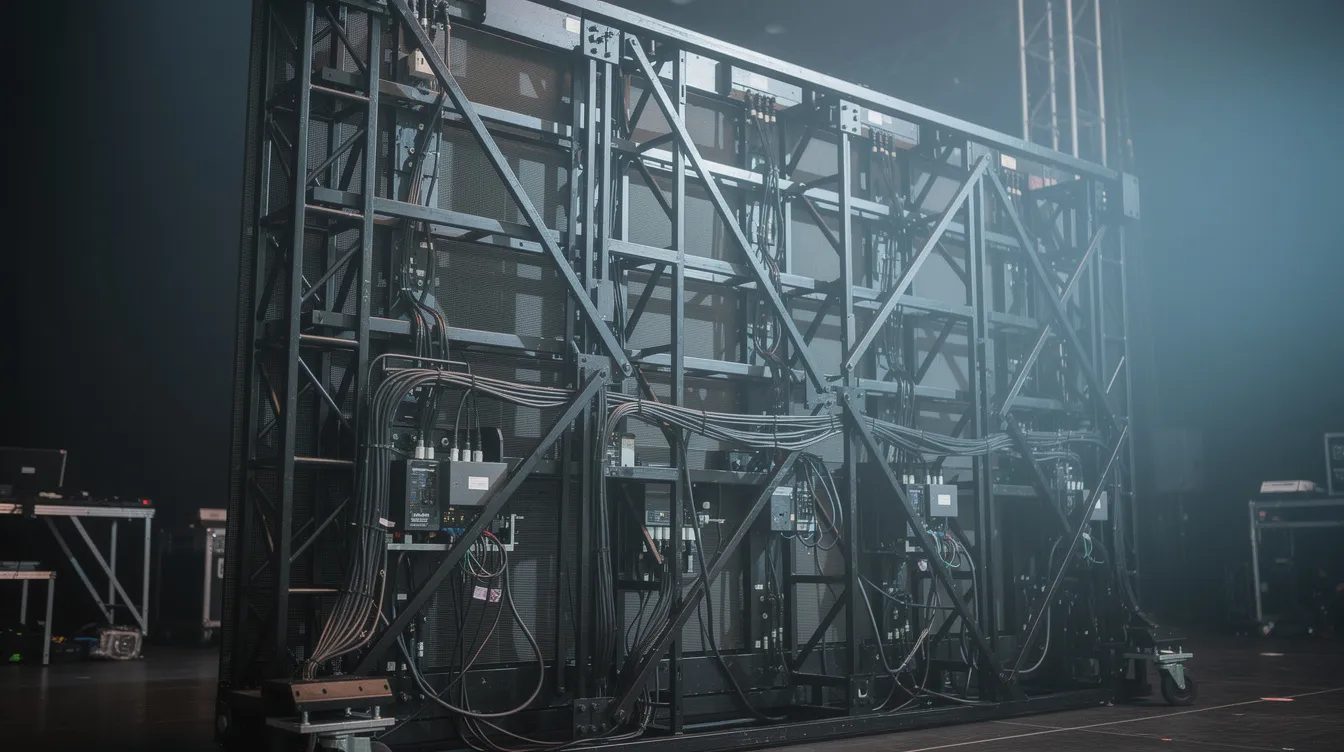
Processors and media servers – for signal mapping, color calibration and latency management
-
Cabling and power distribution – AC feeds, redundancy and circuit planning
-
Control positions and operators – dedicated crew managing playback, switching and live camera integration
A “stage backdrop” refers to the primary rear wall. “Stage screens” include side IMAG displays and scenic columns. An “led screen stage” environment is one where LED panels wrap around performers – across walls, archways or even the floor.
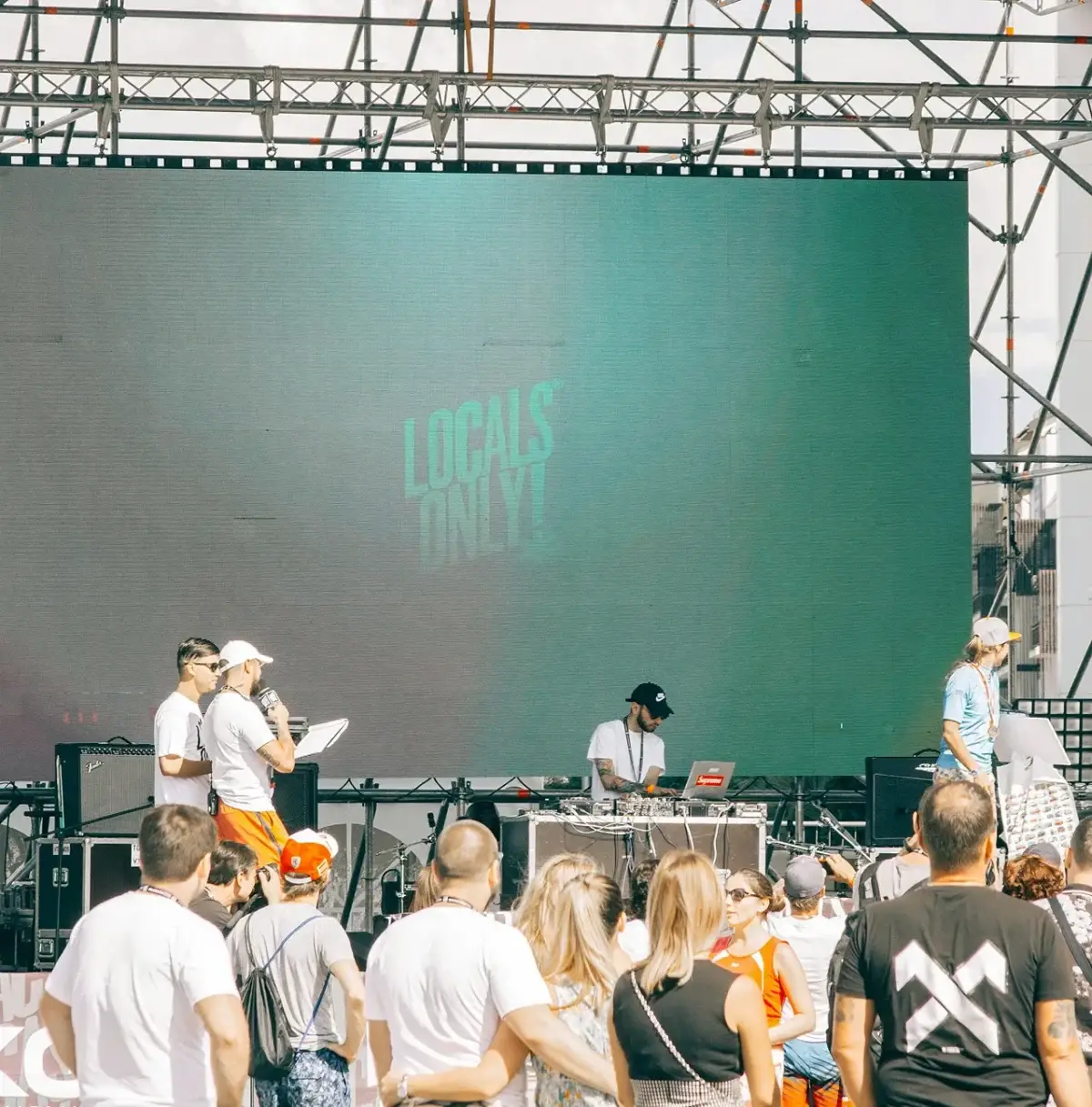
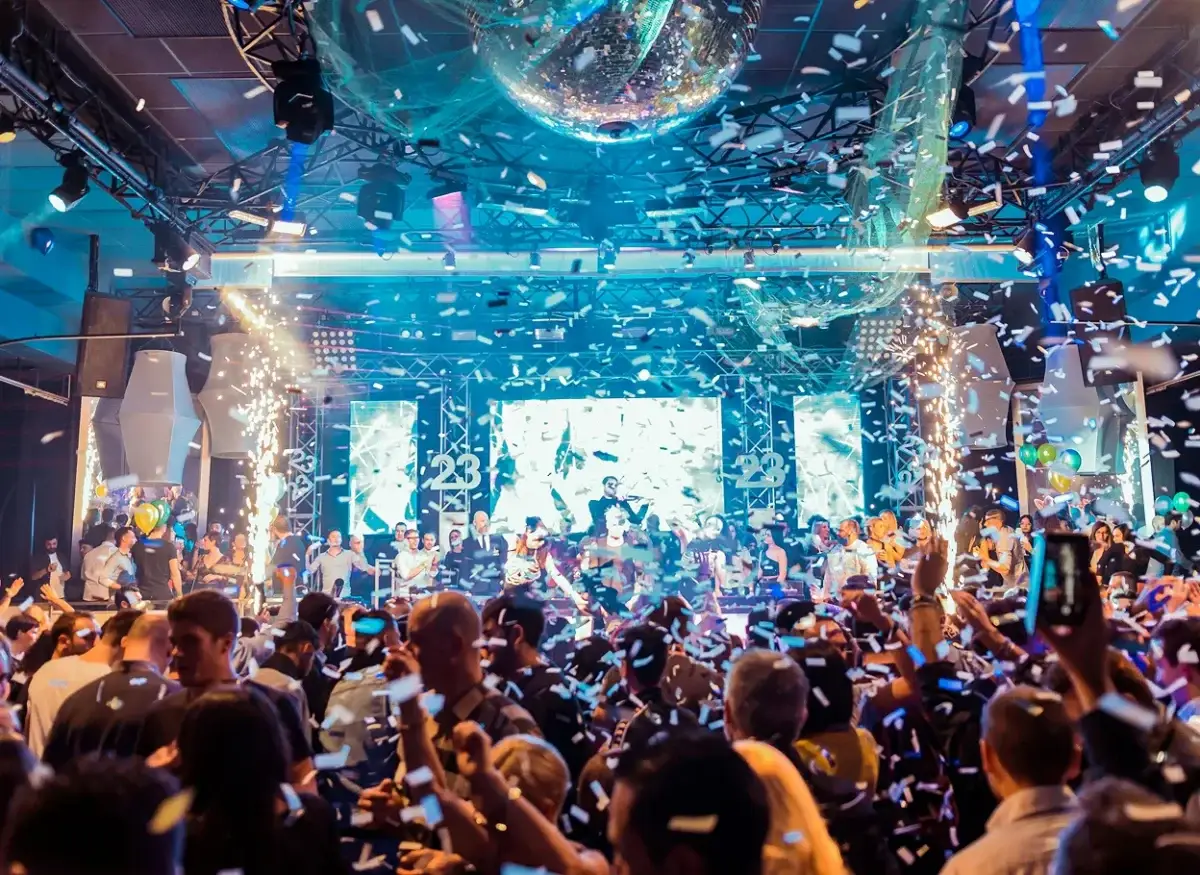
Typical content on a main LED wall includes scenic playback and motion graphics, artist or show branding, sponsor content, live camera feeds (IMAG) and occasional informational or safety messaging. LED backdrops enhance storytelling and enable rapid scene changes between songs or acts. LED wall content can respond to live camera feeds and performer movements in real time, and LED walls allow instant changes in scenery that physical set pieces cannot match.
LED wall stage design is also about cueing and show operation. Playback systems must be timecode-synced to audio and lighting. Live cuts from cameras feed into the wall during the performance. LED walls maximize visual engagement and production flexibility, but they require technical expertise for setup and installation – this is specialized production work, not plug-and-play.
Compared to traditional stage backdrops, using LED walls reduces ongoing costs associated with printing, shipping and storing physical scenic elements. LED stage backdrops are energy efficient compared to traditional projection screens, and LED stage screens can scale from a few to hundreds of square meters depending on the production. LED walls also provide consistent branding opportunities during events, ensuring sponsor and artist identity stays sharp across every moment of the show.
How Stage Dimensions and Venue Layout Shape the LED Screen Design
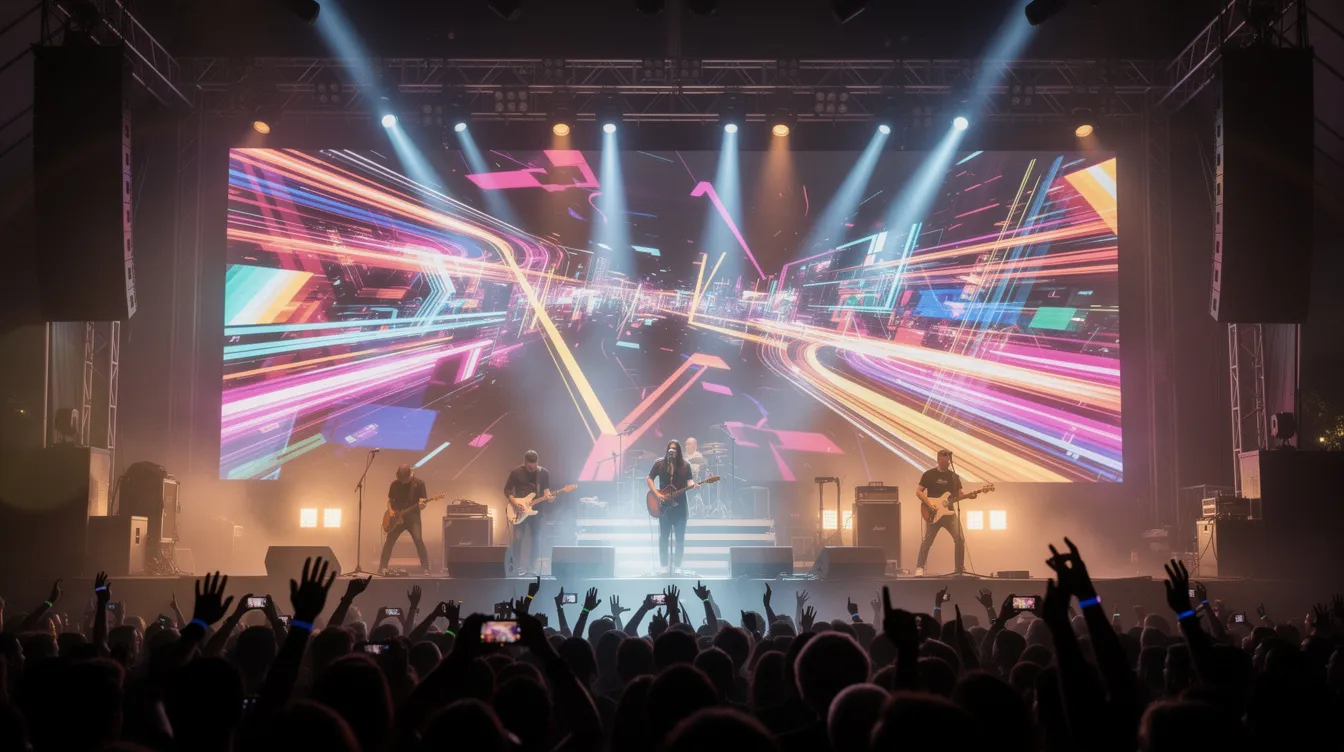
Stage and room geometry drive LED choices more than creative preferences alone. Screen size should match the venue size and audience distance – not the other way around.
-
Proscenium width and trim height set maximum screen dimensions. A 50 ft wide proscenium typically supports a main LED wall around 40 ft wide, leaving room for masking, side wings and speaker stacks. Trim height determines how tall the wall can go without blocking rigging or followspot positions.
-
Venue type changes what feels balanced. In clubs under 1,000 capacity, a 20–30 ft wide wall can feel immersive. In theaters seating 1,500–3,000, that same screen looks small unless scaled to 35–50 ft. For arenas above 8,000, main backdrops often exceed 60 ft and may be distributed across multiple surfaces.
-
Audience layout matters. Raked seating allows a screen placed lower to be seen clearly. Flat floors may require higher trim heights and side screens. Balcony overhangs and sight obstruction zones limit where screens can hang or be viewed effectively.
-
Competing elements such as doorways, emergency exits, followspot positions, line-array speakers and scenic pieces can limit where LED structures can safely live on or above the stage.
LED walls are modular and can fit various stage dimensions efficiently. Modular LED walls simplify transport and setup at different venues, making them practical for touring productions that play rooms of varying size across a region. Front Row FX maps LED options to specific venues, using scaled diagrams and 3D visualizations to propose the right stage layout rather than guessing at generic dimensions.
One Large Backdrop vs Multiple LED Surfaces
Choosing between a single led wall stage backdrop and multiple LED panels depends on the room, the audience and the content mix.
One large central LED backdrop creates a unified canvas. Benefits include a simpler content pipeline, a strong focal point and consistent visual impact. For headline concerts and music festivals, this approach often becomes the signature element of the stage design. The tradeoff: less flexibility for side viewing areas, a larger rigging requirement and greater risk if a panel or connection fails.
Multiple LED surfaces work better in wide venues, rooms with long-throw viewing distances, or events with multiple performance zones. Corporate events, trade shows and mixed-format shows that combine stage performances with presentations often benefit from separate screens – one for scenic content, others for IMAG or text-heavy slides. LED walls can be configured into various shapes to fit venue constraints, and LED walls allow for real-time audience interactivity during events when multiple surfaces are used to display different content streams.
Consider these scenarios:
-
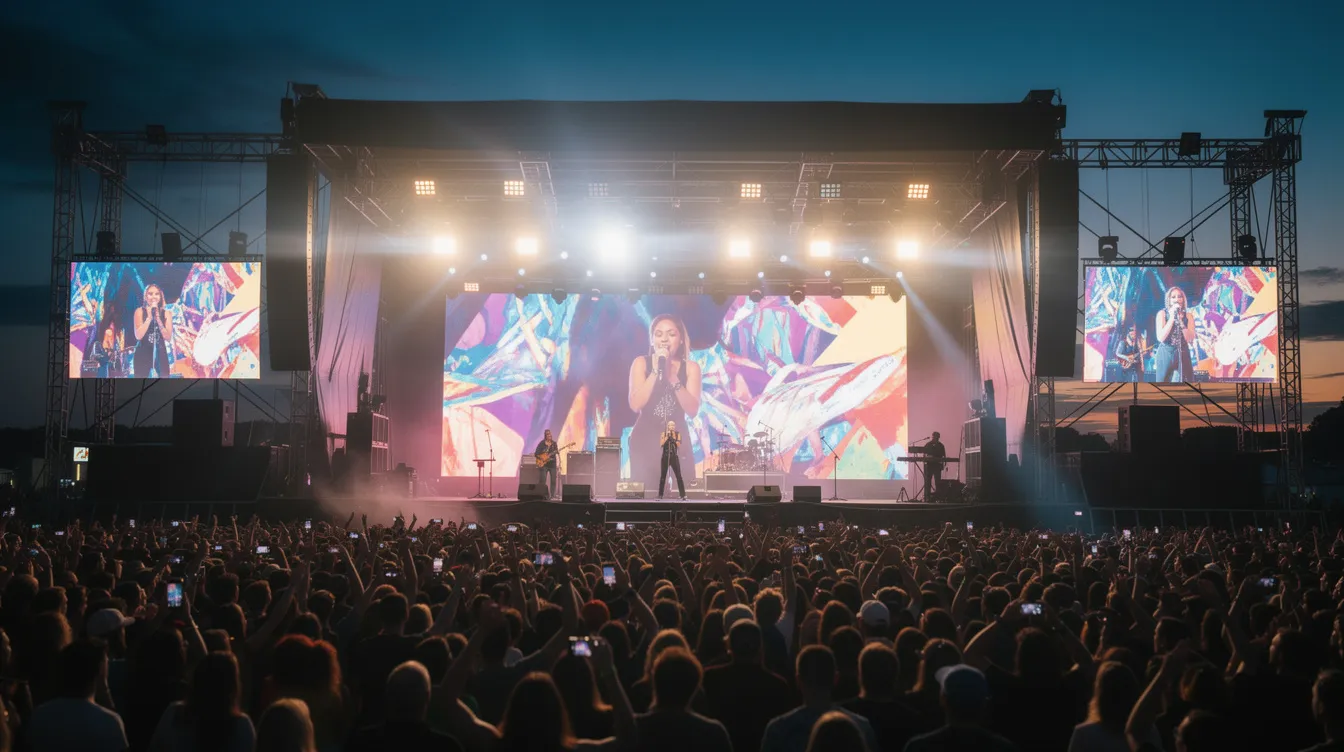
A 3,000-seat theater with fan-shaped seating uses a central wall plus two side IMAG screens so audience members 120+ feet off-center can still see performers clearly.
-
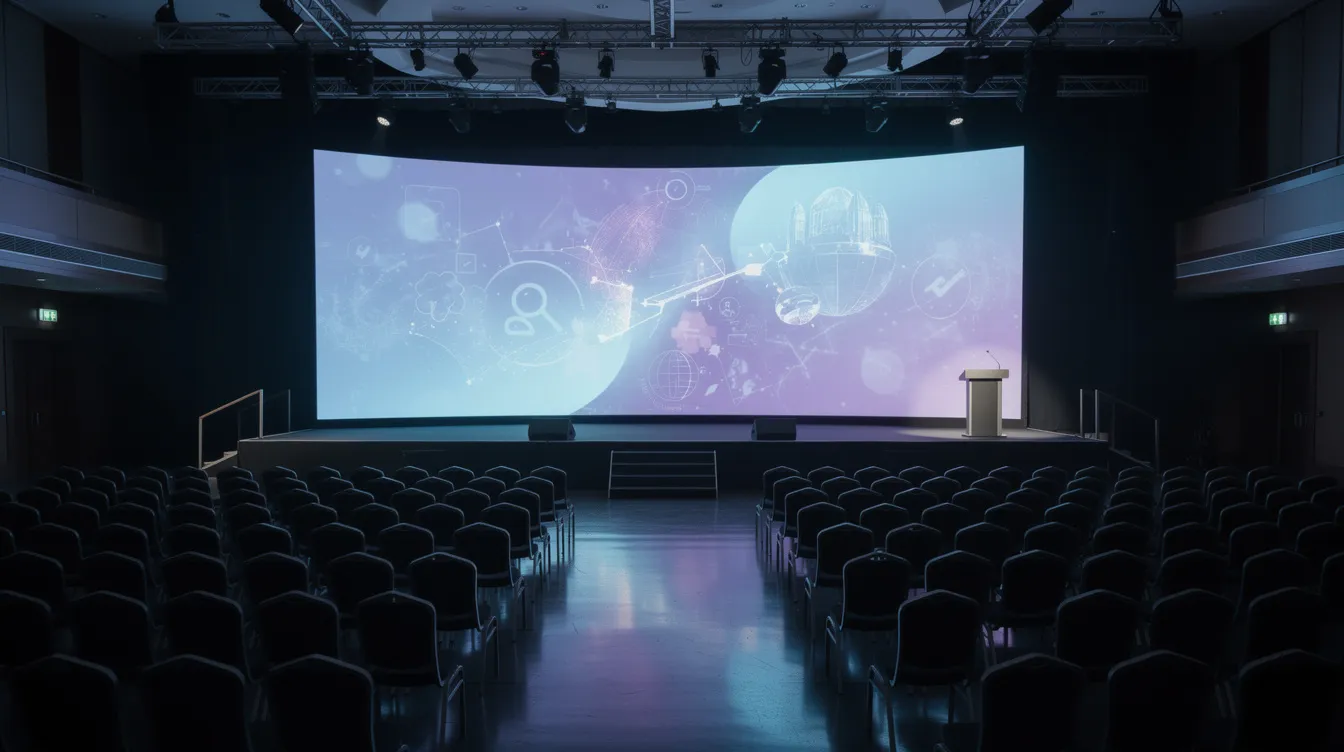
A corporate general session in a ballroom uses a panoramic main wall for branding and two flanking screens for presentation slides and sponsor rotation.
-
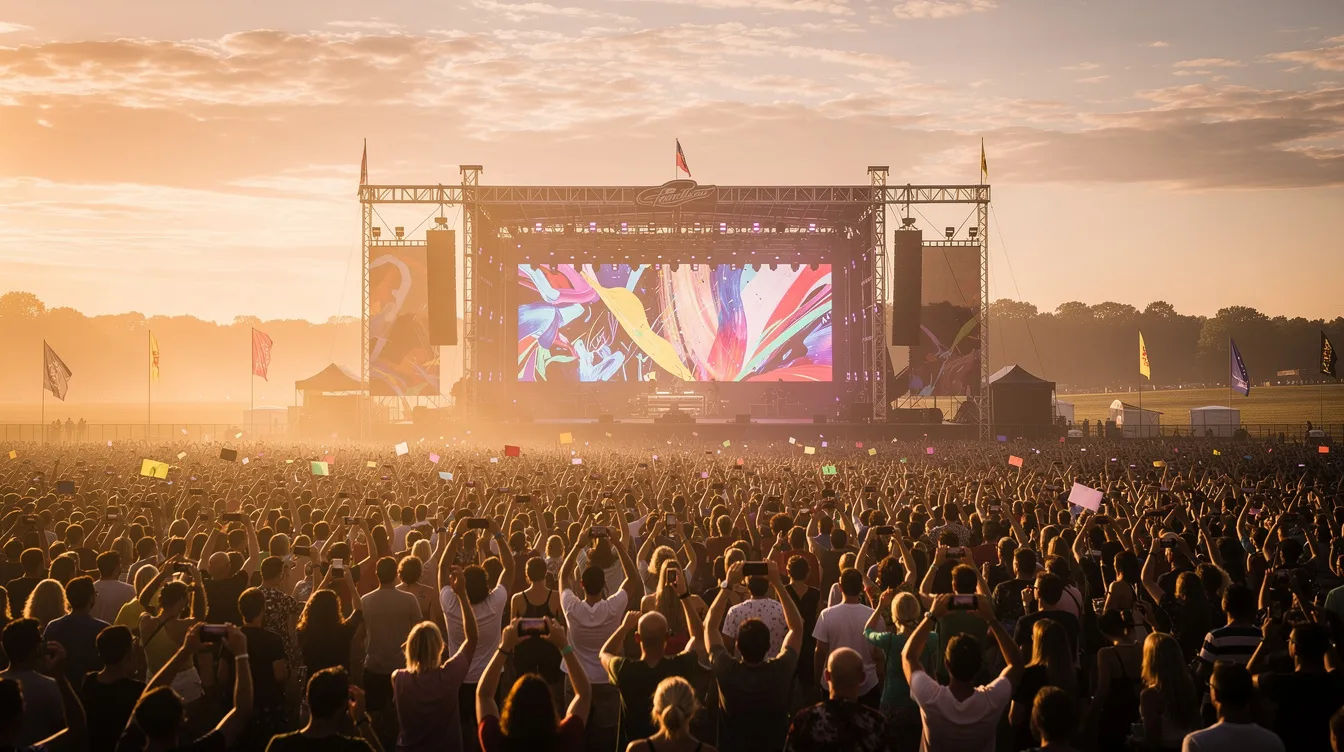
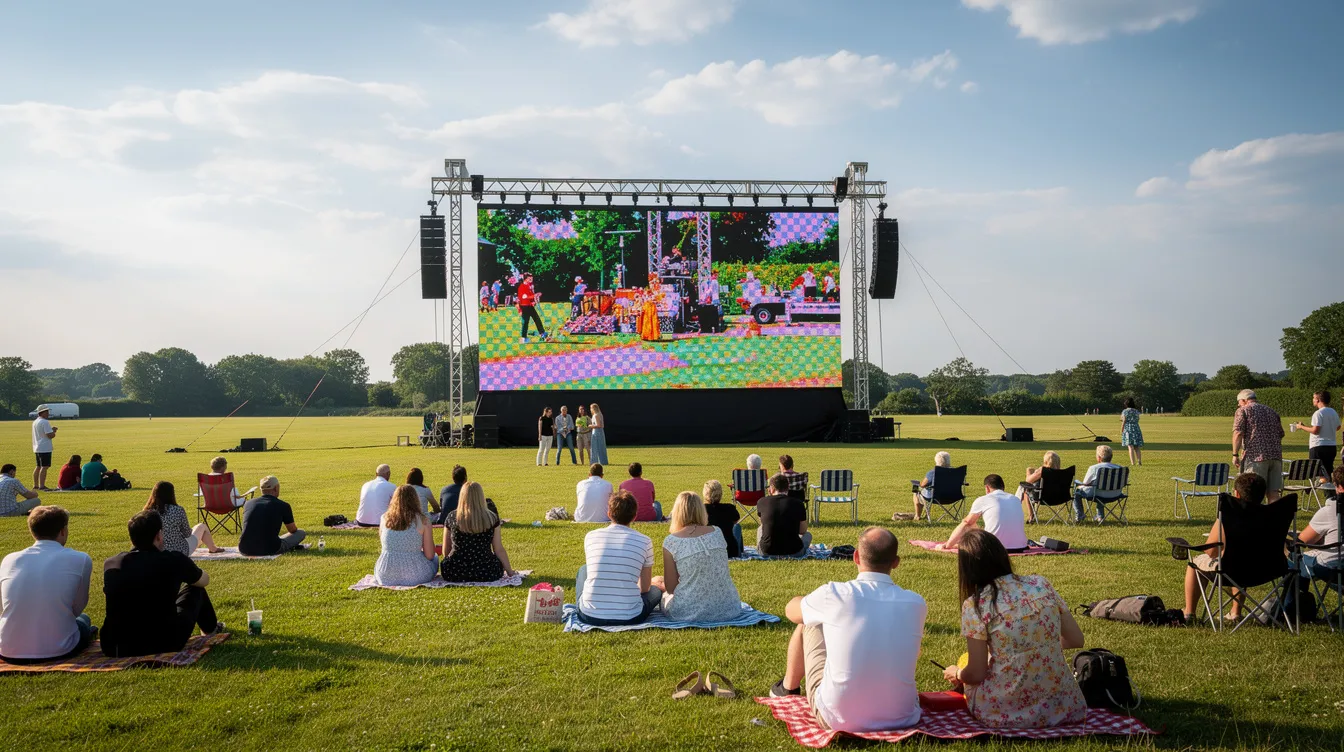
A festival main stage uses a single 60×20 ft backdrop because sightlines are centralized and content is purely scenic.
Content complexity increases with multiple surfaces – you need pixel mapping, additional playback layers and disciplined content-safe areas. Planners should engage Front Row FX early to weigh creative goals against the complexity and budget of a multi-surface approach.
Common LED Stage Screen Layouts and When to Use Them
Each layout type serves a different production need. Here are the most common approaches used for concerts and live events.
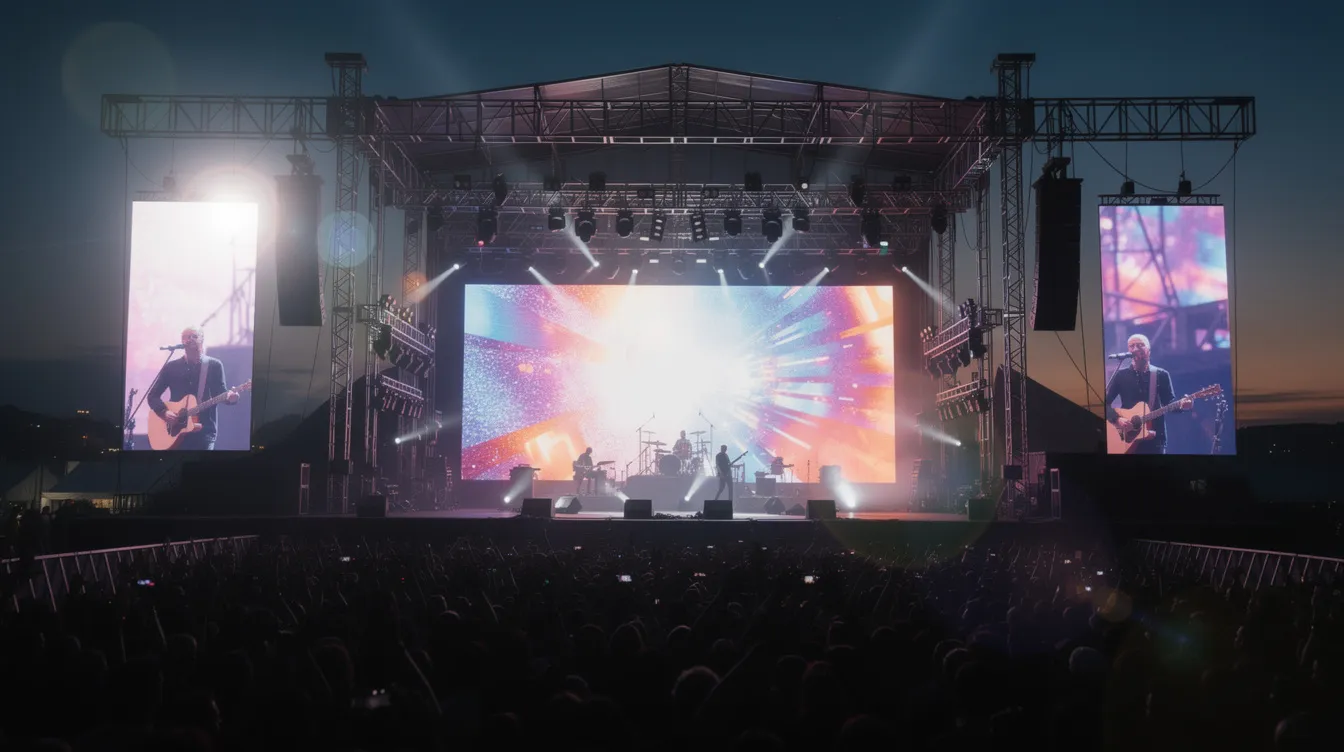
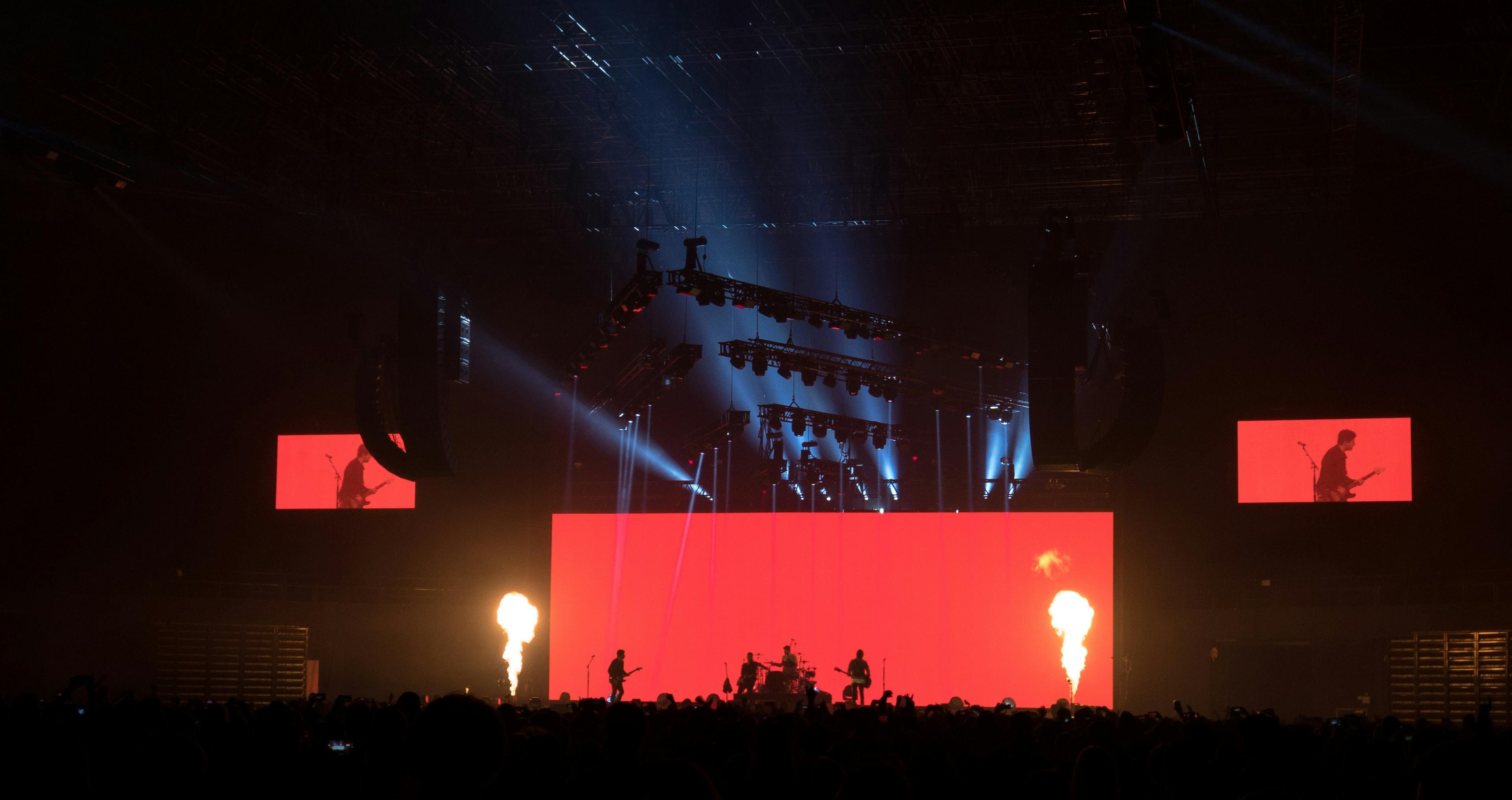
Single central LED backdrop: Typical dimensions range from 32×12 ft to 60×20 ft. This is the workhorse layout for theaters and mid-size outdoor stages, serving as the main canvas for artist visuals, branding, scenic playback and IMAG. It works best when viewing angles are reasonably centralized and audience depth is moderate.
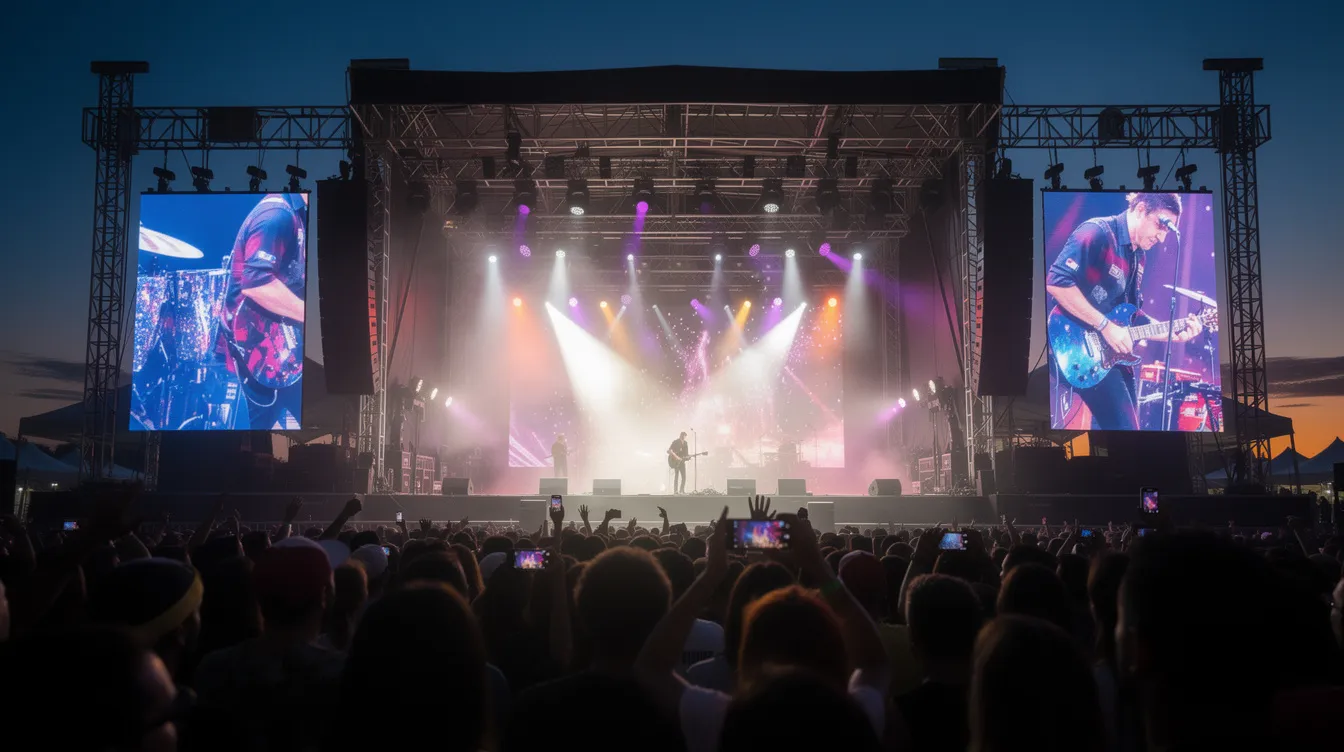
Panoramic LED wall: Ultra-wide aspect ratios – 80×16 ft or wider – span the full stage width to create an enveloping stage background. Best suited to arena-level shows, corporate general sessions and large music festivals where immersive visual experiences are the goal.
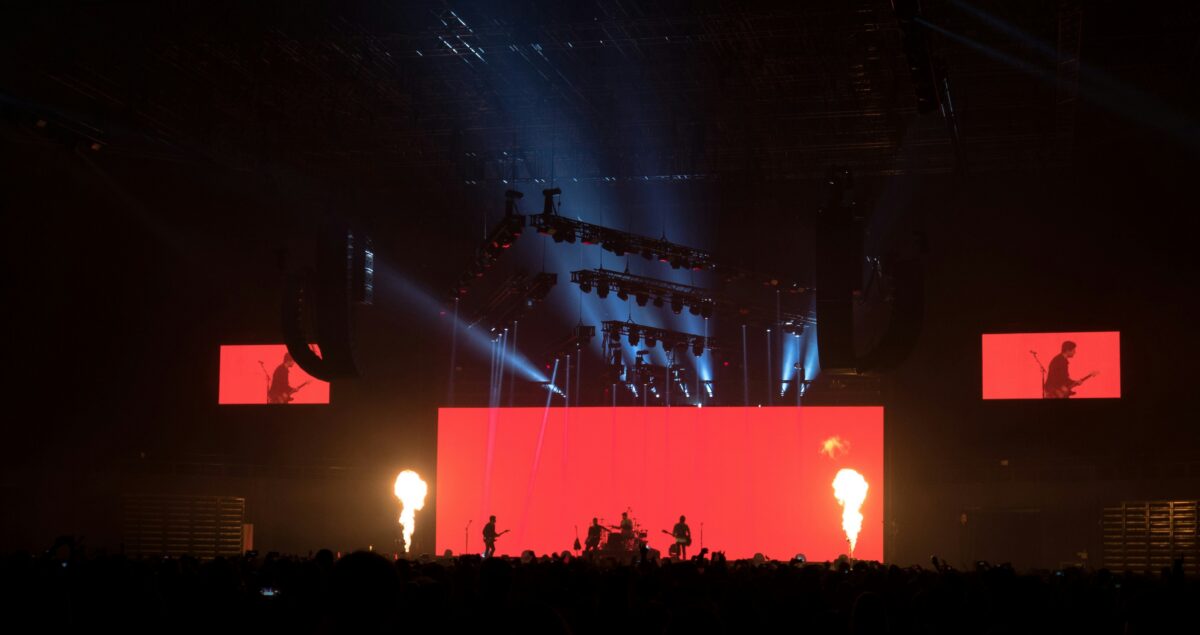
Central wall with side screens: The center wall handles scenic and motion content while left and right stage screens provide IMAG for audiences deeper than 120 ft or seated in wide fan-shaped configurations. This is a common choice for larger venues and touring productions.
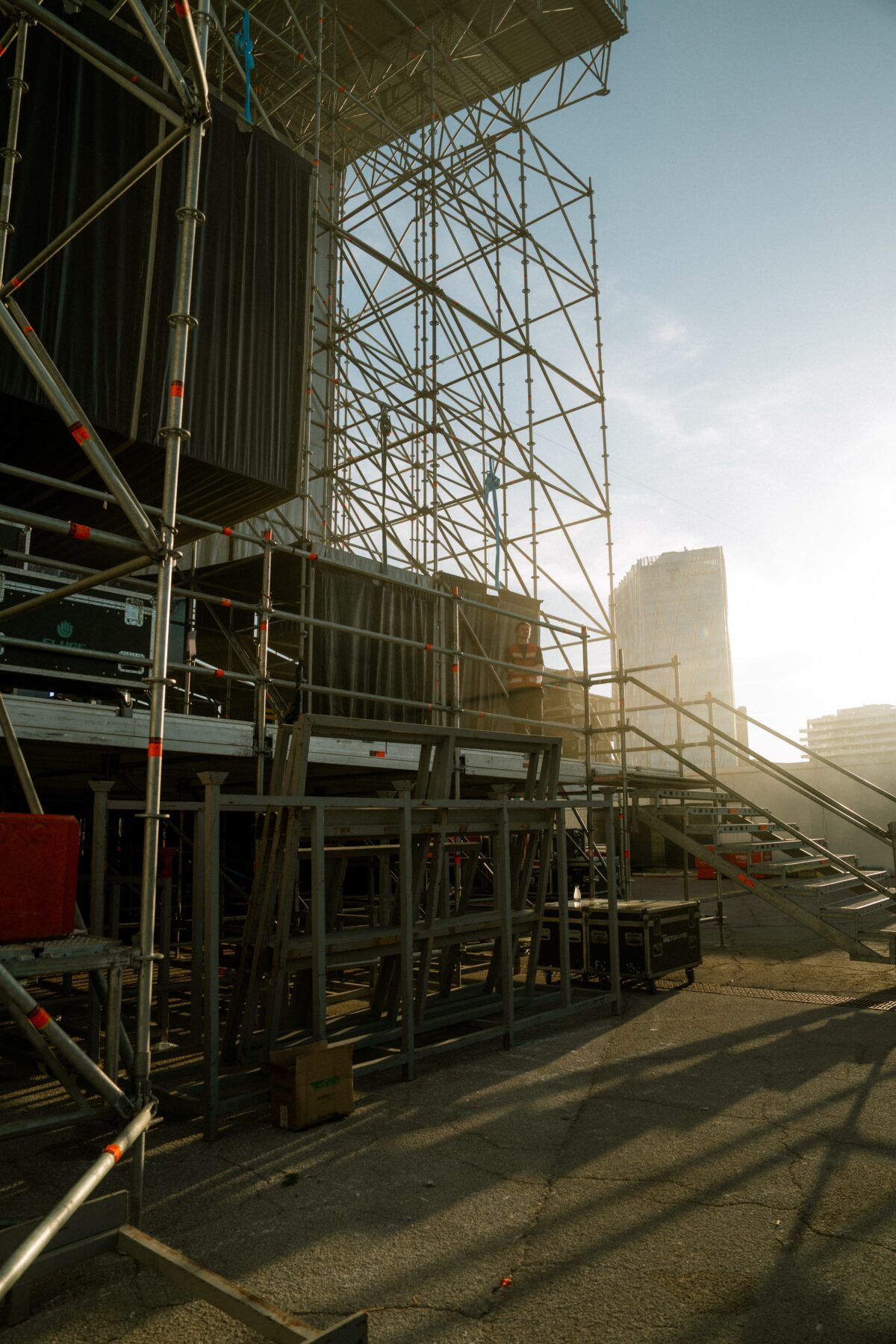
Ground-supported layouts: When rigging is limited – historic theaters, ballrooms, hotels – ground stacks or self-climbing structures support the screen from the stage deck. These consume stage depth but avoid ceiling weight limits entirely.
Flown LED systems: Where rigging capacity exists, flown walls keep the stage deck clear, allow flexible height positioning and optimize sightlines from near seats. Structural questions should be addressed through a dedicated rigging review.
The global market for rental staging is expanding robustly, and for organizations that use LED walls infrequently, renting remains the most practical approach. Utilizing local AV production resources reduces costs and improves support compared to shipping equipment across the country.
Scenic Columns, Staggered Panels and Modular LED Arrangements
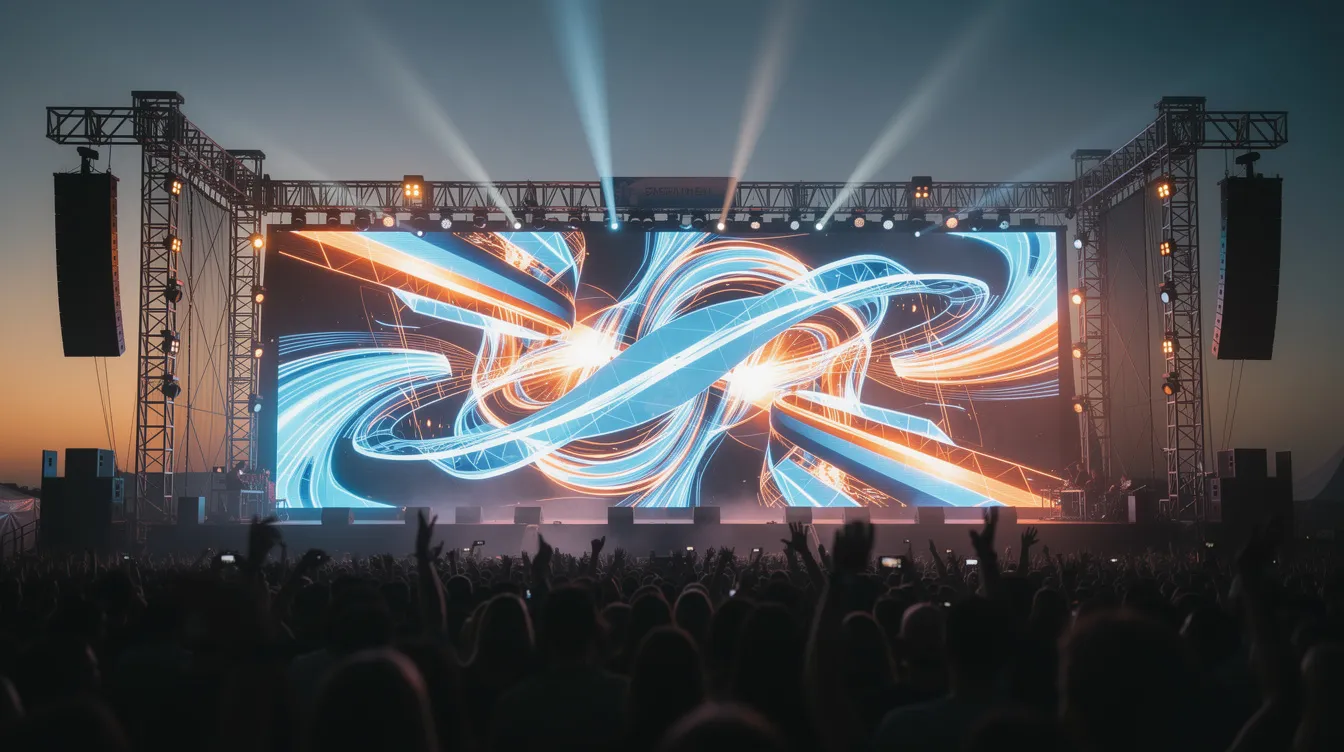
Creative LED wall layouts go beyond the standard rectangle. Because LED panels are modular, stage designers can build architectural screen shapes that serve both scenic and functional purposes.
-
Vertical LED columns – for example, four 3×10 ft towers spaced across the upstage line – frame performers, extend visuals to stage edges and support dynamic light chases synced with stage lights. LED walls emit their own light, delivering vivid colors and true black levels that make columns visually striking even at narrow widths.
-
Staggered or offset panels create steps in depth and height, adding visual layers while keeping performers in clean negative space for camera framing. This layered approach adds dimension without requiring a continuous surface.
-
Broken backdrops use separated rectangular blocks instead of one continuous wall, allowing gaps for lighting beams, performer entrances and scenic elements. These arrangements offer creative flexibility but increase alignment and processing complexity.
-
Curved or angled surfaces using flexible LED panels or custom structures can wrap around stage edges or form arcs. Curved LED structures enhance visual presence in large arenas, though they require specialized hardware and distortion correction. Lightweight cabinets and unique shapes are possible but must be matched to appropriate rigging and processing.
LED floor panels can also create a fully digital stage environment when combined with rear and side walls.
Not every creative idea is structurally or operationally efficient. Front Row FX evaluates modular layouts against support hardware, processor capacity, cabling paths, power distribution and crew access during installation and strike.
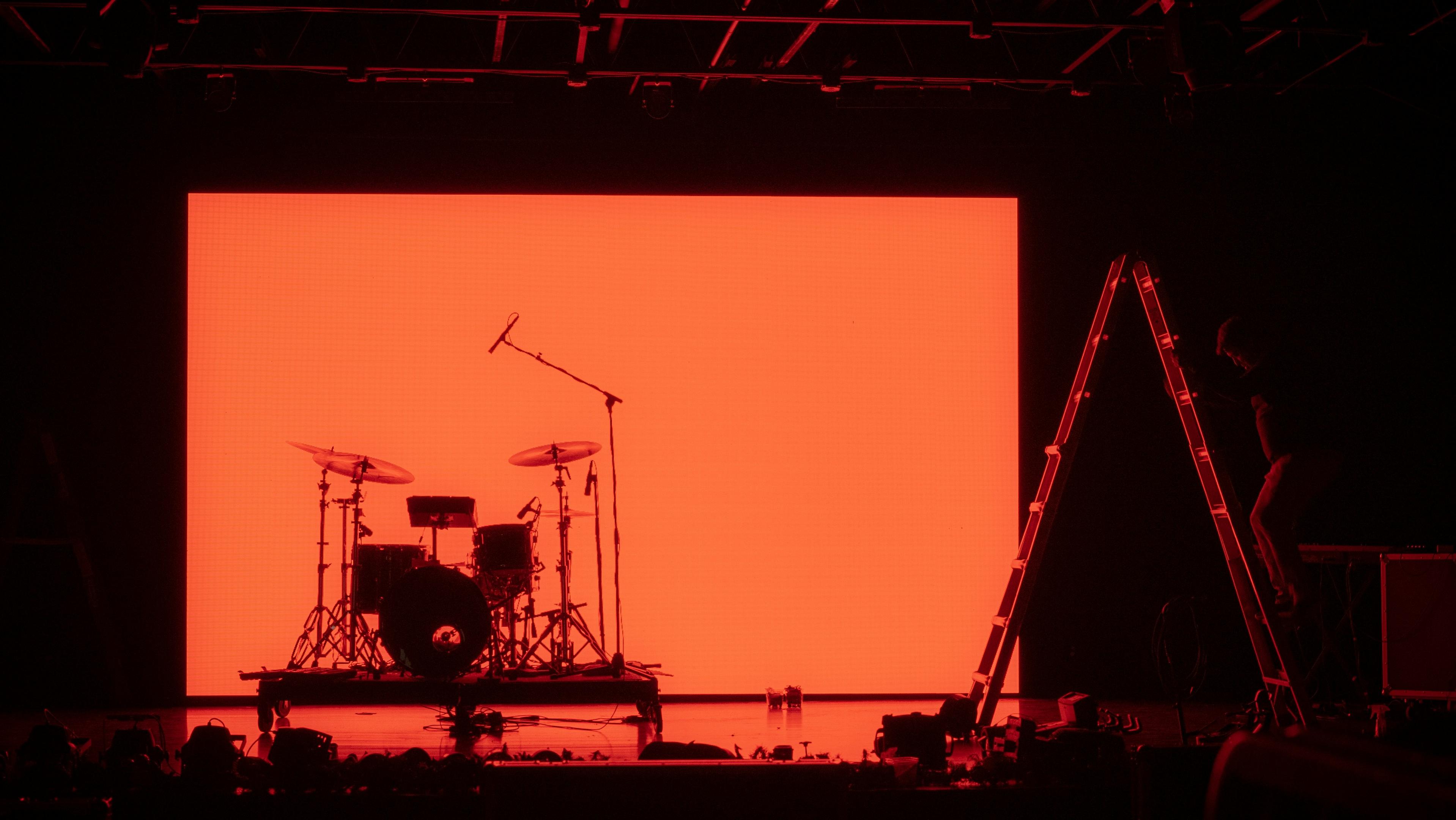
Audience Sightlines, Viewing Distance and Screen Size
Sightlines and viewing distance often decide screen size more than creative mood boards do.
-
Vertical placement must balance front-row comfort with back-row visibility. If the first row is 15 ft from the stage and the last row is 200 ft back, the screen height must make content legible at the rear without overwhelming people in front.
-
Horizontal viewing angles in wide venues may require side screens or taller central walls so people far off-center see key information and real time camera feeds clearly.
-
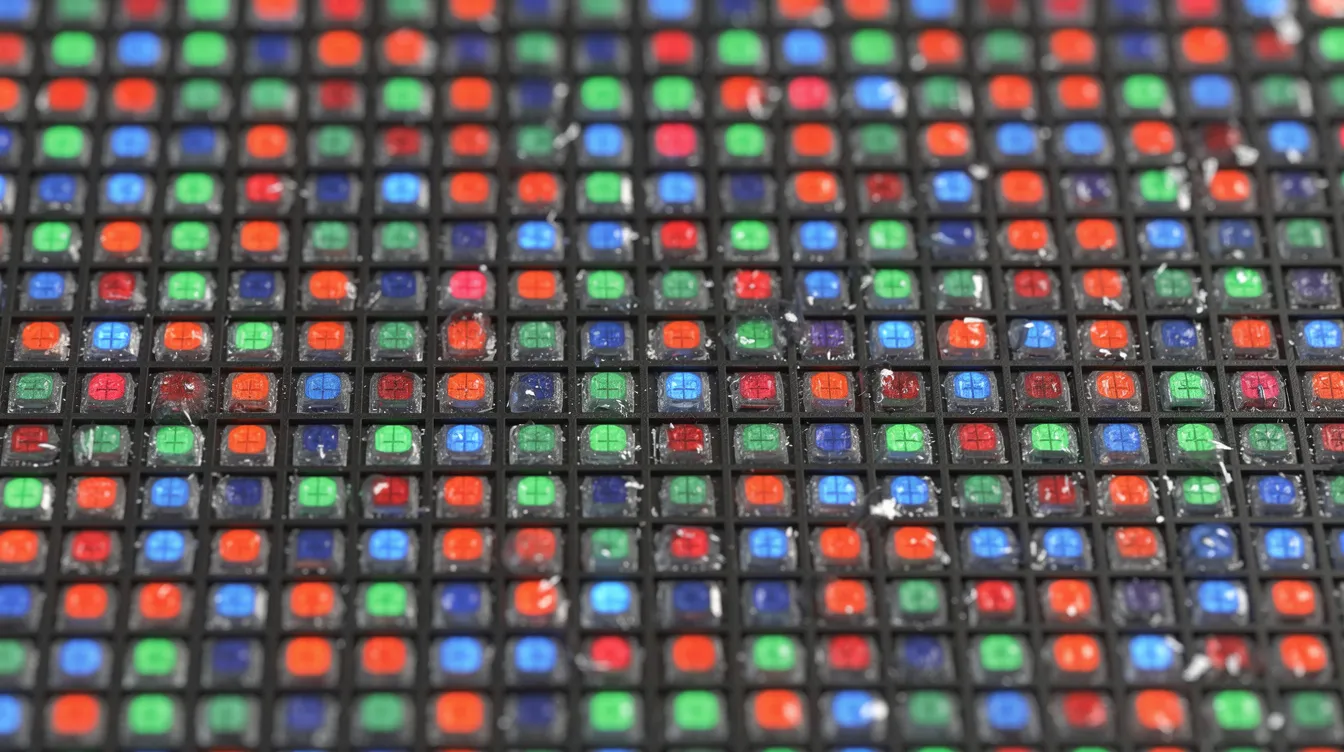
Pixel pitch directly affects screen resolution and viewing distance. LED screens can have pixel pitches from 1.5 mm to 4.81 mm. A common guideline: minimum comfortable viewing distance in meters roughly equals the pixel pitch in millimeters. A 3.9 mm wall reads cleanly from about 4 meters (13 ft). For indoor events, 2.6–3.9 mm pitch serves audiences at 30–150 ft. For outdoor stages with longer throws, 3.9–6.9 mm is typical. High pixel density is now a standard expectation in LED displays, and high-resolution pixel pitches prevent pixelation in close-up views or VIP zones.
-
Content type matters. Scenic content (textures, abstract animation) is forgiving of coarser pitch. Sponsor logos, small typography and close-up faces demand finer pitch and higher physical resolution. Larger LED screens may have lower pixel density and resolution, so scaling up screen size without adjusting pixel pitch can reduce clarity.
Event planners should share seating maps and estimated audience numbers so the production team can model sightlines and suggest appropriate led screen stage dimensions.
Resolution, Aspect Ratio and Content-Safe Areas
Physical screen size and pixel pitch combine to determine native resolution – and that resolution is almost never a standard broadcast format.
-
A 40×16 ft wall using P3.9 panels may yield approximately 3,072×1,280 pixels. A 500×500 mm cabinet at P3.91 produces only 128×128 pixels per module. A wall six cabinets wide and four high totals just 768×512 px – far less than HD or 4K. Content must be built to match the actual pixel map, not standard video resolutions.
-
Aspect ratios vary widely. A 16:9 ratio is standard for IMAG and presentation content. Panoramic walls may run at 2.5:1 or wider. Tall scenic columns have narrow vertical ratios. Each surface needs its own content composition, not just a scaled version of the same file.
-
Content-safe areas are inner margins where critical text, faces and logos stay clear of edges, seams, masking or camera crops. In asymmetrical layouts or separated panels, some surfaces may be partially blocked by performers or staging from certain audience positions.
-
Video and graphic design should begin only after the final layout and pixel map are confirmed. Front Row FX provides content templates and playback specs so creative teams know exactly what resolution, aspect ratio and safe margins they are designing for. This prevents scaling artifacts, soft typography and video transitions that shimmer on screen.
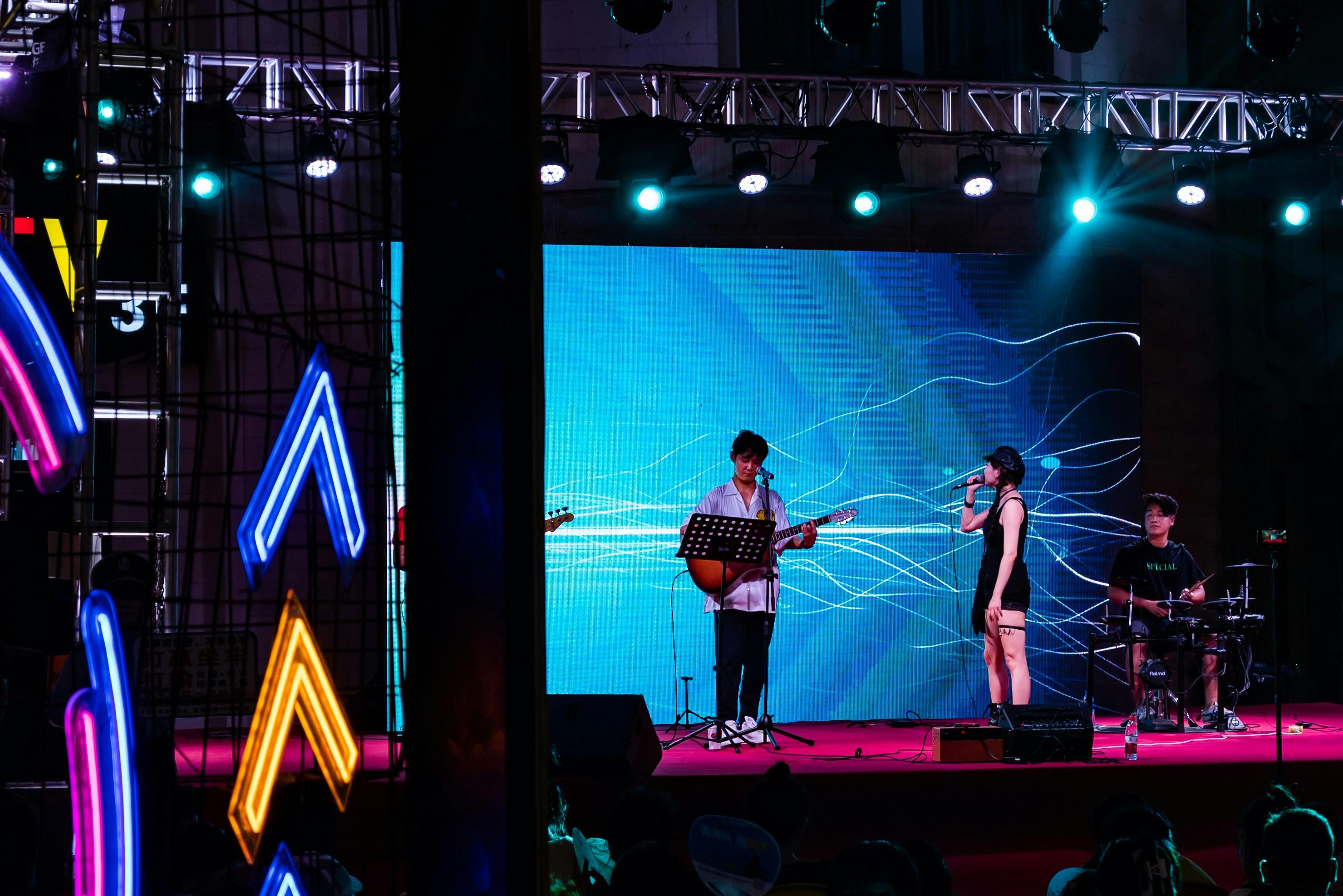
Coordinating LED Video with Event Lighting
LED and lighting design must be built together. When they are planned in isolation, the result is washed-out screens, over-lit stages or performers lost in silhouette.
-
Brightness balance is essential. Brightness for indoor events typically ranges from 1,200 to 2,000 nits – enough to compete with stage lights without overpowering performers. The LED display must be calibrated so key and back light levels on performers match both in-person viewing and camera exposure.
-
Color coordination prevents clashes. Lighting palettes should complement the video content per song or scene. Overuse of saturated whites or bright primary colors on the LED wall can blow out or visually overpower the lighting design.
-
Beam placement matters. Strong backlight and side-light beams should frame performers without directing glare into cameras or onto the screen surface. LED walls maintain deep contrast and brightness under various lighting conditions, but direct fixture wash onto the panels reduces that contrast.
-
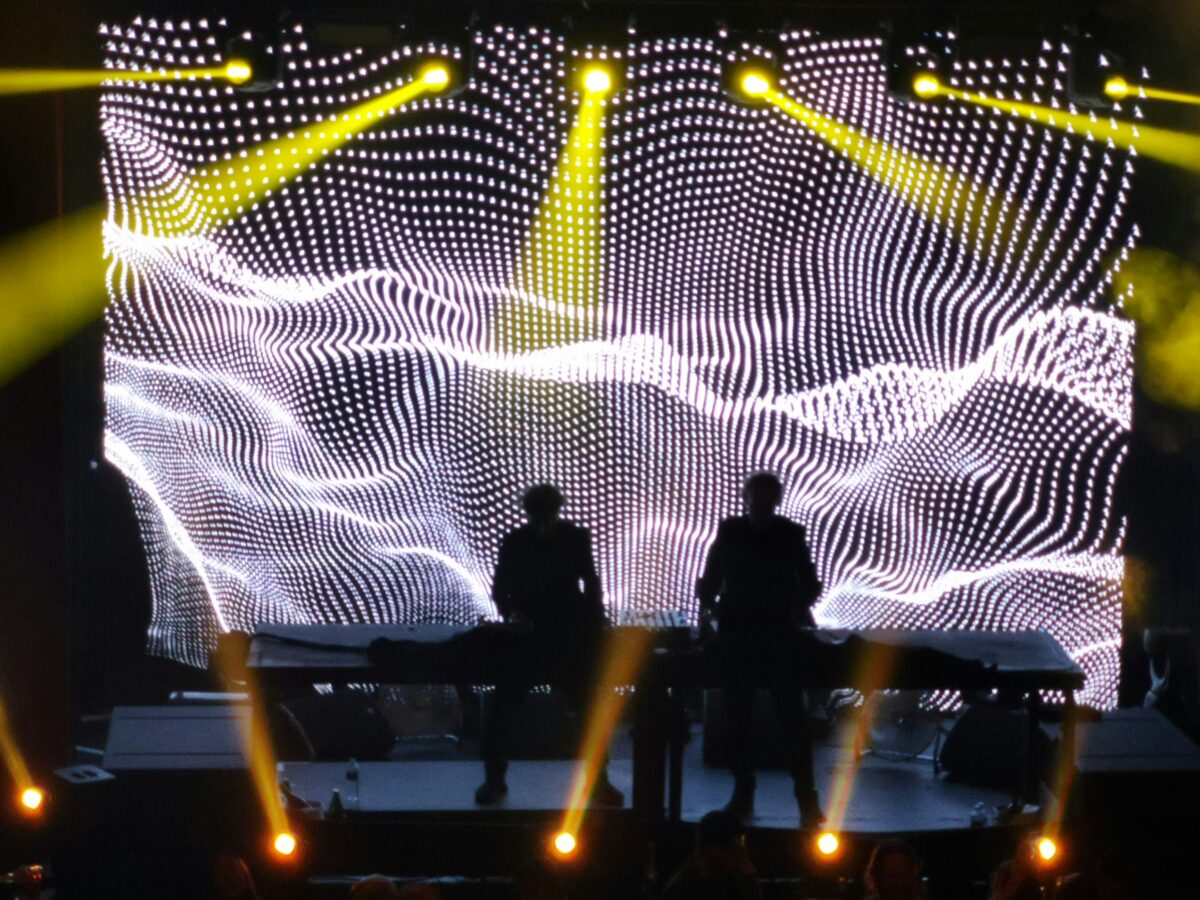
Cue integration ties both systems together through timecode. Moments where screens intentionally go dark highlight a solo or key speech. Synchronized color stories between video and lighting create cohesive visual impact across each song.
Front Row FX delivers event lighting production alongside LED screen wall production, so a single team manages both visual systems and avoids the conflicts that arise when lighting and video are designed by separate vendors with no shared plan.
Designing Around Performers, Cameras and Stage Movement
Good LED wall stage design keeps performers and cameras – not the hardware – at the center of the frame.
-
Artist blocking and staging (band positions, drum risers, runways, B stages) define safe distances between performers and the stage LED display. Too close and you get moiré patterns on camera. Negative space behind the performer creates contrast that helps both in-person viewing and broadcast framing.
-
Camera considerations include IMAG framing, lens field of view and jib paths. Camera platforms need clear sightlines to the LED wall. Bright, high-contrast content directly behind a performer’s face complicates camera exposure – softer, dimmer backgrounds often produce better close-up shots for live camera feeds.
-
High-refresh LED panels are essential for live streaming applications. If the wall refresh rate conflicts with camera shutter speed, visible flicker or banding appears on broadcast and recorded content.
-
Scenic elements such as stairs, props, inflatables and scenic portals must integrate with LED surfaces so entrances, exits and reveals work cleanly. LED walls are highly durable and require minimal maintenance, but physical interference from staging hardware should still be avoided.
Front Row FX collaborates with tour managers, show directors and broadcast crews to align the LED layout with the run-of-show and camera script before content production begins.
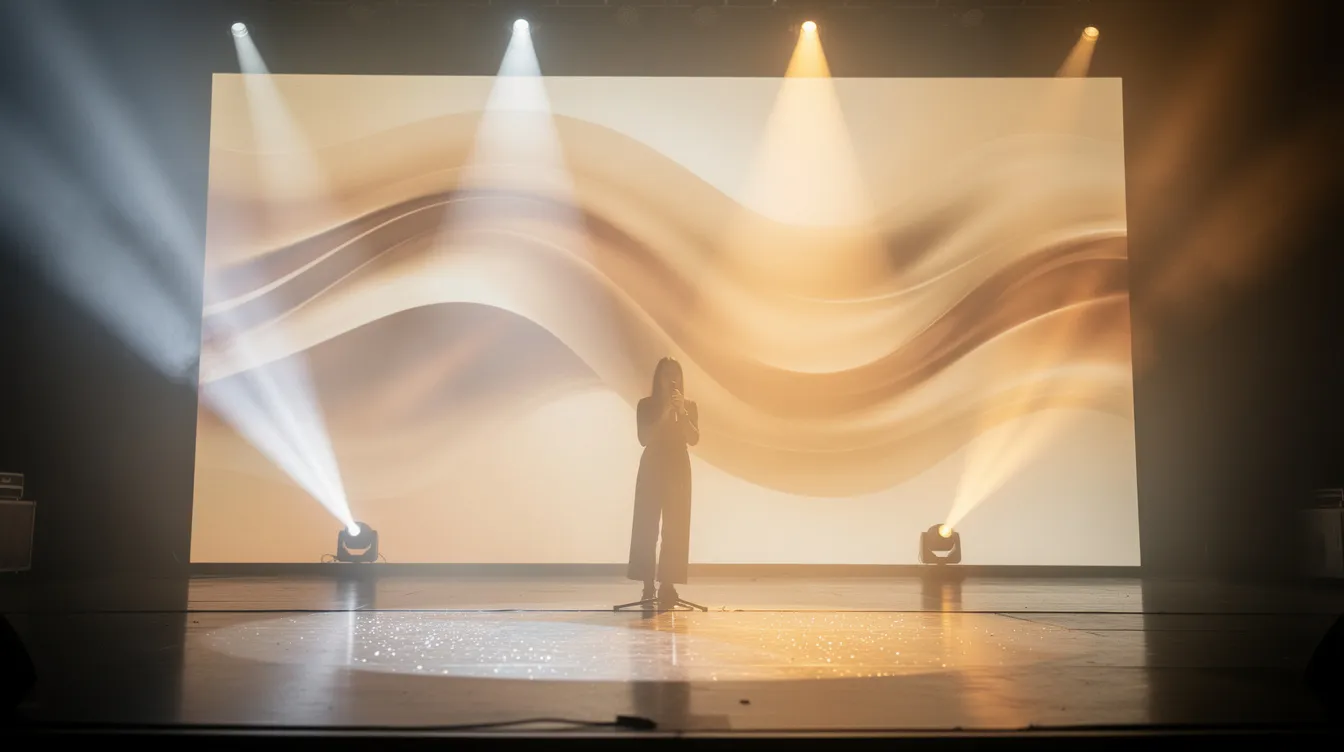
Indoor vs Outdoor LED Wall Stage Backdrop Considerations
Indoor and outdoor stages present different technical demands for LED wall backdrops.
Indoor stages (theaters, arenas, ballrooms):
-
Tighter pixel pitch (2–3.9 mm) is appropriate because viewing distances are shorter and ambient light is controlled
-
Brightness for indoor events should be 1,200 to 2,000 nits
-
Ceiling reflections, color temperature variations and in-house rigging grids must be factored into placement
-
Ballrooms and hotels may limit rigging positions and ceiling heights, increasing reliance on ground-supported led screen stage solutions
Outdoor stages (festivals, amphitheaters, concert grounds):
-
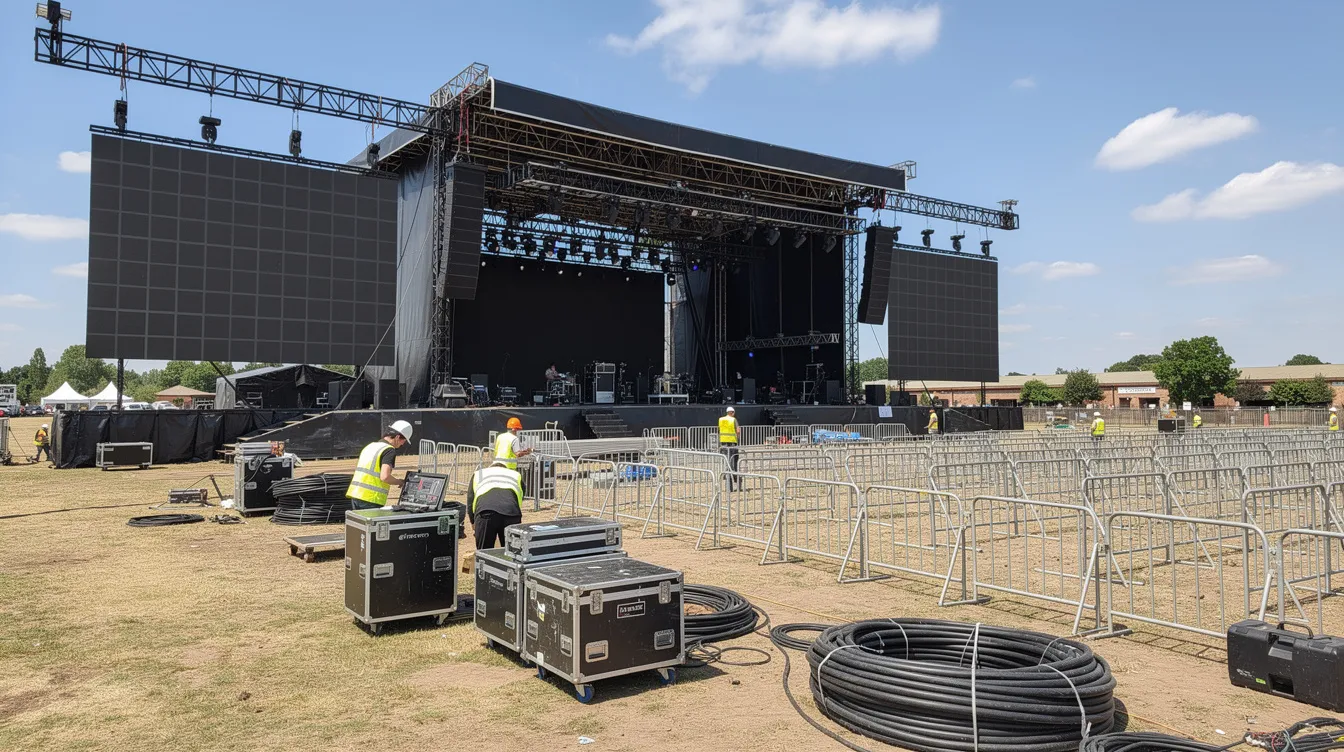
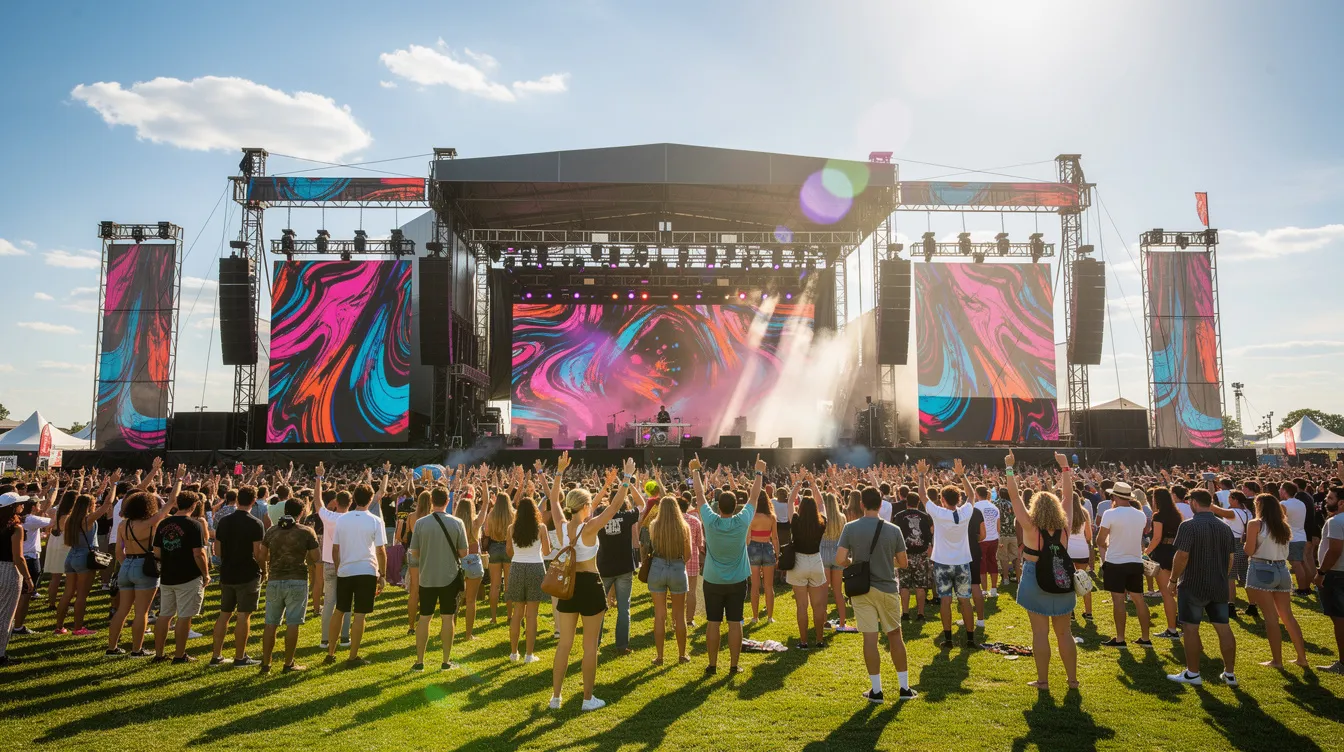
Outdoor events require LED panels rated at 5,000 nits or more to remain visible under direct sunlight. High brightness LED panels are essential for outdoor visibility from afternoon soundcheck through the night headliner.
-
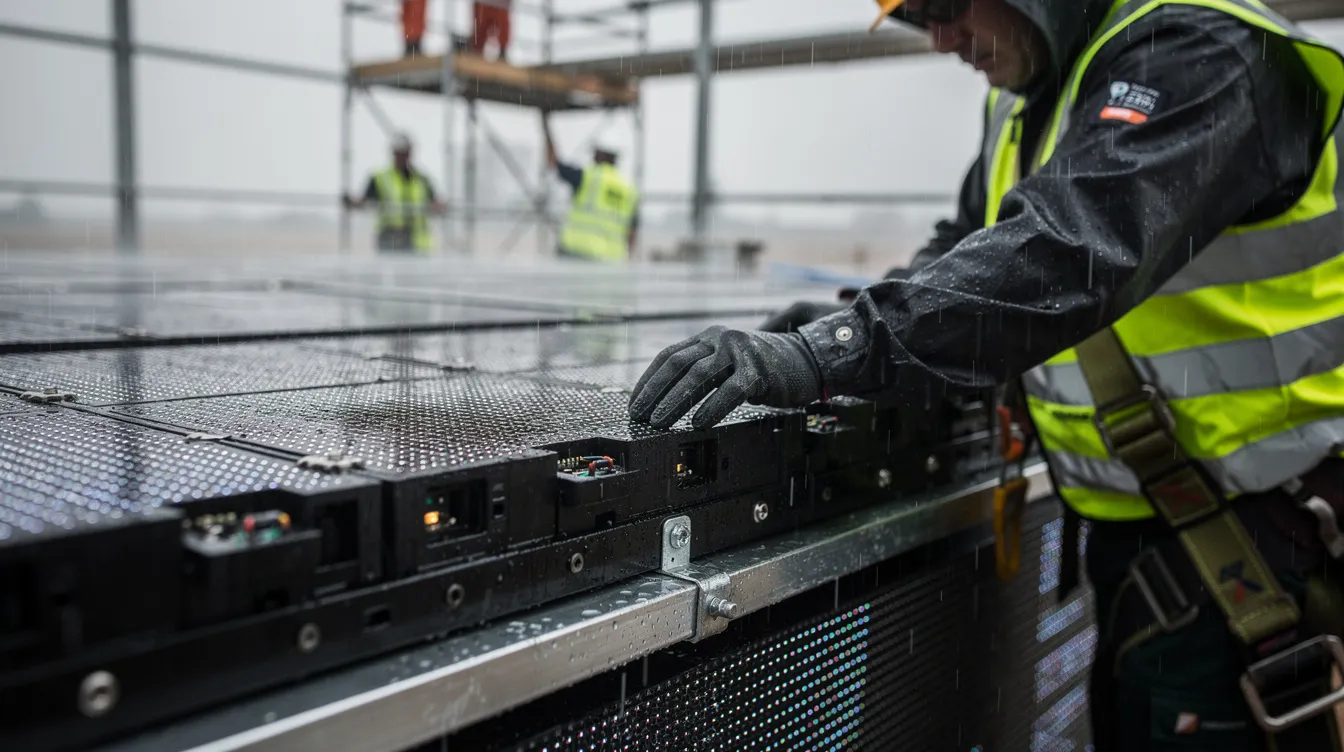
Many LED panels feature weather-resilient designs for outdoor events. An IP65 rating indicates dust-tight and water-resistant features suitable for outdoor use.
-
Sun angles, heat management and airflow around panels need careful planning, especially for summer festivals in the Upper Midwest.
-
Ground-supported structures are used more frequently outdoors. Wind exposure must be assessed for both flown and stacked configurations.
-
Day-to-night adaptability makes LED walls suitable for various events – processors can adjust brightness as ambient light shifts from full sun to darkness.
Front Row FX adjusts panel choice, brightness targets and processor settings differently for indoor tours versus outdoor festival runs. The production approach for a corporate event in Minneapolis looks very different from a three-day outdoor music festival.
Rigging and Ground-Support Implications (Without Structural Calculations)
Structural support is critical to every LED wall installation, but detailed engineering, ballast quantities and load calculations belong in a dedicated resource – not a design overview.
-
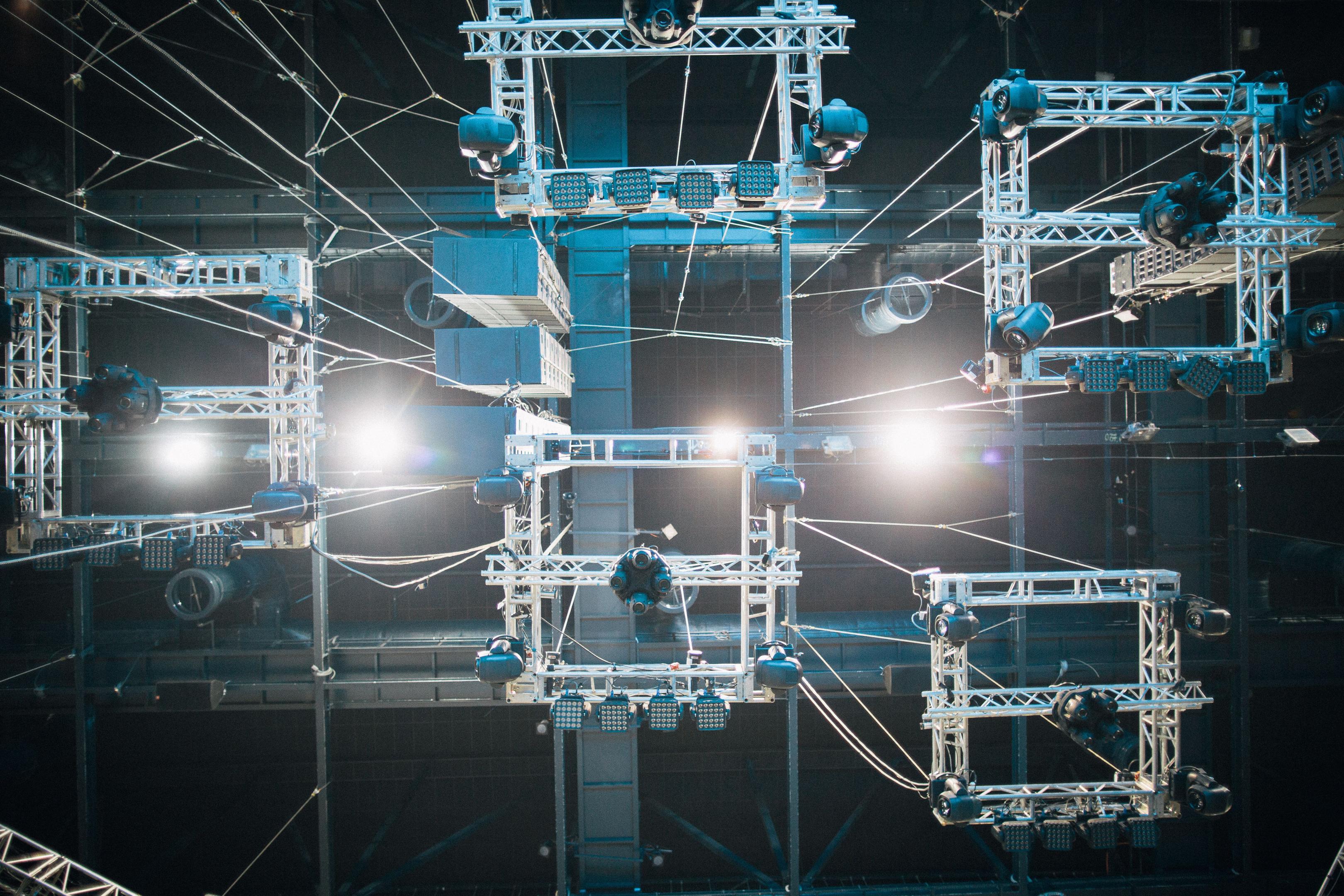
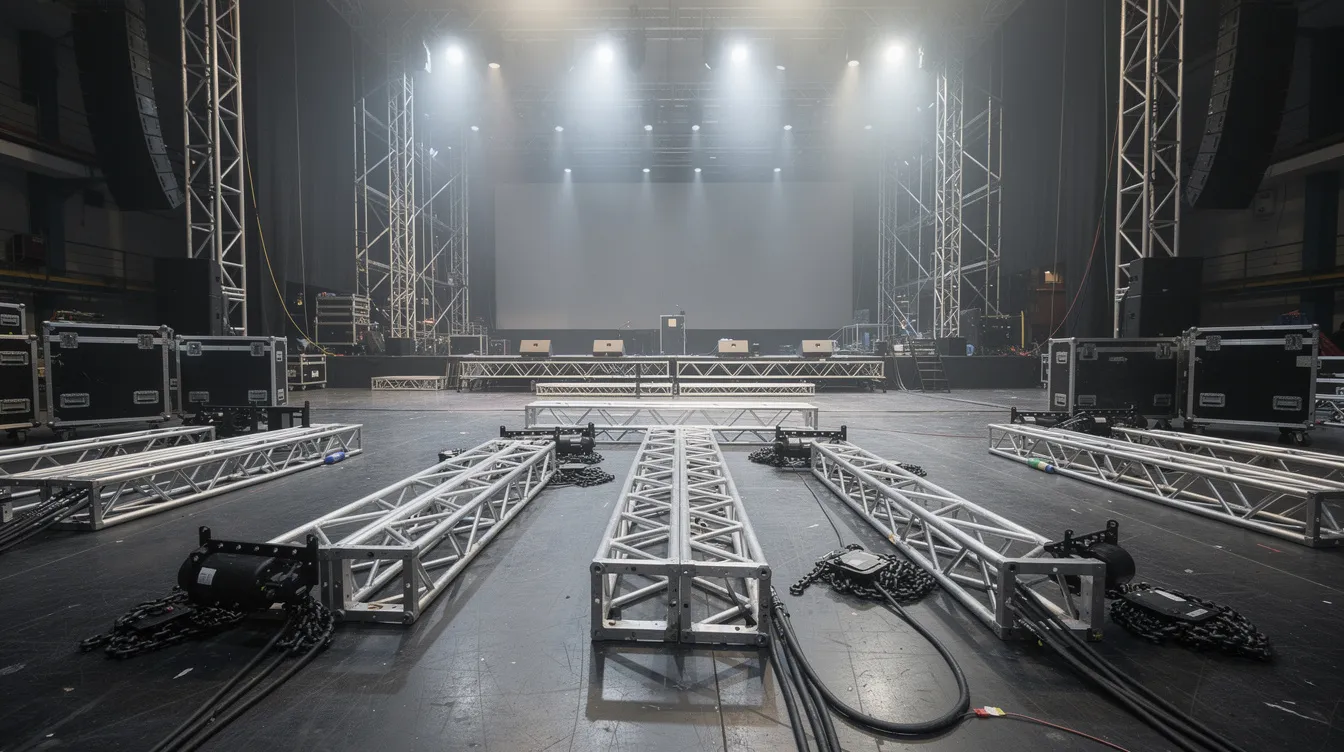
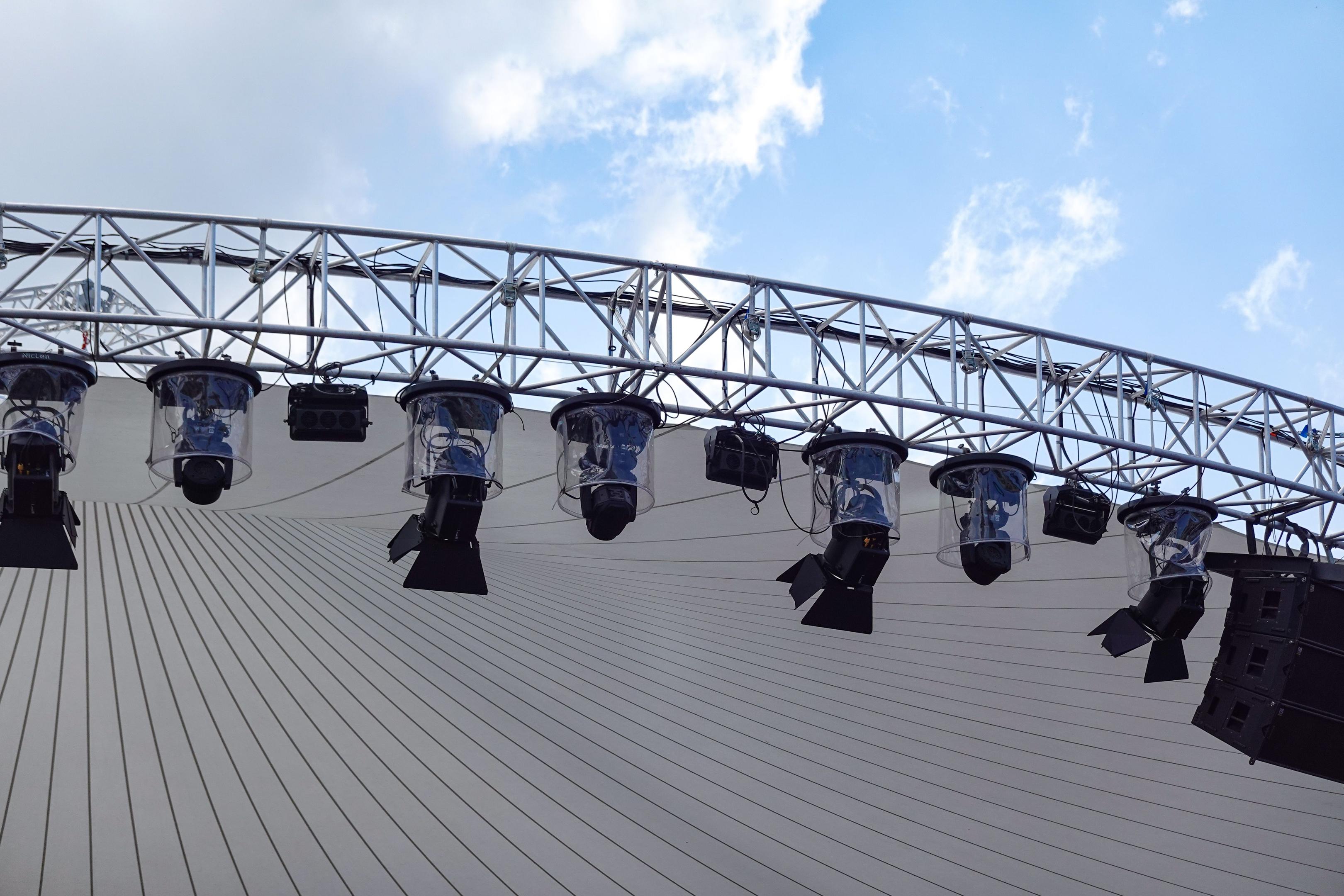
Flown LED walls hang from venue beams or grids using certified rigging hardware. They elevate the screen above backline and performers, keeping the stage deck clear and improving sightlines.
-
Ground-supported systems use truss stacks, base plates and ballast. They are the standard when fly systems are unavailable or ceiling capacity is limited. They consume stage depth but avoid overhead weight concerns.
-
Screen size, weight per panel, total array weight and wind exposure (outdoors) all affect which approach is safe and practical. Initial costs for LED stage screens can be relatively high, and rigging hardware adds to both budget and load-in time.
-
Creative layouts – columns, staggered panels, asymmetrical hangs – must still conform to available support hardware, connection methods and the venue’s approved rigging plan.
For structural detail, planners should review Front Row FX’s dedicated LED wall rigging guidance, which addresses load paths, safety factors and venue-specific engineering without duplicating that content here.
Preproduction, Visualization, Testing and Show-Day Operation
Strong backdrop LED wall stage design is proven in preproduction, not improvised at load-in.
Preproduction includes:
-
Gathering venue data: stage dimensions, trim height, rigging capacity, power availability, audience seating layout and distances
-
Collecting content requirements: IMAG, branding, sponsor rotation, scenic playback, presentation slides
-
Locking the LED layout, pixel map and content templates before any design work begins
Visualization tools – 2D scaled plans and 3D renders – show how the led wall stage backdrop, side screens and lighting will appear from key audience positions: front row, center orchestra, balcony, side aisle. These reveal sightline obstructions and screen size imbalances before a single panel is loaded.
Pixel mapping and content tests verify aspect ratios, safe areas, color calibration, refresh rate and latency with camera systems. Smooth playback depends on properly configured control software and frame-locked processors. Testing for stable performance before doors open prevents on-show surprises.
Show-day operation requires dedicated LED wall operators, backup playback systems, clear cue sheets and continuous communication with stage management and lighting directors. Display videos, live cuts and motion graphics must transition seamlessly through the run-of-show.
Front Row FX supports partial or full show operation, from LED system technicians to integrated video direction for concerts, festivals and large-scale event productions.
Layout Comparison Table: Choosing the Right LED Wall Stage Backdrop Approach
The following table compares common led stage screens options by visual purpose, applications, content needs and key production requirements.
|
Layout Type |
Primary Visual Purpose |
Best-Suited Event Types |
Content Considerations |
Key Production Requirement |
|---|---|---|---|---|
|
Single LED Backdrop |
Strong central focus for scenic, branding and IMAG |
Theaters, clubs, mid-size outdoor stages, special occasions |
Single content feed; standard or custom aspect ratio |
Adequate rigging height or ground-support depth |
|
Panoramic LED Wall |
Full-width immersive environment |
Arenas, corporate general sessions, large music festivals |
Ultra-wide content composition; motion-heavy scenic design |
Wide stage, extended truss or ground frame, high panel count |
|
Central Wall with Side Screens |
Combined scenic impact and audience coverage |
Wide venues, touring productions, theatrical performances, conferences |
Separate feeds for center (scenic) and sides (IMAG or sponsors) |
Additional processors, extra cameras, synchronized outputs |
|
LED Columns or Modular Surfaces |
Scenic architecture and performer framing |
Concerts, galas, brand activations, different events requiring visual depth |
Content mapped per surface; independent or synced playback |
Precise alignment, multiple signal paths, modular rigging |
|
Layered or Custom Scenic Layout |
Visual depth, creative staging, audience attention through dimension |
Headline tours, festivals, stage productions with high design intent |
Custom compositions per layer; complex pixel mapping |
Extended content design timeline, specialized support hardware, longer load-in |
Align your choice with event type, audience layout, content mix and the available rigging or ground-support profile. No single layout is universally superior – the right answer depends on the specific production.
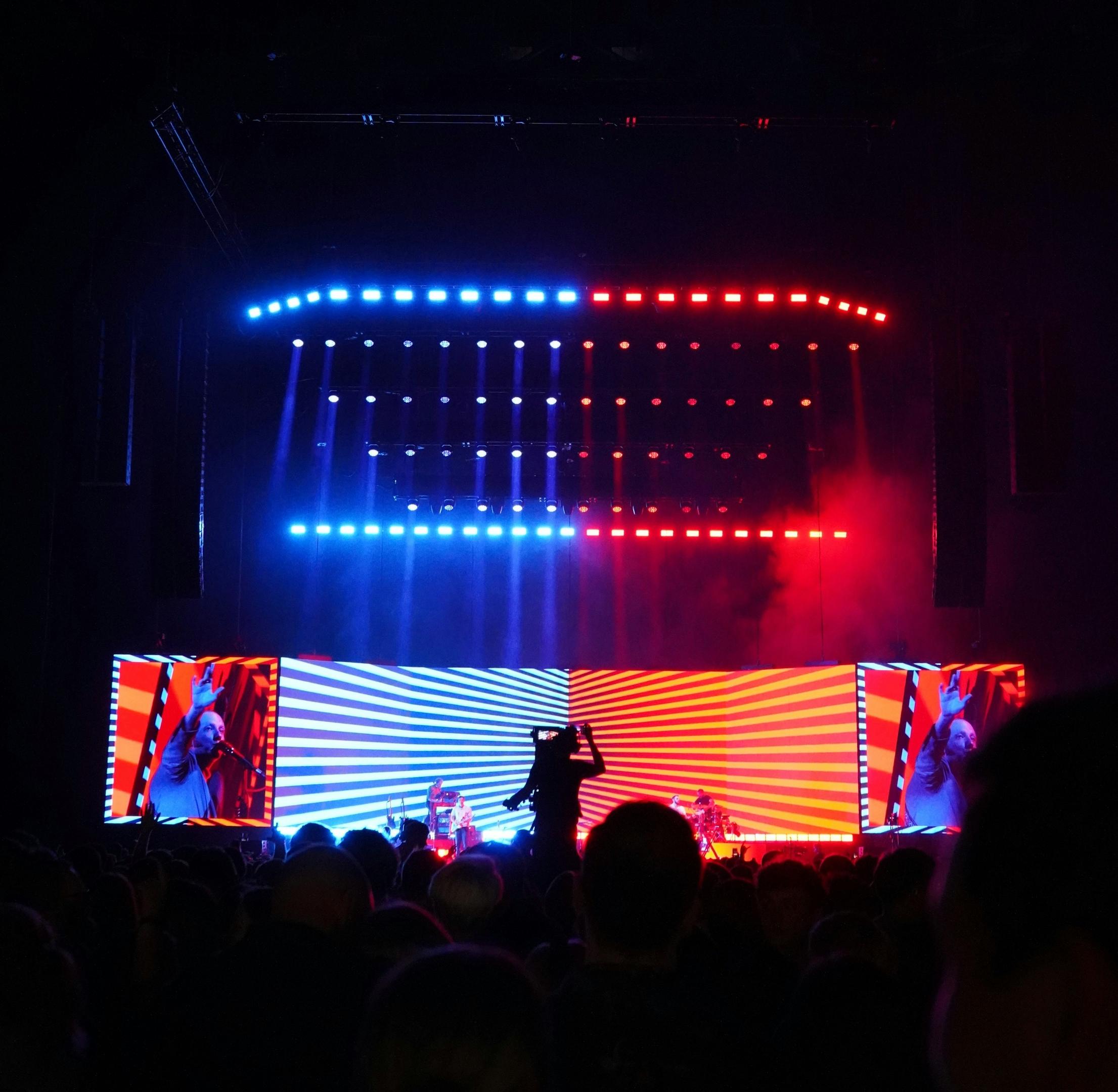
Planning Checklist and LED Stage Design FAQs
Planning Checklist
Before engaging a production partner, gather these details:
- Event date and city
- Venue name and whether it is indoor or outdoor
- Stage dimensions (width, depth) and trim or ceiling height
- Audience size and seating layout (raked, flat, fan-shaped)
- Viewing distance range (first row to last row)
- Desired screen size, screen shape or layout preference
- Event type (concert, festival, corporate, gala, trade show, wedding stage)
- Content types: IMAG, branding, sponsors, scenic playback, presentation
- Camera requirements (number of cameras, broadcast or in-house)
- Lighting scope and whether lighting production is included
- Load-in window and show schedule
- LED screen budget range or flexibility
These details allow Front Row FX to propose a screen solution matched to the performance, venue and audience rather than offering generic sizing.
Why Bigger Isn’t Always Better: Balancing Scale, Concept and Practicality
The largest possible screen is not automatically the strongest stage design. An enormous rectangle in a smaller venue can overpower performers, complicate lighting balance, exhaust content budgets and leave audience attention divided between too-bright visuals and too-dim artists. Viewing angle can suffer when a screen dominates the room rather than complementing it.
A deliberately composed modular layout – a central wall flanked by scenic LED columns, or broken-backdrop blocks that allow lighting beams through – can create more visual impact and lasting impression than one oversized rectangle. The key features of a strong design are proportion, integration and intent, not raw square footage.
Creative LED wall stage design must remain coordinated with structural realities, cabling paths, power, processor capacity, load-in time, crew access and quick installation windows. Audience engagement is earned through a coherent visual system, not sheer screen area.
If you are planning a concert, tour, festival, corporate show or trade show, share these details with Front Row FX: event date, city, venue, stage dimensions, audience size, viewing distances, indoor or outdoor environment, preferred screen arrangement, content formats, camera needs, lighting scope and production schedule.
With this information, Front Row FX can develop a tailored LED wall stage backdrop design that supports the performance, fits the venue and delivers a coherent visual system for both audiences and cameras. Whether you need LED screen wall production for a single concert, LED screens for a multi-city tour or integrated lighting and video for a festival main stage, the design starts with the right details – not the biggest screen in inventory.