How to Plan a Professional Watch Party: LED, Sound, Power & Streaming
Introduction: A Watch Party Becomes a Production Once the Screen Matters
Most guides on how to plan a watch party spend their time on party food, good food options, snacks, and drinks. A well-stocked snack table adds enjoyment to movie nights. Servings of finger foods are suitable for watch parties, and self-serve drink stations keep guests refreshed without disruption. Those details matter for hospitality – but they are not what makes or breaks the occasion when hundreds of people are watching a championship game on a big screen.
Once a watch party reaches professional scale, it stops being a hospitality problem and becomes an AV production problem. The screen gets the attention. Reliability keeps the room watching. This guide focuses purely on that technical side: screen selection, sightlines, signal flow, internet, audio, power, backup systems, and crew.
Whether you plan to host a corporate watch party for the Big Game, a community World Cup viewing, a sponsor-branded fan zone for a football tournament, or a large private gathering where guests will cheer at every score, Front Row FX approaches every professional watch party as one integrated technical environment. The planning sequence we follow – Audience → Venue → Sightlines → Screen → Signal → Internet → Audio → Power → Backup → Crew – ensures nothing falls through the cracks.
Front Row FX is a full-service audiovisual production company based in Eagan, Minnesota, supporting watch party production across Minneapolis, St. Paul, and the broader Twin Cities region.
Step 1 – Define the Audience and the Watch Party Use Case
Planning a professional watch party starts with audience type and behavior, not an arbitrary guest count. Sending invitations ahead of time sets clear expectations for attendance, but the real question is what your audience will do once they arrive.
Corporate hospitality for the Big Game: Seated VIP guests expecting a polished, complete experience with sponsor branding and curated halftime content.
Community World Cup viewing: Standing and seated crowds, families with kids, and fans who will stay for three-plus hours. World Cup watch party food should sustain for that duration – think stadium-style options like hot dogs, nachos, and sliders from food trucks or a continuous food table. Include themed drinks named after competing nations and even novelty items like Cotton Candy Art in team colors.
Sponsor-branded fan zones: Brand activations where a vibrant atmosphere and visual production quality represent the brand itself. A hydration station and good food keep guests comfortable; planning a menu that accommodates dietary restrictions ensures guest satisfaction for larger groups.
Association member events and school or booster club game day parties: Mixed demographics, families who eat together, and fans who want enough seats and a seating area that lets them watch and socialize simultaneously.
What matters for AV planning: Will people stand or sit? How dense is the crowd? How long will they stay in place? Will there be secondary entertainment spaces like a bar area? These answers shape every screen, sound, and power decision that follows.
Step 2 – Pick the Venue with AV in Mind (Indoor vs Outdoor)
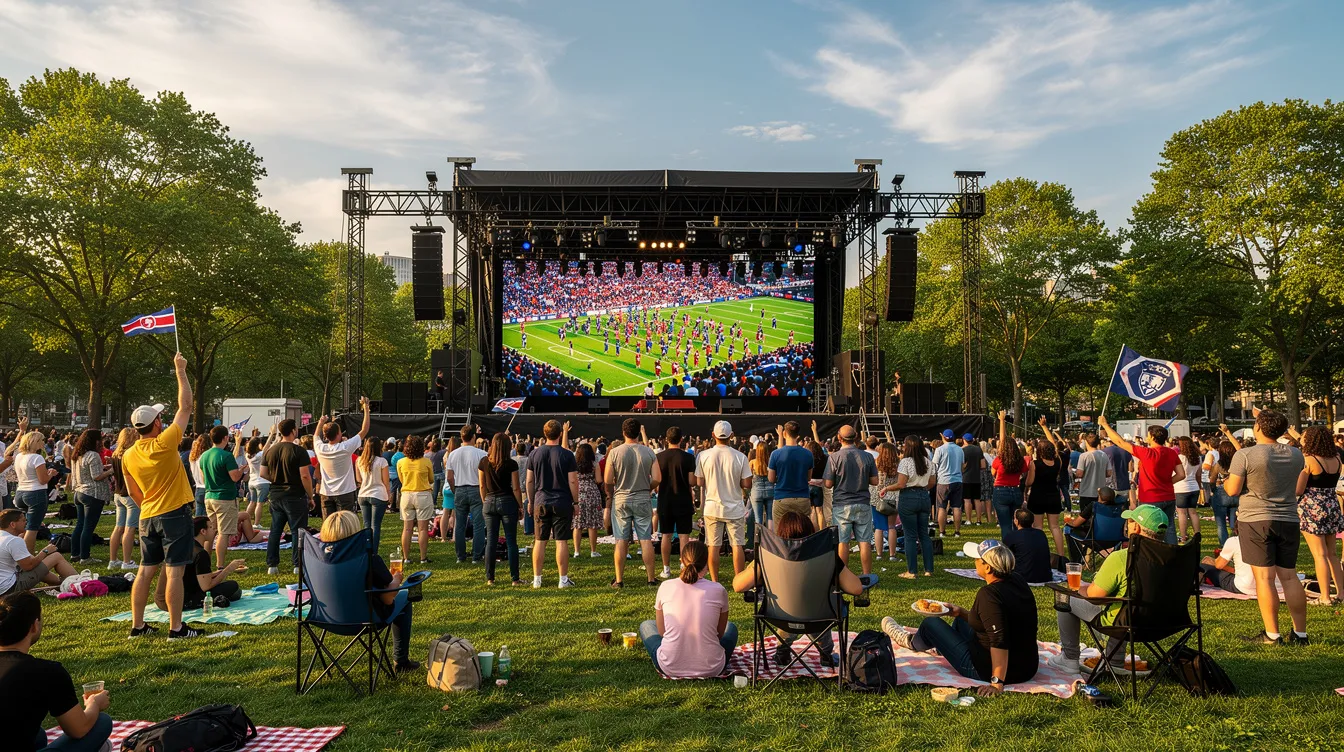
Most watch parties are planned around location or food first. A good watch party, however, factors AV feasibility into venue selection from the start. The space you choose determines what screen technology works, how sound behaves, and whether you have the power to run the production.
Indoor venues (ballrooms, corporate atriums, breweries, bars, gyms, fieldhouses):
Ceiling height and rigging or ground-support capacity for LED walls
Ambient light control – windows, skylights, dimmable house lighting
Loading access for LED screen carts, staging, and speaker systems
Existing electrical panel capacity and breaker locations
Room dimensions that affect viewing distance and speaker placement
Outdoor venues (parking lots, plazas, lawns, rooftops, a park):
Sun path and time of day – direct sun hitting the screen kills contrast
Wind exposure and ground conditions for structural safety
Proximity to power or space for generator placement
Traffic flow near food trucks, sponsor activations, and crowd movement
Weather contingency and safe shutdown access
Front Row FX can walk venues across Minneapolis, St. Paul, Eagan, Bloomington, Minnetonka, Edina, Woodbury, Burnsville, Stillwater, White Bear Lake, North Oaks, Dellwood, Mahtomedi, Wayzata, Excelsior, Orono, and the Lake Minnetonka area to evaluate AV feasibility before contracts are locked.
Step 3 – Sightlines and Layout: Where People Stand, Not Just Where the Screen Fits
The same stadium logic used in arenas applies to a professional watch party: start with where eyes will be, then design the screen and layout around that. Arranging seating promotes clear sightlines for all guests, and comfortable seating arrangements improve guest enjoyment during events.
Define a primary viewing zone – the area where most fans will focus on the main event – and secondary zones for the bar, social talking areas, and walk-up spaces. Seating should allow for both watching and socializing.
Elevate the screen above standing head height. Front-row viewers should not have to crane their necks, and back-row viewers should not miss the score bug behind a crowd.
Avoid placing buffet tables, bars, tent poles, or pillars in the main viewing area. These obstructions create dead spots.
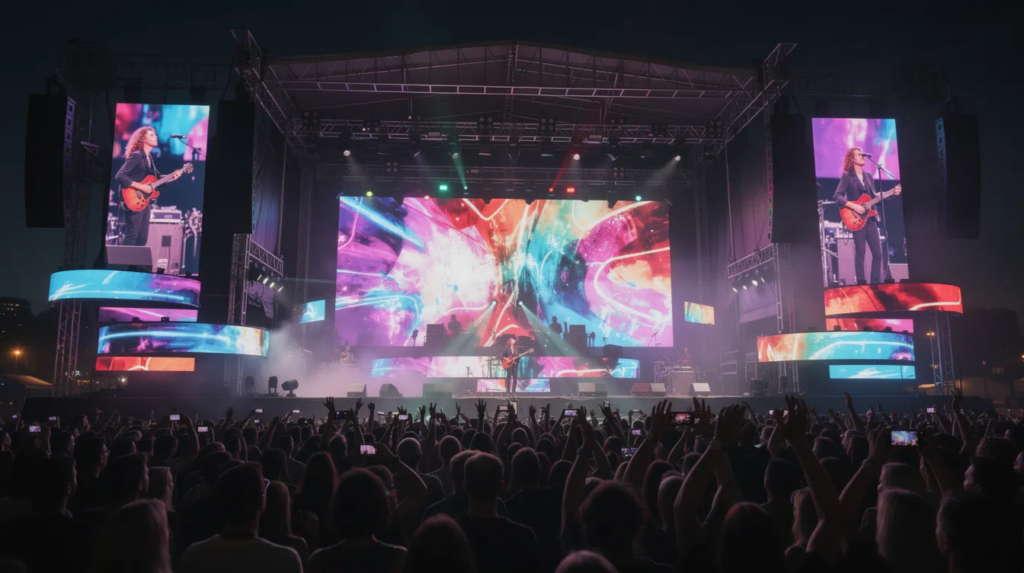
A single central LED wall works when the audience is concentrated directly in front. For wider footprints, multiple side screens or secondary displays at bar and overflow areas create better coverage.
Use floor cushions and extra chairs to maximize indoor sightlines in less formal setups. For outdoor events, tiered seating or elevated rear sections help.
Share even rough layout sketches with Front Row FX before production is booked. Simple plan-view drawings help optimize screen size, speaker positions, and cable routes.
Step 4 – Choosing the Right Screen: LED vs Projector vs Existing TVs
For a professional watch party, the screen decision is a visibility and reliability decision. Guest count alone does not determine size – what matters is viewing distance, room depth, width, whether people stand or sit, and whether the screen must be readable over a crowd.
As a baseline reference point: a 65-inch screen is ideal for 20 guests indoors, and for viewers 10 feet away, a 65- to 75-inch TV works fine. A 100-inch projected image enhances indoor viewing experiences in darker rooms. But most watch parties at professional scale outgrow these dimensions quickly.
When an LED screen for a watch party is the right call:
Daylight or mixed indoor-outdoor spaces where ambient light is high
Large audiences where screen width must exceed what any single TV can deliver
Events where reliability, brightness consistency, and visual impact are non-negotiable
When a projector may work:
After-dark outdoor events or very dark indoor spaces (ballrooms with blackout capability)
Projectors should have 3,000 or more lumens to compete with any ambient light at all
When existing TVs are sufficient:
Supplemental displays at bars, sponsor areas, or overflow rooms – not as the main screen
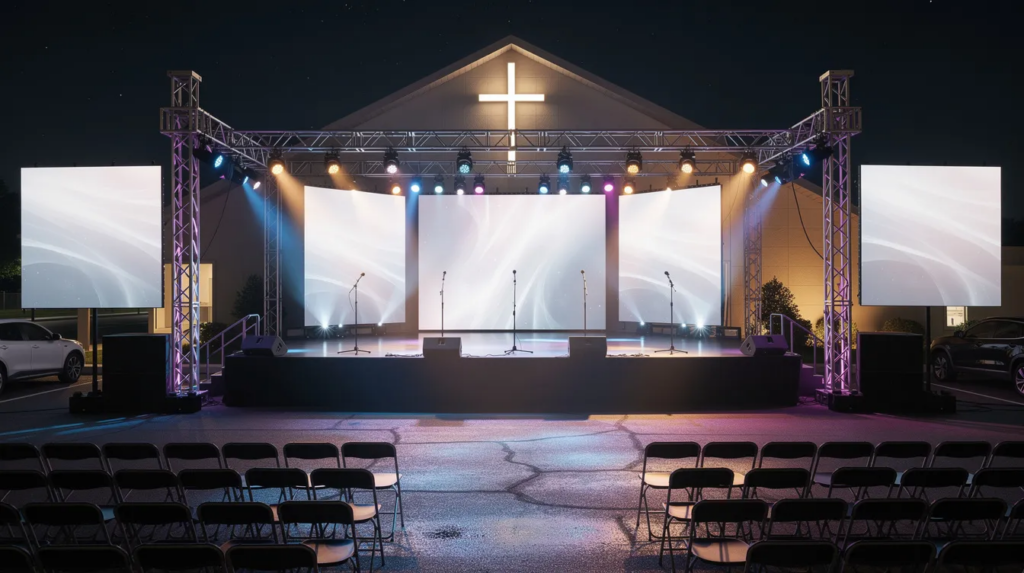
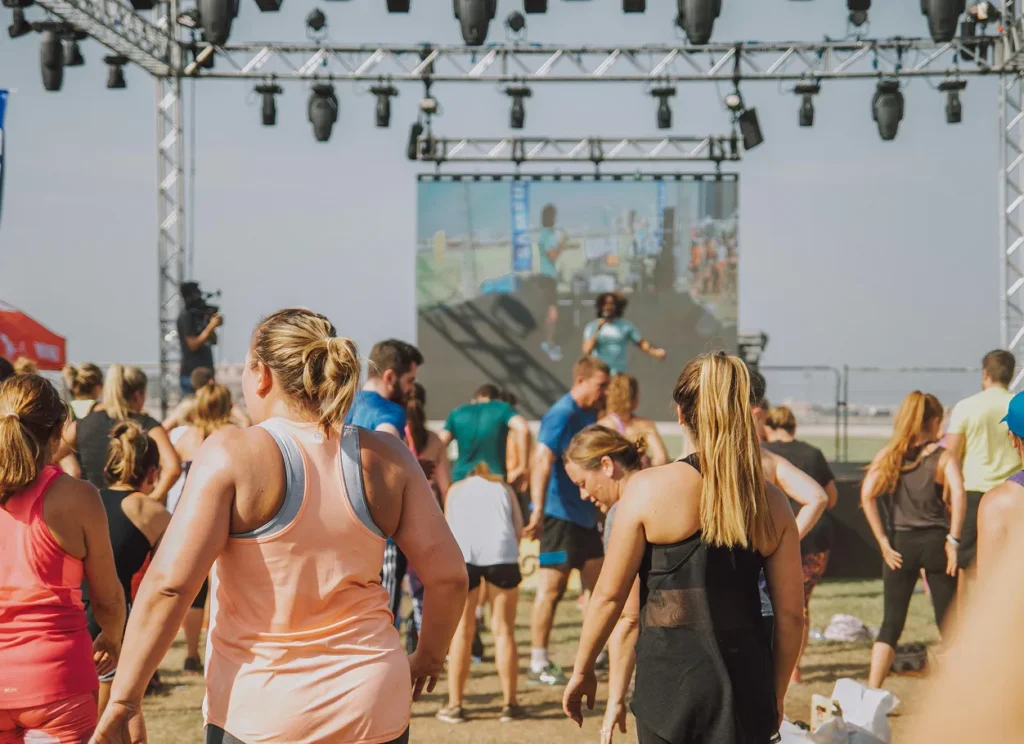
For a large screen watch party, common configurations include one center LED video wall, two side screens flanking a stage, or a main wall plus smaller informational monitors at sponsor stations. Front Row FX scales LED wall dimensions and pixel pitch based on actual floor plans and sightline drawings, not guesswork.
Step 5 – Indoor vs Outdoor LED Screens: Brightness, Weather and Safety
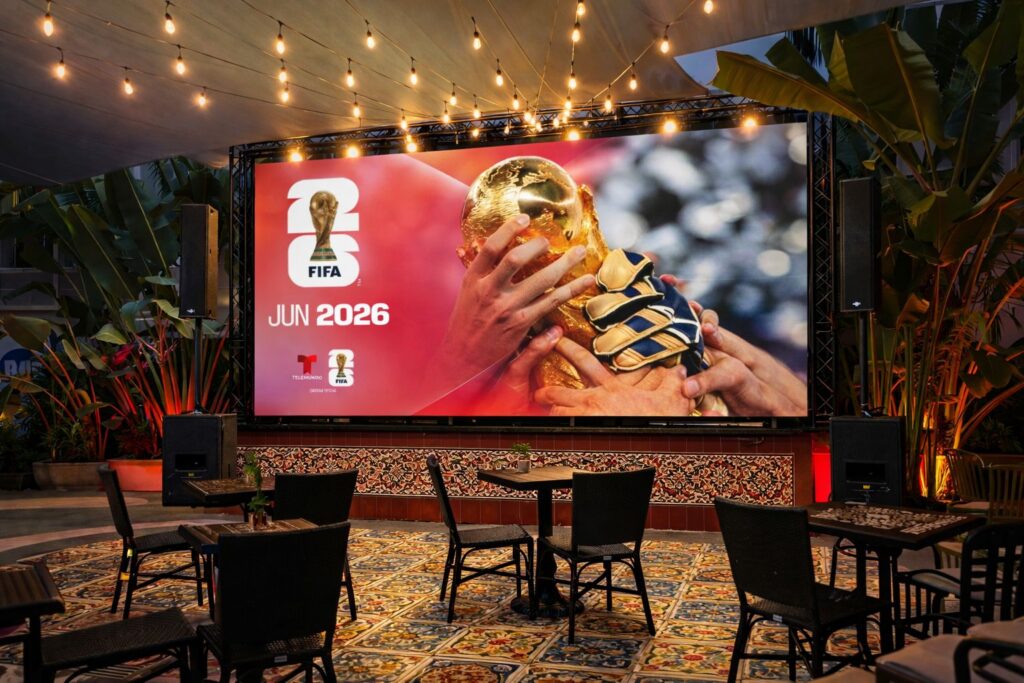
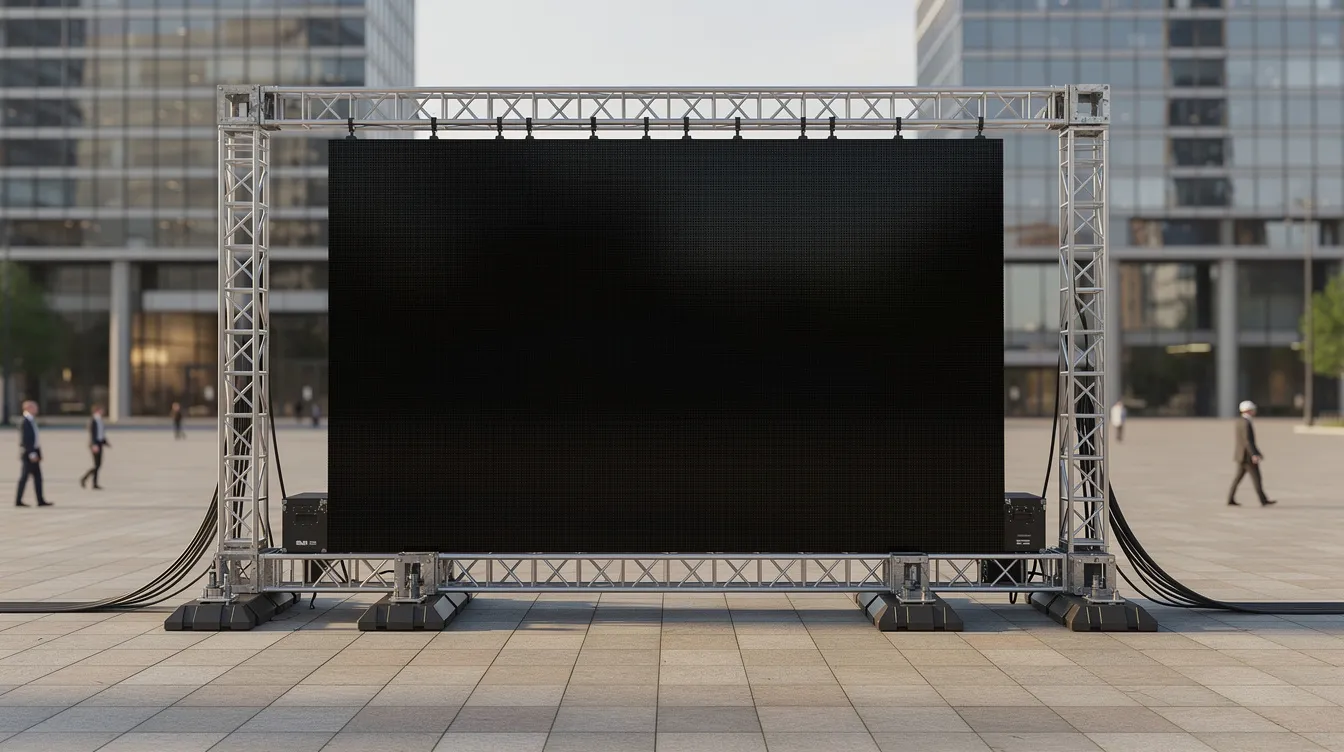
Once a watch party moves outdoors or into bright, glass-heavy atriums, LED becomes the standard solution. Outdoor watch party screens must compete with sun and ambient light – outdoor LED walls typically deliver 5,000 to 8,000 nits for full-daylight visibility, while indoor LED walls at 800 to 1,500 nits outperform projection under standard ballroom lighting. Outdoor screens should face south or east to avoid direct sunlight glare on the panel surface.
Weather and safety planning for Minnesota watch party production:
Rain protection for processors, power distribution, and signal cabling
Weather-rated LED cabinets (IP65 or higher) for wet conditions
Safe, planned shutdown procedures if lightning or severe weather approaches
Ground-support structures with appropriate ballast and anchoring – weight and wind awareness are critical, though specific engineering ratings depend on the setup
Temperature considerations: cold Minnesota evenings require equipment warm-up; hot mid-summer afternoons demand cooling for electronics and crew comfort
What to share with your AV partner early: season, expected time of day, surface type (concrete, grass, rooftop), typical wind exposure, and whether weather shelter exists on-site. Decorating with team colors and adding string lights around the viewing area enhances the mood – but those elements should be planned after the screen, structure, and power are confirmed.
Step 6 – Broadcast Feed, Streaming and Signal Flow
The complete signal flow for a professional watch party runs: broadcast source → playback or decoder → video processing → LED processor → screen and secondary displays. A break at any point in that chain means the crowd sees nothing.
Source types: Over-the-top streaming apps (ESPN+, Fox Sports, Peacock), cable or satellite boxes, in-venue IPTV, or direct broadcaster feeds. Each has different reliability, authentication requirements, and output resolution.
Pre-event testing: Log into streaming apps well before game day. Confirm the correct channel for the World Cup match, Big Game, or specific league rights. Verify HD or 4K resolution compatibility throughout the signal chain. Testing audio and visual equipment before events enhances the experience, and testing technology ahead of time prevents glitches during events.
Content rights: Front Row FX does not provide broadcast rights. The client or event organizer is responsible for confirming any needed public or commercial viewing access and permissions with rights holders.
Video distribution: Professional switchers or routers allow clean transitions between pre game content, sponsor loops, and the live broadcast. Splitting one signal to multiple displays requires proper routing to avoid degradation.
Rehearsal: Run the full signal path at least several hours before attendees arrive. Have a backup playback device – an alternate streaming source or recorded content – ready if the primary feed fails.
Step 7 – Internet and Network Planning: Production Connectivity vs Guest Wi‑Fi
Production internet for a watch party should never ride on the same overloaded guest Wi‑Fi that attendees use for social posts and personal streaming. If buffering happened during a crucial goal or the stream dropped in overtime, no amount of good food or fun entertainment would save the moment.
Dedicated wired internet from the venue is the preferred primary connection – a separate circuit or VLAN isolated from guest traffic.
Cellular bonding as backup where wired is not feasible, combining multiple carriers for improved reliability.
Redundancy logic: Primary wired connection plus cellular or secondary ISP backup, with clear switching protocol if latency or packet loss appears. For broadcast-grade reliability, plan for sustained bandwidth of at least five to six times the program bitrate.
Test at event time: Run the stream at the same time of day as the actual event to reveal congestion, firewall restrictions, or captive portal timeouts.
Ask venues early about network isolation, bandwidth guarantees, and IT support availability. Loop Front Row FX into those conversations for Minnesota and Upper Midwest events.
Step 8 – Professional Watch Party Sound: Coverage, Not Just Volume
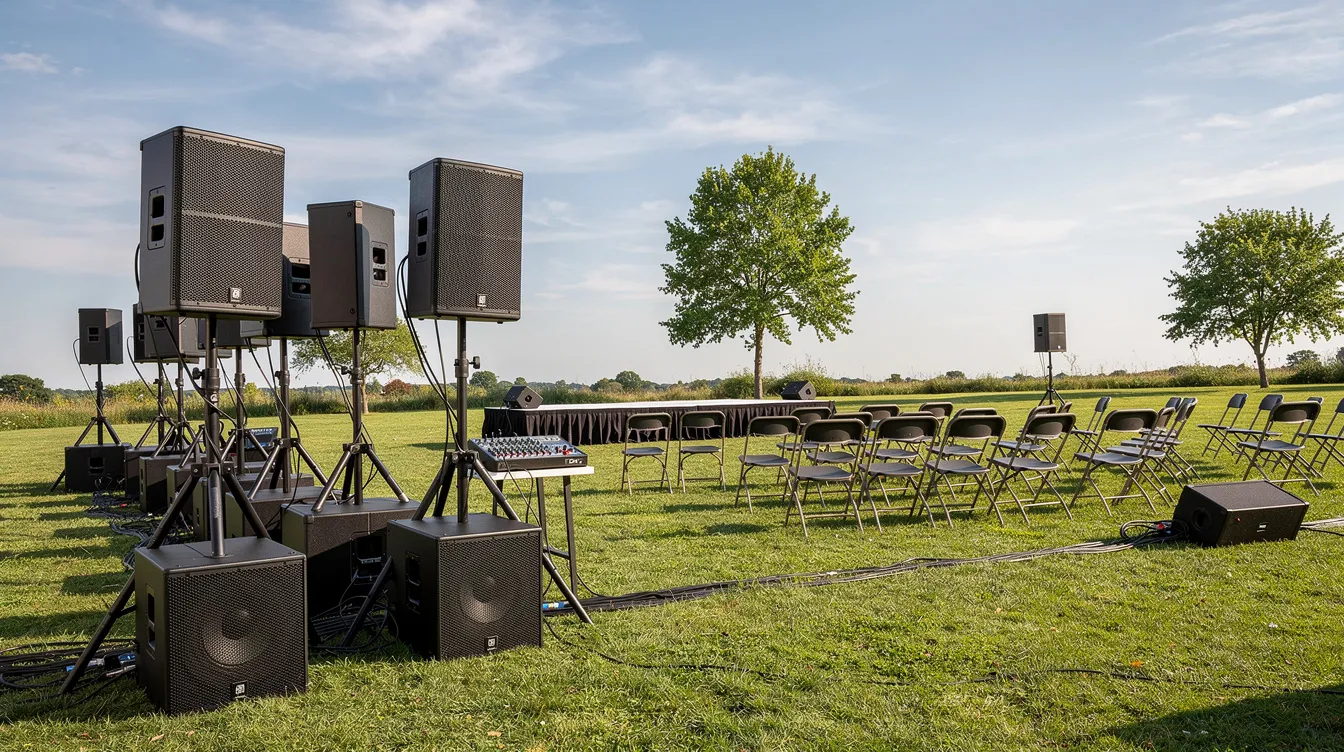
Most watch parties underestimate sound. A TV’s built-in speakers are inadequate for groups over 30 guests. Even indoor parties benefit from a soundbar or home theater setup at minimum, but professional scale demands more. Good sound enhances the viewing experience at watch parties, and a proper sound system is crucial for outdoor events where there are no walls to reflect audio back to the crowd.
A watch party sound system should deliver:
Clear commentary and intelligible announcements from front to back – sound systems should carry audio across the entire venue, not just blast from speakers near the screen
Distributed speaker placement so fans in the main viewing area and those talking at the bar both catch the play-by-play without one zone being painfully loud and another unintelligible
Ability to mix music and hype tracks during pre game segments, MC or announcer moments, sponsor reads, and halftime content
Delay alignment between video and audio, especially when LED walls have minimal processing latency but wireless microphones or mixing consoles introduce slight delays
Zoning for separate areas – a louder primary zone for the game, a quieter area for conversation and socializing
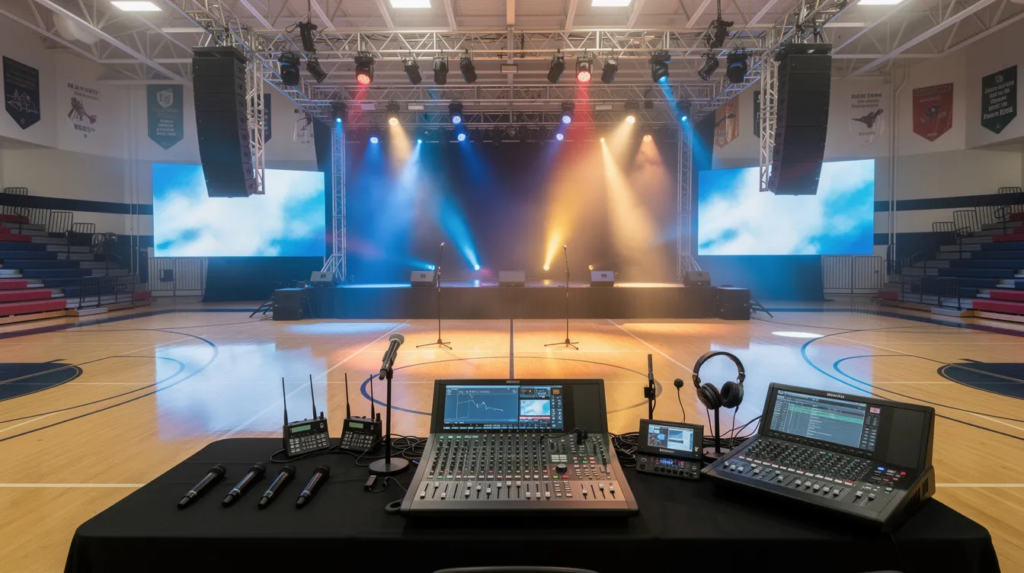
Front Row FX provides professional sound reinforcement including line arrays, distributed speakers, subwoofers, mixing consoles, and dedicated audio technicians for watch party production of any scale.
Step 9 – Power and Infrastructure: Circuits, Distribution and Cable Routes
A significant LED screen setup, distributed sound, and streaming gear cannot simply share a random wall outlet with catering equipment or bar fridges. The job of power planning is keeping every system running independently and safely.
Dedicated circuits for LED walls, separate circuits for audio amplifiers, and isolated feeds for video processing – never share circuits with high-draw loads like refrigeration.
Generator planning for outdoor watch party screens in parking lots, fields, and temporary fan zones, with professional power distribution, grounding, and surge protection.
Amperage specifics vary by screen size, pixel pitch, and processing load – share the proposed LED configuration and all additional AV elements with Front Row FX early for accurate power modeling.
Cable routing: Use cable ramps, taping, and physical protection for all power and signal cabling. Keep routes away from entrances, emergency paths, and water exposure.
Venue coordination: Identify panel locations, breaker access, and any potential costs for utility upgrades before locking the space.
Step 10 – Backup and Risk Management for High-Stakes Games
For a major World Cup match, championship series, or the Big Game, the real product is uninterrupted viewing. When something has happened mid-game – a feed drop, a processor failure – that is the moment nobody wants to miss. The ultimate watch party is one where the crowd never notices the infrastructure because it never fails.
Critical failure points: internet connection, primary playback device or app, video processors, LED power supplies, audio mixer, microphones, key distribution cables.
Practical backups: secondary internet path, spare laptop or decoder logged into the broadcast platform, redundant signal routing, backup audio inputs, spare cabling for long cable runs.
Prioritize by pain: Not every event needs complete duplicated infrastructure. Budget backup for what would be most painful to lose – the live game feed matters more than the pre game sponsor loop.
Pre-event risk review: The event team, venue, and Front Row FX walk through what could go wrong and decide what level of redundancy matches the budget and the event’s visibility. A win on reliability comes from planning, not luck.
Step 11 – Technical Crew, Show Calling and Branded Content
Once a watch party involves sponsors, VIPs, media, or a large public audience, a dedicated technical team becomes essential. Having an on-site crew is the difference between a smooth event and waiting for someone to troubleshoot a black screen while the crowd grows restless.
Typical crew roles:
Video engineer managing LED processors, switching, and signal quality
Audio technician mixing commentary, microphones, and music
Show or technical manager coordinating timing for pre game content, sponsor spots, halftime elements, and post-game segments
Brand and sponsor integration opportunities:
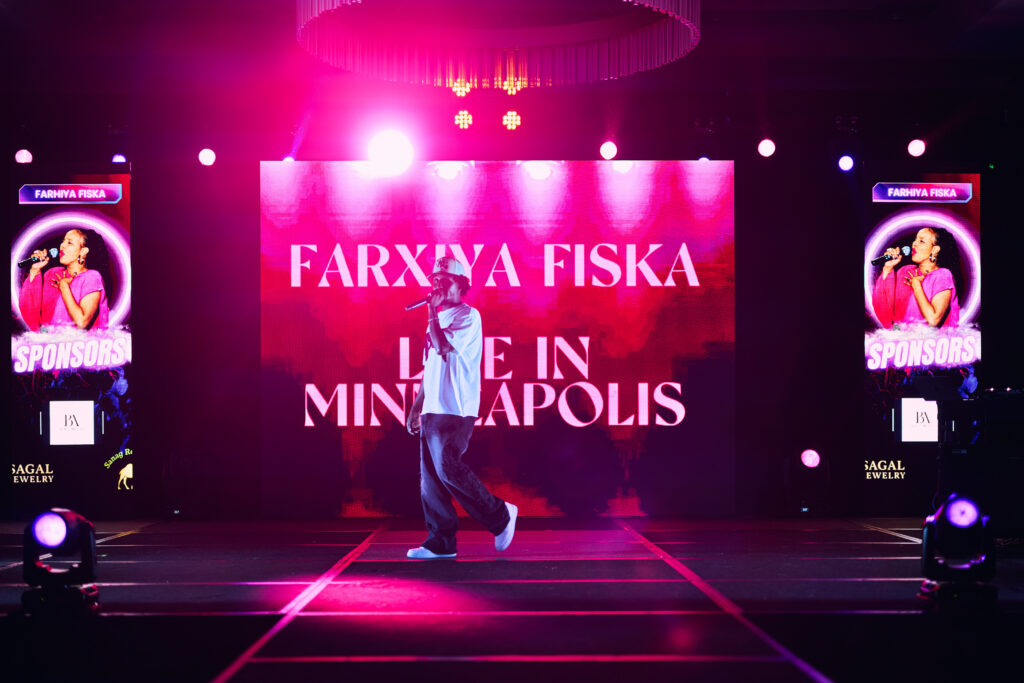
Custom LED layouts around the game feed with branded visuals
Pre-roll sponsor loops and branded halftime features
Live crowd camera shots and post-game highlight reels or thank-you messages
Event lighting in team colors, string lights, and stage design that supports the mood and create a fun atmosphere that adds excitement and engages guests
Engagement during breaks and lulls: Games and activities keep guests engaged – foosball tournaments before kickoff, World Cup Bingo throughout the match, halftime penalty shootouts for competitive excitement, trivia quizzes during breaks, and pre-kickoff activities that build energy. These entertainment elements are part of the show plan the technical manager coordinates alongside sponsor content and music.
Watch parties that are part of larger activations – corporate client nights, property launch events, community days – benefit from integrated show and technical management that ties LED walls, professional sound, lighting, content design, and crew into a single production. Front Row FX is not a screen rental company. It is a production partner supporting the complete sports watch party experience across the Twin Cities and Minnesota.
Planning Your Next Watch Party with Front Row FX
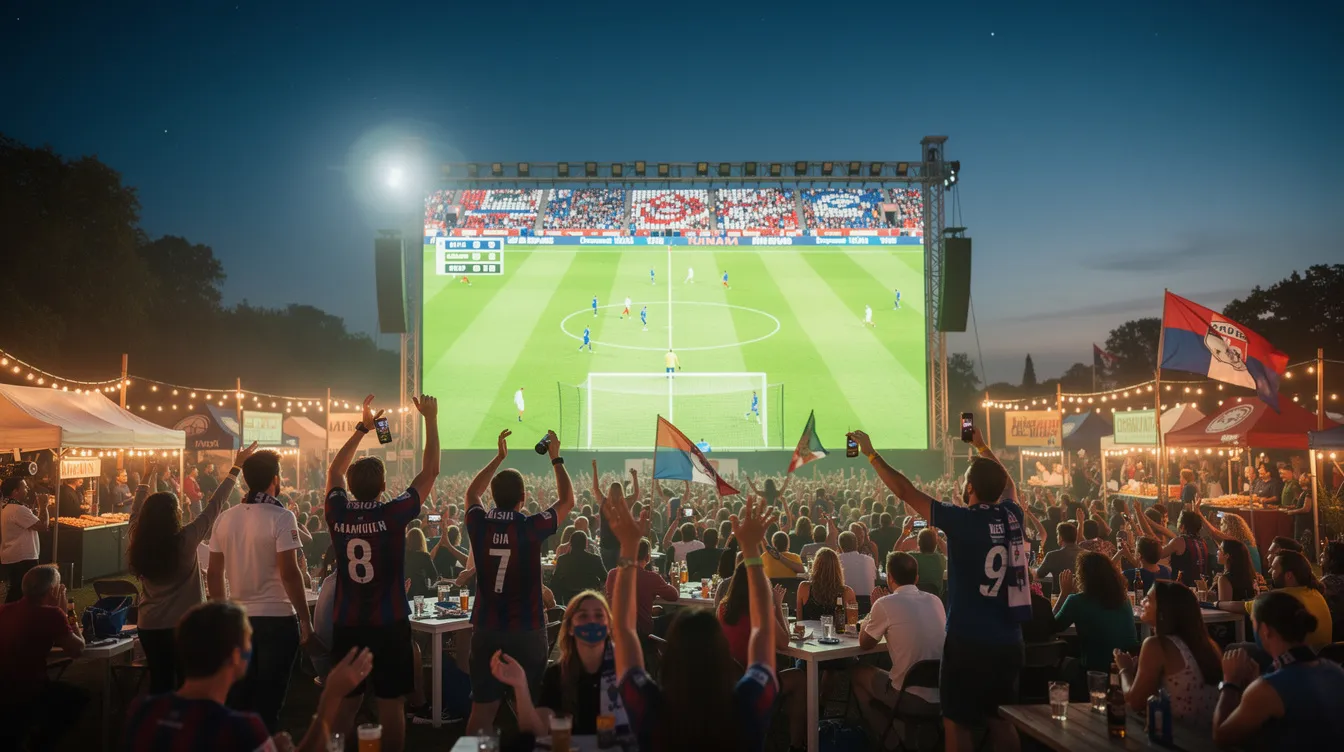
When a watch party goes beyond a living-room gathering, it becomes an AV production challenge that touches screen size, sightlines, sound, internet, power, and backup. A great watch party is one where the ball is always on screen, the sound fills every corner of the space, and the crowd never wonders what they might catch if the feed comes back.
If you are planning a corporate watch party, community game day event, or brand activation in Minneapolis, St. Paul, Eagan, the Lake Minnetonka communities, or anywhere across the Upper Midwest, involve your AV partner early in the process – before the venue contract is signed.
When you reach out to Front Row FX, share a few key details: your date (a Sunday Big Game or a July World Cup knockout match), venue, estimated audience footprint, indoor or outdoor status, and content source. From there, Front Row FX can build an integrated watch party AV package including LED video walls, professional sound, event lighting, signal routing, power planning, and on-site technicians – everything the classic party-planning checklist leaves out.