Touring AV Support for DJs & Independent Artists
This page is for DJs and independent artists who already run professional shows and need to repeat that production across multiple dates and markets without rebuilding from scratch every night.
Touring AV Support for DJs: One Show, Many Cities
Touring AV support for DJs is not about booking, management, or performance coaching. It is about owning the technical and creative infrastructure-audio, LED, lighting, FX, and event production-so that a show built for one city can land with equal impact in the next. This applies to live music events, festivals, club runs, and corporate events with a performance centerpiece.
The core concept is straightforward: touring production for DJs is about preserving the same creative and technical intent in every venue, not forcing the exact same gear list into every room. AV support for DJs must adapt to different venue sizes and types while keeping the audience experience consistent. Touring DJs rely on robust audiovisual support to deliver immersive live experiences, and that reliability comes from a single production relationship rather than cold-starting with a new vendor in every market.
Front Row FX operates touring audiovisual production from two bases: Eagan, Minnesota and Atlanta, Georgia. From those hubs we support multi-city runs through the Midwest and Southeast-Minnesota, Wisconsin, Illinois, Iowa, North Dakota, South Dakota, Georgia, Tennessee, Florida, and additional routed markets. Touring AV requirements include logistics management for consistency across multiple locations, and having two geographic anchors means gear, crews, and planning stay inside efficient transit lanes.
Why does a single production relationship matter? Because when one team owns the show design, rider, advance, and execution, there is no re-education cycle at every stop. The artist performs. The production team delivers. Every city gets the same show.
From One Show to a Repeatable Touring Production Package
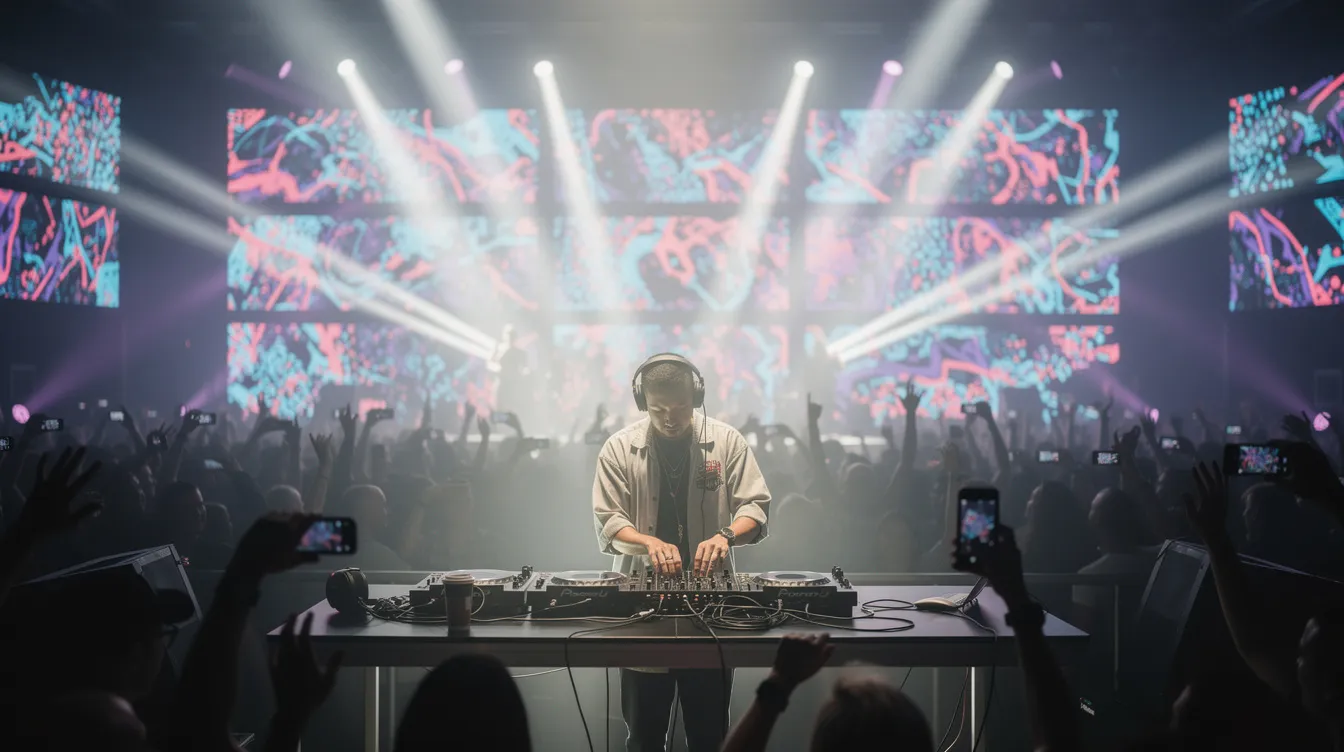
A one-off show becomes a repeatable DJ touring production package when you define the look, sound, and show flow once, then deploy variations of that design across multiple venues. Modern electronic music relies heavily on visual integration, including LED walls and projection mapping, so the production plan has to account for far more than just a PA system. Professional AV production can synchronize visuals with music for enhanced impact-and that synchronization should not have to be rebuilt nightly.
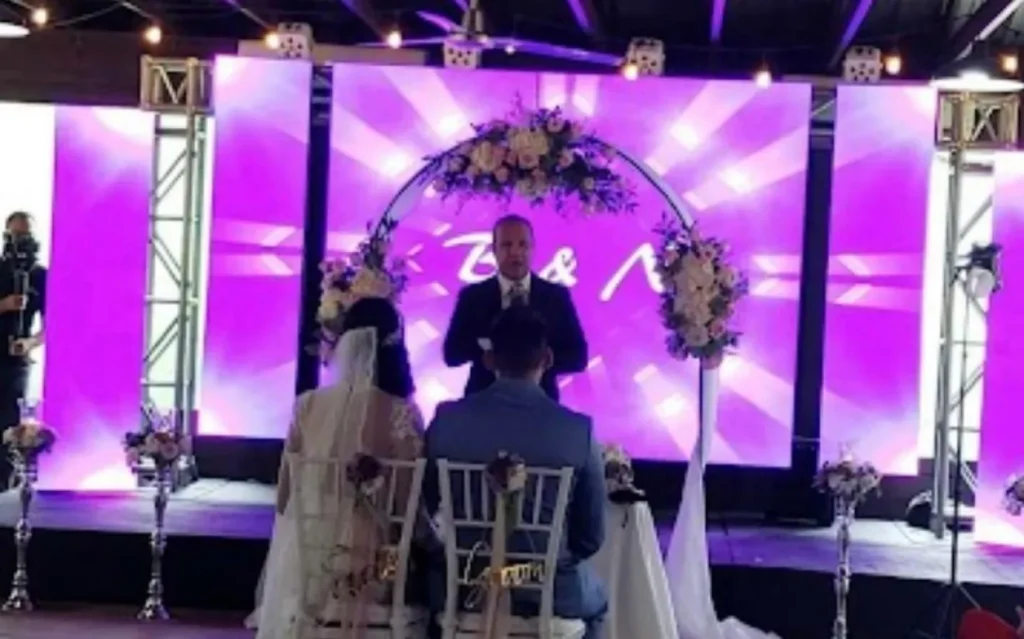
Standardization means creating repeatable files: audio console scenes, lighting show files, LED processor mappings, and video systems signal routes. Concert stage setup involves designing and constructing performance areas, and when that design lives in transferable files, it assembles faster in every room. Concert stage setup includes assembling platforms and integrating equipment according to a known plan rather than improvising.
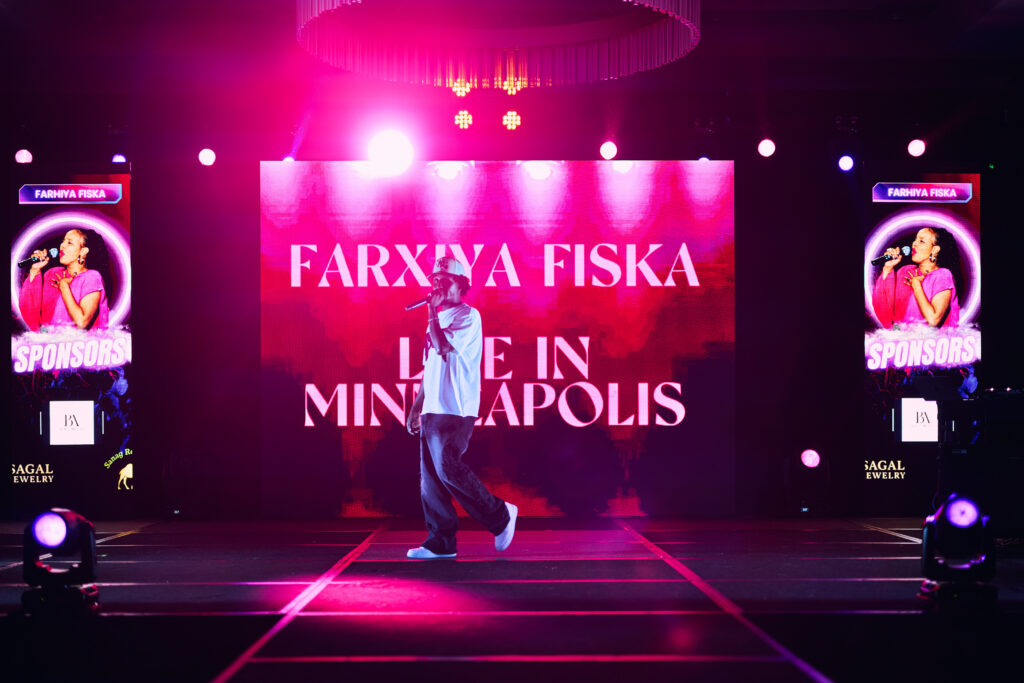
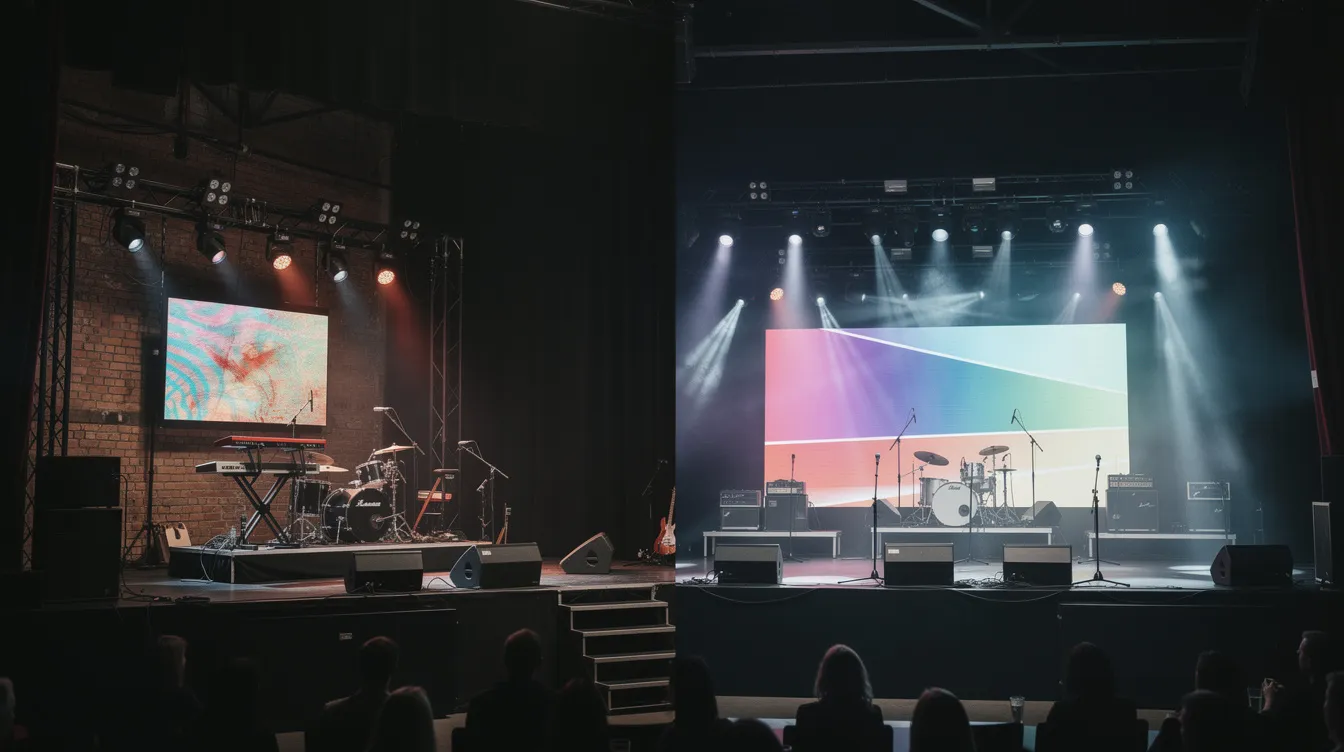
Consider a DJ whose signature intro builds from ambient visuals and a slow color wash into a sub-bass drop with synchronized strobes and LED flash. With standardized cue sheets and content, that same moment works in a 500-cap club and a 2,000-cap theatre. The fixtures and line array may differ, but the timing, color language, and dynamic contrast stay locked. Shorter soundchecks, efficient setup, predictable timelines-that is the life of a repeatable concert production package.
Technical Rider Support: Clear Requirements, Flexible Solutions
A technical rider is essential for documenting a DJ’s equipment and specific needs. Front Row FX helps DJs and independent artists build or refine a rider that focuses on outcomes rather than inflexible brand-by-brand demands.
Rider elements we help define include main audio requirements and sub-low expectations-high-end touring rigs utilize rider-approved line-array speaker systems for sound reinforcement. We specify DJ inputs (CDJs, controllers, external mixers, live instruments), on-stage monitoring (dedicated monitor engineers ensure DJs hear optimal mixes without interference during performances), and seamless handoffs between artists, which require compatible mixers and digital stage boxes. Tour AV systems must handle power distribution and signal stability to prevent issues, so the rider addresses three-phase versus single-phase power, minimum amperage, and backup requirements.
Visual elements get the same treatment: LED wall dimensions and aspect ratios, preferred content resolutions (1920×1080, 3840×1080, 3072×768), and video systems routing for visuals, cameras, and branding. Lighting expectations describe fixture types as guidelines-color language, key FX moments, strobes, haze-framed as “what the audience should see” so local equivalents work where appropriate. Stage layout covers DJ booth placement, riser heights, side-fill locations, crew expectations for load-in, soundcheck, and show operation.
A strong rider makes multi-city production and local coordination smoother. It defines the required outcome while allowing substitutions that meet the same standard-technical rider support that works in the real world.
Advance Work: Solving Touring Problems Before Show Day
Advancing a show means Front Row FX connects with each venue and local provider before the date to align technical details with the rider and show design. Sound engineers manage audio equipment for live events, they balance audio levels and adjust acoustics for clarity, and sound engineers adapt to varying acoustical environments-all of which is easier to plan when the room’s parameters are known in advance. Optimal audio quality is crucial during live music events, and advance work is where that quality gets protected.
Specific advance items we cover:
Stage dimensions, ceiling height, loading dock access
Power distribution and drop locations
Rigging capacity and weight limits
House system capabilities (what stays, what travels in)
Venue restrictions: sound curfews, haze policies, local labor or union expectations
Lighting must ensure visibility in outdoor settings-confirmed during advance for open-air dates
Labor and schedule elements include local crew counts, load-in time, line check, soundcheck window, doors, curfew, and strike plan. Event planners manage all aspects of live music event production, and for touring, that coordination happens across every stop. Even markets like Arizona, where concert production includes logistics and artist coordination specific to the region, benefit from early preparation.
Touring production issues are almost always cheaper to solve days or weeks before the show than during doors. Front Row FX handles this advance workflow across multiple dates so the artist has one production contact instead of separate technical conversations in every city.
Maintaining Show Consistency Without Forcing Identical Gear
Touring AV support for DJs is about preserving consistency in experience: visual identity, stage layout logic, audio expectations, LED content delivery, lighting language, FX hits, and show flow. Good AV production creates distinct visual identities that enhance artist branding, and that identity should not shift because the house rig changed.
Identical equipment is not always necessary. What matters is matching capabilities-equivalent line array performance, LED resolution, and lighting feature sets that can reproduce key scenes and moments. Stage design involves planning and constructing visual elements, and effective stage design enhances performance and audience experience regardless of whether the speakers and fixtures are identical to last night’s. Stage design considers venue dimensions and audience perspective, and can even reflect local culture and landscape when the concept allows it. Sound engineering enhances the overall concert experience for audiences when the production intent stays consistent.
Front Row FX maintains a central “show brain”: master show files, content packages, and cue sheets that travel with the artist and adapt to each venue’s rig. AV partners should have plans for equipment failure and backup systems in place-our approach includes redundancy planning at every stop. This works across clubs, theatres, concert halls, brand activations, and corporate events where a DJ-driven show is the anchor.
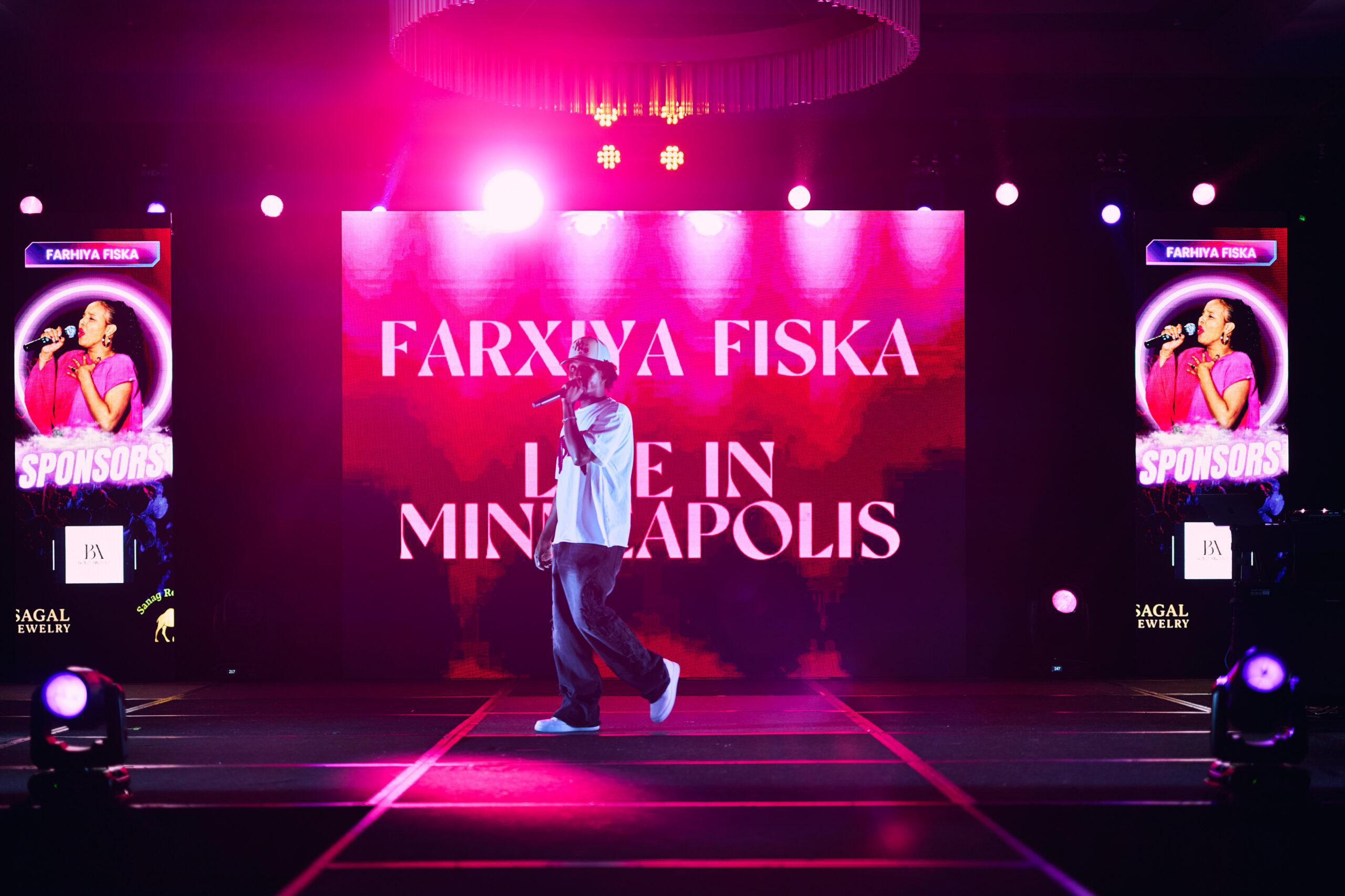
Consider a 500-cap room in Wisconsin with a P3.9 LED wall at 16×8 feet, and a 2,000-cap theatre in Tennessee with the same pixel pitch but a 30×15-foot wall. The intro moment-ambient visuals, magenta wash, sub-drop, strobe burst-plays identically in flow and timing. The scale changes. The show does not. Fans see a coherent show from Minneapolis to Atlanta.
Route Efficiency: Touring Equipment, Local Gear, or Hybrid Models
Route efficiency means choosing how equipment and crew move between cities to balance budget, reliability, and show requirements. Special effects like CO₂ jets and pyrotechnics enhance the spectacle of live shows, and whether those effects travel or source locally depends on the routing plan. Event lighting transforms venues and enhances atmosphere-lighting designers use spotlights, LEDs, and color washes, and effective event lighting captivates audiences and accentuates performances. How that lighting gets to the stage is a logistics question.
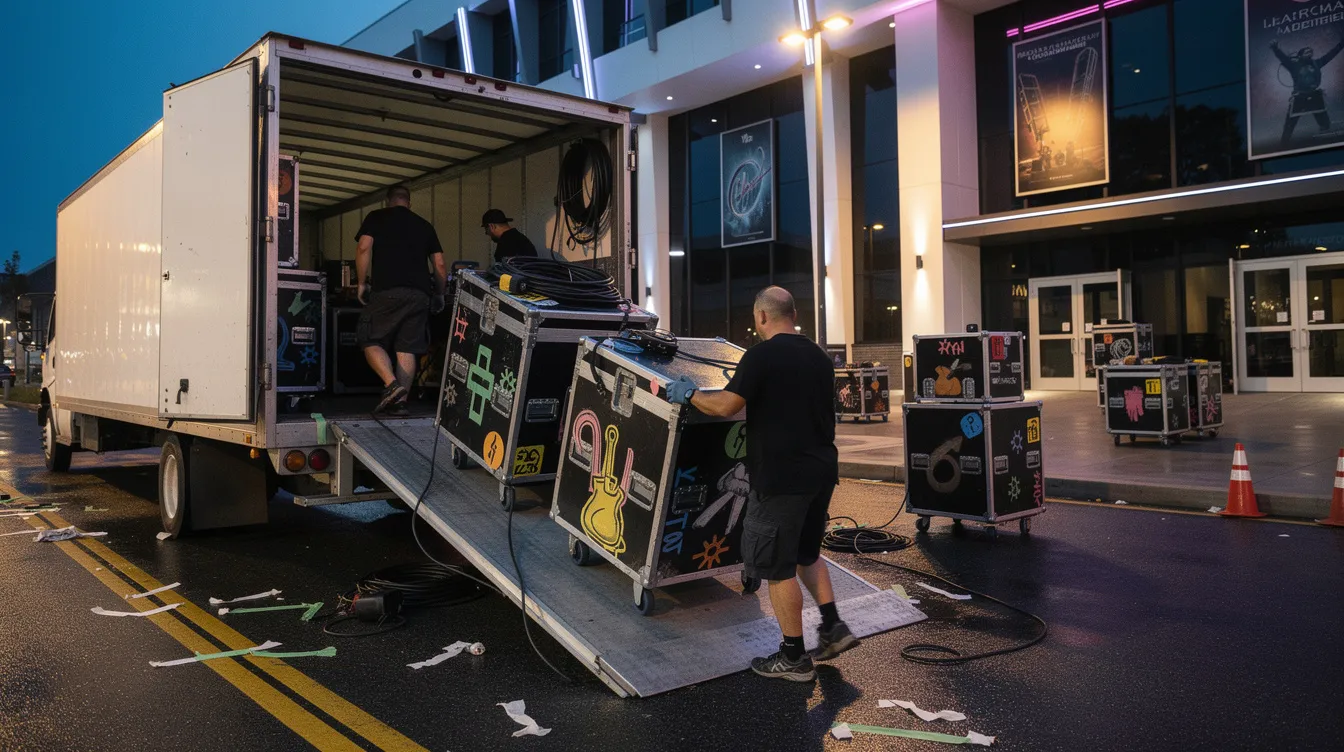
Front Row FX uses three models. A full touring equipment package makes sense when dates are tightly packed-Minnesota to Wisconsin to Illinois, or a run anchored between Atlanta, Tennessee, and Florida with direct truck routing. All major gear travels: PA, LED, lighting rig, FX, core crew. Maximum control, fewest variables. A primarily local equipment model works when reliable audio visual resources exist in each market. Front Row FX specifies minimum standards via the rider, coordinates local video systems, LED, and lighting, and only critical core gear travels with the artist. A hybrid production model combines both: core elements travel (DJ riser, media server, LED processors, specialty FX) while trusted local systems supply PA, LED tiles, or conventional lighting.
Logistics across all three models include truck routing, cross-rentals, crew travel, hotels, and next-day load-ins. Multi-city production planning can improve preparation and sometimes pricing efficiency-confirmed runs allow better equipment allocation, crew planning, and resource scheduling. But even when local gear is used, Front Row FX still owns the production direction and quality control across the tour.
Local Production Partners & Scaling Your Tour Across Regions
Front Row FX maintains core production infrastructure from Minnesota and Georgia but expands reach using established professional partners across the Midwest, Southeast, and other routed markets. The entertainment and touring industry includes major players-LMG Touring, for example, has provided audiovisual support since 2007 and owns $200 million in audio, video, and lighting equipment, with a lighting inventory that includes fixtures of all shapes and sizes, and technicians who create stunning visuals and outstanding atmosphere. At every scale of the industry, the concept is the same: reliable partners, consistent standards.
Using regional partners does not shift responsibility. Front Row FX remains the central production team coordinating audio, LED video walls, lighting, FX, and show management. We vet and direct local crews so musicians and performers get consistent show operation and efficient setup regardless of whether the LED tiles and line arrays are ours or a partner’s. This model supports everything from club tours to select festival plays, special events, and high-production party or corporate events where a DJ performance is the anchor. Independent artist production can scale from anchor markets like Minneapolis–St. Paul and Atlanta into a multi-city route without rebuilding the plan at every stop.
Artist vs. Production Responsibilities on Tour
A clear split between artist and production responsibilities simplifies multi-city planning:
Artist Provides | Production Team Provides |
|---|---|
Music, performance, set list | Advance work, venue coordination |
DJ system preferences, show files | Audio systems, tuning, experienced audio technicians |
Visual content, branding direction | LED walls, video routing, content scaling |
Creative intent, tour schedule | Lighting systems, programming, FX |
Band or performer integration needs | Power distribution, crew, site management |
This split lets the artist focus on performance while a dedicated team manages event production logistics from first load-in to final teardown. For some DJs, their own performance setup-specific controllers, drum machines, or hybrid live rigs-travels with them and gets integrated into the audio visual system in each market. The production team is responsible for making that integration happen reliably, whether the world of local gear is familiar or new.
How Front Row FX Runs a Multi-City DJ Tour
The workflow follows a clear line: initial conversation about the show concept, then design, then technical rider support, then venue advance, then equipment and crew planning, then show execution, then resetting for the next city. Each step builds on the last, and confirmed multi-date runs make it easier to standardize show files, content, programming, and crew assignments.
A practical example: a 6-date run across Minnesota, Wisconsin, and Illinois. Front Row FX carries a core LED wall, lighting rig, and critical FX gear. Local vendors in select cities provide PA or supplemental lighting that meets rider specs. Each city has been advanced, soundchecks take under two hours, and the same opening visual suite and sound presets deploy every night. A long weekend in Georgia, Tennessee, and Florida follows a similar plan with the Atlanta base as a staging node. Clients exploring this kind of run can access all production services through one team.
Whether the goal is promoting a new release across the region or delivering concerts for an established fanbase, the success of the run depends on preparation, knowledge of each room, and a production team that is prepared and reliable enough to adapt quickly and deliver night after night.
Next Steps: One Artist, Multiple Cities, One Production Direction
DJs and independent artists can establish one production relationship that protects their show across multiple cities-no more re-explaining needs to a different AV company in every market. Whether you have a confirmed run or a partial route you are still organizing, Front Row FX can plan a touring AV solution that fits real-world dates, money, and markets.
Share your current or upcoming route with dates, markets, and any existing technical documentation. Contact Front Row FX to explore how we build a production plan around your schedule.
One artist. Multiple cities. One production direction.