What Custom AV Production Actually Means
Almost every audio visual production company can say “yes, we can do that.” That does not necessarily mean the production is truly custom. Sometimes it simply means the company can source enough equipment, subcontract enough departments, and add enough contingency to make an unfamiliar project possible.
There is an important difference between custom AV production and improvising a production from scratch every time a client asks for something different. Real custom event AV is not about reinventing the wheel for every event. It is about having enough technical infrastructure, expertise, systems, and production relationships to adapt the wheel quickly.
Front Row FX is a Minnesota-based audiovisual production company focused on live event production, LED walls, professional sound, stage lighting, and technical management across Minnesota, Wisconsin, Illinois, Georgia and the Upper Midwest. This article is written for corporate event planners, producers, agencies, and national teams bringing events into Minneapolis, St. Paul, and regional venues.
Here is what this article covers:
-
The difference between custom AV and improvised AV production
-
Why “yes, we can do it” can quietly inflate your budget
-
How owned infrastructure and a production network create efficiency
-
How custom event production helps allocate a fixed budget more intelligently
-
Questions to ask any company claiming to offer custom audiovisual production
Custom AV Should Mean Adaptable, Not Unnecessarily Expensive
“Custom should describe the design, not the inefficiency behind it.”
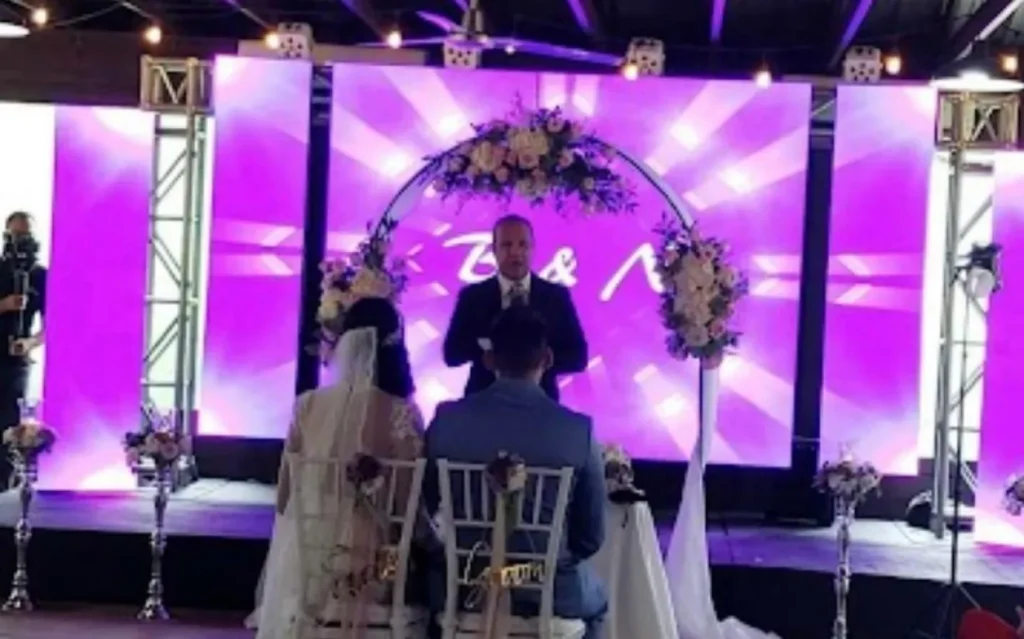
Custom audiovisual production should allow audio, video, lighting, and LED systems to adapt to the event format, room, schedule, and audience without rebuilding unfamiliar infrastructure every time. Custom AV production aligns technical elements with event requirements rather than forcing an event into a predefined package.
Consider two scenarios. A 400-person corporate event in a downtown ballroom might need a single center LED wall with moderate resolution and a PA system calibrated for speech intelligibility. A large concert in an arena requires distributed audio, multiple LED walls for a stage backdrop, a lighting rig for wide throw, and immersive effects. A company that handles both frequently can execute either efficiently. A company experienced only in ballrooms may struggle with the engineering, rigging, and redundancy the arena demands.
Capability and efficiency are not the same thing. AV setups must meet clarity and high production value expectations regardless of the venue. The difference is whether the production company reaches that standard through established workflows or through expensive improvisation.
Key points:
-
Custom AV production does not automatically mean a lower project cost
-
It helps allocate budget more intelligently across LED walls, sound, lighting, content, and crew
-
A project one experienced team executes efficiently may cost another company significantly more in subrentals, labor, and contingency
-
The room and program should drive the production design, not a fixed equipment list
Custom AV vs Improvised AV Production
The distinction is straightforward.
In improvised event production, a service event production company assembles unfamiliar gear, outside vendors, and ad-hoc workflows specifically for one unusual project. The provider figures out where to source equipment, who knows how to operate it, whether systems are compatible, and how much extra contingency should be added because the workflow is unfamiliar.
In custom AV production, an audiovisual production company starts from known systems: LED processing, audio consoles, stage lighting rigs, power distribution, rigging partners. The configuration changes per event. The operating discipline does not.
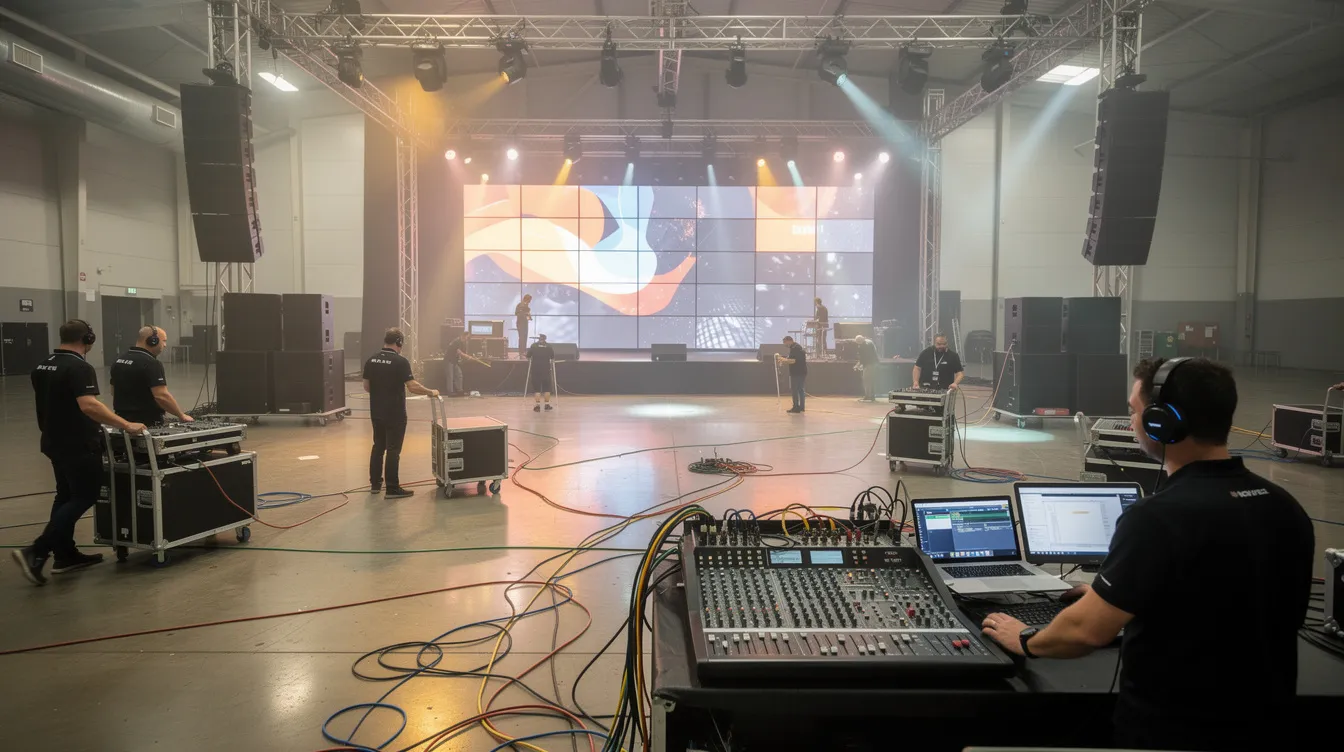
Imagine a live event production requiring multiple LED walls, distributed audio, stage lighting, and show control. An improvised provider might scramble for subrentals from multiple vendors, bring in outside engineers unfamiliar with the signal chain, and add labor hours for troubleshooting. An experienced custom provider plugs this scope into existing workflows with compatible equipment and crew who have built similar systems repeatedly.
Corporate event production requires seamless transitions and reliability. When clients pay for improvisation, they absorb the provider’s learning curve.
Improvised AV:
-
Equipment sourced ad-hoc from multiple unfamiliar vendors
-
Crew unfamiliar with specific hardware
-
Signal flow and integration tested for the first time on site
-
Unclear single point of responsibility
Custom AV:
-
Known systems with repeatable workflows
-
Experienced crew operating familiar equipment
-
Pre-engineered signal routing and power plans
-
One accountable technical direction from design through execution
Why “Yes, We Can Do It” Can Become Expensive
Almost any serious AV production company can technically say yes to a complex event production if the budget is large enough. That does not mean every company can produce it efficiently.
Corporate environments require tight agendas and speaker management. When the production infrastructure behind those agendas is unfamiliar to the provider, costs quietly inflate through several common factors:
-
Extensive subrentals from vendors the team has not previously integrated
-
Outside engineering teams brought in to design unfamiliar systems
-
Operators who need extra rehearsal time with equipment they do not regularly run
-
Extra trucking and transport from multiple vendor locations
-
Added contingency days because the workflow has not been tested before
-
Redundant backup systems added specifically because the team does not know the hardware’s failure history
The same LED wall configuration and professional sound system might be routine for one corporate event production company in Minnesota but require custom engineering, specialty vendors, and significant extra labor for another firm that rarely builds at that scale.
Complexity driven by genuine event needs is expected. Complexity driven by internal inefficiency is waste.
Signals your AV quote may be paying for improvisation:
-
Many separate vendors listed with no clear integration lead
-
Vague descriptions of how audio, video, and lighting connect
-
No mention of a technical director or show caller
-
No documentation offered (signal flow, power plans, run-of-show)
-
Unclear who troubleshoots when systems interact
Owning Equipment vs Knowing How to Scale a Custom Production
A common misconception: a professional audiovisual production company must own every piece of gear used on a show. That is not how larger event production works.
What matters more is having owned core infrastructure plus a proven model for scaling with partners. For Front Row FX, owned infrastructure includes indoor and outdoor LED walls, processing, sound reinforcement systems, key lighting fixtures, power distribution, show control systems, and support gear used regularly across the Upper Midwest and Georgia.
Scaling larger or unusual projects may involve adding specialized components – additional LED inventory, broadcast cameras, specialty rigging, scenic structures – from trusted regional partners who work within Front Row FX’s technical direction.
What owned infrastructure provides:
-
Consistency and quality control across projects
-
Speed in preparation and predictable workflows
-
Crew familiarity with equipment maintenance and failure modes
What a scalable production network provides:
-
Additional capacity for peak or simultaneous events
-
Specialized equipment beyond standard inventory
-
Regional reach and local crew support across venues
Subrentals vs Outsourcing Responsibility
Bringing in additional equipment from a partner is not the same as outsourcing responsibility for the event’s technical production.
In a professional custom AV model, the primary event production company still owns design, signal flow, processing, crew direction, installation standards, show operation, and contingency plans – even when additional LED walls, lighting, or audio components are subrented. A dedicated production manager simplifies communication during events and ensures that supplemented gear integrates cleanly into the overall system.
For a large corporate event in Minneapolis needing an expanded LED video wall system, Front Row FX may supplement its own cabinets with additional compatible LED from a partner but still controls content delivery, processor configuration, power planning, rigging coordination, and live switching. AV production companies should provide a single point of contact for events regardless of how many production elements are involved.
The client should not have to manage multiple AV vendors. A custom event production company should unify all technical disciplines into one accountable team.
Questions to confirm who is really responsible:
-
Who signs off on the complete system design?
-
Who directs all technicians across audio, video, and lighting?
-
Who troubleshoots when multiple systems interact?
-
Who remains on site during rehearsals and the live event?
Repeatable Expertise: How Systems Make Custom Work Manageable
Custom event AV is not about reinventing the technical system every time. It is about applying repeatable expertise, especially in complex areas like LED video, sound reinforcement, and lighting design.
Building in system redundancy prevents technical failures during events. That redundancy comes from experience: knowing which backup systems matter, which signal paths need failover, and which components have the highest risk of failure under specific conditions.
What is repeatable across disciplines:
-
LED video: Cabinet math, pixel pitch selection, processor capacity, power distribution, content resolution specs, spare strategy, and installation workflow. High-resolution LED video walls provide superior brightness and flexibility, but the engineering behind them should not start from zero each time.
-
Audio: Array design, coverage modeling, gain structure, RF spectrum coordination, console workflow, and monitor mixes. High-quality audio systems are essential for sound reinforcement, and audio solutions ensure crystal-clear sound for presentations when the team understands the room.
-
Lighting: Fixture placement, color temperature consistency, key light versus effects, dimmer management, and cueing. Stage lighting influences how speakers and content appear to the audience.
-
Show management: Run-of-show documents, cue sheets, communication hierarchy, signal flow documentation, and backup systems necessary in case of equipment failure during events.
Integrated technical coordination enhances audience experience when every discipline operates from proven methods rather than first-time experiments.
Custom AV Begins With the Room, Not With a Package
A pre-built package asks: which tier do you want? Custom production asks: what does this room need?
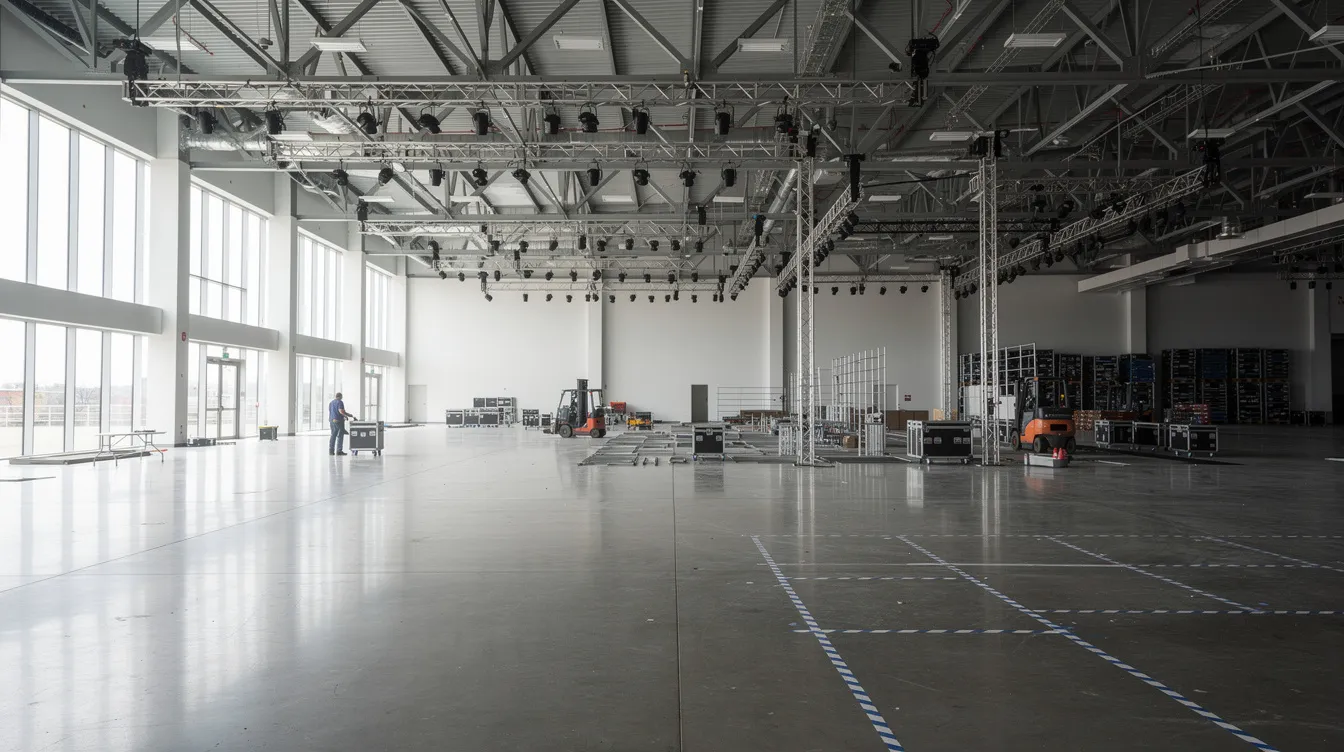
That changes the entire conversation. Technical integration requires understanding venue layout and audience needs before any equipment is specified. Involving AV early in the design phase ensures proper planning and evaluation of what each space actually demands.
Consider these scenarios:
-
A ballroom in downtown Minneapolis where ceiling height limits screen placement and LED wall size – two side displays may serve attendees better than one center wall partially blocked by chandeliers
-
A convention center breakout where distributed audio is more important than a single large PA – conference AV production that prioritizes intelligibility over volume
-
An outdoor live event where LED brightness, power, and weather protection become primary drivers – requiring different technology decisions than any indoor program
Room-first questions that guide the production:
-
What are the sightlines from every audience position?
-
What is the ambient light level, and how does it change during the program?
-
What is the seating shape and capacity?
-
Where are rigging points, power drops, and load-in paths?
-
How fast does changeover between sessions need to happen?
The room should determine the production. The production should not force the event into a space it was not designed for.
Custom Does Not Mean Unlimited (Or “Yes” to Everything)
A serious custom audiovisual production company should sometimes recommend less equipment, different screen choices, or a simpler approach when that better serves the event vision.
An effective AV partner evaluates client goals to tailor production needs – and that sometimes means saying no to a request that introduces unnecessary risk, cost, or complexity. Saying yes to everything is not customization. It is sales.
Examples where “less” or “different” is smarter:
-
Suggesting a smaller LED wall because viewing distance and pixel pitch make a larger screen wasteful
-
Recommending a different pixel pitch instead of the most expensive option when the audience sits beyond the detail threshold
-
Proposing two medium LED video walls instead of one massive wall blocked by venue obstructions
-
Redirecting budget from decorative lighting into better audio coverage when the program is speech-heavy
-
Recommending a broadcast-focused partner for a multi-city hybrid event while Front Row FX remains responsible for in-room LED, sound, and lighting
The objective is not to sell the maximum amount of equipment. It is to build the right production. Planners should expect their AV partner to push back constructively when a requested configuration does not match the space, the audience, or the budget.
Front Row FX: Our Approach to Custom Audiovisual Production
We approach AV as a production system rather than a collection of individual rentals. Technical production partners manage audio-visual execution for events, and our process reflects that responsibility.
Our typical process begins with the event: venue, audience, content, experience, technical requirements, then production design. Only after those questions are understood does the equipment configuration become clear. A dedicated production manager simplifies communication and event flow from the first site visit through teardown.
Depending on the project, we coordinate:
-
LED video walls (indoor and outdoor)
-
Professional sound reinforcement
-
Video processing, signal routing, and playback
-
Special effects
-
Power planning and distribution
-
Technical crews and operators
-
Venue coordination, installation, and teardown
Custom AV production coordinates sound, video, and lighting as one integrated system. We design productions so that sightlines, rigging, power, and crew workloads align with the event’s run-of-show – not as separate vendor deliverables that happen to share a room.
Our regional focus covers the Twin Cities, greater Minnesota, Wisconsin, Chicago, and the Upper Midwest. Representative event types include corporate general sessions, multi-room conferences, nonprofit galas, outdoor concerts, multi-day trade show AV production, university events, and selective high-production private events.
Owned Infrastructure + Trusted Production Network
Front Row FX combines owned professional infrastructure with a trusted Upper Midwest production network. This is how custom AV production scales without losing a single production direction.
Owned infrastructure gives us predictable workflows, consistent quality, and speed for typical corporate event production elements: LED walls, main PA systems, stage lighting, and control. Our extensive inventory covers the systems we use most frequently, maintained and operated by crew who know every component.
Our production network extends capacity and specialization. Additional LED inventory, advanced rigging, large-format audio systems, and camera packages come through long-term partners we integrate under one technical direction. Clients interface with one production team, one show caller or technical director. Additional partners are coordinated behind the scenes.
Owned Infrastructure:
-
Availability and quality control for core systems
-
Faster preparation and familiar maintenance cycles
-
Reduced dependence on third-party logistics
Production Network:
-
Scalability for unusually large or simultaneous events
-
Specialized equipment beyond standard inventory
-
Regional crew and rigging partners across key Midwest venues
Together, these layers allow us to take on larger or more unusual projects without pretending that one company physically owns every piece of equipment the industry can possibly require. Explore our complete audiovisual production model to see how this works across event scales.
National and Out-of-State Clients: Why Local Custom AV Matters
Custom production becomes especially important when an organization is producing an event outside its home market.
A national client coming into Minnesota does not necessarily know local venues, loading conditions, regional crew, rigging providers, power requirements, winter logistics, or which production partners are reliable. A strong local production partner can absorb that complexity.
Front Row FX becomes the technical bridge between a national client’s event vision and the realities of Midwest venues. Instead of building a new vendor ecosystem from scratch, the production company manages venue coordination, crew sourcing, rigging relationships, and on-the-ground problem solving under one accountable direction.
National teams can fly in producers, creative leads, and presenters while relying on Front Row FX for complete audiovisual production, local show management, and site-level execution.
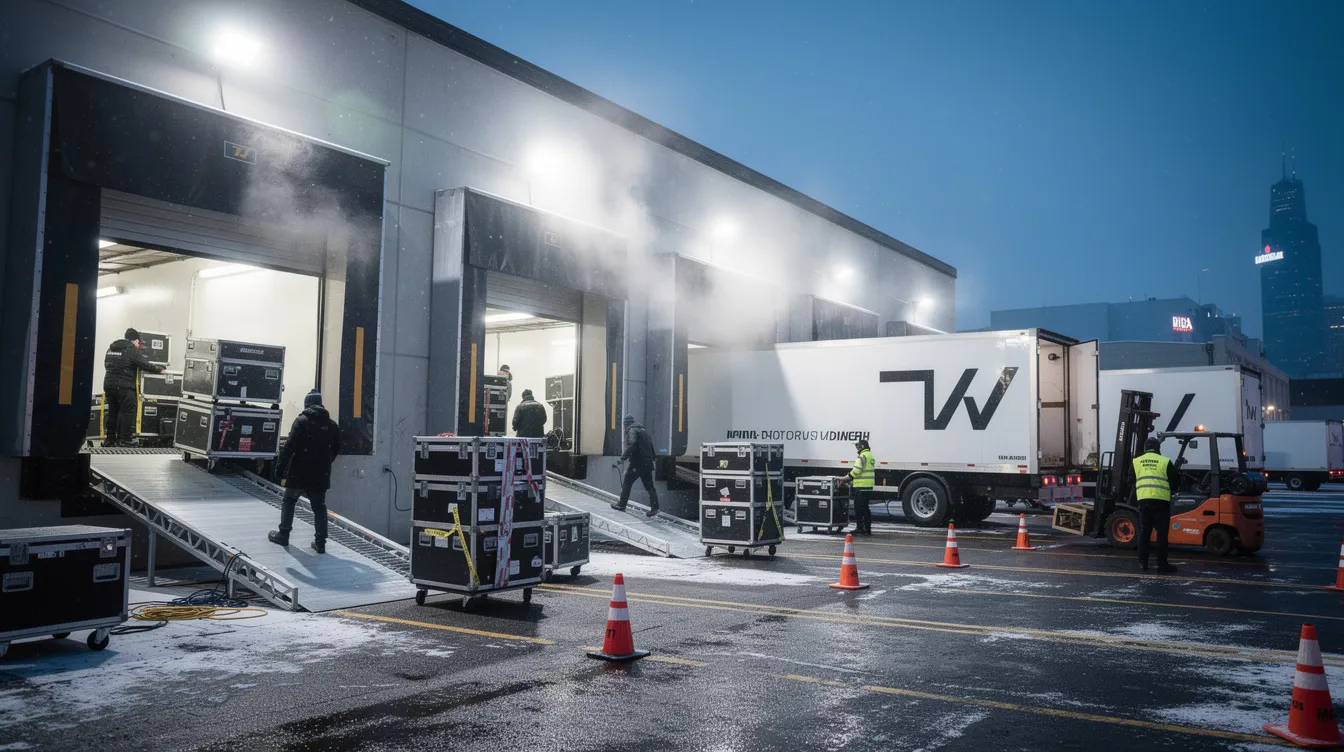
What a local custom AV partner adds for national teams:
-
Venue-specific knowledge of rigging points, power, dock access, and house rules
-
Regional crew networks and established relationships with rigging partners
-
Realistic scheduling that accounts for weather, transport, and local logistics
-
Fewer surprises on load-in day and more accurate pre-production planning
Budget Allocation: Using Custom AV to Spend Smarter, Not Just Less
Custom event AV is a tool for smarter budget allocation: shifting money toward what the audience actually needs to hear and see. Professional custom AV usually constitutes 15% to 20% of total event investment, and how that allocation is distributed matters more than the total number.
Choosing a custom AV production partner involves defining event scope and budget early. Transparent pricing and itemized proposals are important for evaluating AV services, especially when comparing providers with different production models.
Custom production does not always reduce total cost. It often improves how a fixed budget is distributed across LED, audio, lighting, content, and crew – reducing waste on low-impact production elements.
Consider the tradeoffs:
-
One enormous LED wall versus a slightly smaller wall plus two side screens that improve coverage for more attendees
-
More moving lights versus better main PA coverage for a speech-heavy program
-
Bigger stages versus better LED content design that communicates the message more effectively
-
Extra hardware versus additional technical staffing for complex show calling and seamless execution
Budget questions we typically explore:
-
Where does audio clarity rank versus screen size for this audience?
-
How important is camera coverage or IMAG?
-
How critical is scenic design versus LED content for the brand?
-
Is the focus on in-person experience, live stream quality, or both?
-
What level of rehearsal and technical support does the program require?
Event Types Where Custom AV Production Matters Most
Custom audiovisual production and unified technical direction significantly improve outcomes compared with piecemeal rentals or generic packages. Custom AV solutions enhance clarity and production value for corporate events and live productions alike. Custom staging includes bespoke fabrication and branded backdrops when the event scope requires it.
-
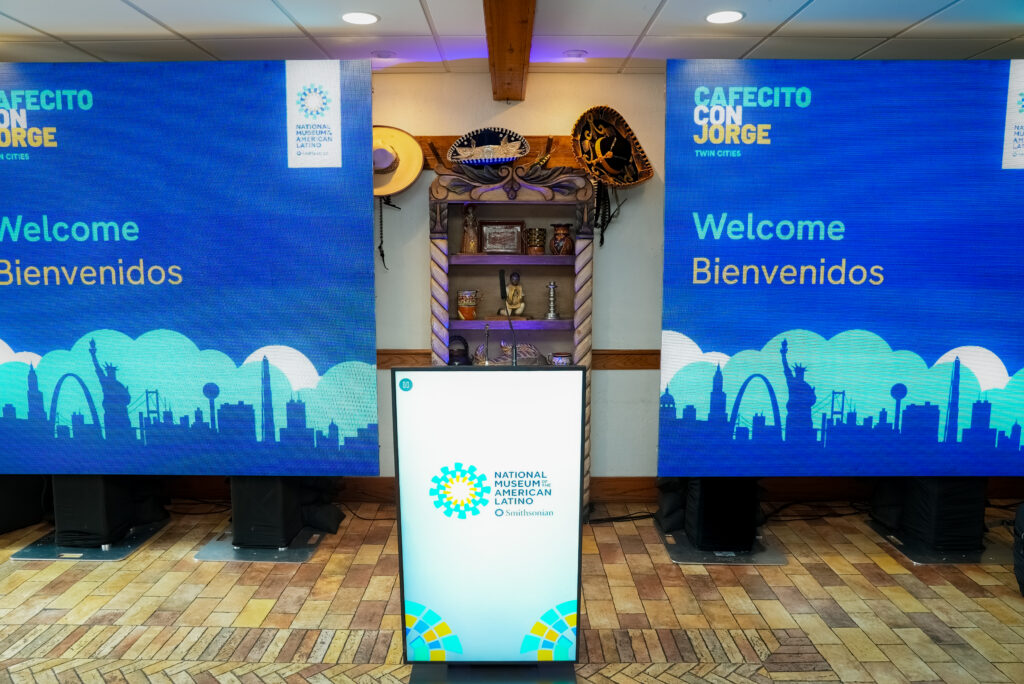
Corporate events: Executive town halls, investor meetings, and product launches require projectors, screens, and microphones configured precisely. LED walls enhance visual impact at corporate events, and presentation playback must be reliable under tight schedules with no room for technical failure.
-
Conferences: General sessions and breakout rooms need coordinated LED or projection, distributed audio, and session recording. Consistency across multiple rooms and days is where a collaborative production approach outperforms disconnected vendor setups.
-
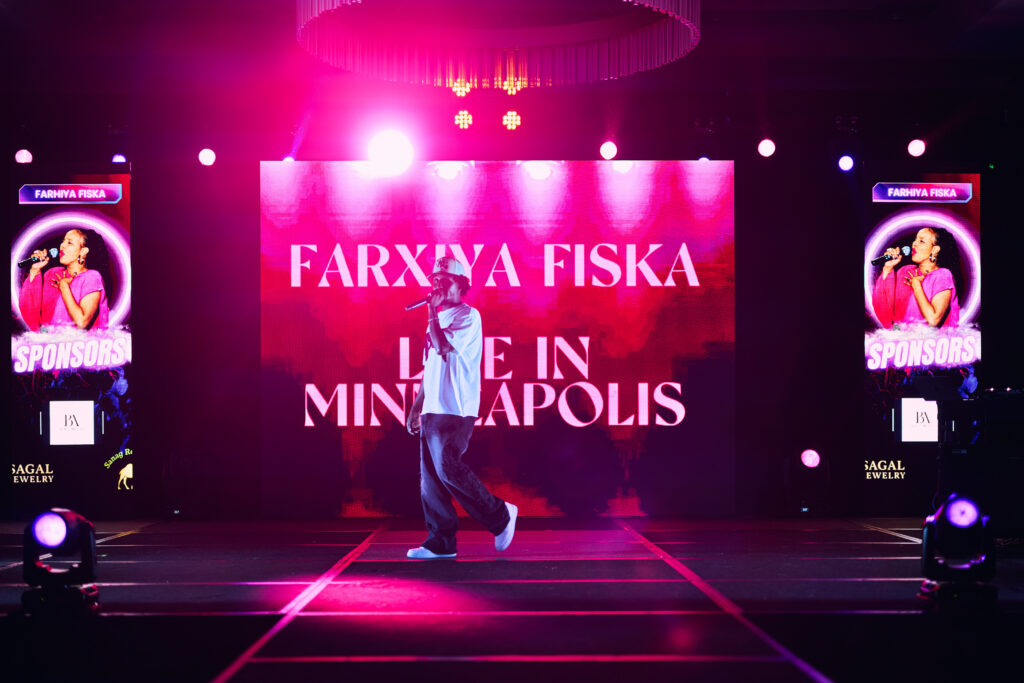
Concerts and live events: Outdoor festivals, campus concerts, and theater events demand audio systems scaled for coverage and clarity, lighting looks cued to music, LED content synchronized to performance, and effects managed under one creative and technical team.
-
Galas and nonprofit events: Fundraising programs where event lighting, scenic elements, awards presentation, and live entertainment share a single stage. Custom AV helps preserve both program clarity and atmosphere without one discipline compromising another.
-
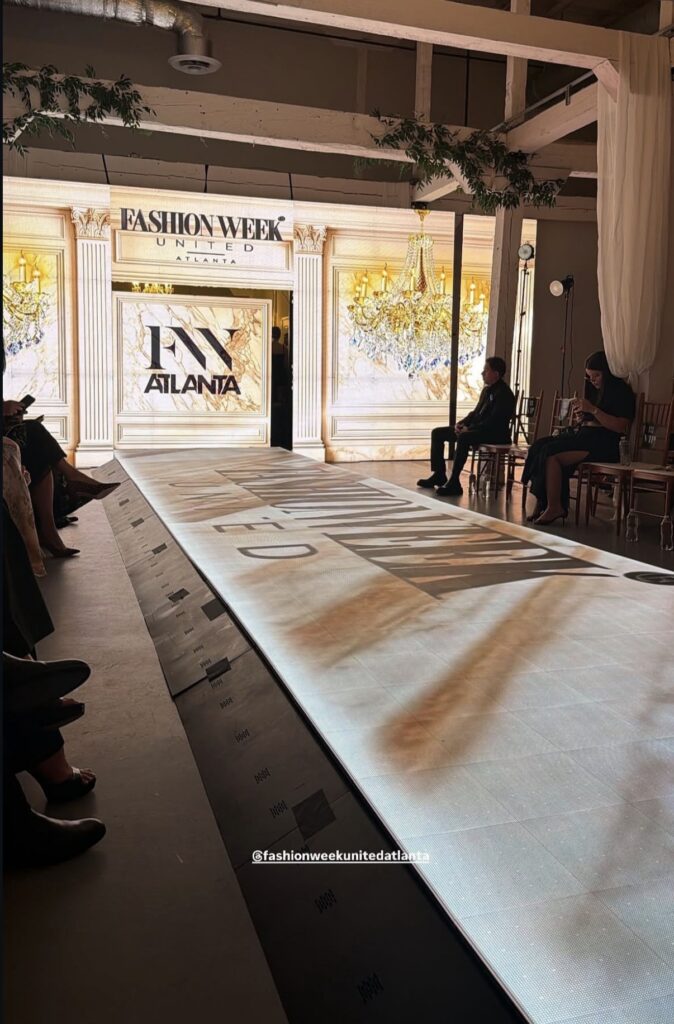
Brand activations and experiential events: Unusual screen layouts, interactive content, and LED structures in lobbies or atriums require a custom workflow that a standard production company may not routinely deliver.
The more disciplines involved in a single event, the more important it becomes to manage them as one production rather than several disconnected rentals.
Questions to Ask Any “Custom AV” or Event Production Company
Technical event planners assess client needs and budget. Before assuming a provider truly offers custom production, ask:
-
Who engineers the full system? Understanding whether audio, video, LED, lighting, and power are designed by one technical team or fragmented across vendors reveals the true production model.
-
How often do you build systems like this? Frequency indicates workflow maturity. A company that builds LED walls weekly operates differently from one that does it twice a year.
-
What equipment does the company actually operate regularly? Knowing what is owned versus what must be sourced helps identify where improvisation may enter the project.
-
What happens when the project exceeds your inventory? The answer should describe managed partner relationships, not scrambled last-minute sourcing.
-
Who remains responsible for the complete system? There should be a single technical director or production manager, not a collection of independent vendors.
-
Will you provide documentation? Signal flow diagrams, CAD layouts, power plans, and run-of-show documents indicate a process-driven company.
-
Who is on site during rehearsals and the live event? Dedicated technical staff should be present from load-in through teardown – not just during the keynote.
-
Can you explain why you are recommending each major production element? A real production partner should be able to discuss the reasoning behind every recommendation, not just the line items.
Custom Production With Front Row FX
Custom AV production is not about saying yes to everything or stacking extra equipment. It is about adaptable design, efficient systems, and one accountable production direction. Custom AV production connects sound, video, lighting, and staging into a unified event experience. Custom AV production tailors technical elements to specific event needs – and integrated technical coordination enhances audience experience when all disciplines work as one system.
Front Row FX delivers custom audiovisual production across Minnesota, Wisconsin, Illinois, Georgia and the Upper Midwest, combining owned LED, audio, and lighting infrastructure with a trusted regional production network. Backup systems are necessary in case of equipment failure during events, and our production model accounts for redundancy, contingency, and the detail that separates professional execution from improvisation.
Suggested next steps:
-
Share a draft agenda or program outline
-
Send venue diagrams, photos, or site details
-
Discuss LED versus projection for your location and audience
-
Clarify budget bands and priority areas (audio, video, lighting, content, crew)
-
Event briefs should include audience expectations and venue details – a production brief should include event purpose and audience details so we can build the right scope
We do not begin with a package. We begin with the event.
Start a Project or explore our complete audiovisual production services to see how these disciplines connect.