Inside a Four-Wall LED Production at the Minneapolis Convention Center
Large trade shows can look deceptively simple from the attendee side. Screens are running, content is moving, and everything feels organized. Behind that finished environment, there are production decisions that materially affect both the budget and the final result.
Project Overview: Four LED Walls for a Multi-Day Minneapolis Convention Center Expo
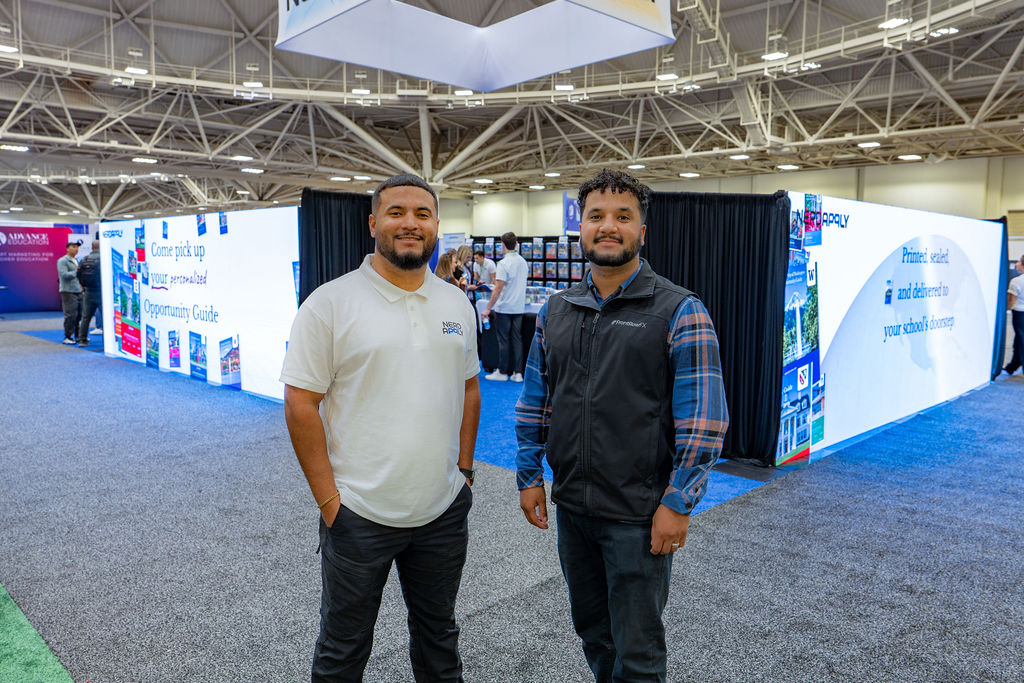
For a multi-day expo at the Minneapolis Convention Center, Front Row FX supported a national education technology client with four large indoor LED video walls, dedicated video processing, touchscreen displays for live demos, and ambient uplighting designed to improve booth visibility from multiple aisles.
The Minneapolis Convention Center is the largest convention center in the Upper Midwest. It hosts numerous trade shows, conventions, and corporate events throughout the year, and it provides venues, services, and support for productions of varying scale. The center accommodates large-scale displays and dynamic presentations, which made it a natural fit for this kind of build.
The production included:
-
Four LED video walls, each built from approximately 24 P2.6 indoor LED cabinets (500 × 1000 mm)
-
Approximately 96 LED tiles total across all four walls
-
Four NovaStar VX1000 Pro processors, one per wall
-
Touchscreen interactive displays for product demonstrations
-
Uplighting for ambient booth lighting and aisle visibility
-
On-site technical support throughout all expo hours
-
Delivery, setup, multi-day operations, and teardown
This article covers the practical planning behind that production: LED system design, pixel pitch selection, drayage and freight, electrical service, load-in scheduling, content strategy, booth traffic flow, and on-site technical support. It is meant to be useful for exhibitors, companies, and brand teams planning real booths at the Minneapolis Convention Center or similar Minneapolis venues.
Booth Strategy First: Space, Sightlines and Aisle Visibility at the Minneapolis Convention Center
The booth occupied an island footprint with aisle exposure on all four sides. That layout informed the decision to deploy four separate LED walls rather than a single large display against one back wall.
Each screen faced a different traffic approach, giving the brand visibility from multiple directions. LED walls attract attendees with bright visuals at trade shows, and in a hall where hundreds of exhibitors compete for eye contact, that multi-directional presence matters.
Trade show booth dimensions affect LED wall size recommendations directly. Before finalizing any screen configuration, exhibitors should map:
-
Floorplan orientation: island, peninsula, or inline placement
-
Primary aisle directions: where attendees enter the hall and how traffic flows past the booth
-
Viewing distances: how far away content should start being legible (for P2.6, the range is roughly 8 to 25 feet)
-
Height limits: trade show regulations dictate maximum heights for booth structures, and the Minneapolis Convention Center has specific weight restrictions and rigging point rules that must be confirmed with show management
Screen height and orientation were selected so that branding cleared heads in busy aisles while product messaging remained readable at closer distances.
LED System Design: Four P2.6 LED Video Walls Built from 500×1000 mm Cabinets
The hardware configuration used roughly 24 cabinets per wall, with each cabinet measuring 500 × 1000 mm and weighing approximately 13.2 kg. At 96 total cabinets, the LED tile weight alone approached 2,800 pounds before accounting for structure, cabling, and cases.
Choosing the right LED wall depends on booth size and viewing distances. P2.6 pixel pitch was selected because it falls within the ideal pixel pitch range for close-up viewing (1.5 mm to 2.6 mm) while remaining cost-effective at scale. Pixel pitch affects image sharpness at close viewing distances, and common pixel pitches for indoor LED walls include P2.5 and P2.9, with P3.9 used where budgets are tighter and viewing distances are bigger. For this booth, where attendees could stand as close as eight feet, P2.6 delivered high resolution without unnecessary cost escalation.
LED video walls deliver vibrant colors and superior brightness, which is critical in a space like the Minneapolis Convention Center, where the facility features advanced audiovisual technology but also high ambient lighting levels throughout exhibit halls. LED walls can be configured into various sizes and shapes, and in this case each wall was built to approximate a 16:9 aspect ratio-the standard aspect ratio for video displays unless specified otherwise.
Each wall was driven by a dedicated NovaStar VX1000 Pro processor, which supports up to 6.5 million pixels with multiple input types including HDMI 2.0 and 3G-SDI. Powerful video processors are essential for seamless switching and multi-input layering, particularly when four separate surfaces need synchronized content. LED walls can be rented up to 100 feet wide on larger productions, but for trade show booths, the configuration is driven by the booth footprint rather than maximum possible size.
Content and Demo Flow: LED Walls, Touchscreens and Live Product Walkthroughs
The LED walls served as high-level brand messaging surfaces. Looping visuals, session callouts, and motion graphics ran on content designed to be understood from the aisle. LED video walls provide high-resolution images for events, and that clarity supported the attract-mode function of each screen.
Touchscreen displays inside the booth handled the deeper product demonstrations once visitors stepped off the aisle. Brand visibility in trade show booths is enhanced with dynamic demos and strong visuals, and the combination of LED walls plus interactive displays created a clear flow: notice from distance, approach, then engage.
Content was built to support three states:
-
Attract loop: bold branding, short motion reels, large typography, high contrast-designed for P2.6 at trade show viewing distances
-
Steady state: rotating messaging, session schedules, benefit-driven content
-
Demo support: visual content reinforcing what staff explained at touchscreen stations during product launches and presentations
For exhibitors considering alternatives, transparent LED walls create experiences without obstructing views in certain booth designs, and cascading LED poster kiosks are highly portable and quick to deploy for smaller activations. Neither was needed here, but both are worth evaluating based on booth size and goals. Projection can also supplement LED in some configurations, though it rarely competes in brightness on a trade show floor.
Drayage, Freight and Cases: Managing the Weight of 96 LED Cabinets
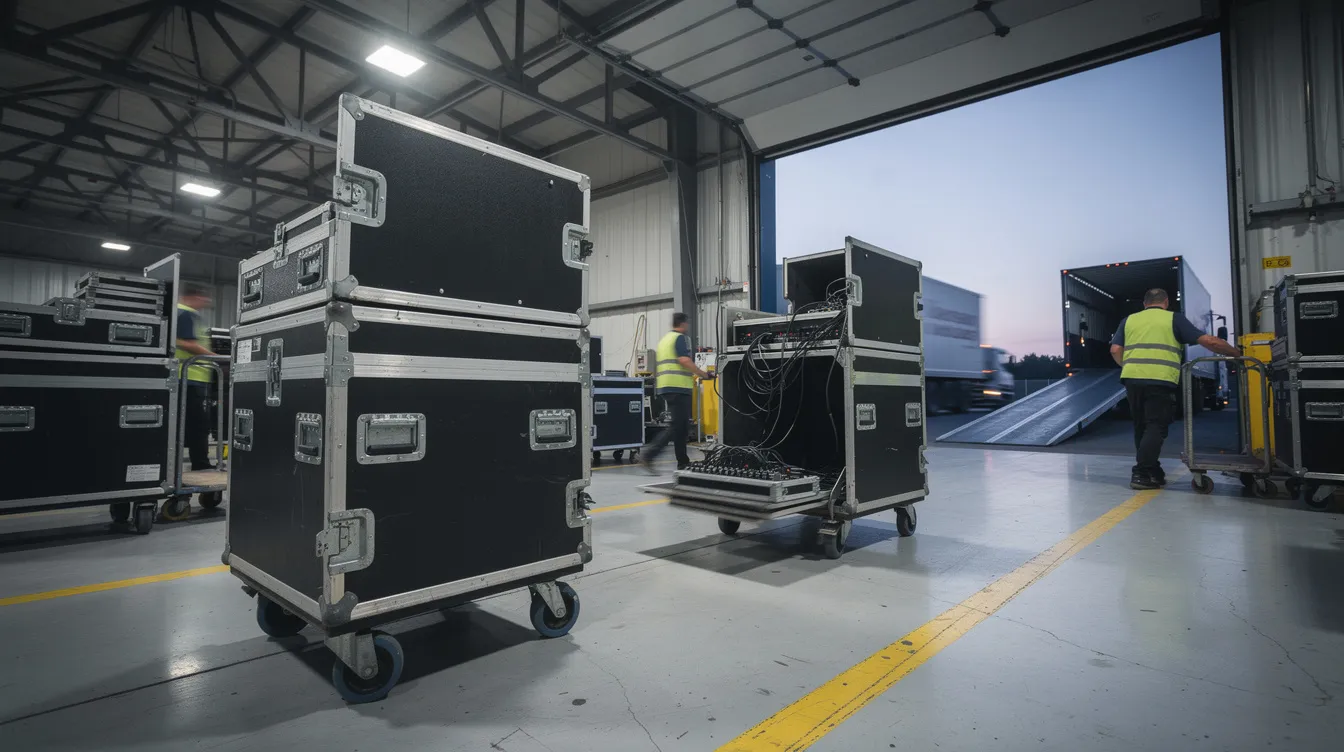
LED video production is heavy. Ninety-six cabinets plus flight cases, support structures, processors, cabling, and hardware created a substantial freight shipment. At the Minneapolis Convention Center, drayage is typically billed by weight and handling requirements, and that cost can become one of the largest hidden line items in a trade show AV production.
Practical steps that helped control costs:
-
Consolidating LED gear into efficiently packed cases
-
Coordinating arrival with official freight windows
-
Sharing preliminary LED designs with the AV team early so drayage exposure could be estimated alongside the production budget
-
Planning case storage within the booth space to avoid additional handling fees
When comparing proposals from different AV businesses, ask how equipment weight and case counts are handled. Whether a show is in Minneapolis, Milwaukee, San Diego, or Chicago, drayage math works the same way.
Electrical Planning: Power, Breaker Access and LED Wall Power Requirements
Electrical service at the Minneapolis Convention Center must be ordered through the show’s official provider, typically 30 days before move-in. For this build, the order specified amperage for four LED walls, processors, touchscreens, uplighting, and audio playback.
At roughly 60 watts average per cabinet, the 96-cabinet system drew approximately 5,700 watts under normal content. Peak draw under full white could reach 16,320 watts. Larger LED walls require dedicated multi-phase power connections, and this production used separated circuits to isolate LED loads from other booth equipment.
Critical planning details:
-
Breaker placement: power distribution was positioned so breakers remained accessible inside the booth after carpet and booth structures were installed
-
Flat floor cabling: kept aisles clear and maintained a clean booth appearance
-
Circuit separation: prevented noisy power sources from affecting LED signal quality
-
LED wall power requirements: reviewed with both the AV production team and the electrical contractor before final booth drawings were approved
Load-In, Setup and Multi-Day Operations at the Minneapolis Convention Center
Load-in at the Minneapolis Convention Center is segmented by booth size. Larger booths-classified as bulk exhibitors-typically receive earlier move-in windows. For this project, the four-wall LED build required early access, and the installation schedule was mapped against the permitted floor hours.
Setup followed a sequenced flow:
-
Receive freight at the marshalling yard via East 16th Street
-
Position cases at the booth
-
Assemble ground-support structures
-
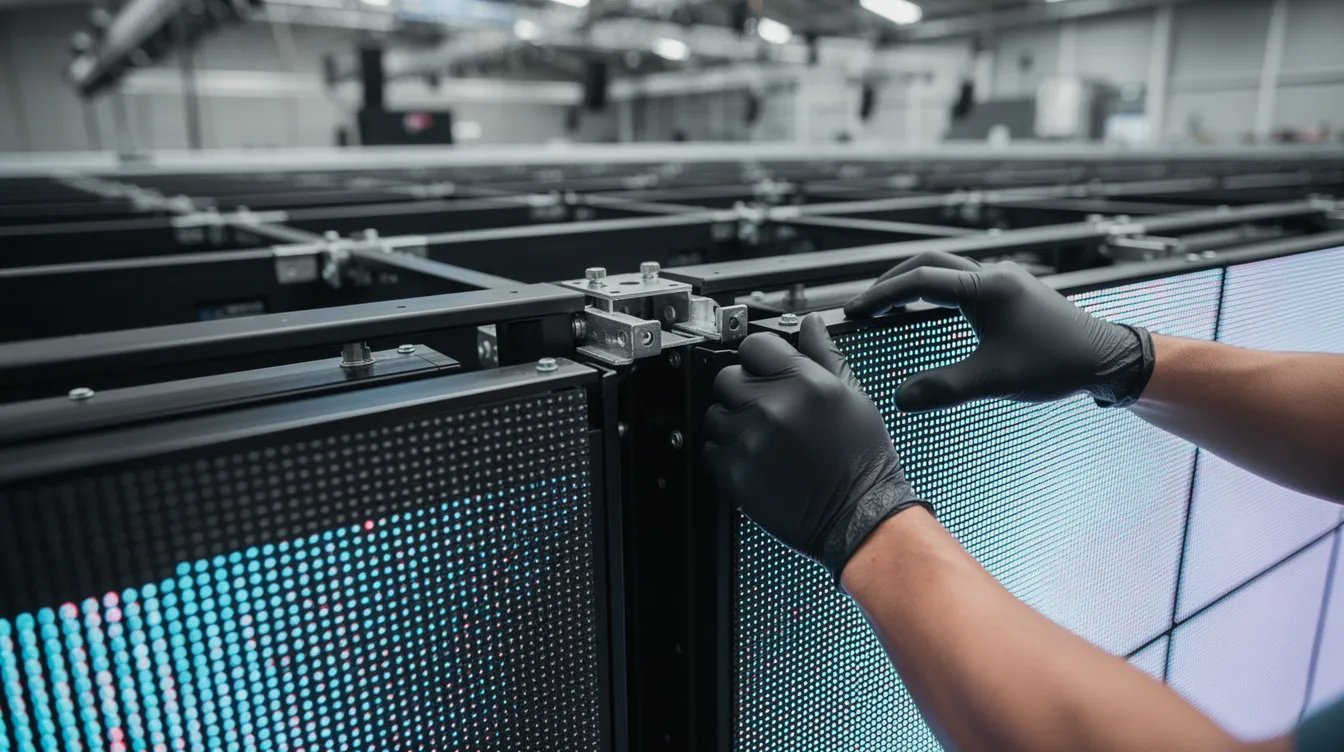
Build LED tiles wall by wall, addressing and mapping each cabinet through the NovaStar processors
-
Route cabling, connect processors, test video playback
-
Install touchscreens, uplighting, and booth finishing elements
Pre-planned processing configurations accelerated setup. Content templates were matched to wall aspect ratios before arriving on site, which reduced on-floor troubleshooting.
For multi-day operations, Front Row FX technicians arrived ahead of opening each morning to perform system checks, monitor LED temperatures, verify signal paths, and handle content updates or configuration changes. Conferences and meetings often shift schedules mid-show, and having technical support on site allows those changes to happen without disrupting operations.
Teardown reversed the build sequence: power down, disassemble tiles, pack cases, and clear the floor within the move-out schedule enforced by show management.
Lighting and Environment: Uplighting, Ambient Control and Competing Visuals
Minneapolis Convention Center halls feature high ambient lighting levels, which means LED brightness and color settings need to be calibrated to remain clear without causing glare or eye strain. LED video walls are ideal for bright environments like conventions, but they still need to be tuned to the space.
Simple, well-placed uplighting gave the booth structure definition and guided the audience’s eye from the LED walls into demo areas and meeting spaces.
Lighting tactics that pair well with LED walls in convention center venues:
-
Uplights on booth corners: create visual form and separate your space from neighboring exhibitors
-
Consistent color temperature: match LED wall white balance to ambient lighting for cohesive photos and video
-
Accent lighting on demo stations: draw visitors deeper into the booth after the LED wall catches their attention
-
Avoid competing brightness: downlights near LED surfaces can wash out screen content if not carefully aimed
LED walls for concerts and larger productions often push brightness harder, but trade show settings benefit from a balanced approach that keeps the booth inviting rather than overwhelming.
Working with an AV Production Partner vs. a Simple LED Wall Vendor
There is a meaningful difference between video wall rentals and a complete audiovisual production approach.
That is the difference between hiring an LED vendor and having a production partner invested in how the exhibit actually performs.
For this Minneapolis Convention Center project, the interconnected decisions included:
|
Planning Element |
Why It Connects |
|---|---|
|
Freight and drayage |
Determined by cabinet count and case weight |
|
LED cabinet count |
Driven by booth size and viewing distances |
|
Pixel pitch |
Selected based on audience proximity |
|
Electrical ordering |
Sized to LED power draw plus support equipment |
|
Content layout |
Matched to wall dimensions and aspect ratios |
|
Video processing |
Configured per wall with synchronized playback |
|
On-site support |
Required for multi-day system monitoring |
A basic LED vendor may deliver the panels, build the wall and leave. A production partner stays responsible for the entire visual system—freight planning, power, processing, content, installation, daily system checks, on-site support and final move-out.
That turnkey approach is especially valuable for out-of-state exhibitors and national teams producing events in Minnesota. Instead of coordinating multiple vendors from a distance, clients can work with one local audiovisual production partner from planning through show close.
For exhibitors searching for LED wall production at the Minneapolis Convention Center, trade show AV in Minneapolis or large-format LED production across Minnesota and the Midwest, Front Row FX provides the technical planning and on-site execution needed to keep the booth running—not just the equipment needed to build it.
Planning an expo in Minnesota? Bring us the booth drawings, event dates and visual goals. We’ll help build the production plan before the first case reaches the loading dock.