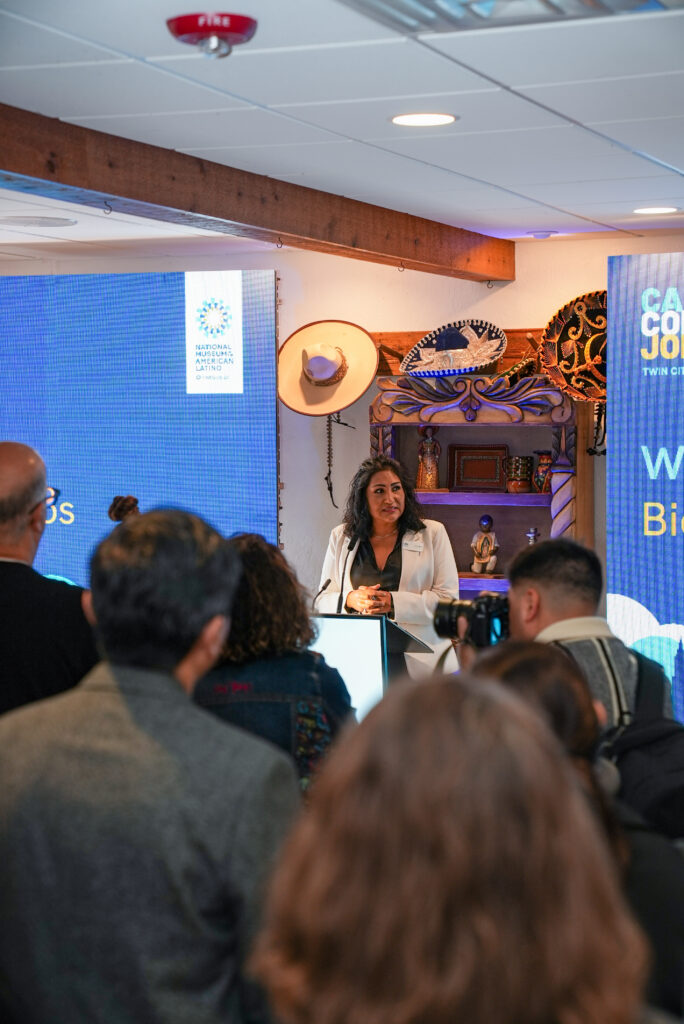
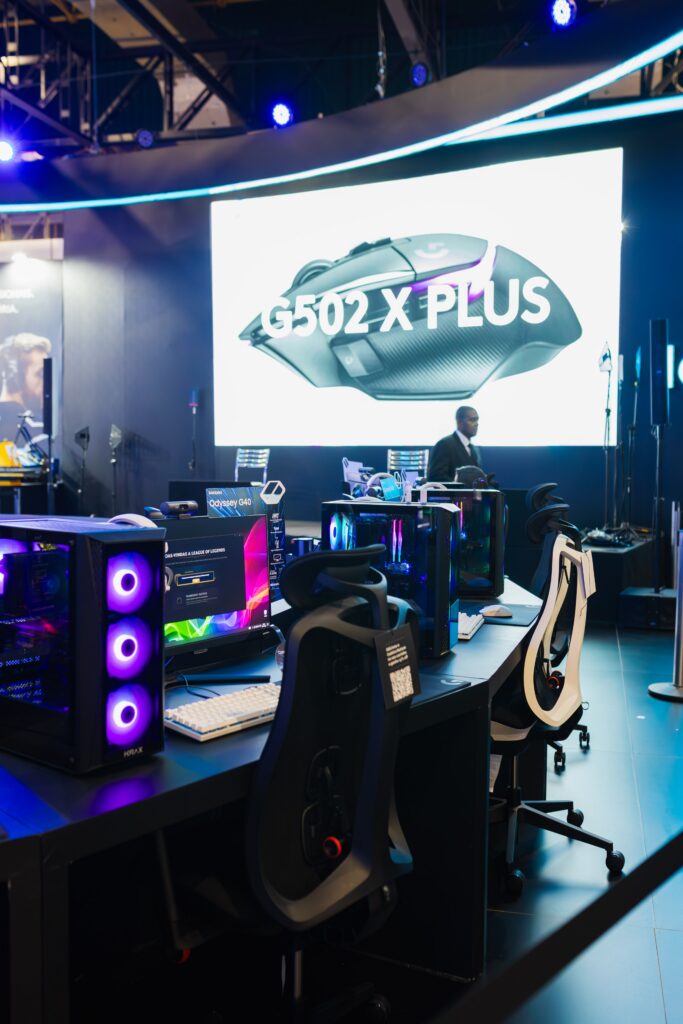
LED Video Walls for Event Planners: What to Know Before You Add One
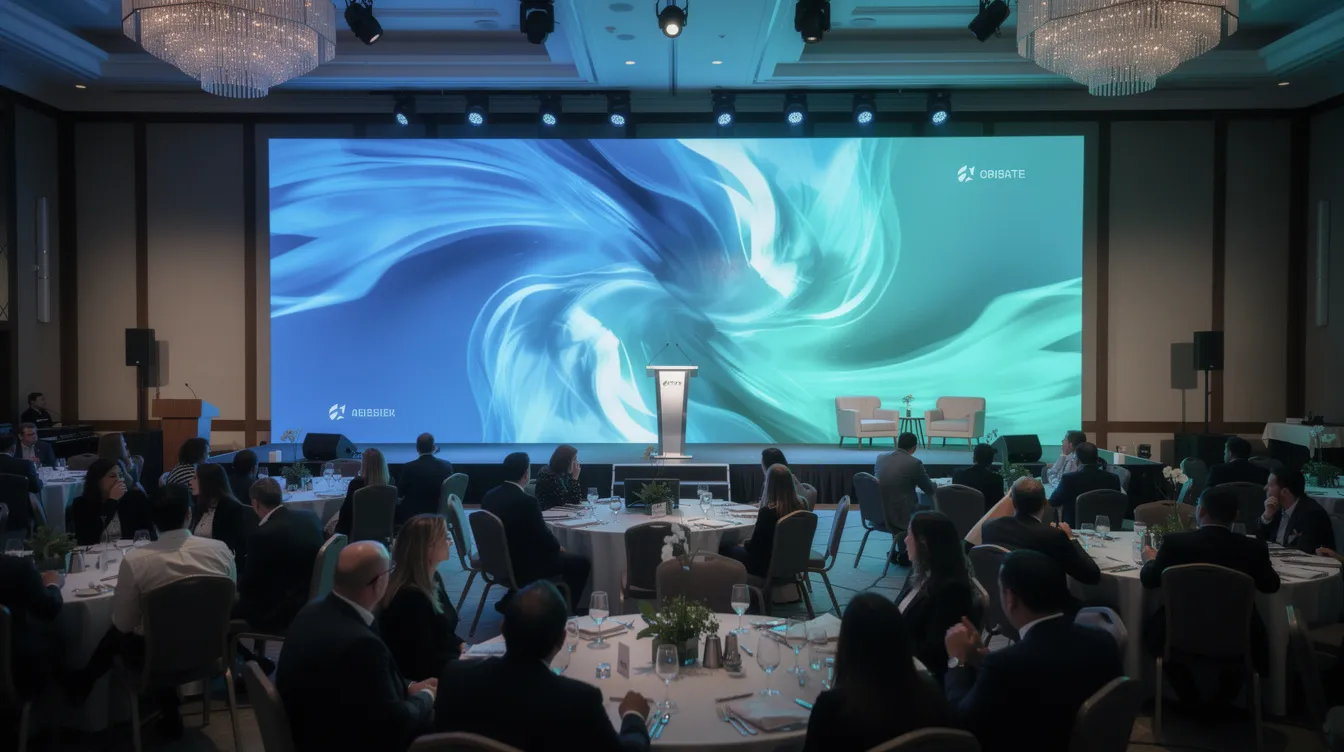
LED video walls are now a standard expectation at conferences, galas, brand activations, and corporate events across the country. They deliver bright, high-contrast images that keep audiences engaged, and they can be used for both indoor and outdoor events. But adding an LED wall to your event changes far more than just the visual backdrop.
An LED video wall is not a simple décor upgrade. It affects budget, room design, load-in logistics, power infrastructure, content production, and crew requirements. For event planners working on a 2026 annual sales conference in Minneapolis, a nonprofit gala in St. Paul, or a brand activation tied to a major sporting event in Wisconsin, understanding these variables early is the difference between a smooth production and a last-minute scramble.
In practical terms, LED video walls are modular LED screens assembled into stage backdrops, side screens, expo features, and sponsorship canvases at live events. They enhance audience engagement, replace traditional projectors and traditional monitors for presentations, and support everything from IMAG to sponsor loops. Front Row FX is a full-service audiovisual production partner based in Minnesota, helping planners across the Upper Midwest translate room, idea, and budget into the right LED wall configuration – from LED video wall production to conference AV and complete audiovisual production.
1. Realistic LED Wall Cost for Events
For professional LED walls, cost scales quickly. Never present LED to a client as a small add-on to the AV quote.
Here are planning ranges for common configurations:
11–15 ft wide × ~6.5 ft high LED video wall: typically around $12,000–$15,000 for a corporate event in Minneapolis or St. Paul.
19 ft wide × ~8 ft high conference LED wall: often around $25,000–$30,000 for a multi-day conference.
29 ft wide × ~16 ft high large-format LED wall: can reach $50,000–$60,000+ depending on venue, rigging, pixel pitch, event duration, and event production scope.
These are planning ranges, not fixed packages. Access constraints, ceiling height, labor rules, pixel pitch (P2.6 vs P3.9), and show schedule can all move numbers up or down.
LED wall rental for events is fundamentally different from booking projectors. LED requires more truck space, more crew, longer setup time, video processing hardware that must handle scaling and color calibration for seamless presentations, and usually an on-site LED technician.
Key cost drivers to share with clients:
Size and panel count
Pixel pitch and resolution requirements
Venue access and load-in complexity
Support structure (ground vs flown)
Show length and rehearsal days
Content complexity and number of sources
Coach your language early. Try: “We’re exploring a large-format LED wall for your event; final size and cost will be confirmed after technical review.”
2. LED Wall Size and Placement Should Come From the Room
Pinterest mockups and past show photos are helpful inspiration, but room dimensions and sightlines must drive the LED screen design. LED video walls can be configured to any size or shape, offering flexible size options – but bigger is not always better.
Factors that determine size and configuration:
Room length and width
Ceiling height at rigging points
Stage width and depth
Audience layout (classroom, theater, rounds)
Closest viewing distance
Whether cameras or IMAG will be used
You should determine audience placement to ensure optimal sightlines and viewing angles before selecting a screen size. The visual impact for guests in the front row matters just as much as visibility for the back row.
Common room-driven layouts include:
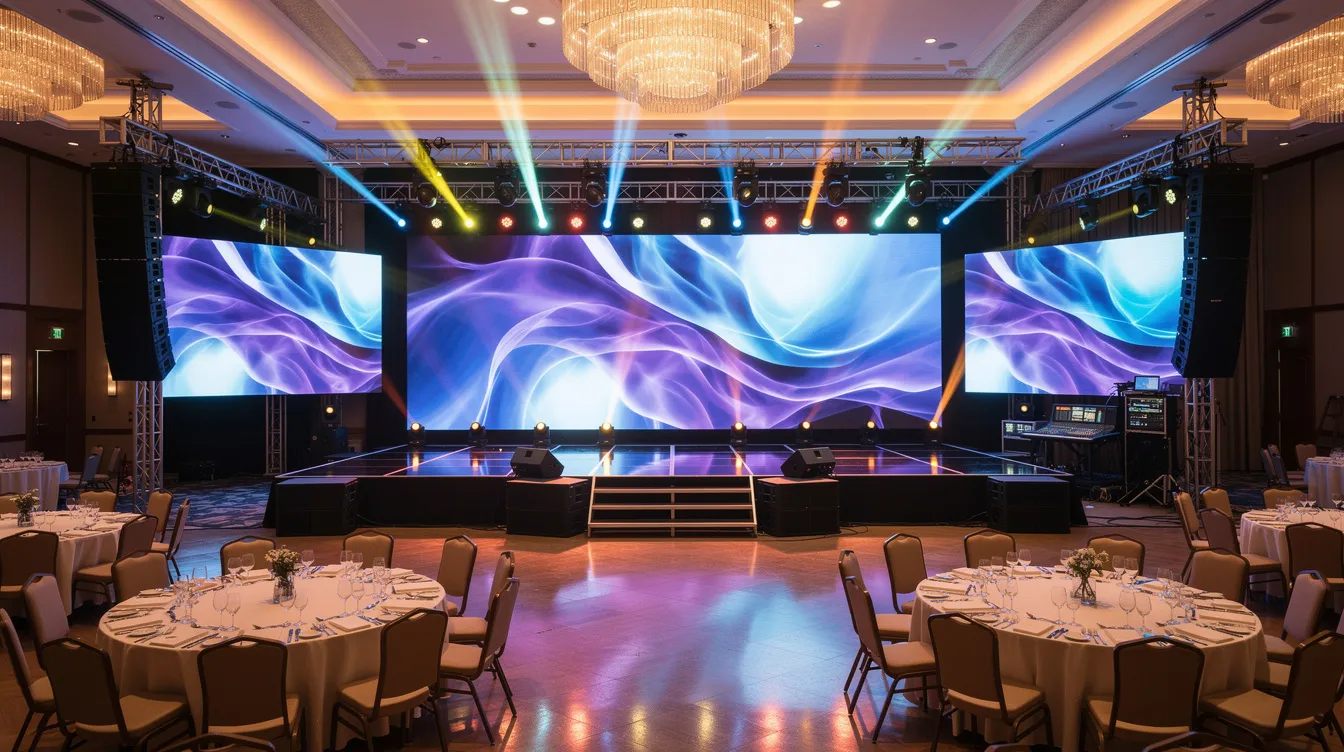
One large center LED wall behind the stages for keynotes.
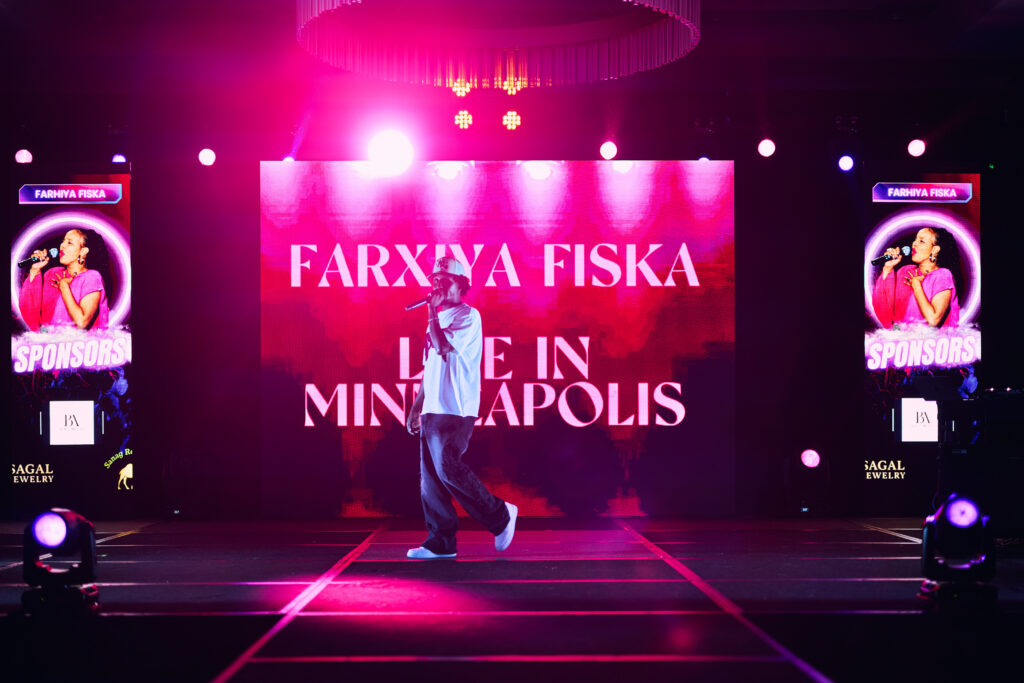
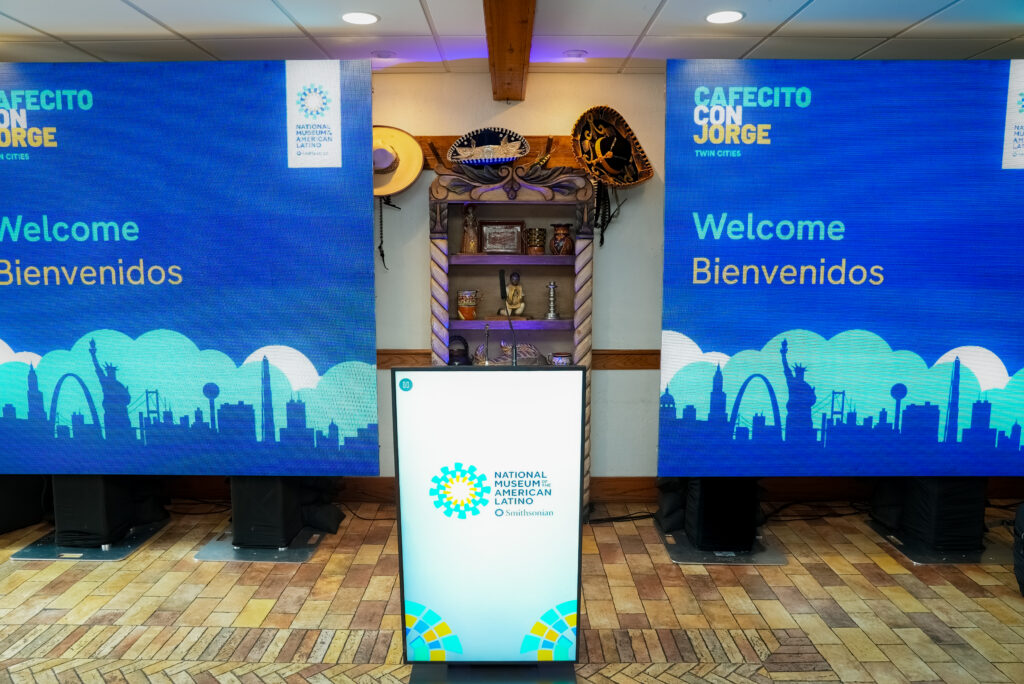
Two side LED screens flanking a scenic stage for awards shows.
One central LED wall plus smaller vertical LED columns for brand activations.
Multiple smaller LED displays distributed through a large ballroom or expo hall.
Consider a 500-person conference at a downtown Minneapolis hotel ballroom. A 24-foot center LED wall may need to be reduced or split into two 14-foot LED screens due to ceiling height and rigging limits. The room should determine the LED design, not the reference photo.
Loop your AV team in before locking the room layout.
3. Load-In, Access, and Venue Logistics for LED Walls
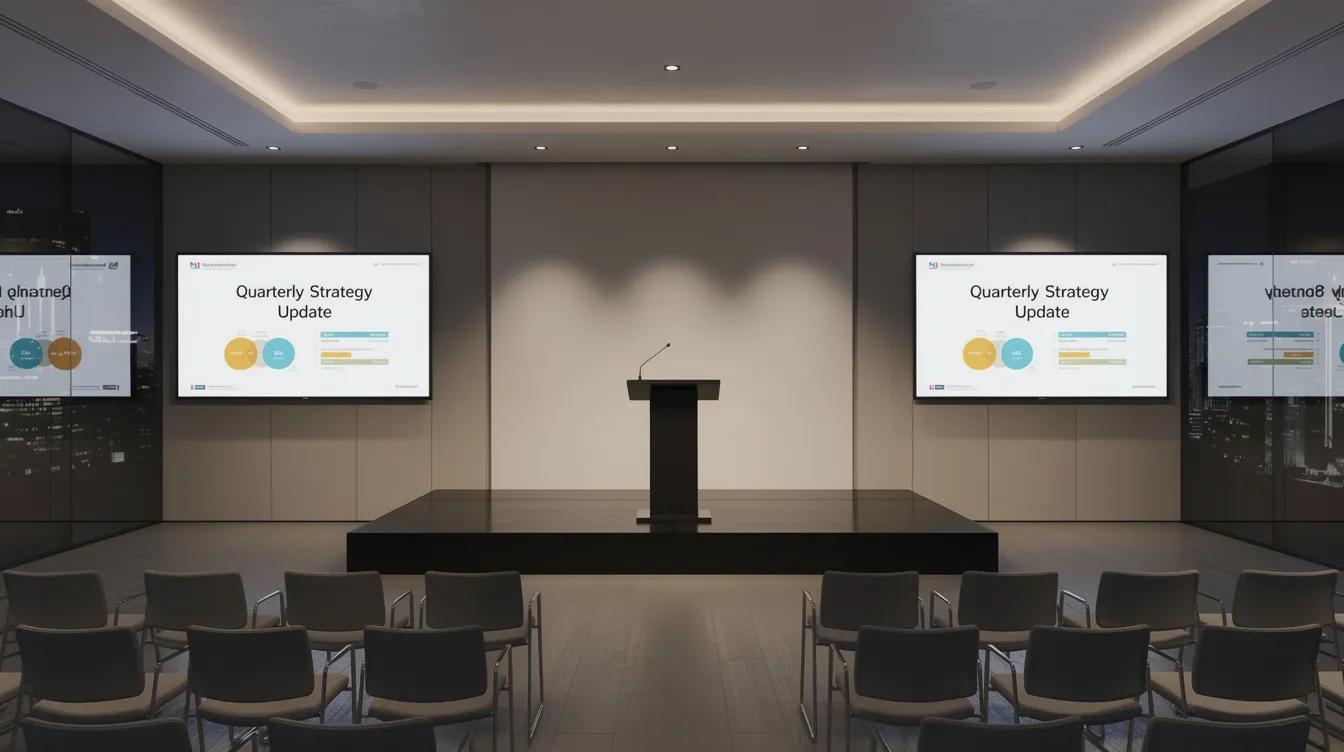
An LED video wall that looks perfect in a CAD drawing can become expensive or impossible if venue access is not checked early. This is one of the biggest planning mistakes in LED video wall event planning.
Logistics questions to confirm before the setup plan is finalized:
Is there a loading dock, or is it street-level access only?
Are freight elevators large enough for LED road cases and truss?
How long is the push from dock to ballroom at venues like Minneapolis Convention Center or major downtown hotels?
Are there union or exclusive labor rules that affect load-in and teardown hours?
Restricted setup windows – for example, 10 p.m. to 4 a.m. – can require additional crew and change LED wall cost significantly. A suburban hotel with direct dock access is a completely different production from a tight urban venue with small freight elevators, narrow corridors, and aggressive noise curfews.
Share any known constraints (floor protection, dock sharing, security access) when you first talk with your AV partner. This applies equally to trade shows, trade show booths, and ballroom events.
4. Power and Safety: Planning Electrical for LED Walls
LED walls, processors, and playback gear require planned, dedicated power. This cannot be handled with random wall outlets on show day. Indoor LED walls require significant weight support and electrical infrastructure that must be coordinated in advance.
What’s usually needed: multiple 20A or 30A circuits, or a larger three-phase service, depending on total LED display area and brightness levels. A 16-by-9-foot wall may draw 2,500–3,500 watts at moderate brightness. Larger configurations can demand 6,000–9,000 watts or more.
Power requirements depend on screen size, pixel pitch, configuration, content type (all-white backgrounds draw more energy than darker content), and processor rack power.
Questions for planners to ask:
Who provides power – venue, in-house AV, or an outside electrician?
Where will the distro and breakers actually be located once carpet, pipe and drape, and booths are installed?
Are there any power limitations in the chosen ballroom or expo hall?
Indoor LED walls typically need between 800 to 1,500 nits of brightness, and indoor LED walls must avoid excessive brightness to prevent visual discomfort. Front Row FX calculates power draw and coordinates with the venue. The planner’s job is to make sure electrical ordering happens early and that access to panels and breakers remains clear.
5. Ground-Supported vs Flown LED Walls
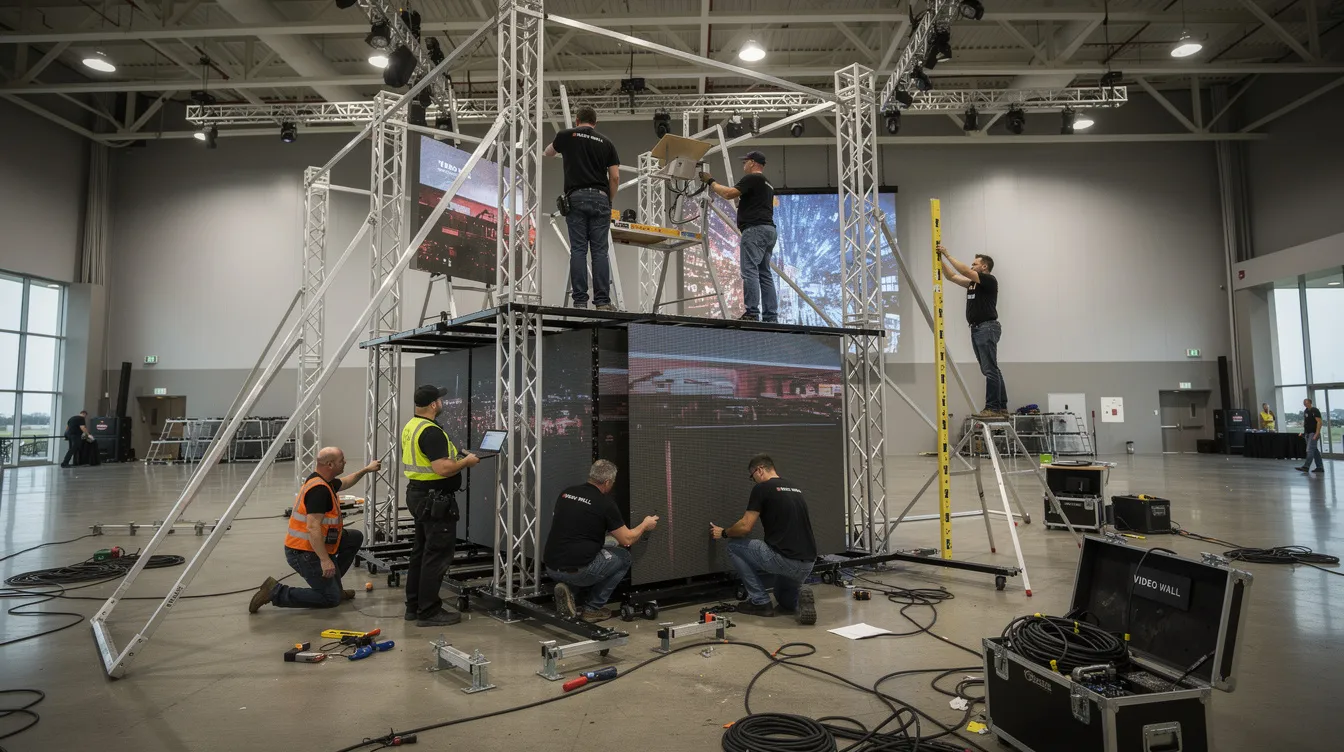
The core structural decision: will your LED wall sit on the floor or hang from the ceiling? The answer affects space, safety, and cost. You must determine if the venue allows for rigging or ground support for LED walls before finalizing any design.
Ground-supported approaches:
LED video wall mounted on ground-support truss or engineered bases.
Scenic surrounds that disguise the support system for galas and awards shows.
Extra depth required backstage for ballast or bracing.
Flown LED walls:
Hung from building structure via truss and motors.
Require venue rigging approval, point loads, drawings, and certified riggers.
Often ideal at venues like large convention centers with modern rigging grids.
LED video walls can be curved, stacked, or built into stage sets to create unique shapes. Some rooms simply cannot support a large flown LED display due to age or structural limits. In those cases, smaller LED panels or multiple smaller screens may be the practical solution.
Front Row FX manages rigging plans as part of LED wall production, but planners should share any known rigging policies, approved vendor lists, or in-house rigging contacts early. Safe implementation follows guidance from manufacturer documentation and resources like the Event Safety Alliance.
6. Pixel Pitch and Viewing Distance: Choosing the Right LED Screen
Pixel pitch is the distance between individual LEDs on a panel. It determines how close the audience can stand before seeing the grid pattern between pixels. A smaller pixel pitch ensures higher resolution and tighter pixel density, but it also costs more. LED screens emit light directly, which is why they deliver high resolution visuals in any lighting condition and stay bright even in challenging ambient light.
Practical bands for event planners:
P2.6 or P2.9 (fine pitch): good for close viewing in ballrooms where the front row may be 8–15 feet from the LED wall. Indoor LED video walls prioritize close-range clarity in controlled ambient lighting.
P3.9 (standard event pitch): excellent for larger rooms, concerts, and outdoor event displays where the audience distance is 20+ feet.
The recommended viewing distance is roughly three times the pixel pitch in millimeters, converted to feet. Choose pixel pitch based on audience distance for clarity – not simply because a finer pitch sounds better.
A 2026 regional sales meeting in St. Paul with 300 attendees may use P2.9 for a 20-foot conference LED wall delivering high quality visuals. A 5,000-person outdoor watch party in Wisconsin might use P3.9 for a much larger LED display. A high refresh rate prevents flickering and distortion when capturing video, and high refresh rates are crucial for live-streaming and video recording at events.
Event planners need to balance visual impact and technical specs when choosing an LED video wall. Provide approximate room dimensions and closest viewing distance; Front Row FX can match pixel pitch to content, image quality, and budget. Concerts utilize LED walls for vibrant stage visuals at a completely different scale than a corporate keynote, and the right pitch reflects that.
7. Content and LED Canvas: Don’t Design Graphics Before the Screen Is Final
The fastest way to lose time and budget is to have designers build content before the LED wall size and resolution are locked. LED walls often use custom aspect ratios – ultra-wide, tall portrait stacks, or multi-screen arrays – that do not match standard 16:9 PowerPoint slides.
Aspect ratio and dimensions should be designed around the screen content. Before content production starts, planners or designers should request from Front Row FX:
Final pixel dimensions of each LED wall (e.g., 2304×864).
Aspect ratio of the main canvas and any side or scenic LED displays.
Preferred file formats and codecs for led video content.
Frame rate targets (e.g., 30 FPS or 60 FPS).
Safe areas and zones reserved for lower thirds, logos, or captions.
Whether content is played as one large LED canvas or multiple independent screens.
LED video walls can display multiple content types simultaneously, and LED walls can display custom video animations and logos. They can also display content as multiple video layers simultaneously, combining slides, live video feeds, and sponsor loops on a single surface.
Two common approaches to display content on custom canvases:
Fully custom anamorphic content that fills the entire LED wall with creative designs.
Standard 16:9 content floated inside a wider LED environment with branded backgrounds.
Front Row FX offers LED Content & Visual Design for planners who do not have in-house motion graphics resources and need help translating presentations, sponsor logos, and show branding to the actual LED display.
8. Show-Hours Technical Support: Who Owns the LED Screen During the Event?
Installing an LED wall is only half the job. The other half is operating and monitoring it during live sessions, award segments, and brand activations at professional events. This is where flawless execution either happens or falls apart, and it makes a real difference in the event’s overall performance.
There is a clear distinction between:
A delivery-only LED wall rental with minimal show support.
A full-service LED wall production with a dedicated LED technician or video engineer on site throughout the event.
You should evaluate the supplier’s ability to deliver, install, and troubleshoot the LED system. Experienced technicians on site typically cover:
Monitoring LED processors and signal paths.
Adjusting brightness and color balance for lighting and camera changes.
Managing content changes, playlists, and cue timing.
Swapping a cabinet or sending a spare panel into the system if needed.
Coordinating with Show & Technical Management and other departments when issues appear.
For conferences, multi-day corporate events, or heavily sponsored galas, budget for full show-hours coverage. This reduces risk more than cutting a few hours of crew time. Front Row FX includes this support within broader complete audiovisual production scopes depending on the event.
9. Integration With Lighting, Sound, Staging, and Cameras
LED screens are not a stand-alone vendor line. They interact with event lighting, professional sound, staging, scenic, and cameras. Seamless integration between these systems requires early coordination.
Concrete examples of what can go wrong:
A bright LED video wall behind a presenter can change how key and backlighting are positioned to avoid silhouettes.
Tall side LED screens may block speaker entrances or aisleways if staging is not coordinated.
Camera shots for IMAG need content brightness tuned so that faces are not washed out on the LED wall.
Organize a joint conversation between your AV team and other vendors – decor, scenic, broadcast, venue – early in the process. This prevents departments from competing for the same rigging points or floor space.
Front Row FX delivers integrated solutions that connect LED walls, lighting, audio, and show management into one cohesive event production. Send updated floor plans and stage layouts whenever the set, seating, or sponsor activations change, so LED screen placement can be checked again for sightlines and safety.
10. How to Talk About LED Walls With Clients
This section is about protecting your clients and your own credibility. Do not lock into exact LED wall dimensions before the technical review is complete.
Preferred phrasing to use with corporate clients and stakeholders:
“We are planning a large-format LED environment; Front Row FX will confirm final dimensions after we review the venue and production details.”
“We’re exploring an LED wall for the main stage and possibly additional LED displays for sponsors, depending on budget and room layout.”
Why this protects everyone:
Budget flexibility if access, rigging, or pixel pitch change cost.
Sightlines and audience experience if the room turns out shorter or narrower than expected.
Creative options if the team discovers that two LED walls or vertical scenic LED make more sense than one giant center wall.
At the proposal stage, present LED wall cost for events as a range with clear “subject to venue and technical review” wording. Position LED as part of an upgraded visual strategy that supports sponsorship opportunities and stage branding – not just a bigger TV. Help clients highlight what matters: the experience, not the spec sheet.
Planner Checklist: Key Questions Before You Add an LED Wall
Before promising LED video walls to clients, work through this list:
What is the approximate budget range available for the LED wall and supporting AV?
What are the room dimensions, ceiling height, and stage size?
How close will the nearest attendees be to the LED screen?
What type of content will run (slides, IMAG, high-motion videos, sponsor logos)?
What are the confirmed load-in and load-out windows?
How does gear enter the room (dock, ramp, freight elevator, or stairs)?
Is the LED wall likely to be ground-supported, flown, or integrated into scenic?
Who provides electrical service, and when will it be ordered?
Who is responsible for the LED screen during show hours?
Is the LED wall part of a larger event audiovisual production or a stand-alone feature?
Answering these upfront enables Front Row FX to respond faster with accurate LED video wall planning and pricing.
What to Send Your AV Partner to Design the Right LED Wall
You do not need final creative or fully dimensioned drawings before starting the conversation. Here is what helps most:
Event name, date(s), and city (e.g., May 2026 tech summit in Minneapolis).
Venue and specific room name (e.g., Ballroom A, Minneapolis Convention Center).
Floor plan, even if preliminary, plus any existing CADs if available.
Stage dimensions and preferred stage location in the room.
Approximate audience size and seating style (theater, classroom, rounds).
Closest and furthest viewing distances from the proposed LED wall.
Examples of content (past decks, sponsor logos, brand style guides, reference videos).
Event schedule, especially tight turnarounds between sessions or room flips.
Load-in window and any known access limitations or union rules.
Approximate AV/LED budget range and any must-have elements (e.g., IMAG cameras, specific sponsor deliverables).
Front Row FX will help develop the configuration from there as part of LED production planning.
How Front Row FX Works With Event Planners
The planner owns the client relationship and event strategy. Front Row FX owns technical design and execution of LED walls and AV.
Front Row FX is a Minnesota-based, full-service audiovisual production and event technology company serving Minneapolis, St. Paul, Minnesota, Wisconsin, Chicago, Georgia and the Upper Midwest. The team supports corporate event production, association conferences, galas, concerts, cultural events, product launches, and high-production private events.
How Front Row FX supports event planners:
Translate creative decks into practical LED wall layouts and cabling plans.
Coordinate LED display placement with stage, lighting, audio, and cameras.
Provide LED Content & Visual Design support when needed.
Deliver Show & Technical Management so cues, content, and crew stay aligned.
In practice, this has meant helping a regional healthcare conference team in 2024 avoid a last-minute wall redesign by identifying rigging limits during the first site visit, and working with a 2025 nonprofit gala team in downtown Minneapolis to split a single large wall into two surfaces that better matched the room’s proportions – saving budget and improving sightlines.
Front Row FX works with the planner, not around the planner. The goal is to protect both the creative concept and the event budget.
When to Bring Your AV Partner Into the Planning Process
The best time to involve Front Row FX is after a venue is shortlisted or booked, but before stage design, screen dimensions, and final budgets are locked.
Advantages of early involvement:
Identify better LED screen configurations for the specific room.
Confirm whether a large center LED wall is realistic, or if side screens are more effective.
Spot access, power, and rigging issues while there is still time to adjust.
Align content planning and LED canvas details early with marketing and sponsors.
A simple planning timeline:
6–9 months out: concept and budget discussion including whether LED makes sense for your next event.
3–6 months out: site visit or virtual walk-through, preliminary LED design, power and rigging review.
1–3 months out: lock LED wall specs, start content production with exact pixel dimensions.
Show week: installation, rehearsals, show operation, adjustments.
Early technical involvement does not reduce the planner’s creative control. It ensures the LED wall for events can be practically delivered in the chosen venue and schedule.
If you are designing a 2026, 2027 or 2028 conference, gala, or expo in Minnesota or the Upper Midwest and LED is on the table, this is the moment to talk with Front Row FX.
Plan Your LED Video Wall Production
LED video walls transform live events, but they also change budget, logistics, and content workflows. Planners should avoid promising exact sizes or costs before a technical review, and a strong AV partner simplifies this entire process.
Front Row FX provides professional LED video walls, complete AV production, conference AV, LED content and visual design, show and technical management, event lighting production, and professional sound across Minnesota, Wisconsin, Chicago, and the Upper Midwest.
FAQs: LED Video Walls for Event Planners
How early should I book an LED wall for a corporate event or conference?
Four to eight weeks is a common lead time for securing LED equipment, but for peak seasons or large-format walls, six to nine months of advance planning is safer. The earlier you start, the more flexibility you have on configuration and cost.
Can we use the same LED wall design for both a general session and an evening gala in the same room?
Often yes, with content and lighting adjustments. The wall itself can stand through a room flip while content transitions from presentations to a new product reveal or branded gala visuals. Plan with your AV team so transitions are built into the show flow.
Is an LED wall always better than projection for corporate events?
Not always. Projection can work well in controlled lighting for smaller groups. But LED video walls deliver high-resolution visuals in any lighting condition, offering a clear advantage in rooms with ambient light, windows, or where attendees are close to the screen. LED walls also eliminate concerns about lamp life and shadow interference that come with projectors.
What is the smallest practical LED wall size for a breakout or small meeting?
An 8-by-6-foot wall with fine pitch can work for smaller meetings. Even smaller LED panels are available for trade show booths and focused activations where the audience is very close.
Can LED walls show multiple content sources at once?
Yes. LED video walls can display multiple video layers simultaneously – slides on one zone, a live camera feed on another, and a sponsor loop on a third. This requires proper video processing and content mapping, which should be planned in advance.
Are outdoor LED walls weather-resistant for summer events in Minnesota, Illinois, Georgia and Wisconsin?
LED video walls are sunlight-readable and weather-resistant when specified for outdoors. Outdoor panels carry IP ratings for dust and moisture protection and are designed to stay bright even in direct sunlight. Outdoor event displays require higher brightness panels, structural engineering, and additional weatherproofing compared to indoor configurations. Festivals, sporting events using LED walls for live scores and replays, and summer activations all benefit from properly specified outdoor LED.
How does LED wall cost compare between a one-day event and a three-day conference?
Equipment cost is often similar, since trucking and setup labor happen regardless. The difference is in crew days, show-hours coverage, power, and spares. Multi-day events benefit from dedicated on-site technicians and redundancy planning, which adds to the total.
Do we need to provide our own content team, or can Front Row FX handle LED content production?
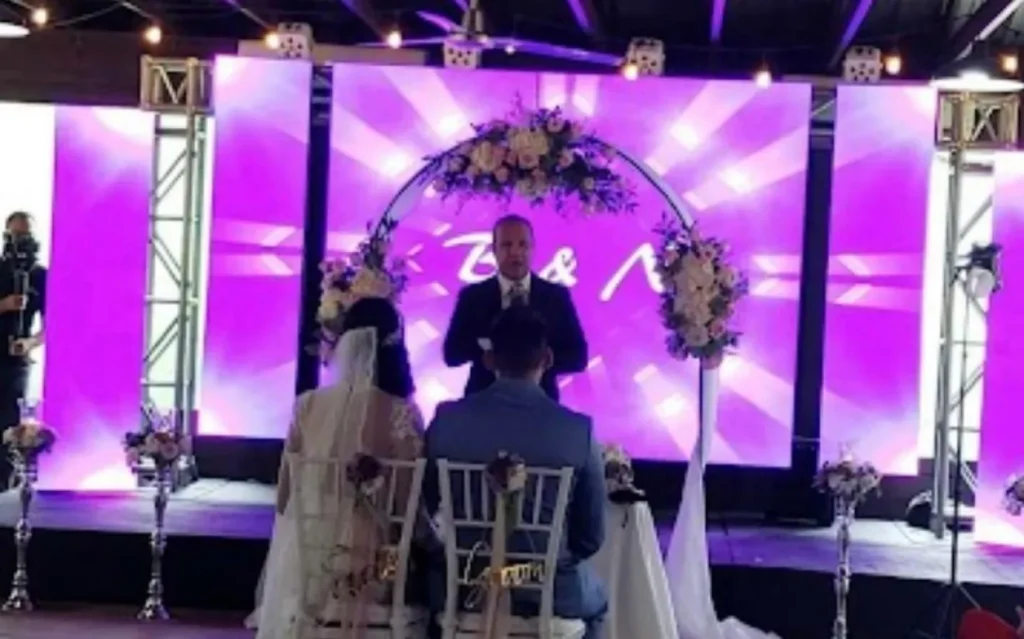
You do not need an in-house motion graphics team. Front Row FX offers LED Content & Visual Design services to help translate slides, sponsor logos, and branding into content that matches your actual LED canvas. Weddings benefit from LED walls for dynamic visual displays, and creating that content is part of the production scope. LED screens are effective for trade shows and exhibitions as well – the content approach simply changes based on the application.
For deeper reading on LED screens and video walls, visit the Front Row FX Journal.